Desi Bling To Alleged Asset Freeze: Why Satish Sanpal Is Under UAE Lens; Why India Is Quiet?


Analysing Satish Sanpal’s Frozen Assets and “Desi Bling” Fame
Dubai-based entrepreneur Satish Sanpal, a Netflix “Desi Bling” star famous for flaunting his wealth, suddenly finds himself under the glare of an international money-laundering investigation. In early August 2026, the UAE’s Financial Intelligence Unit (FIU) ordered a temporary freeze on Satish Sanpal’s assets, part of a broader probe into “suspicious financial transactions”. The order, reportedly issued about two weeks prior, directs all UAE banks, brokers and crypto exchanges to block withdrawals, transfers or safe-deposit access for accounts linked to Sanpal.
According to news reports, the directive explicitly covers Satish Sanpal’s personal accounts and those of his wife Tabinda, as well as several company accounts. Indeed, multiple outlets note that the freeze even applies to entities owned by the Sanpals, including ANAX Capital Asset Management Company, ANAX Capital Financial Markets LLC, ANAX Holding FZCO, and SSB Bazaar General Trading LLC. This broad 30-day block (extendable by court order) is intended to safeguard evidence while investigators review millions in deposits and digital wallets. As one media summary quotes the FIU order: “You are immediately requested to freeze any funds or accounts… and deny access to the safe deposit boxes” linked to Sanpal and his associates.
This enforcement action has drawn immediate attention because no conviction has been announced. Leading outlets emphasize that the asset freeze is merely a preliminary step, not proof of guilt. Moneycontrol and Brandsynario explain that such freezes are “precautionary measures” in anti-money-laundering probes and do not establish wrongdoing. In fact, Indian courts have cautioned against hasty judgement: in May 2026 the Delhi High Court noted that media had “prematurely labelled” Satish Sanpal a culprit even though the official investigation was ongoing. As one analysis points out, freezing assets is not itself a charge – it simply keeps suspected funds from disappearing while the FIU verifies their origin.
Yet the freeze highlights a jarring reality: the real-world allegations against Satish Sanpal sharply contradict the glamorous image he projects. By his own telling and media profiles, Sanpal is a rags-to-riches success story. He is a 41-year-old Indian-origin businessman based in Dubai who claims to run a multibillion-dollar empire. Officially, Sanpal hails from Jabalpur, Madhya Pradesh: according to reports, he left school after class 8 and began an “eighty thousand rupee shop” back home. That venture faltered, and in the mid-2010s Sanpal moved to the UAE where he entered finance and real estate.
By 2018 he had founded ANAX Holding, an investment group focused on luxury real estate and hospitality. Media articles claim the ANAX conglomerate is “valued at around $3 billion”, and note that Satish Sanpal owns multiple high-end assets, including a Burj Khalifa penthouse, a $120 million mansion in Dubai Hills, dozens of luxury cars, and even a custom pink Phantom gifted to his daughter.
The couple has leveraged their lifestyle into fame: Sanpal and Tabinda are the breakout stars of Netflix’s 2026 reality series Desi Bling, which showcases “the lavish lifestyles of affluent South Asians living in Dubai”. The show’s trailers and episodes are filled with scenes of opulence: the Sanpals dining amid gold, luxury cars, and Burj Khalifa suites. For example, one episode famously depicts Tabinda gleefully recounting that “her husband gifted her 40 kilograms of gold,” a stunt that underlines their seemingly limitless wealth.

But behind the glitz, Indian authorities say there is a very different story – one of gambling rings, hawala cash channels and financial fraud. Multiple investigative reports detail a vast illegal betting network allegedly centered on Satish Sanpal back in Jabalpur. Since 2021, police records in Madhya Pradesh show at least nine FIRs (First Information Reports) naming Satish Sanpal as a key figure. These cases span several police stations (Madan Mahal, Omti, Lordganj, Kotwali, etc.) and involve serious charges: illegal gambling under the state Public Gambling Act, cheating (IPC §420), criminal conspiracy (IPC §120B) and money-laundering.
One FIR (No. 170/2022, Madan Mahal) alleges Satish Sanpal’s associates were operating an illicit IPL cricket-betting den; investigators recovered betting ledgers, cash, mobile devices and even a motorcycle used for running bets. Another (FIR 271/2022, Omti PS) charges two henchmen with public gambling and criminal conspiracy – those men told police they collected and settled bets “on Sanpal’s instructions”. A third FIR (No. 356/2022) involves a local resident claiming his identity documents were fraudulently used to open shell accounts for money-laundering – accusations also tied to Sanpal’s network.
A fourth case (FIR 338/2022) concerns forgery of cheques and extortion in an apparent online betting scheme; the complaint explicitly describes a gang working on Sanpal’s directions from Dubai. Taken together, police allege this represents a “massive illegal cricket betting and money-laundering syndicate involving over ₹1,000 crore”. In one dramatic May 2022 raid on an office linked to Satish Sanpal’s associate, officers seized roughly ₹21.5 lakh in cash and dozens of betting records, arresting two operatives on the spot.
Authorities even sought a Look-Out Circular through India’s Bureau of Immigration to flag his travel; orders under CrPC Sections 82/83 were reportedly issued to proclaim him as a wanted man.
However, none of these cases has reached a verdict. To date, Sanpal himself has not been convicted or even formally charged in any Indian court. In fact, arrested associates were later granted bail, and official statements emphasise that investigations are still underway. His lawyers point out that Sanpal has consistently denied wrongdoing. Even court has warned that media reports should not prejudge him and label him a culprit, when the probe reamains unfinished.
In May 2026, public frustration over this disconnect came to a head. A Jabalpur activist (Yogendra Singh) filed a complaint with India’s National Human Rights Commission (NHRC) after watching Desi Bling. He objected that the show glorifies Sanpal’s wealth without context, thus normalizing alleged criminal gains. The NHRC notice cites multiple pending criminal cases involving illegal betting, hawala and fraud against Satish Sanpal.
The complainant’s letter points out the irony: “A person against whom cases of betting, and financial fraud are registered is being shown as a crorepati businessman and style icon. Such content can push young people towards a shortcut mentality instead of hard work and honest earning.”. In other words, the reality series casts an accused person as an aspirational role model – a portrayal that critics say could mislead impressionable youth.

The NHRC has taken the allegations seriously. Member Priyank Kanoongo issued a notice to Netflix seeking explanation, calling the content “a serious matter.” He flagged specifically that the reality show glorified an individual accused of actual illegal betting, financial fraud, and money laundering, which could adversely influence youth, misguide them by glorifying a lifestyle based on gambling and betting in an attractive manner, and glamorizes criminals which sends the wrong message to society and the youth generation.
The data and timelines underscore the dissonance. On one hand, Satish Sanpal’s Netflix profile, magazine spreads and social-media posts paint a picture of a rags-to-riches success. On the other, Indian case files and FIRs describe a person wanted for large-scale betting operations and money-laundering. Reports, citing court records and police documents, have even mapped how millions of rupees may have flowed through shell companies linked to his network. For example, police allege Sanpal’s network used a dozen shell firms to launder betting proceeds, then transferred the funds abroad via hawala channels. The cumulative figure cited by investigators is eye-popping – on the order of thousands of crores of rupees running through illicit channels.
Why, then, does the Netflix series omit all this? The reality show’s style is pure spectacle. It barely touches on anything but the luxury: Soaring incomes, designer clothes, diamond-studded events. The complaint notes that show underplays or even romanticizes Satish Sanpal’s rise. For example, an entire episode features a lavish housewarming in which he details how he “started with just ₹80,000 in India” and grew it all the way to Burj Khalifa living, with no mention of the legal hurdles.
By editing together this narrative of humility-turned-wealth, Desi Bling effectively brands Satish Sanpal as a self-made billionaire. Critics argue this narrative glosses over the reality that, according to Indian authorities, much of the wealth may be “ill-gotten” or tied to illegal enterprises.
The disconnect has practical consequences for young viewers. Studies show that aspirational media figures can heavily influence youth attitudes on success and ethics. By presenting a man under investigation as a glamorous success, the show could “push young people towards a shortcut mentality” – just as the complainant warned. The NHRC’s concern speaks to broader fears: in a country where online betting and easy credit are booming, glamorizing unverified success stories might make illegal schemes look tempting to the wrong audiences. Even without citing statistics, experts note that Bollywood and pop culture have long struggled with the morality of glamor; Desi Bling adds a new twist by mixing reality TV with unresolved crime.
Through all this scrutiny, one fact remains clear: Satish Sanpal has not been convicted in any court. Legally, he is still “innocent until proven guilty.” That means the story is far from over. The UAE inquiry has 30 days to decide whether to charge him or release the freeze; after that, extension would need a court order. Meanwhile, Indian agencies have lodged rogues’ gallery cases but await cooperation (which can be difficult across borders). Some analysts question why, despite long lists of allegations, courts in India have not yet delivered verdicts against Satish Sanpal?
In sum, the Satish Sanpal saga is unfolding on two fronts: the flashy screens of Netflix and the sober records of police stations. The episode of real life that Netflix broadcasts is one of glamour and success. But the legal files read like a crime thriller in progress. A thorough investigation and due process are needed to reconcile these views. Until then, the freeze of Sanpal’s assets in Dubai raises serious questions for the public: are we witnessing the exposure of a secret betting empire, or the unwarranted targeting of a shrewd businessman?
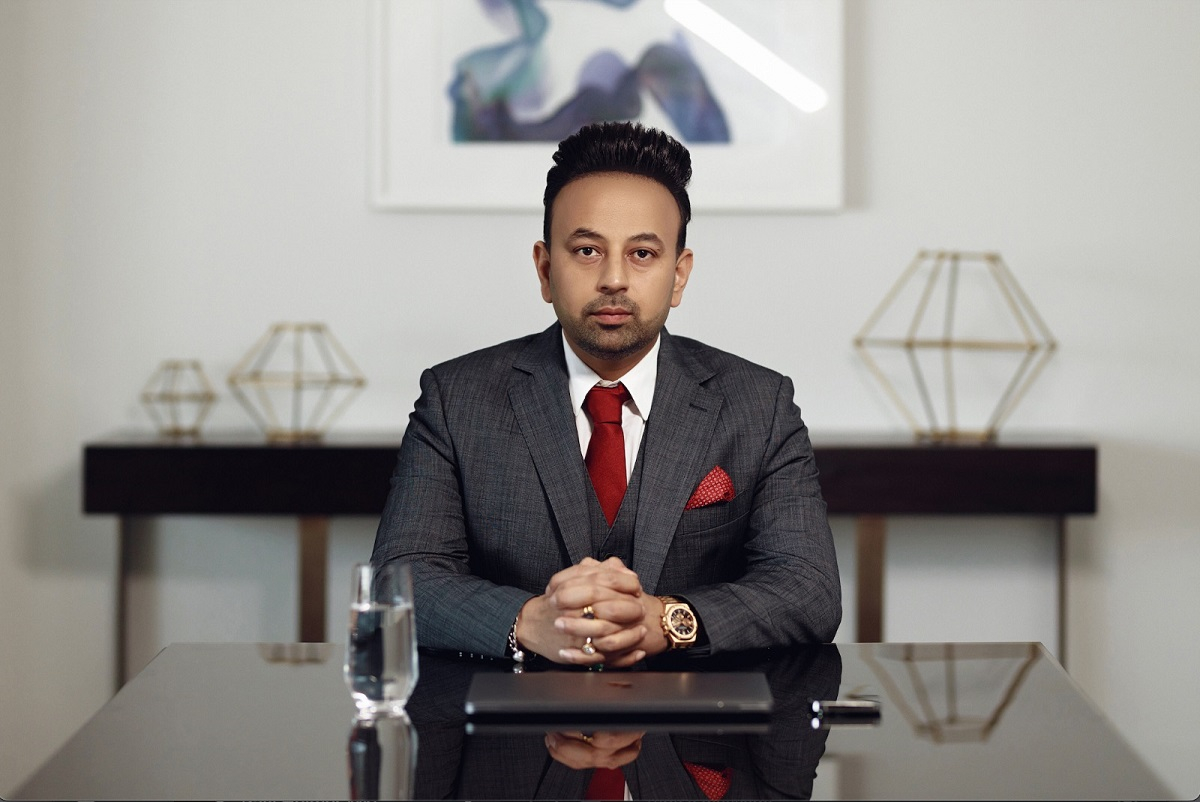
And what responsibility do entertainment platforms bear when blending fact with fantasy? For India’s youth watching Desi Bling, the message hangs in the balance – between hard work and easy schemes. The experts quoted above warn that glorifying wealth with thin verification could mislead a generation. The ultimate answer to these questions will only come out of the courts and audits, not the TV cameras. Until then, viewers and regulators alike must tread carefully in separating Desi bling from reality.