Trump’s Russian Oil Tariff Threatens India Even As The World Runs Out Of Predictable Oil. Iran And The Middle East Are Rewriting The Global Energy Map, But The Bigger Battle Is Over Who Controls The Next Barrel
The global energy market is being reshaped by wars, sanctions and a scramble for reliable supplies. Trump’s threat of tariffs on Russian oil buyers puts India in a difficult spot, but the bigger story stretches from Iran and the Middle East to Venezuela, Europe and the fight over who controls the next barrel.

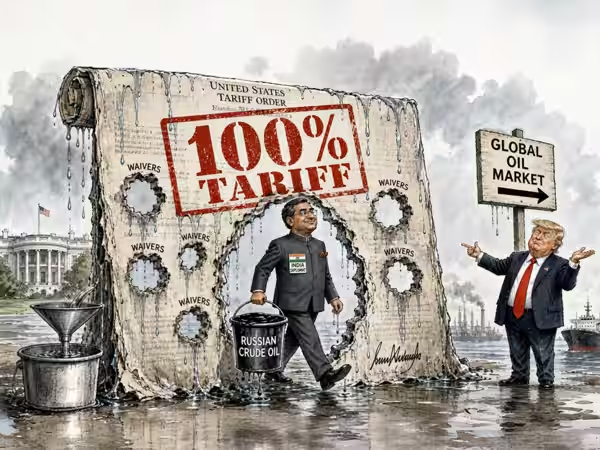
The latest US move against countries buying Russian oil puts India in an uncomfortable position. Washington is considering tariffs of up to 100% on countries that continue purchasing Russian energy, while India’s refiners remain among the biggest buyers of Russian crude.
But here is why the timing matters. The world is already dealing with a far more complicated energy problem, where wars, sanctions, shipping disruptions and geopolitical alliances are making the supply of oil and gas increasingly difficult to predict.
The US House has advanced legislation that would give Donald Trump sweeping authority to impose additional tariffs on countries continuing to buy Russian oil and gas. The Senate had already passed its version of the Russia sanctions bill with an overwhelming 86-11 vote. The House version goes further by explicitly identifying India and China, among others, as potential targets.
For India, this creates an awkward equation.
Russian crude became important not because India suddenly developed a political preference for Moscow’s oil, but because discounted Russian barrels offered refiners an economically attractive source of crude after Western sanctions disrupted Russia’s traditional export markets. Indian refiners could buy the crude, process it domestically and export refined products while benefiting from the price differential.
Now Washington wants to make that equation considerably more expensive. But there is a problem with looking at this purely through the Russia-India-US triangle.
What happens if the Russian barrels disappear?
They do not disappear from the planet. They simply have to find another buyer. And the barrels that India stops buying have to be replaced by barrels from somewhere else.
That is where the real problem begins.
India would suddenly be competing for alternative crude with China, European buyers, Asian refiners and other countries already scrambling to secure supplies disrupted by the Middle East crisis.
Saudi Arabia, Iraq, the UAE, the United States, Brazil, Guyana and potentially Venezuela can all supply additional crude, but production capacity, refinery compatibility, shipping routes and infrastructure determine how quickly those alternatives can actually reach the market.
At the same time, the Middle East has introduced another layer of uncertainty. The region is not merely an important source of crude. It sits astride some of the world’s most important energy shipping routes, including the Strait of Hormuz, through which enormous volumes of oil and LNG move.
That means an oil market can be adequately supplied on paper and still experience a physical shortage in the places that need the barrels most.
And this is why the word “predictable” matters.
The global energy market is not necessarily running out of oil. It is running into a world where knowing which barrel will be available, where it will come from, what route it will take and what it will cost is becoming much harder.
For India, that distinction could become expensive. Because the Russian oil question is no longer simply about whether New Delhi can continue buying from Moscow.
It is about whether the world can continue finding enough reliable, affordable and politically accessible energy when several of its biggest suppliers and consumers are becoming entangled in the same geopolitical fight.
Why Russian Oil Became So Important To India
The easiest way to understand India’s dilemma is to look at what happened after Russia invaded Ukraine in February 2022. Western sanctions and a growing list of restrictions pushed Russian crude away from many of its traditional European buyers. India, meanwhile, saw an opportunity that was difficult for an energy-hungry economy to ignore.
Russian crude began arriving at Indian ports at increasingly attractive discounts.
For Indian refiners, the calculation was straightforward. Crude is their primary raw material, and lower input costs can improve refining margins. India could purchase Russian barrels, process them in some of the world’s largest and most sophisticated refineries, and turn them into products such as diesel, petrol and aviation fuel.
The arrangement also suited Russia.
Moscow needed buyers willing to take its crude as Western markets became increasingly difficult to access. India and China emerged as two of the most important destinations, helping Russian oil remain part of the global market despite sanctions.
This is where the politics gets complicated.
India has consistently argued that its crude purchases are driven by energy security and commercial considerations. From New Delhi’s perspective, refusing discounted Russian oil would not eliminate India’s energy requirements. It would simply force Indian refiners to source those barrels elsewhere, potentially at a higher cost.
And India cannot simply switch suppliers overnight.
Different refineries are designed to process different combinations of crude grades. Shipping distances matter. Freight and insurance costs matter. Long-term contracts matter. Refinery margins matter. So does the availability of replacement barrels at the precise moment they are needed.
That is why the Russian oil trade became more than a temporary bargain. It became part of India’s energy procurement system.
The scale of that shift is now significant enough that Washington’s attempt to pressure Russia through its customers has a direct consequence for India. If buying Russian crude potentially attracts punitive US tariffs, the economic calculation changes from “How cheap is Russian oil?” to “How much will it cost India to keep buying it?”
But there is another question that is even more important.
If India reduces its Russian purchases, who supplies the replacement oil?
That question takes us out of Moscow and New Delhi and straight into the Middle East. Because the obvious alternative suppliers are already dealing with a world in which oil, gas, shipping capacity and refining products are under pressure from multiple directions.
And that is where Iran enters the equation.

China Is The Other Problem For India
India’s Russian oil dilemma cannot be understood without looking at China.
The two countries are among the world’s largest crude importers, and both have taken advantage of discounted Russian barrels since Western sanctions disrupted Moscow’s traditional energy trade. That means any attempt to push Russian crude out of the global market creates competition between two enormous buyers for the alternatives.
And China has something India does not have to the same degree: enormous strategic storage and a willingness to buy when prices are attractive.
Chinese refiners have been building inventories and adjusting refinery runs as the global market has become more volatile. When Beijing decides to increase purchases, it does not merely affect Chinese supply security. It can change the availability and price of cargoes for buyers across Asia.
This creates an interesting problem for India. Suppose Washington succeeds in persuading New Delhi to reduce its Russian crude purchases.
India then needs replacement barrels. But China is looking for energy security too. Europe is competing for LNG. Japan and South Korea remain major energy importers. And Middle Eastern producers are dealing with their own geopolitical risks.
The result is a market where India cannot assume that every Russian barrel it gives up will simply be replaced by an equivalent barrel at the same price.
There is another complication.
Russia itself is not necessarily going to stop selling.
If India reduces purchases because of American pressure, Moscow can redirect more crude towards China or other buyers willing to take it. That means sanctions aimed at reducing Russian energy revenues can produce a more complicated redistribution of global oil flows rather than simply removing Russian oil from the market.
This is why the proposed US tariff mechanism is potentially much more consequential than the headline number suggests – consumers will ultimately absorb some combination of the additional costs.
The irony is that the more fragmented the market becomes, the more valuable flexibility becomes.
A country that can buy from Russia, the Middle East, Africa, Latin America and the United States has more options than one dependent on a single supplier. A refinery capable of processing a wide range of crude grades has more flexibility than one designed around a narrow crude mix.
That is gradually becoming India’s larger strategic challenge. India does not simply need more oil. It needs more choices. And that is precisely why the battle over Venezuela, Iranian oil, Russian crude and Middle Eastern supplies is ultimately connected.
The question is no longer just who produces the next barrel; it is who has enough options to decide where that barrel comes from.

The United States Has An Energy Problem Of Its Own
It is easy to view Washington as the country standing outside the energy crisis, using sanctions and tariffs to dictate what everyone else should buy. The reality is more complicated.
The United States is one of the world’s biggest oil producers, but that does not make it immune to disruptions in global crude and refined-product markets. American consumers still feel changes in international oil prices, while refiners have to deal with their own capacity constraints, crude requirements and regional supply disruptions.
This becomes particularly important when gasoline prices rise. The political consequences of expensive fuel are immediate because consumers encounter them every time they fill their cars. That gives the Trump administration a reason to care about global oil flows even when the United States can produce enormous quantities of crude domestically.
The refining side of the equation is especially important. A country can have plenty of crude underground and still face pressure in the fuel market if refining capacity is constrained. The White House has therefore been examining ways to increase US refining capacity as the energy market remains under pressure. Reuters reported that the administration was considering using the Defense Production Act to encourage additional refining capacity, with US refineries already operating at very high utilisation rates.
That helps explain another part of Washington’s energy strategy. The United States is not simply trying to restrict Russian and Iranian energy revenues. It is also trying to ensure that alternative sources of oil remain available and that enough refining capacity exists to turn crude into the fuels consumers actually use.
This makes Venezuela particularly interesting. Its enormous reserves potentially offer another source of heavy crude for the global market and, importantly for Washington, one located in the Western Hemisphere rather than in a region exposed to the Strait of Hormuz.
The American calculation therefore extends beyond sanctions. It is increasingly about securing access to energy from sources that Washington can influence more directly while limiting the ability of geopolitical rivals to use energy revenues as a source of power.
That does not mean every American energy decision is part of one coordinated plan. But the overlap is becoming difficult to ignore. Russia, Iran, Venezuela, Middle Eastern supply routes and US refining capacity are now appearing in the same energy conversation.
And for India, that creates a particularly difficult question: what happens when Washington’s energy strategy conflicts with India’s cheapest available source of crude?
India Cannot Treat This As Just Another Trade Dispute
For New Delhi, the biggest danger is that the Russian oil issue becomes entangled with the broader India-US trade relationship. The two countries are already negotiating a trade agreement, meaning tariffs linked to Russian energy could potentially complicate discussions that extend far beyond oil.
India has repeatedly maintained that its energy purchases are driven by national requirements and commercial considerations. That position becomes more important when the alternative is not a guaranteed supply of equally priced crude, but a scramble for replacement barrels in an already volatile market.
If Indian refiners reduce Russian purchases, the immediate impact would depend on how quickly alternative supplies can be secured and at what cost. India can buy more crude from the Middle East, the United States, Africa and Latin America, but every additional source comes with different freight costs, crude characteristics, contractual arrangements and refining economics.
There is also the question of domestic prices. India’s fuel market does not automatically mirror every movement in international crude prices because taxation, pricing policy, refining margins and other factors influence what consumers ultimately pay. But sustained increases in the country’s crude import bill would still put pressure on the broader economy.
India imports the overwhelming majority of the crude it consumes. That makes energy security inseparable from economic security. A more expensive oil basket can affect the trade deficit, the rupee, inflation and the cost of transporting goods across the country.
The problem becomes even larger when oil is viewed together with gas. India also depends on imported LNG and LPG, while fertiliser production, petrochemicals, aviation and several industrial sectors remain closely connected to international energy prices.
So Washington’s pressure on Russian oil is not simply asking India to change one supplier. It is effectively asking India to reconsider part of the system through which it manages one of its largest and most strategically important import requirements.
And that is why the answer cannot be separated from what is happening in the Middle East.
The Next Barrel Is Becoming More Valuable Than The Last One
The most important change taking place in the global energy market may be the growing value of flexibility. For years, the central question was often how much oil the world had and whether production could keep up with demand. Today, an equally important question is whether that oil can actually reach the country that needs it.
A barrel trapped behind sanctions is not equivalent to a barrel that can be freely traded. A barrel sitting in a producing country is not immediately useful if shipping routes are disrupted. And a crude cargo that reaches a refinery is of limited value if the refinery cannot process that particular grade efficiently.
This is why geopolitical geography has become so important.
The Strait of Hormuz matters because of what passes through it. Russian export routes matter because of the volume of crude they carry. The Suez Canal matters because of how quickly cargoes can move between markets. Venezuela matters because of the scale of its reserves and its proximity to the Western Hemisphere. US Gulf Coast refineries matter because they can process particular grades of crude and supply one of the world’s largest fuel markets.
Control does not necessarily mean ownership. It can mean the ability to influence access, transportation, investment, financing or sanctions.
That is also why the energy market can remain tight even when the world has sufficient resources underground. What matters during a crisis is not geological abundance but usable supply.
For India, this is particularly significant. The country’s long-term energy strategy cannot depend entirely on finding the cheapest barrel available at any given moment. It needs multiple suppliers, diversified shipping routes, sufficient refining flexibility and enough strategic reserves to withstand temporary disruptions.
The same principle applies to Europe, China and the United States.
The countries with the greatest ability to switch suppliers, access different grades of crude and secure transportation will have greater protection when the next disruption arrives.
And the next disruption is precisely what markets are now beginning to price in.
Europe, India And China Are Competing For The Same Energy
The global energy problem becomes particularly difficult because the major importers cannot solve their problems independently. When one large buyer changes its purchasing pattern, other buyers feel the consequences.
If India reduces Russian crude purchases, it needs replacement barrels. If Europe needs additional LNG, it competes for cargoes that could otherwise move to Asia. If China increases purchases to build strategic inventories, available supplies for other buyers can tighten.
This creates a chain reaction.
A European buyer willing to pay more for LNG can pull cargoes away from Asia. An Asian refiner searching for Middle Eastern crude can compete with another refinery for the same shipment. A rise in demand from China can tighten the market for everyone else. And a disruption in the Middle East can amplify all of these pressures simultaneously.
This is why the current energy crisis cannot be understood simply by looking at production figures. The real issue is the competition for accessible supply.
Europe is trying to reduce its dependence on Russia without making its industries permanently uncompetitive. China is attempting to secure energy at favourable prices while maintaining large strategic buffers. India wants affordable energy to sustain economic growth while keeping its diplomatic relationships intact.
All three objectives are understandable. The difficulty is that they increasingly collide. And when supply is disrupted, the countries with the deepest pockets can often secure cargoes first, leaving poorer or more exposed economies to absorb higher prices.
That is one reason energy security has once again become a strategic issue rather than merely an economic one.
So Who Actually Benefits From A More Expensive Barrel?
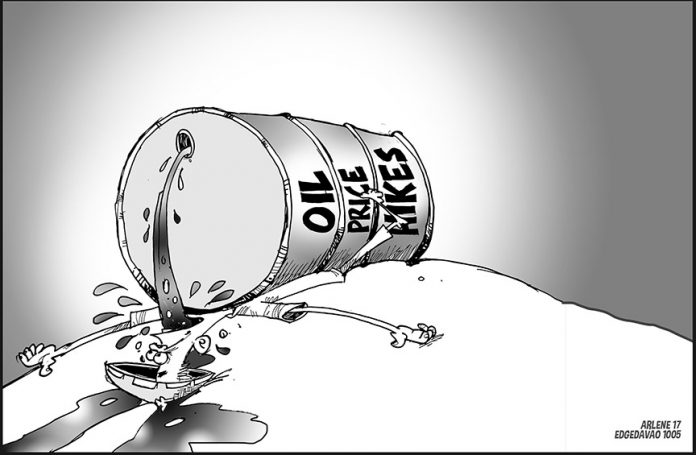
There are obvious potential beneficiaries when the global supply of accessible crude becomes tighter. Producers with spare capacity can gain greater bargaining power. Countries capable of increasing production can attract investment. Oil companies can benefit from higher prices, while exporters with large reserves can suddenly find previously marginal projects becoming commercially attractive.
Saudi Arabia, the UAE, the United States, Brazil, Guyana and potentially Venezuela therefore become increasingly important whenever Russian or Iranian barrels become harder to access.
But there is a limit to how much producers can benefit from a permanently unstable market.
If prices rise too far, consumers reduce consumption. Airlines cut capacity, manufacturers look for alternatives, motorists drive less and governments intervene to contain inflation. High prices can eventually destroy demand.
That creates a strange balance.
Producers want prices high enough to make investment profitable, but not so high that they trigger a collapse in demand. Importing countries want prices low enough to protect consumers, but supply security often requires paying a premium for reliable barrels.
And sitting between these interests are traders, shipping companies, refiners and governments, all trying to determine where the next disruption will occur.
That is why the phrase “the next barrel” matters.
The next barrel of oil that can actually be delivered may command far greater strategic value than the barrel sitting underground.
The Last Bit, The Russian Oil Fight Is Really About The Future Of Energy Security
The proposed US tariffs on countries buying Russian oil therefore represent only one part of a much larger transformation.
Russia is trying to preserve access to international energy markets. The United States is using sanctions and trade measures to put pressure on countries supporting Moscow’s energy revenues. India is trying to protect access to affordable crude without damaging its relationship with Washington. China is securing supplies and building resilience. Europe is attempting to replace Russian energy while managing the cost of doing so.
Meanwhile, Iran remains central to the Middle Eastern energy equation, Venezuela has suddenly become strategically important to Washington, and Gulf producers have gained greater importance as buyers search for alternatives.
None of this guarantees that one country will emerge as the permanent winner. It does, however, reveal something important about the next phase of global energy competition.
The countries that control the largest reserves will matter. But so will the countries that control refineries, shipping routes, storage facilities, pipelines, LNG terminals and access to capital.
Energy security is therefore becoming less about owning one giant oil field and more about controlling enough of the chain to keep energy moving when geopolitics gets in the way.
For India, that may ultimately be the most important lesson from the Russian oil dispute.
The question is not simply whether New Delhi continues buying Russian crude. It is whether India can build an energy system in which losing any one supplier, route or geopolitical relationship does not leave the economy exposed.
Because in the new energy market, the most valuable resource may not be oil itself – it may be choice.