If Betting Ads Are Banned In India, How Did They End Up On Zepto? The Questions ED’s Probe Could Force The Industry To Answer
India has spent years cracking down on offshore betting platforms and repeatedly warning against their promotion. Yet advertisements linked to banned betting operator Parimatch allegedly surfaced on quick-commerce platform Zepto, drawing the attention of the Enforcement Directorate. While the company maintains the campaign was routed through a third-party agency, the controversy raises a larger question: have betting operators discovered a new route to reach Indian consumers?

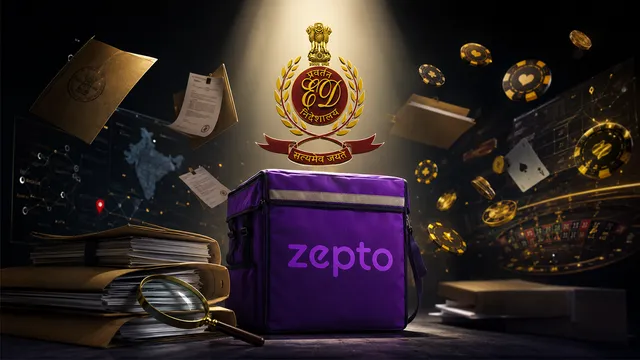
Quick commerce major Zepto has pressed ahead with its stock market debut, filing updated draft papers for an initial public offering comprising a fresh issue of ₹8,010 crore and an offer-for-sale by existing shareholders. The company intends to deploy the proceeds towards expanding its dark store network, investing in subsidiaries and pursuing inorganic growth opportunities.
The IPO filing comes at a time when investor sentiment towards loss-making startups remains cautious. While several consumer internet companies have either delayed or recalibrated their listing plans amid valuation concerns, Zepto has chosen to move forward despite reporting a wider loss in FY26.
According to its updated draft red herring prospectus (DRHP), the company’s consolidated net loss widened 26 per cent year-on-year to ₹5,905.2 crore in FY26 from ₹4,695.4 crore in the previous financial year. However, operating revenue more than doubled during the same period, rising to ₹22,623.6 crore from ₹11,109.9 crore a year earlier.
The company generated ₹17,587.9 crore from the sale of goods, while revenue from services, including warehousing, packaging, last-mile delivery, platform services, subscriptions, advertising, licensing and franchise fees, stood at ₹5,022 crore. Total income for the year reached ₹23,128.4 crore.
While losses remained elevated, Zepto reported improvements in operational efficiency. Its adjusted EBITDA loss per order improved to ₹78.75 in FY26 from ₹136.15 in FY25. During the fourth quarter, operating revenue rose to ₹7,497.6 crore, while net loss narrowed sequentially to ₹1,538.7 crore.
Alongside its financial disclosures, Zepto also flagged an ongoing regulatory matter in its IPO documents. The company disclosed that the ED had issued summons to founders Aadit Palicha and Kaivalya Vohra in April under the Foreign Exchange Management Act (FEMA), seeking information relating to foreign investments, financial statements, shareholding structures, loans, guarantees, tax filings and other aspects of the company’s operations. Zepto identified the matter as a potential risk factor for prospective investors.
How Zepto Found Itself In The ED’s Parimatch Investigation
Even as Zepto prepares for its stock market debut, the company has found itself under the spotlight – the ED recently sought information as part of its wider investigation into Parimatch, a Cyprus-based online betting platform that has been under the scanner of Indian authorities for alleged money laundering and illegal betting operations.
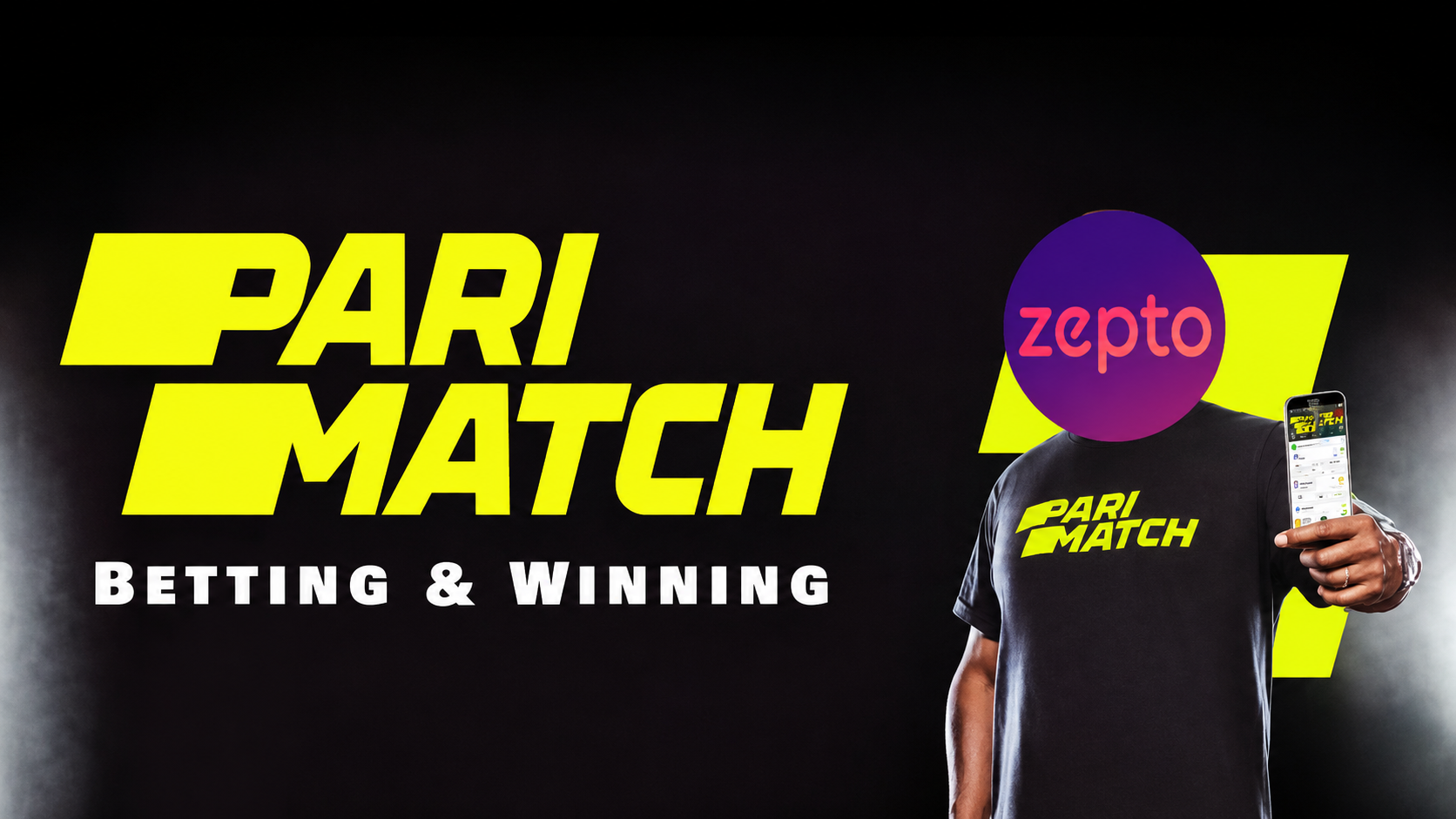
According to reports, the ED found that advertisements linked to Parimatch appeared on Zepto’s app and that promotional flyers associated with the betting platform were allegedly circulated alongside customer deliveries. Investigators reportedly sought details from the company on whether any verification or due diligence was conducted before the advertising campaign was allowed to run.
The scrutiny stems from a broader investigation into Parimatch’s operations in India. The ED has alleged that the betting platform generated thousands of crores through its activities in the country and relied on a network of mule accounts, front entities and informal channels to move funds. The agency has also accused the platform of using surrogate advertising methods under names such as “Parimatch Sports” and “Parimatch News” to build brand visibility despite restrictions on betting-related promotions.
Zepto, however, has denied any direct involvement with the betting platform. In its response, the company said the advertisement in question was placed in March 2025 through a third-party media agency arrangement and that it neither onboarded nor managed the advertiser. The company further stated that it had no role in betting, gaming, payment processing, user acquisition or any operational activities connected to the entity under investigation.
According to Zepto, it fully cooperated with the ED, shared all information available with the company and connected investigating officials with the external agency that handled the campaign. Sources familiar with the matter have also maintained that information was sought through email communication and that no company executive was formally summoned in connection with the Parimatch advertising issue.
While the company has sought to distance itself from the controversy, the episode has nevertheless drawn attention because it touches upon a much larger debate surrounding platform responsibility, advertiser verification and the continued visibility of betting-related promotions in India despite repeated regulatory warnings.

The Bigger Question: If Betting Advertisements Are Prohibited, How Do They Keep Reaching Consumers?
The controversy surrounding Zepto is not merely about whether a particular advertisement appeared on a particular platform. It also raises a more fundamental question: if India’s regulators have spent years cracking down on online betting platforms and repeatedly warning against their promotion, how do such advertisements continue to find their way to consumers?
Over the past few years, the Ministry of Information and Broadcasting (MIB) has issued multiple advisories cautioning broadcasters, publishers, digital media platforms and online intermediaries against carrying advertisements related to betting and gambling websites. Authorities have also repeatedly warned against surrogate advertising, where betting operators promote themselves through seemingly unrelated products, services or content offerings in order to circumvent restrictions.
At the same time, enforcement agencies have continued to target offshore betting operators accused of illegally soliciting Indian users. Websites have been blocked, payment channels disrupted and investigations launched into entities allegedly facilitating such operations.
Yet despite these measures, advertisements linked to betting platforms continue to surface with surprising regularity. This is what makes the questions being posed to Zepto particularly significant. The issue is not confined to whether one company carried a prohibited advertisement. Rather, it concerns the effectiveness of the broader regulatory framework itself.
If betting-related promotions are still reaching millions of consumers, regulators may be forced to ask whether existing enforcement mechanisms are keeping pace with the evolving ways in which digital advertising is bought, sold and distributed.
The answers could have implications far beyond a single quick-commerce platform. They could determine whether responsibility for preventing prohibited advertisements rests solely with advertisers and agencies, or whether the platforms carrying those advertisements must also shoulder a greater share of the burden.

Can Platforms Outsource Responsibility Along With Advertising?
At the heart of the Zepto-Parimatch controversy lies a question that regulators, companies and consumers may increasingly find difficult to ignore: can a platform escape responsibility for a prohibited advertisement simply because it was placed through a third-party agency?
Zepto has maintained that the advertisement was managed externally and that it neither onboarded nor directly contracted with the advertiser. The company has also stated that it had no involvement in the betting platform’s operations and fully cooperated with investigators. However, the episode raises broader questions that extend beyond the specifics of one campaign.
For instance, what level of due diligence should platforms be expected to conduct before allowing advertisements to appear on their apps, websites or physical delivery channels? Should responsibility end once an advertisement is sourced through an agency, or should platforms independently verify the identity and business activities of the entities ultimately benefiting from the campaign?
These questions become particularly relevant in sectors where regulatory restrictions are already well known. Betting advertisements have been the subject of repeated government advisories and enforcement actions.
Thus, if an advertiser operates in a category that is under heightened regulatory scrutiny, should platforms be expected to apply additional checks before approving campaigns?
The issue is not unique to quick commerce. Television broadcasters, digital publishers and social media platforms have all faced questions in the past regarding the advertisements they carry. In many cases, regulators have argued that platforms cannot simply act as passive conduits when the content being promoted may violate existing rules or advisories.
This is perhaps what makes the ED’s inquiry noteworthy. Beyond the specifics of Parimatch or Zepto, the investigation appears to touch upon a larger principle: where does liability begin and end in the digital advertising chain? Is responsibility borne solely by the advertiser? Does it rest with the agency that booked the campaign? Or do platforms that provide the advertising inventory also have a duty to ensure that prohibited promotions do not reach consumers?
The answers may ultimately shape not only how quick-commerce companies approach advertising partnerships in the future, but also how regulators view platform accountability in an increasingly fragmented digital marketplace.
Have Quick-Commerce Apps Become The New Advertising Frontier For Betting Platforms?
Regulators have focused their attention on the traditional channels through which betting operators reached consumers. Television advertisements, sports sponsorships, websites, influencer promotions and social media campaigns have all come under scrutiny as authorities attempted to curb the visibility of offshore betting platforms in India.
However, the rapid rise of quick-commerce platforms may have created an entirely new advertising channel that was scarcely contemplated when many of the original advisories were issued.
Unlike traditional digital platforms, quick-commerce companies interact with consumers at multiple touchpoints. Advertisements can appear within apps, during the ordering process, on promotional banners, through notifications and even in the form of physical flyers delivered alongside customer purchases. Collectively, these touchpoints offer advertisers direct access to millions of consumers on a daily basis.
This is where the Zepto episode becomes particularly relevant. The question is not merely whether an advertisement linked to Parimatch appeared on one platform. Rather, it is whether betting operators have identified quick-commerce networks as an effective way to maintain visibility despite increasing restrictions elsewhere.
If that proves to be the case, regulators may find themselves confronting a challenge that extends beyond a single investigation. The framework governing betting advertisements was largely developed with broadcasters, publishers, websites and social media platforms in mind.
The explosive growth of quick commerce has introduced a new category of advertising intermediary that combines digital reach with physical delivery infrastructure.
As India’s digital economy continues to evolve, regulators may increasingly be forced to look beyond conventional advertising platforms. The concern is not whether quick-commerce companies are intentionally facilitating such campaigns, but whether emerging consumer platforms have inadvertently become attractive gateways for entities that are finding it harder to advertise through traditional channels.

The Questions Zepto – And The Industry – May Need To Answer
As the investigation unfolds, the issue may ultimately boil down to a series of straightforward but important questions.
For Zepto, the first question is whether adequate checks were conducted before the advertisements appeared on its platform and through its delivery network.
The second question relates to responsibility. If an advertisement is booked through a third-party media agency, does the platform’s obligation end there, or does it retain an independent duty to ensure that prohibited promotions do not reach consumers? In an increasingly complex advertising ecosystem, this distinction could prove critical.
The controversy also raises questions for the wider quick-commerce industry.
Therefore, the ED’s inquiry into advertisements linked to Parimatch may eventually determine whether any laws or regulations were breached, but the larger significance of the episode lies elsewhere.
It has brought renewed attention to a question that regulators, platforms and advertisers can no longer afford to ignore: are India’s existing safeguards against betting promotions keeping pace with the rapidly evolving digital economy?