Indira Jaising calls sexual harassment judiciary’s ‘dirty secret’
It Reminds The Famous Case Of Ex CJI Ranjan Gogoi & How It Tarnishes The Reputation of Judiciary In Eyes Of Common Man

An investigative opinion on sexual harassment, hierarchy and the Indian judiciary’s talent for burying its own women
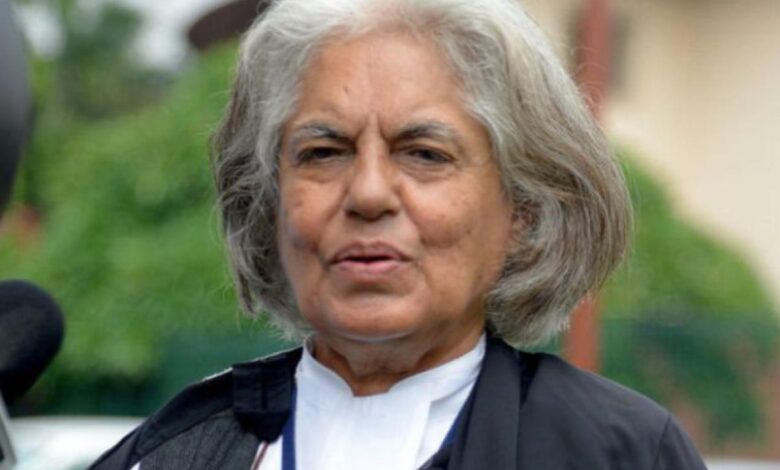
On the last day of August 2026, in a memorial lecture titled with the usual pious futility — My Vision of India: 2047 A.D. — Senior Advocate Indira Jaising said out loud what the robes have spent a generation calling “in-house.” Sexual harassment, she said, is “the dirty secret of the judiciary of India.” Women judges had come to her. Male judges were the subject of the complaints. Nobody wanted to talk.
She then told the story the institution has been circling since 2014. A woman District Judge, her client, was asked to line up with other women district judges in matching sarees and throw flowers at male judges walking into a dining room when a High Court judge retired. The same woman, Jaising said, was told to attend a High Court judge’s twenty-fifth wedding anniversary and dance to an “item number.” She refused. She lost her job.
Former Delhi High Court Chief Justice S. Muralidhar, speaking from the same podium, did not contradict her. He said women judges face sexual innuendo and harassment from senior male colleagues, and that the judiciary’s manners are still feudal.
The newspapers did what newspapers do. Some printed the quote and went home. Some, to their credit, opened the file. The file is uglier than the quote, and more precise. It does not give Jaising a courtroom victory on the sex charge. It gives the Republic something worse: a working demonstration of how this institution protects itself.
I. The dance that was “not proved” — and the exile that was
The anecdote is not folklore. It is Ms. X v. Registrar General, High Court of Madhya Pradesh, and the High Court judge in the dock of that story was Justice S.K. Gangele.
The woman was not a clerk fetching tea. She was an Additional District and Sessions Judge, recruited in 2011 after fifteen years at the Bar, second on the merit list, posted at Gwalior, later president of the District Vishaka Committee, assigned rape, gang rape and murder-with-rape. Her second ACR, assessed in January 2014 and endorsed by the same portfolio judge who would become the respondent, graded her “very good.”
Then came December 2013. She alleged that the wife of the Gwalior Chief Judicial Magistrate called her and said Justice Gangele wanted her to dance to an item song at a ladies’ sangeet. She declined. She attended the main anniversary on 11 December with her two daughters. She alleged remarks about her appearance and about wanting to see her dance; later messages; requests to meet; further incidents at another officer’s wedding in February 2014 and at a High Court farewell in April 2014. Justice Gangele denied the lot.
On 7 July 2014 the Transfer Committee moved her from Gwalior to Sidhi. The order reached her on 8 July. She asked for eight months so her daughter could finish Class 12. Refused. She asked for Sehore, Raisen, Dewas or Ujjain. Refused. On 15 July she resigned. On 17 July the State accepted it. Two days. That is the speed at which a High Court can end a woman who has become inconvenient.
Fifty-eight Members of Parliament signed a Rajya Sabha motion. The Judges Inquiry Committee — Justice R. Banumathi, Justice Manjula Chellur, senior advocate K.K. Venugopal — reported in December 2017. Charge of sexual harassment: not proved beyond reasonable doubt. The four specified incidents, including the anniversary, failed that standard. The same committee found her mid-session transfer not justified, said the High Court had shown “lack of a human face,” and recommended she be taken back if she wished. Rajya Sabha cleared Gangele. Impeachment died.
In February 2022, Justices L. Nageswara Rao and B.R. Gavai held that the resignation “cannot be construed to be voluntary.” They restored her with continuity of service and no back wages. Jaising appeared for her. The Supreme Court did not retry the sex allegation. By then she was no longer pressing it. The Court restored the officer the High Court had squeezed out, and left the man in the robe where the parliamentary committee had left him.
Read that twice. The institution would not say he demanded a dance. It would say, years later, that the woman who refused him was hounded out of the service. That is not a clean chit. That is a split verdict written to save the robe.
Jaising’s 2026 sentence — she resisted, “for which she lost her job” — is her client’s causation. It is not the committee’s finding on sex. It is, however, the only causation that makes sense of a “very good” officer being hurled across the State in a week. The Court itself, in 2022, smelled something. Justice Gavai wrote that the “breakneck speed” of events gave rise to a suspicion that there was “something more than which meets the eye.” Suspicion, of course, is all a woman is usually allowed.
II. The Chief Justice who heard himself
If Gwalior is the district-court version of the secret, April 2019 is the version in which the accused is the Chief Justice of India.
On 19 April 2019 a former junior court assistant, in service from May 2014 to December 2018, sent an affidavit to twenty-two Supreme Court judges. She alleged that Ranjan Gogoi, then CJI, subjected her to unwanted physical and sexual contact in his residence office on 10 and 11 October 2018 — a hand on the head and down the back on the first day; hands held, body pressed, a demand and a warning on the second. She alleged that after she resisted, the machine moved: transfers, a memorandum, suspension on 27 November, dismissal on 21 December; her husband and a relative in Delhi Police suspended; a disabled brother-in-law’s temporary Supreme Court job ended; a January 2019 episode at the residence in which she said she was made to apologise; a cheating FIR on 3 March 2019, arrest, custody, bail. The Registry called the affidavit “completely and absolutely false and scurrilous.” Gogoi denied it.
The next morning the Supreme Court sat in a matter of “great public importance touching the independence of the judiciary.” Gogoi sat. He spoke of “bigger forces.” The complainant was not noticed and not heard. The signed order named Justices Arun Mishra and Sanjiv Khanna and not the man who had just denied the complaint from the bench. No evidence was taken. The media was told to behave.
That sitting is not an allegation. It is an order of the Court. Years later Gogoi allowed that, “in retrospect,” his participation “might not have been correct.” Procedure, he meant. Not October.
Then the in-house committee: Justices S.A. Bobde, N.V. Ramana and Indira Banerjee. She objected to Ramana; he recused; Indu Malhotra replaced him. She appeared on 26, 29 and 30 April. She asked what law they were applying — POSH, Vishaka, the 1999 in-house procedure, or a private invention. She asked for a lawyer, a support person, a recording, copies of her own statements, call records, WhatsApp. She said the room was three Supreme Court judges and no armour. On 30 April she walked out. The committee continued without her, heard Gogoi on 1 May, and on 6 May the Court announced “no substance.”
The report was not published. She was not given a copy. The Court cited Indira Jaising v. Supreme Court of India (2003) — the same Jaising, the same Court — to keep the reasons in the vault. Former Supreme Court Justice Madan Lokur later asked whether the mandate even reached the retaliation narrative, or only the alleged touching. Nobody can answer. The paper is locked.
A parallel circus, the Utsav Bains “conspiracy,” was sent to retired Justice A.K. Patnaik with an express instruction: do not inquire into the alleged misconduct of the Chief Justice. In February 2021 the Court closed that file. Bains’s specific story was not corroborated. Some electronic traces were gone, so a conspiracy could not be wholly ruled out. That order did not clear Gogoi of sexual harassment, because it was forbidden to ask. Anyone who says otherwise is laundering a jurisdictional fence into an acquittal.
Then the quiet restorations. Family police suspensions lifted around June 2019. The cheating case closed in September 2019 when the original complainant lost interest. The woman herself was reportedly taken back into the Supreme Court establishment in January 2020, arrears cleared, then leave. No published reasons tied any of this to the truth of October 2018. Pegasus-project reporting in 2021 put her numbers and her family’s numbers on a selection list around the scandal. Presence on a list is not a tap, and it is not Gogoi’s signature. It is another file that ends in fog.
So the accurate sentence, the only one a newspaper is entitled to print as fact, is this: a former employee swore that the Chief Justice of India put his hands on her; the Court put him on the first bench; three of his colleagues, in a proceeding she abandoned as unfair, declared “no substance” in a report nobody is allowed to read. That is not justice. That is a vanishing act performed in a black coat.
III. The intern, the hotel, and the Full Court that shrugged
The Court has done this before. It has even found something — and then discovered it had no further “follow-up.”
On the evening of 24 December 2012, between about 8.00 and 10.30 p.m., a law intern went to Room service of history at Hotel Le Meridien, Delhi, where retired Supreme Court judge A.K. Ganguly was staying “to assist him in his work.” He did not deny she was there. In November 2013 she wrote it. A three-judge Supreme Court committee read her statement, the affidavits of three witnesses, and Ganguly’s account, and held that her statement prima facie disclosed “unwelcome verbal/non-verbal conduct of sexual nature.”
The Full Court met. Its answer deserves to be carved on the building. The intern was not on the Supreme Court’s rolls. The judge had already demitted office on the date of the incident. “No further follow up action is required by this Court.” Representations against former judges, the Full Court added, “are not entertainable by the administration of the Supreme Court.”
Prima facie unwelcome sexual conduct. Then a jurisdictional shrug. Ganguly left the West Bengal Human Rights Commission under public heat. The intern got a copy of the report. The Republic got a precedent: even when the Court’s own judges say the conduct is there, retirement is an eject button.
Almost immediately another intern alleged that Justice Swatanter Kumar, while still a sitting Supreme Court judge in May 2011, had subjected her to unwelcome physical contact and a quid-pro-quo suggestion during an internship. The allegations surfaced after he had gone to the National Green Tribunal. He called them false and went to the Delhi High Court to muzzle the press. The Supreme Court issued notice on her writ and said it was “inclined to consider” a mechanism for sitting and retired judges, because none existed. Amicus were appointed. The Court was careful to say it was expressing no opinion on the allegations. The mechanism the intern actually needed — a public, reasoned inquiry into a sitting judge who had since put on another constitutional hat — did not arrive as a verdict on her complaint.
Two interns. Two former Supreme Court judges. One prima facie finding and a closed door. One notice and a meditation on “mechanism.” The women were young. The men had already risen. That is the only mechanism that has ever worked without interruption.
IV. When the accused is junior enough, the Court can suddenly remember how to sack a man
Do not say the judiciary cannot act. It can. It acts when the man is not a High Court judge and not a Chief Justice.
In January 2016 the Karnataka High Court dismissed District Judge A.N. Hakeem, then 57, posted at Belagavi. The inquiry found he made women employees watch pornographic videos and photographs on his official laptop. An anonymous letter reached the Chief Justice on 1 November 2011. A woman employee complained on 8 November. The vigilance cell moved. The inquiry report came in July 2015. The Full Court voted in November. Dismissal on 22 January 2016. Four years, but a result. The inquiry authority cited Vishaka and Apparel Export Promotion Council v. A.K. Chopra and said a district judge enjoys “unquestionable trust.” That trust, for once, was treated as a reason to remove him, not a reason to hide him.
Hold Hakeem next to Gangele and Gogoi and watch the caste system of accountability. A district judge who plays pornography at women can be dismissed by his High Court. A High Court judge accused by a district judge is walked through Parliament at the standard of proof beyond reasonable doubt and left standing. A Chief Justice accused by a staffer is investigated by his own Court, in secret, after sitting on his own case. The law is not blind. The law is taller when the accused is taller.
Gujarat offered the other trick. A woman advocate alleged sexual harassment in a Rajkot courtroom by senior civil judge Girishkumar Soni in 2012. The High Court years later quashed its own probe: delay, no written complaint as later POSH and GSICC rules required, guidelines issued after the oral complaint. The woman spoke. The rules arrived late. The judge kept the service.
Calcutta, in 2025, still had to put on its website a sexual-harassment committee born in 2010. Article 14’s reporting found the High Court committee barely used, barely publicised; twenty of twenty-three district courts silent on whether their Internal Complaints Committees even existed in a form a woman lawyer could find. Three complaints known by May 2022: one ended in an apology. That is not a justice system. That is a suggestion box with a lock.
V. The numbers the robes do not read in open court
A dirty secret needs a room in which it can live. The Indian higher judiciary is that room, and the occupancy is male.
As of early 2026, official figures put one woman among 33 Supreme Court judges — 3 per cent. Across 25 High Courts, 116 women of 781 sitting judges — 14.85 per cent. Three High Courts — Manipur, Tripura, Uttarakhand — have had stretches with no woman on the bench at all. Allahabad, with a working strength around 110, has been down to a handful. Punjab and Haryana leads among the large courts and still does not break 30 per cent.
By mid-2026 the Supreme Court had two women after Justice V. Mohana’s appointment from the Bar; High Court women still hovered at 111 of 781, 14 per cent, a figure Supreme Court Observer noted had not moved in two years. In the Court’s entire history, women have been a rounding error of all appointments — on one count, eleven of roughly 280, under 4 per cent. India has never had a woman Chief Justice. Justice B.V. Nagarathna’s expected turn in 2027 has been measured in days, not years.
Climb down the pyramid and the story changes, which is the point. District and subordinate courts: about 7,852 women, 38 per cent of working strength as of February 2025, on a sanctioned cadre of 25,886. Delhi’s lower courts have been reported near 44 per cent. Women enter where there is an examination. They thin out where there is a collegium.
Jaising has been saying this for years: law schools fill with women; the peak does not. A woman she once represented asked why her Supreme Court appeal could not go before a woman judge. Because there wasn’t one. The same Court had told every employer in India that a sexual-harassment committee must be headed by a woman. The Court, she noted, did not apply that sentence to itself.
This is not “diversity.” This is the physical condition in which a junior woman judge, intern or staffer is asked to complain about a man who writes her ACR, sits on her transfer committee, or heads the Court that will appoint the committee that will judge him. Muralidhar called it feudal. The statistics call it a closed shop.
VI. The machine that replaced a trial
Trace the design. It is not an accident.
1995–99: C. Ravichandran Iyer and the in-house procedure. Complaints against High Court judges go up a ladder that begins inside the same brotherhood. The High Court Chief Justice has, the Supreme Court later said, only a “limited authority” to say whether a deeper probe is required. In the Madhya Pradesh matter the Supreme Court found the then Chief Justice had “travelled beyond” that authority by setting up his own two-judge committee. The lesson the institution took was not “protect the complainant.” It was “guard the procedure.”
2003: Indira Jaising v. Supreme Court of India. In-house reports are not to be made public. In 2019 that sentence became the bolt on the Gogoi file.
2013: POSH Act for the Republic. GSICC regulations for the Supreme Court. Committees on paper. The constitutional test, as advocate N.K. Goswami put it this week, is not whether a letterhead exists. It is whether a woman can walk through the door without offering her posting, her ACR, her reputation and her family’s police file as the fee.
1968: the Judges (Inquiry) Act. One hundred Lok Sabha members or fifty Rajya Sabha members to move impeachment. Then a committee. Then Parliament. No Indian judge has been removed by this route. Gangele is what the route looks like when sexual harassment is the charge: 58 signatures, years of process, “not proved beyond reasonable doubt,” transfer condemned, man uncleared of office. Criminal courts do not ask a raped woman to assemble a parliamentary majority before they register an FIR. Judges do.
20 April 2019: the accused as judge in his own cause, rebranded as “independence of the judiciary.”
This is why Jaising’s phrase is not poetry. A secret is not only an unproved assault. A secret is a system that can move a woman 500 kilometres in seventy-two hours, dismiss a staffer in eight weeks, sit the accused on the bench the morning after the affidavit, and then quote her own old case to lock the reasons in a drawer.
VII. Two voices, one robe
Vishaka (1997) told every workplace in India that sexual harassment violates Articles 14, 15, 19 and 21. Medha Kotwal Lele told them to obey. The POSH Act criminalised the employer’s shrug. High Courts lecture universities, factories, the Army, newsrooms, political parties. They have lectured the nation on constitutional morality until the phrase is a sedative.
Then a woman inside the courthouse speaks, and the voice drops to a whisper.
Ganguly: prima facie unwelcome sexual conduct — no further action, he had retired.
Gangele: sex charges not proved to the impeachment standard; the woman still had to wait until 2022 for a court to admit she had not resigned of her own free will.
Gogoi: “no substance,” unpublished, complainant gone from the room, first hearing conducted by the respondent.
Hakeem: dismissed. He was not a High Court judge.
That is the double register Goswami named. Stern for the ordinary employer. Soft when the accused occupies high judicial office. Independence was invented to keep the executive’s hands off the Court. It was not invented so that a District Judge could be turned into a dancer at a private anniversary, or so that a junior assistant’s body could become a matter of “bigger forces.”
Public confidence is not destroyed when a wrong is named. It is destroyed when the only people who can name it are the people who work for the man named. Jaising has represented “a lot” of women judges. That is not a census. It is more than the Court has ever published about itself. The Court publishes cause lists. It does not publish how many of its own women asked for protection and what became of them. Until it does, “dirty secret” is not rhetoric. It is the only accurate catalogue heading.
VIII. What 2047 will not save
Jaising ended her lecture with the Constitution. She told a Gen Z questioner that hope survives so long as the text cannot be rewritten by the party in power. She then listed delimitation, women’s reservation without a federal lock, one nation one election, symbols handed to rebel factions, the “magic number” for amendment. That is a different brief.
The brief that matters here is older and smaller and does not require 2047. It requires that a woman who wears the judicial robe, or types in the registry, or interns in a judge’s chambers, can complain about a man in a higher robe without being transferred, dismissed, arrested, or invited to dance.
The minimum is not mysterious. Independent inquiry. Decision-makers who do not eat lunch with the respondent. A lawyer in the room. A recording. Copies of her own words. Evidence seized before it evaporates. A ban on punitive transfer while the case lives. A reasoned outcome she is allowed to read. Review that is not a Full Court protecting its own. Confidentiality that hides her name, not the institution’s shame.
Until that exists, every sermon the Supreme Court delivers on gender justice is a performance in a building that will not apply the sermon to itself. The gravest contempt of court is not a tweet. It is a courthouse that teaches the country that the law has a stern voice for everyone except the man who sits on the law.
Jaising called it a dirty secret. She is late, and she is not wrong. The secret is not that men in robes have been accused. The secret is that when they are accused, India still does not get a trial. It gets a committee, a lock, a shrug, and a lecture on independence. That is not a judiciary protecting its honour. That is a judiciary spending its honour to protect itself.
The allegations against living judges named above remain, except where a competent public finding is expressly recorded, contested and denied. What is not contested is the design that met those allegations.