The Dr. B.R. Ambedkar Development Corporation Bank Fraud: Forged Fixed-Deposit Documents, ₹14.95 Crore Siphoned And The Wider Money-Laundering Investigation
The Enforcement Directorate investigation into the Dr. B.R. Ambedkar Development Corporation has exposed a sequence of forged documents, impersonation and premature closure of fixed deposits that removed approximately 14,95,00,000 rupees from accounts held in the name of a Karnataka government body created to advance the economic interests of Scheduled Caste communities. The money moved through multiple accounts and cash withdrawals. Earlier filings sought confiscation of assets worth 6,02,00,000 rupees and attached property valued at 24,00,000 rupees. The public purpose of the corporation makes every unanswered question about verification, monitoring and recovery a matter of direct concern for those who depend on its programmes.

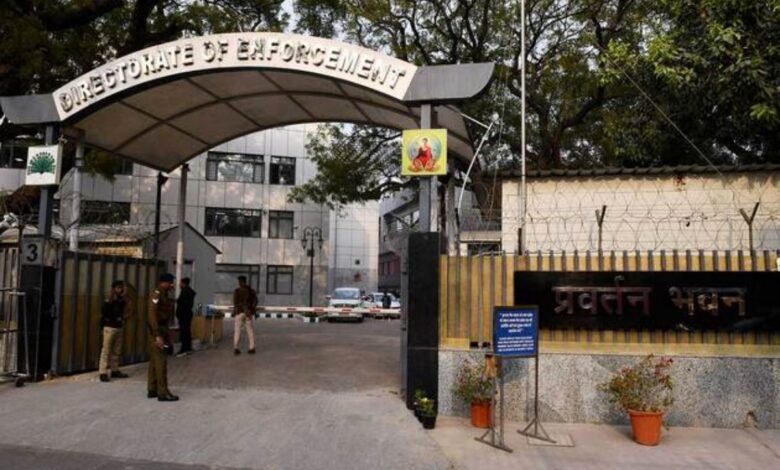
The Enforcement Directorate Bangalore Zonal Office has filed a supplementary prosecution complaint before the Special Court under the Prevention of Money Laundering Act in Bangalore on 05.10.2026 against 05 accused persons involving Ayub Sayyed and others. The investigation was initiated on the basis of an FIR registered by the Central Bureau of Investigation Anti-Corruption Branch Bengaluru under various sections of the Indian Penal Code and the Prevention of Corruption Act 1988 which are scheduled offences under the Prevention of Money Laundering Act 2002.
Investigation conducted by the Enforcement Directorate has revealed that a fake current account in the name of Dr. B.R. Ambedkar Development Corporation Limited was fraudulently opened at the State Bank of Mysore HAL II Stage Branch Bengaluru by using forged documents and impersonation. Thereafter four fixed deposits of 5,00,00,000 rupees each belonging to the corporation were prematurely closed using forged term deposit receipt and fixed deposit receipt instruments and fabricated pre-closure letters resulting in the siphoning of 14,95,00,000 rupees approximately which constitutes proceeds of crime under the Prevention of Money Laundering Act 2002.
Further investigation revealed that the proceeds of crime were layered and laundered through multiple bank accounts of individuals and entities followed by transfers and cash withdrawals in order to conceal the origin of the funds. Statements recorded under Section 50 of the Prevention of Money Laundering Act also revealed that the funds were knowingly received transferred and withdrawn as part of the laundering process.
Earlier during investigation the Enforcement Directorate filed a prosecution complaint before the same Special Court on 25.03.2026 against 15 accused persons or entities involved in the crime of money laundering praying confiscation of the assets worth 6,02,00,000 rupees approximately belonging to the accused persons. A second provisional attachment order dated 22.07.2026 concerned an immovable asset valued at 24,00,000 rupees belonging to one accused.
The institution at the centre of this matter is not a private company. Dr. B.R. Ambedkar Development Corporation Limited is a Karnataka government development corporation established to promote the economic advancement of Scheduled Caste communities through financial assistance self-employment programmes and related development schemes. Its institutional history traces to the Karnataka Scheduled Castes and Scheduled Tribes Development Corporation established on 20.03.1975.
Government records describe its work as supporting economic development through schemes involving loans subsidies agriculture and self-employment. One of its programmes the Ganga Kalyana scheme provides irrigation support to eligible small and marginal farmers including borewells pumpsets and associated infrastructure. When funds held in the name of such a corporation are removed through forged instruments the consequences extend far beyond a balance-sheet entry.
Every rupee that disappears is a rupee that cannot reach a beneficiary waiting for a loan a subsidy or an irrigation facility. The public character of the institution raises immediate questions of accountability that cannot be brushed aside by technical explanations about banking procedures.
How was it possible for a fake current account to be opened in the name of an existing government corporation at a branch of a major bank. Ordinary banking practice requires verification of the organisation identity and the authority of the persons seeking to open and operate the account. The account-opening form the know-your-customer file the corporate authorisation the specimen signatures the identification documents the photographs and any record of in-person verification should have been examined with particular care when the applicant claimed to represent a state development corporation.
Whose identity was used. Were the documents purportedly issued by the corporation itself or by some other authority. Were signatures simply forged or were genuine documents misused. Did the process involve any bank employee or an external intermediary. The press release does not answer these questions yet the very existence of the fake account demonstrates that whatever checks existed at the State Bank of Mysore HAL II Stage Branch were insufficient to prevent the opening of an account that later became the conduit for large withdrawals.
The four fixed deposits each carrying a face value of 5,00,00,000 rupees represented a combined 20,00,00,000 rupees. Premature closure of fixed deposits is not a casual act. A bank is required to establish the depositor entitlement and the authority of the person requesting closure and then to determine where the proceeds should be credited. The Enforcement Directorate states that forged term deposit and fixed deposit instruments together with fabricated pre-closure letters were used. That statement alone invites a series of interrogative concerns. Were the original instruments held in genuine accounts of the corporation and later altered or replaced.
Did the bank receive written electronic or personal instructions. Which officials processed or approved each closure. Were the pre-closure letters checked against the corporation official records. Where were the closure proceeds first credited. Were the four transactions processed on the same day or spread over a period. Were they flagged by any internal fraud-monitoring or reconciliation system. The absence of answers to these questions from the public record is itself a matter of concern. High-value fixed deposits belonging to a public corporation should not be capable of disappearance through document fraud without leaving a clear trail of verification failures.
The numerical discrepancy between the face value of the deposits and the amount identified as siphoned demands particular scrutiny. Four deposits of 5,00,00,000 rupees each total 20,00,00,000 rupees. The Enforcement Directorate identifies approximately 14,95,00,000 rupees as the amount siphoned. The difference is 5,05,00,000 rupees. Possible accounting explanations exist in principle including partial closure proceeds money remaining in legitimate accounts differences between face value and actual transfer or a narrower amount attributed to the offence. None of these explanations appears in the press release.
To reconcile the figures an investigator requires the four original deposit records the bank premature-closure vouchers the interest calculations the destination-account credits and the relevant corporation ledger entries. Until those documents are examined the public is left with an unexplained gap of more than five crore rupees in a matter involving public funds. That gap is not a technical curiosity. It is a concrete indication that the full financial picture has not been placed before the public.
Once the money left the original accounts it was moved through multiple bank accounts belonging to individuals and entities followed by transfers and cash withdrawals. The purpose of such layering is to conceal the origin of the funds. A complete money trail must distinguish the first destination account receiving the closure proceeds intermediate accounts through which funds were routed accounts controlled by the accused or related parties transfers to companies or other legal entities cash withdrawals and the people who physically made them and the final beneficiaries or assets purchased with the funds.
Statements recorded under Section 50 of the Prevention of Money Laundering Act indicated that funds were knowingly received transferred and withdrawn as part of the laundering process. Those statements form part of the evidentiary basis yet the public release does not identify each account the amounts passing through them the beneficial owners or the ultimate recipients. Without that detail the claim of layering remains an outline rather than a transparent map. Public funds that disappear into a chain of transfers and cash withdrawals raise the most basic question of recovery. How much of the 14,95,00,000 rupees has actually returned to the corporation and how much remains beyond reach.
The bank branch named in the investigation was the HAL II Stage Branch of the State Bank of Mysore. That institution was one of the associate banks merged into the State Bank of India with effect from 01.04.2017. The merger itself does not imply wrongdoing yet it does require careful attention to the date of the transactions. The press release does not state when the fake account was opened or when the four deposits were closed. It therefore remains unclear whether the events occurred before or after the merger.
What is clear is that basic banking safeguards verification of identity and authority independent confirmation of instructions to close high-value fixed deposits validation of deposit instruments and letters against the bank own records controls over changes to account details and destination accounts segregation of duties and reconciliation between depositor records and bank ledger are essential. The public summary does not identify the bank internal audit findings the relevant transaction approvals or the results of any disciplinary inquiry. Those omissions leave open the question whether the controls that should have protected public deposits functioned at all.
The underlying criminal case began with an FIR registered by the Central Bureau of Investigation Anti-Corruption Branch in Bengaluru. That FIR invoked provisions of the Indian Penal Code and the Prevention of Corruption Act 1988. The Enforcement Directorate investigation focuses on the proceeds of crime and their subsequent handling transfer concealment or use.
The two tracks are connected. The precise offences originally alleged the individuals and entities named the dates and methods of the fraud the evidence linking each accused to the opening of the account the closure of deposits or the movement of funds and whether the identified proceeds of crime match the amounts described in the underlying case all remain matters that require comparison of the Central Bureau of Investigation records with the Enforcement Directorate complaints. The press release does not provide the FIR number all the Indian Penal Code sections the detailed Prevention of Corruption Act provisions or the complete list of accused in the underlying case. Those details are necessary for a full public understanding.
The Enforcement Directorate filed its initial prosecution complaint on 25.03.2026 against 15 accused persons or entities. The supplementary complaint filed on 05.10.2026 names 05 accused persons including Ayub Sayyed. A supplementary complaint can address additional accused evidence or developments arising during further investigation. The precise relationship between the five persons in the later complaint and the fifteen in the earlier complaint is not explained in the public release. There could be overlap and the original complaint may count both individuals and legal entities.
Adding the two numbers to produce a total of twenty would therefore be unsafe. The full complaints and the case accused-person schedule are required to determine the correct total. The press release identifies Ayub Sayyed as one of the persons named in the supplementary complaint yet does not set out his specific role in sufficient detail to establish whether he is linked to the opening of the account the preparation or use of forged documents the receipt of transfers the making of cash withdrawals or another act. Those distinctions matter because different roles carry different implications for the overall scheme.
The asset figures require careful separation. The initial prosecution complaint sought confiscation of assets worth approximately 6,02,00,000 rupees. The later provisional attachment order concerned an immovable asset valued at 24,00,000 rupees. These figures must not be confused with the 14,95,00,000 rupees identified as the amount siphoned. Attachment restricts dealings with property. It is not the same as money being returned to the public corporation. Adding 6,02,00,000 rupees and 24,00,000 rupees and calling the sum the amount recovered would be misleading.
The next documents required are the first and second provisional attachment orders the property schedules the reasons recorded for attachment and the relevant adjudication orders. These should establish what property was attached its legal owner the valuation method and the alleged link to the proceeds of crime. Until those documents are public the gap between the amount removed and the assets identified remains a source of concern.
The method described combines identity fraud document fraud and layering. An account opened in the name of a government corporation can provide a destination for funds if the bank is deceived about who controls the account. A fixed deposit is supported by records establishing the deposit its owner its terms and any authorised closure. Forged receipts and pre-closure letters if used successfully can make an unauthorised transaction appear legitimate. Once funds leave the original account multiple transfers can make it more difficult to identify the original recipient and the ultimate beneficiary.
These mechanisms are familiar in financial crime investigations yet their appearance in a case involving a public development corporation named after B.R. Ambedkar intensifies the public-interest stakes. The funds in question were not private capital. They were resources intended for the economic advancement of Scheduled Caste communities. Every day that passes without a complete public accounting of how the money left the corporation who benefited and how much has been recovered is a day in which the beneficiaries of the corporation programmes remain without the resources that should have been available to them.
The unanswered questions are therefore not peripheral. Who opened the fake account. The account-opening form know-your-customer records authorisations and bank verification logs could establish who applied who was impersonated and how the account was approved. Who prepared and submitted the forged documents. The originals forensic examination correspondence and statements could help establish the origin of the purported instruments and pre-closure letters. Why were 20,00,00,000 rupees in deposits associated with an identified siphoning amount of 14,95,00,000 rupees.
The four deposit ledgers closure vouchers interest calculations and destination credits should reconcile the difference of 5,05,00,000 rupees. Who ultimately received the money. A transaction-by-transaction account should identify intermediate accounts cash withdrawals recipients and any assets purchased from the proceeds.
What was the response of the bank and of the corporation itself. The internal inquiry audit findings fraud report and official responses are needed to determine when the matter was discovered and which controls were examined. How much has actually been recovered. The attachment orders court records and corporation accounts must distinguish property attached from money returned to the corporation.
The documents required to complete the public picture include the Central Bureau of Investigation Anti-Corruption Branch Bengaluru FIR the Central Bureau of Investigation charge sheet or final report if filed the Enforcement Directorate initial prosecution complaint dated 25.03.2026 the Enforcement Directorate supplementary complaint dated 05.10.2026 both provisional attachment orders the corporation audited financial statements and deposit register the original fixed-deposit instruments and closure vouchers the account-opening and know-your-customer records for the fake account the bank statements for all identified accounts and the internal inquiry records of both the corporation and the bank.
These records would make it possible to move beyond the outline provided in the press release and to establish a complete timeline of how public funds left a development corporation created for the benefit of Scheduled Caste communities.
The 14,95,00,000 rupees identified as proceeds of crime represent more than a figure on a page. They represent resources that should have been available for loans subsidies irrigation support and other forms of economic assistance. The corporation historical role has included financial support for Scheduled Caste communities through self-employment agricultural and other economic-development programmes. When such resources are removed through forged documents and impersonation the integrity of the entire institutional framework is placed in question.
The layered transfers and cash withdrawals that followed the initial siphoning only deepen the concern. Public money that moves through a chain of accounts and emerges as cash is public money that has been placed beyond easy recovery. The earlier filing seeking confiscation of 6,02,00,000 rupees in assets and the later attachment of property valued at 24,00,000 rupees indicate that some recovery action has been taken yet the disparity between those figures and the amount identified as siphoned remains striking. Until a full reconciliation is placed before the public the case stands as an example of how easily the financial safeguards surrounding a government development corporation can be breached.
The timing of the successive filings also invites scrutiny. The initial prosecution complaint was filed on 25.03.2026. The second provisional attachment order was issued on 22.07.2026. The supplementary complaint was filed on 05.10.2026 and announced on 14.10.2026. The multi-year investigative history suggested by the Enforcement Case Information Report reference associated with the matter indicates that the events under examination did not occur yesterday.
The length of time between the original registration of the case and the latest court filing raises the question of how long the funds remained outside the corporation control and what opportunities for further dissipation may have existed during that period. A public institution whose deposits can be closed through forged instruments without immediate detection is an institution whose internal monitoring systems require urgent examination. The same observation applies to the bank that processed the transactions.
High-value movements of public funds should trigger multiple layers of verification. The fact that four deposits totalling a face value of 20,00,00,000 rupees could be closed and the bulk of the proceeds removed indicates that those layers either did not function or were deliberately circumvented.
The human impact of the missing funds cannot be measured solely in crores of rupees. Every scheme administered by the corporation is designed to reach individuals and families who rely on state support for economic mobility. A small business loan that is never disbursed a borewell that is never drilled a subsidy that is never paid all represent concrete losses for people who have already been historically disadvantaged.
When the Enforcement Directorate identifies 14,95,00,000 rupees as proceeds of crime the public is entitled to know whether any of those funds have been restored to the schemes for which they were intended and whether the corporation has been forced to curtail programmes because of the shortfall. The press release is silent on those points. That silence is itself a cause for concern.
Accountability for public funds requires more than the filing of complaints and the attachment of selected assets. It requires a transparent demonstration that the money has either been recovered or that every available avenue for recovery has been exhausted.
The case also highlights the vulnerability of institutional identity. A government corporation exists as a legal person with its own accounts its own authorisations and its own obligations to beneficiaries. When that identity is appropriated through forged documents the entire framework of public trust is undermined. The bank that accepts the documents becomes an unwitting or in the worst case a complicit participant in the diversion.
The corporation that fails to notice the disappearance of large fixed deposits in a timely manner becomes a silent witness to its own loss. Both institutions therefore face questions that go beyond the individual accused persons named in the complaints. The systems that were supposed to protect the funds failed. The public is entitled to know why.
The supplementary complaint against five accused persons including Ayub Sayyed represents a further stage in the investigation yet it does not by itself resolve the larger questions of recovery and systemic reform. The earlier complaint against fifteen accused persons or entities and the subsequent attachment of property valued at 24,00,000 rupees form part of the same continuum. Together they demonstrate that the Enforcement Directorate has identified both individuals and assets connected to the movement of the funds.
What remains missing from the public record is a clear statement of how much of the original 14,95,00,000 rupees has been secured for return to the corporation and what steps have been taken to prevent a repetition of the same sequence of forged documents and premature closures. Without those answers the case continues to stand as a warning about the fragility of financial controls surrounding public development institutions.
The difference between the face value of the deposits and the amount identified as siphoned continues to demand explanation. A gap of 5,05,00,000 rupees is not a rounding error. It is a substantial sum that requires documentary reconciliation. Until the original deposit instruments the closure vouchers and the corporation accounts are examined side by side the public cannot know whether the discrepancy represents money that remained safely in legitimate accounts money that was never transferred or money that has simply not been accounted for in the press release. In a matter involving public funds any unexplained difference of that magnitude is unacceptable.
The same standard of transparency must apply to the final destination of the 14,95,00,000 rupees. Layering through multiple accounts and cash withdrawals is designed to obscure the trail. The Enforcement Directorate investigation has followed that trail to the point of filing successive complaints. The next step is to place the complete trail before the public so that the beneficiaries of the corporation programmes can see whether the money taken in their name has any prospect of return.
The institutional history of the corporation only sharpens the concern. Established in 1975 and later renamed in honour of B.R. Ambedkar the organisation was created to serve communities that have faced structural economic exclusion. Its schemes for self-employment land ownership irrigation and related support are not optional extras. They are instruments of social and economic justice.
When 14,95,00,000 rupees are removed from its accounts through the methods described the damage is measured not only in lost capital but in lost opportunities for the people the corporation was designed to serve. The public therefore has a right to demand a full accounting of every stage of the fraud every control that failed and every rupee that can still be recovered. The Enforcement Directorate filings have brought the matter into the open. The remaining task is to ensure that the openness produces both recovery and reform.