Subhash Chandra : The Vanishing Billionaire
The Vanishing Billionaire How Subhash Chandra’s net worth shrank from ₹59,113 crore on paper to ₹31.79 crore in court — and how a ₹22,006-crore personal-guarantee mountain was nearly flattened to ₹6.5 crore until LIC Housing Finance called the bluff

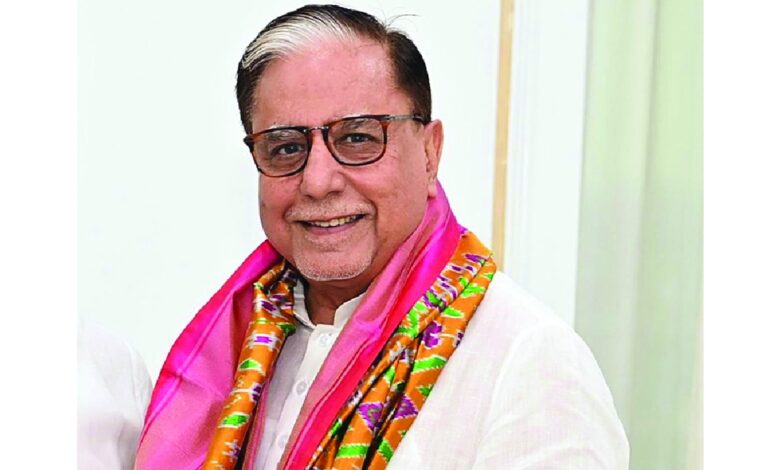
In 2018, Subhash Chandra — founder of the Essel empire, former chairman, former Rajya Sabha member — stood behind two credit facilities from LIC Housing Finance Limited as personal guarantor. The papers that travelled with those facilities did not whisper. They roared. One net-worth certificate put him at ₹59,113.21 crore as on 31 March 2017. Another, dated 6 July 2018, put him at ₹40,562 crore. On the strength of that splendour, LICHFL sanctioned roughly ₹500 crore to Vasant Sagar Properties Private Limited (with Pan India Infra Projects as co-borrower) and ₹480 crore to Digital Subscriber Management and Consultancy Services Private Limited (with Spirit Infrapower and Multiventures as co-borrower). Principal on the table: about ₹980 crore. Personal guarantee: Chandra’s.
Fast-forward to the insolvency theatre. The same man, now a personal guarantor being processed under the Insolvency and Bankruptcy Code, told the system his net worth in 2024 was ₹31.79 crore. And that even in 2017–18, the golden years of those certificates, he did not have a net worth of more than ₹40,000 crore.
Read that again. Not a market correction. Not a sad quarterly. A collapse of declared stature so violent it makes the certificates look like fiction written for a credit committee. That contradiction is not a columnist’s insinuation. It is the spine of the complaint LICHFL took to the Central Bureau of Investigation. On 31 August 2026, the CBI registered a case. The alleged wrongful loss to LICHFL: over ₹1,322 crore. Outstanding figures cited from the FIR: ₹570.50 crore on the Vasant Sagar book and ₹507.25 crore on the Digital Subscriber book. The accused list is not poetic. It is corporate: Chandra; Vasant Sagar and director Pankaj Suroliya; Pan India Infrastructure / Infra Projects; Digital Subscriber Management and director Amish Pandya; Spirit Infrapower and director Rajeev Dholakia; and others unknown.
This is the story of a guarantee that was fat when money was needed and thin when money was due.
Act I — The certificates that opened the vault
LIC Housing Finance is not a neighbourhood moneylender. It is a housing-finance company with LIC in its bloodstream. When it extends hundreds of crores on a promoter’s personal guarantee, the guarantee is supposed to mean something more than stationery.
According to the publicly reported complaint, the first facility was framed as a takeover-and-top-up for business expansion; the second as rental discounting under a rental-securitisation scheme. Chandra’s continuing guarantees sat on both. One professional firm named in reporting, DIM and Co, is associated with a March 2018 certification that put his worth at about $6,197.62 million — the dollar rendering of that Himalayan rupee figure. Another, MPJ & Co, is associated with the July 2018 paper north of ₹40,000 crore.
A solvent billionaire on letterhead is a comforting sight in a sanction note. A man who later swears he was never that billionaire is a different sight altogether. Either the 2018 papers were ornament, or the 2024 insolvency statement is a convenient amnesia. They cannot both be earnest. LICHFL’s complaint chooses the first reading: inflated and bogus net worth, false documents, collusion to cheat, misappropriation of proceeds. The CBI has been asked to test precisely that — who prepared the papers, who used them, how they were vetted, and where the money went after it left the lender.
Both accounts, the reports say, defaulted. Default is not a vibe. It is a ledger that stopped being polite.
Act II — The ₹22,006-crore mountain and the ₹6.5-crore molehill
If the net-worth vanishing act were the only grotesque number in this file, it would still be enough. It is not.
Chandra’s personal insolvency did not begin with LICHFL. It began, as reported, with a Section 95 IBC action by Indiabulls Housing Finance — now Sammaan Capital — over a ₹170 crore exposure linked to Vivek Infracon, admitted in 2024. By the time the personal-guarantor process matured, the admitted claim pile against him had swollen to ₹22,006.57 crore. That is not a rounding error. That is the size of a small budget.
On 25 August 2026, an NCLT member approved a repayment plan under which Chandra would pay about ₹6.25 crore to creditors and about ₹25 lakh toward process costs — in all, in the region of ₹6.5 crore. One report puts the creditor number at ₹6.2 crore. Quibble over twenty-five lakh if you wish. Do not quibble over the ratio.
₹6.5 crore against ₹22,006 crore is a recovery of roughly 0.03 per cent.
The implied haircut is about 99.97 per cent.
LICHFL’s own admitted claim in that pool was the same ₹1,322 crore now echoing through the CBI FIR. Under the approved plan, its suggested payout was reported at about ₹38.09 lakh. Thirty-eight lakh rupees against thirteen hundred and twenty-two crore. That is not a restructuring. That is a courtesy tip left on a wrecked table.
Call it what the arithmetic calls it. A near-total wipeout of personal-guarantee liability, dressed in the respectable clothing of a “repayment plan.” The Insolvency and Bankruptcy Code was sold to the country as a cure for promoter impunity — a way to end the ancient Indian sport in which private empires privatise the upside and socialise the default. What landed on the NCLT board in late August looked like the sport winning anyway: a former media baron walking toward a statutory blessing to settle a five-digit-crore obligation with a sum that would not buy a decent floor in south Mumbai.
Then LIC Housing Finance declined to clap.
Act III — Forty-eight hours, two blows
The Gujarat Samachar account of the sequel is the most useful because it is the most sequential.
Less than forty-eight hours before that haircut could harden into a finished fact, LICHFL moved on two tracks.
Strike one: complaint to the CBI, FIR on 31 August 2026. Reporting cites the case as RC0742026E0007. The language of the complaint, as quoted, is not bureaucratic small talk. It accuses Chandra and the other accused of conniving with common criminal and dishonest intention to defraud the lender. It says the accused had publicly disclosed an intention to leave India, and that unless an FIR was registered at once, the proceeds of the loans and the assets of the accused might not be traceable. That sentence should be read slowly. A lender that has already watched its facilities sour is telling a federal agency that delay itself is a risk of disappearance.
Strike two: on 1 September 2026, a five-member special bench of the NCLT stayed the 25 August plan and barred Chandra from alienating assets. Reporting names the special bench in connection with Justice (retd.) Anupinder Singh Grewal and notes Chandra’s objection: that the tribunal has no power to constitute such a bench. One account calls it the first five-member special bench in NCLT practice, born of a prior division-bench deadlock.
So the sequence is ugly and clear. A plan that would have turned ₹22,006 crore of admitted claims into pocket change. A criminal complaint the same week. A stay and an asset freeze the next day. If this is what “resolution” looks like until a public-linked lender panics, the scandal is not only the promoter. The scandal is the machine that almost stamped the haircut.
Act IV — The supporting cast, named
Investigative writing that is afraid of names is public relations. The reports are not afraid.
Around the two LICHFL facilities stand four companies and three directors besides Chandra: Pankaj Suroliya at Vasant Sagar, Amish Pandya at Digital Subscriber Management, Rajeev Dholakia at Spirit Infrapower. Pan India Infra Projects sits as co-borrower on the first book. These are not anonymous shells in a footnote. They are the vehicles through which nearly a thousand crore of principal was supposed to become “business expansion” and “rental securitisation.” The complaint’s allegation is that the vehicles, the guarantor, and the papers worked as one design: get the money in, let the accounts die, and let the personal guarantee later pretend it had never been backed by a ₹59,113-crore man.
Whether each director was architect or instrument is for the CBI to sort. What is already on the public record is that they have been booked alongside the guarantor. That is not a social inconvenience. That is an FIR.
Act V — The questions that will not dissolve in a press note
A serious investigation, if it is more than theatre, has to answer questions the certificates themselves raise.
One. How does a man certify ₹59,113.21 crore as on 31 March 2017 and later insist he was never above ₹40,000 crore in that same season? Which number was prepared for the lender, and which number was prepared for the tribunal? If the higher figure was real, the insolvency disclosure is a problem. If the lower figure is real, the loan papers are a problem. There is no third door marked “misunderstanding.”
Two. What assets composed that ₹59,113-crore cathedral? Listed stock, unlisted group companies, land, receivables, personal holdings, valuations of media dreams? A net-worth certificate is not a poem. It is a schedule. The CBI’s reported brief includes the preparation and use of those documents. Good. Publish the schedule when the law allows. The country is entitled to see whether the cathedral had walls.
Three. Where did the ₹980 crore go? Sanction for expansion and rental securitisation is a purpose. Default without a forensic map of end-use is only a shrug. LICHFL’s complaint, as reported, alleges misappropriation. That word has a meaning. It means the money did not do the job it was dressed to do.
Four. How did a housing-finance company of LICHFL’s size swallow two nine-hundred-crore-scale facilities on the personal aura of one promoter? Credit appraisal is supposed to survive charm. If the certificates were the load-bearing wall, the appraisal was a faith-based exercise. The probe must look at the lender’s own diligence, not only at the borrower’s ink. A public-linked institution that lends on a mirage is not a victim in the simple sense. It is also a system that failed its own checklist.
Five. Who would have collected the 0.03 per cent, and who would have eaten the 99.97 per cent, if the 25 August plan had stood? Personal-guarantee insolvency that reduces twenty-two thousand crore of admitted claims to six-and-a-half crore is not a technicality. It is a transfer of pain from a promoter’s balance sheet onto every creditor who filed a claim and every institution whose “admitted” number turned out to be a polite fiction.
Six. What, precisely, was meant by the complaint’s claim that the accused had signalled an intention to leave the country? That allegation is on the record of the complaint as quoted. It is not proof of flight. It is a reason the lender gave for haste. Investigators either substantiate it or they drop it. They do not get to treat it as flavouring.
Act VI — The larger contempt
Subhash Chandra was not a man without a public. He built a media group that lectured the country on aspiration. He sat in the Rajya Sabha from 2016 to 2022 as an Independent with BJP backing. He sold, for years, the romance of the self-made baron. The Essel story that followed — debt, default, the long grind of creditors — is not a secret. What the last fortnight has done is put a magnifying glass on the most indefensible fragment of that story: the personal guarantee as costume.
A personal guarantee is a moral sentence written in commercial language. It says: if the company fails, I do not walk away richer than the wreckage. The 2018 papers said Chandra could absorb almost any wreckage. The 2024 insolvency papers said he was a man of ₹31.79 crore. The August 2026 plan said the wreckage of ₹22,006 crore could be blessed away for the price of a modest bungalow.
That sequence is not unfortunate. It is insulting.
It insults the credit officer who was told to believe a net worth the guarantor would later disown.
It insults every home-loan borrower who pays LICHFL on time while a promoter’s group facilities are allowed to rot into a four-figure-crore “loss.”
It insults the IBC’s original promise that India would stop confusing insolvency with amnesia.
It insults the idea that a certificate signed for a lender is a statement of fact rather than a performance.
None of this requires a novelist. The figures are enough. ₹59,113.21 crore. ₹40,562 crore. ₹40,000 crore “not more than.” ₹31.79 crore. ₹980 crore sanctioned. ₹1,322 crore alleged loss. ₹570.50 crore and ₹507.25 crore outstanding. ₹22,006.57 crore admitted. ₹6.5 crore proposed. ₹38.09 lakh for LICHFL. Forty-eight hours. One FIR. One stay. One asset bar.
Harsh language is not the scandal here. The scandal is that the language of the ledgers is harsher.
What this piece is — and what it is not
It is not a conviction. The CBI has registered a case; it has not, on the public reporting available, completed a chargesheeted trial. Chandra and the named companies are entitled to their defence. They may argue that valuations changed, that group holdings were marked to a different method, that the insolvency statement was conservative, that LICHFL’s loss figure includes interest the law will trim, that the NCLT plan was lawful, that the five-member bench was irregular, that “intention to leave India” is panic dressed as fact.
They may argue all of that. They cannot argue the contradiction off the page. A guarantor does not get to be a colossus in 2018 and a pauper in 2024 without inviting the only adult question left in the room: which version was the lie?
Until that question is answered with documents, bank trails, valuation workings, and sworn consistency, the public is not obliged to speak of Subhash Chandra in the hushed tones reserved for misunderstood industrialists. The public is obliged to look at a man who pledged an empire’s worth of personal standing to extract nearly a thousand crore from a housing-finance company, then arrived in insolvency with a net worth that would not service a fraction of the reputation those certificates purchased.
That is not tragedy. That is a method, or it is a mess so large it is indistinguishable from one. Either way, it is not entitled to a quiet haircut.
The CBI now has the file. The NCLT has stayed the giveaway. The assets, for the moment, are not supposed to walk. Those are the only decent sentences in this story. Everything else — the Himalayan net worth, the pocket-change resolution, the defaulted rental dream, the guarantee that melted — reads like a taunt aimed at a country that has heard this plot too many times and is tired of being told it is “only business.”
Business, when it is honest, can survive a crash.
What it cannot survive is a promoter who is worth ₹59,113 crore when the cheque is being signed and ₹31.79 crore when the cheque is being collected.
That is the file. It should be read without perfume.