In a development that once again throws the spotlight on long-pending concerns surrounding Raheja Developers, the Haryana Department of Town and Country Planning, DTCP has scheduled a fresh inspection of the Raheja Akshara plotted project in Sohna on September 7, 2026. The move follows the failure of an earlier inspection planned for August 26, which could not proceed because a representative of the Haryana Shahari Vikas Pradhikaran (HSVP) chief engineer was unavailable.
According to a September 1 communication from a senior town planner, the inspection will be conducted by a committee constituted in compliance with a May 1, 2025 order of the Punjab and Haryana High Court in a case filed by the Akshara Plot Buyers Welfare Society. The stated purpose is to ascertain the latest status of development works and submit a report to the directorate. Representatives of the buyers’ welfare societies and the developer, Raheja Developers, have been asked to remain present. HSVP superintending engineer (Circle-I), the district town planner, and the executive engineer of division-VI have also been directed to participate. The letter marks the matter as “most urgent.”
Raheja Akshara is a 6.81-acre plotted project in Sohna Sector 14, promoted under the Deen Dayal Jan Awas Yojana. It was registered under RERA in June 2017, with the authority recording December 31, 2022 as its likely completion date. Nearly four years after that deadline, Haryana RERA has classified it as a “lapsed project.” Public records and consumer forum proceedings, including a January 2026 case involving Anupam Madan, have highlighted disputes over delayed documentation and non-execution of builder-buyer agreements within promised timelines. Property portals have at times listed optimistic “ready to move” claims, yet the fresh government inspection underscores the gap between promotional claims and on-ground reality.
This latest administrative step is not an isolated event. It is merely the most recent public manifestation of a much deeper, decades-long pattern of delayed, undelivered, and stalled projects by Raheja Developers that has left thousands of homebuyers in financial and emotional distress. What follows is a detailed examination of how a company that once marketed aspirational housing across Gurugram and Sohna has become entangled in a web of homebuyer complaints, Economic Offences Wing FIRs, National Company Law Tribunal insolvency proceedings, repeated RERA interventions, consumer court orders, and successive Enforcement Directorate actions under the Prevention of Money Laundering Act that have so far resulted in provisional attachment of assets valued at well over ₹2,300 crore.
The Scale of Alleged Diversion and ED Crackdowns on Raheja
The Enforcement Directorate’s investigation into Raheja Developers centres on allegations that the company collected approximately ₹2,425.99 crore from nearly 4,600 homebuyers across various residential projects and then failed to deliver the promised units within committed timelines. Investigators have stated that evidence points to large-scale diversion of these funds for purposes other than the development and completion of the projects for which the money was raised.
The first major search operation under PMLA took place on June 27, 2025, covering 13 locations across Delhi, the National Capital Region, and Mohali. Officials seized incriminating documents, digital devices, and records relating to movable and immovable assets linked to the company, its Managing Director Navin M. Raheja, and associated persons. The action followed multiple FIRs registered by the Economic Offences Wings of Delhi Police and Gurugram Police on complaints of cheating and criminal conspiracy filed by homebuyers who alleged they had paid substantial sums yet received neither possession nor timely refunds.
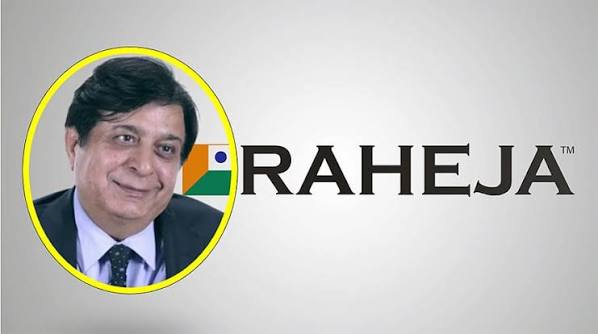
The agency returned on April 25, 2026, conducting searches at approximately seven premises in Noida, Greater Noida, Sainik Farms, New Friends Colony, and other NCR locations. Premises linked to Navin Raheja, his son Nayan Raheja, and associated entities were targeted. During these operations, officials recovered documents, digital evidence, jewellery and bullion valued at around ₹15.82 crore, and foreign currency amounting to approximately ₹15 lakh.
Three days later, on April 28, 2026, the ED issued a Provisional Attachment Order attaching immovable properties belonging to related entities N.A. Buildwell Pvt. Ltd. and Riyasat Palaces Ltd., as well as properties held in the names of Navin M. Raheja and his family members. The estimated market value of these assets stood at ₹1,113.81 crore. On June 15, 2026, a further attachment of properties worth ₹503.48 crore followed, taking the cumulative figure to roughly ₹1,617 crore. By July 31, 2026, another Provisional Attachment Order added assets valued at approximately ₹782.36 crore, pushing the overall provisional attachments in the case past ₹2,300 crore and approaching ₹2,400 crore in some official tallies.
These successive actions under the PMLA have been described by the agency as efforts to secure alleged proceeds of crime arising from the non-delivery of homes. The company has consistently denied any fraud or diversion, stating that it has invested more funds into the projects than it collected from customers and pointing to forensic audits conducted under RERA supervision. Homebuyers and investigators, however, have pointed to the prolonged incomplete status of multiple projects despite high percentages of payments having been collected as evidence that something went seriously wrong with the use of those funds.
Raheja Revanta: The Flagship Project That Became a Symbol of Delay
No project illustrates the scale of the problem more clearly than Raheja Revanta in Sector 78, Gurugram. Launched around 2011, the project promised possession within 36 months for certain independent floors and 48 months for high-rise towers. Buyers paid 90 to 95 per cent of the total sale consideration in many cases. One group of 176 allottees alone paid over ₹137 crore towards 99 units. The project completion date declared before Haryana RERA was July 31, 2022. Years later, possession remained pending for large numbers of buyers.

Haryana RERA responded by banning further sale and purchase of units, ordering a forensic audit, and freezing unsold inventory and related bank accounts. The National Consumer Disputes Redressal Commission directed refunds with interest in multiple cases. In 2026 the principal bench of the National Company Law Tribunal admitted an insolvency petition filed by 176 homebuyers after finding a prima facie case of default. The tribunal noted that the company had entered into memorandums of understanding with several allottees that explicitly acknowledged delays and promised both compensation and possession by revised timelines—commitments that were not met.
Homebuyers described a familiar cycle: original delivery dates came and went, new dates were announced, those too were missed, and construction progress remained inadequate relative to the money collected. The developer frequently attributed delays to the absence of essential government infrastructure such as water, electricity, sewerage, and firefighting systems despite claiming to have paid external and internal development charges. For buyers servicing home loans while continuing to pay rent, such explanations offered little comfort.
Krishna, Aranya, Shilas, Trinity and the Broader Pattern of Non-Delivery
The problems extend far beyond Revanta. Raheja Krishna, an affordable housing project in Sector 14, Sohna, was licensed around 2014 with possession targeted for 2019. Construction advanced only partially. By some accounts it stood at roughly 58 per cent completion years after the deadline. The Department of Town and Country Planning directed the company to stop collecting further instalments. Structural complaints involving cracks and seepage led to municipal action over unpaid audit dues. In 2025 the NCLT admitted insolvency proceedings following a petition by approximately 130 homebuyers alleging defaults of around ₹38.89 crore.
Raheja Aranya City in Sohna faced similar multi-year delays. The NCDRC ordered a refund of more than ₹1.19 crore with 9 per cent interest in one villa case after the buyer had continued making payments for years without receiving possession. The commission rejected the developer’s force majeure arguments as fallacious, noting the absence of a completion certificate or offer of possession even years after the contractual timeline had expired.
Raheja Shilas in Sector 109 saw the NCLT admit insolvency proceedings on petitions by more than 40 homebuyers claiming significant defaults. The National Company Law Appellate Tribunal refused to stay the corporate insolvency resolution process. Raheja Trinity in Sector 84 left a commercial unit incomplete despite the promoter collecting over 95 per cent of the cost. In August 2026, HARERA ordered a full refund of ₹50.5 lakh plus 10.8 per cent annual interest after the developer reportedly failed to file written replies across multiple hearings, leading the authority to strike off its defence.
Across these projects the pattern is consistent: ambitious launches, aggressive collection of instalments, repeated revision of timelines, incomplete construction, and eventual regulatory or judicial intervention. Homebuyers report years of unanswered emails and phone calls, pressure to accept revised schedules, and the psychological toll of watching their life savings remain locked in incomplete structures while they continue to service loans.
Regulatory and Judicial Interventions, and the Limits of Relief
Haryana RERA has classified multiple Raheja projects as lapsed, banned sales, ordered forensic audits, and directed refunds with interest. Consumer commissions have awarded compensation and litigation costs. Police Economic Offences Wings have registered numerous FIRs. The NCLT has admitted insolvency petitions that place the company under the insolvency and bankruptcy framework, suspending the board in relevant cases and imposing a moratorium. The ED’s successive attachments aim to secure assets that investigators believe represent proceeds of crime.
Yet for the majority of affected families, these steps have not translated into either possession of homes or timely recovery of their money with adequate interest. Resolution processes take time. Attached assets do not automatically become refunds. Court orders for refunds are sometimes not complied with promptly, leading to further execution proceedings and, in some instances, non-bailable warrants for non-compliance. The human cost continues to mount: EMIs without keys, rental expenses on top of loan repayments, educational and medical decisions delayed, and the erosion of trust in the entire real estate regulatory system.
Historical Context and Persistent Concerns
The current crisis does not exist in isolation. In 2010 the Income Tax Department conducted searches that reportedly recovered evidence linked to significant tax issues. A 2014 Cobrapost sting operation that examined several real estate developers led to further scrutiny of practices in the sector, including allegations involving acceptance of black money. While these earlier episodes are distinct from the present money-laundering investigation focused on homebuyer funds, they contribute to a long-standing perception among critics that financial opacity has been a recurring concern.
The company has maintained that no fraud has been committed against any homebuyer and that delays stem primarily from infrastructure bottlenecks outside its control. It has pointed to forensic audits and claimed higher investment in projects than customer collections. These assertions stand in tension with the volume of FIRs, the findings that prompted the ED’s multi-crore attachments, the classification of projects as lapsed by RERA, and the admission of insolvency petitions by the NCLT.
A Concerning Pattern That Continues
The September 7, 2026 DTCP inspection of Raheja Akshara is therefore more than a routine administrative exercise. It is another chapter in a long record of delayed delivery, regulatory intervention, and homebuyer distress associated with Raheja Developers. From the high-rise towers of Revanta to the plotted development of Akshara, from the affordable housing scheme of Krishna to commercial spaces in Trinity, the common experience for thousands of allottees has been prolonged uncertainty and financial strain.
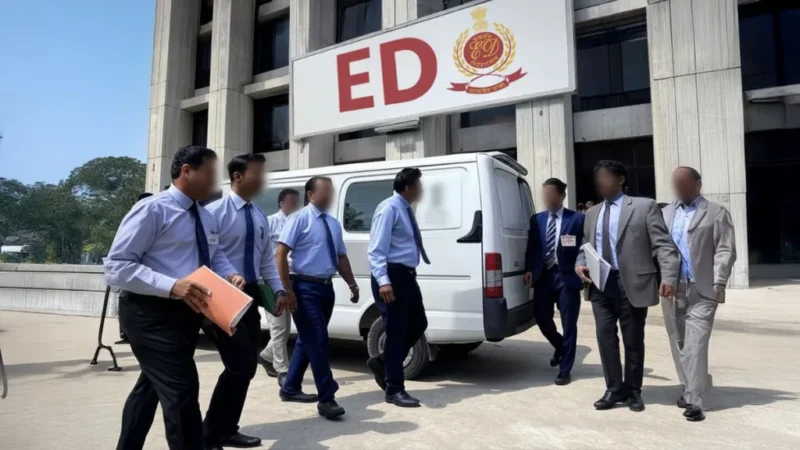
The Enforcement Directorate’s attachment of assets now valued in the thousands of crores reflects the seriousness with which central agencies view the allegations of fund diversion. Whether those attachments ultimately translate into meaningful relief for homebuyers remains to be seen. What is already clear is that the gap between the promises made at the time of booking and the reality experienced by buyers has been wide, persistent, and deeply damaging. The latest inspection order may provide an updated assessment of one site, but the larger questions of accountability, timely delivery, and restitution for the thousands still waiting continue to demand answers that have so far remained elusive.