19 Chargesheets And Counting: CBI’s Probe Into Alleged Homebuyer Cheating And The Story Of Indian Real Estate Mafia

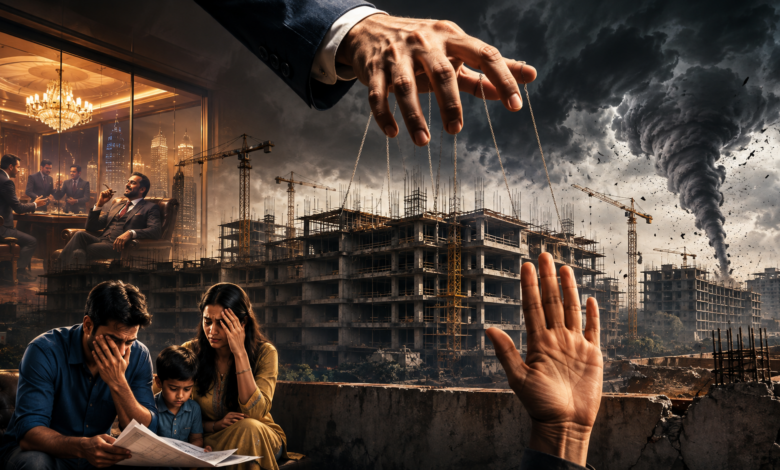
The Central Bureau of Investigation, CBI, has, over the course of 2025 and 2026, filed a succession of chargesheets in cases registered on the directions of the Supreme Court of India concerning alleged large-scale cheating of homebuyers by real estate developers and, in several instances, officials of financial institutions. By early September 2026 the agency had submitted its 19th such chargesheet, this time against Earthcon Universal Infratech Pvt. Ltd. and its directors in relation to the Casa Royale housing project at Plot No. GH-10 in Sector-1, Greater Noida. The chargesheet was filed before the Special CBI Court at Rouse Avenue District Courts in New Delhi.
According to the CBI’s public statements, investigation revealed that the accused builder company and its directors allegedly induced homebuyers and investors through false assurances and fraudulent representations and obtained financial benefits by resorting to illegal and deceptive means.
The agency stated that substantial evidence had been unearthed and that the chargesheet was filed under relevant provisions of the Indian Penal Code pertaining to criminal conspiracy, cheating and criminal breach of trust. At the time of that filing the CBI indicated it was investigating another approximately 30 cases registered pursuant to the same Supreme Court directions against various builder companies and unknown officials of financial institutions across the country in matters concerning alleged cheating and diversion of funds involving homebuyers.
This 19th filing followed a series of earlier chargesheets. In June 2026 the agency filed its 12th chargesheet against M/s Decent Buildwell Pvt. Ltd. and its director in connection with a housing project in Greater Noida. The CBI stated that the accused, in furtherance of a criminal conspiracy, allegedly induced innocent homebuyers and investors through false assurances, misleading representations and deceptive promises, thereby dishonestly obtaining financial gains while causing wrongful loss to the victims. The chargesheet invoked provisions relating to criminal conspiracy, cheating and criminal breach of trust.
Preceding that, chargesheets had been filed against a range of entities including M/s Rudra Buildwell Constructions Pvt. Ltd., M/s Dream Procon Pvt. Ltd., M/s Jaypee Infratech Ltd., M/s AVJ Developers (India) Pvt. Ltd., M/s CHD Developers Pvt. Ltd., M/s Sequel Buildcon Pvt. Ltd., M/s Logix City Developers Pvt. Ltd., M/s Manju J Homes India Ltd., M/s Shubhkamna Buildtech Pvt. Ltd., M/s Ninex Developers Ltd., and others, along with, in several cases, directors and officials of certain banks and financial institutions.
By August 2026 the tally had reached 18 chargesheets, in connection with various housing projects. Additional filings covered projects linked to Ithaca Estate and LGCL Urban Homes in Bengaluru, Saha Infratech in Noida, and further entities. The common thread running through these public CBI statements is the allegation that homebuyers were induced to part with funds on the basis of assurances that were not fulfilled. In multiple cases the agency has described the collection of money from buyers while projects remained incomplete or significantly delayed, with funds allegedly diverted.
Where bank or financial institution officials appear in chargesheets, the CBI has referred to an alleged nexus that facilitated the process, including under provisions of the Prevention of Corruption Act in some instances. The Supreme Court had directed registration of these cases after taking note of widespread complaints from homebuyers who had paid substantial sums, often through bank loans under subvention or other schemes, yet had neither received possession nor timely refunds.
The scale of the investigation is significant. Public statements indicate that the CBI registered around 50 cases in compliance with the Supreme Court directions. Searches have been conducted at dozens of locations across multiple states and Union Territories, resulting in the seizure of documents and digital devices. The agency has repeatedly reiterated its commitment to ensuring accountability in economic offences that adversely impact common citizens and homebuyers.
For the homebuyers themselves the practical consequences described in the underlying complaints and subsequent probes are prolonged uncertainty. Many had committed life savings or taken on long-term loan obligations on the strength of project timelines and amenities that were publicly marketed. When construction stalled or possession was indefinitely deferred, EMI payments continued while the asset remained unavailable. In some reported instances banks pursued recovery even as the underlying project remained incomplete. The CBI’s filings do not quantify the total number of affected families across all 50 cases, but the repeated pattern of allegations across Noida, Greater Noida, Gurugram, Bengaluru, West Bengal and other locations indicates a systemic problem rather than isolated defaults.
The legal process remains at the chargesheet and investigation stage in most of these matters. Filing of a chargesheet means the agency has formed an opinion that there is sufficient evidence to proceed to trial; it does not constitute a judicial finding of guilt. The accused entities and individuals are entitled to contest the allegations before the competent courts. Some builders have, in parallel proceedings, sought to settle with groups of homebuyers, though the Supreme Court has indicated that such partial settlements do not automatically terminate the broader criminal investigation until the interests of all affected buyers are addressed.
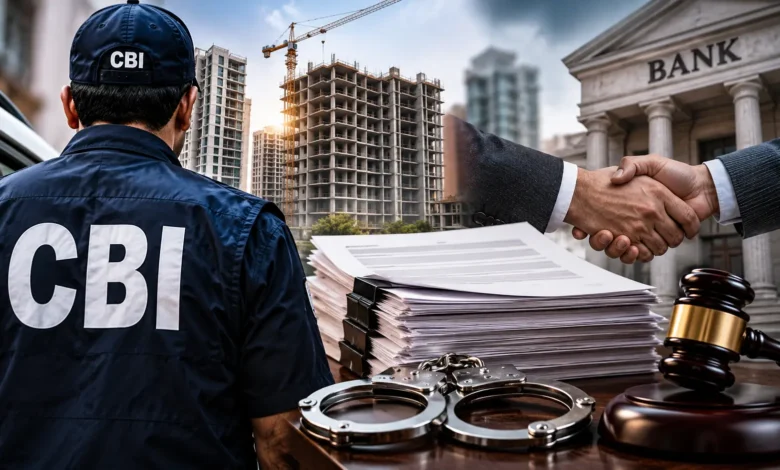
From a data perspective the sequence is clear. Supreme Court directions prompted registration of a large batch of cases. Investigation produced successive chargesheets naming specific companies, directors and, in several matters, bank officials. The allegations centre on inducement through false assurances, collection of funds, failure to deliver, and in some instances diversion of those funds. The geographic spread covers major urban real-estate markets. The number of chargesheets has risen steadily through 2026, reaching at least 19 by early September.
The critique that emerges from this record is institutional and structural. Home purchase is typically the largest financial commitment a middle-class family makes. When the regulatory and enforcement environment allows projects to collect substantial sums while delivery timelines are repeatedly breached, the resulting hardship falls disproportionately on buyers who have limited leverage once payments are made. Subvention schemes and tripartite arrangements with banks, while intended to ease initial burdens, can lock buyers into repayment obligations even when the builder fails to perform. The repeated appearance of similar allegations across multiple developers suggests that existing safeguards—RERA registration, escrow mechanisms, and project disclosure requirements—have not consistently prevented the collection of funds without corresponding progress.
The CBI’s ongoing work, conducted under judicial monitoring, represents an attempt to impose criminal accountability where civil and regulatory remedies have proved insufficient for many buyers. Whether the eventual trials result in convictions, restitution orders or further asset recovery will determine the practical relief available to those who paid for homes they never received. Until then the documented pattern of chargesheets stands as evidence of the scale of the problem the Supreme Court directed the agency to investigate: the gap between the promises made to homebuyers and the outcomes delivered by a significant number of real-estate projects.
The investigation continues. Additional chargesheets may follow. For the thousands of families whose funds are tied to these projects, the process remains a long wait for both justice and, if possible, recovery of what was lost.