RERA Orders Raheja To Refund 50 lakh, When Raheja Failed To Deliver The Commercial Unit After 9 Years.
A Gurgaon couple's nine-year fight for a refund from Raheja Developers is not an outlier, but it is a template. Across three decades, the Delhi-headquartered builder has faced an income-tax raid, a black-money sting, a Prime Minister's Office-ordered probe, environmental-clearance violations, two waves of insolvency proceedings, an HRERA sale ban, and in 2025 and 2026, repeated Enforcement Directorate raids and asset attachments now totalling nearly ₹2,400 crore in an alleged ₹2,426 crore, 4,600-homebuyer fraud.

9 Years, 1 Refund: Inside Raheja Developers’ Decades-Long War Against Homebuyers
A Gurgaon couple recently secured a full refund from a builder after a nine-year wait. On paper, this should be unremarkable: a consumer forum enforcing a builder’s contractual obligation. In practice, for anyone who has followed Raheja Developers Limited over the past decade, it reads like a template that has been used, and reused, dozens of times.
This is not a one-off. It is a pattern with a paper trail. Consider just three of the publicly documented, near-identical cases against the same builder:
- The National Consumer Disputes Redressal Commission, NCDRC ordered Raheja Developers to refund ₹1.19 crore with 9% annual interest to Delhi residents Virender Goel and J.P. Gupta, who had booked a flat in the “Raheja Revanta” project in Gurgaon in 2011 and never got possession.
- The NCDRC separately ordered Raheja Developers to refund ₹1.17 crore with 9% interest to buyers Reshu Kansal and Nitin Gupta after an eight-year wait on the same Revanta project, warning that “the complainants cannot be made to wait indefinitely”.
- A Gurugram consumer forum ordered Raheja Developers to refund ₹28.68 lakh with 9% interest and ₹1 lakh compensation to the Rohera family, who had waited more than nine years for possession of a flat in “Raheja’s Shilas” in Raheja’s Atharv project.
More than 1,500 buyers of Raheja’s Krishna Housing Scheme in Sohna, Gurugram, still awaiting refunds nine years after paying. The Haryana Real Estate Regulatory Authority (HRERA) itself has separately directed refunds in Revanta cases after five-year possession delays, and the NCDRC has ruled that Raheja must pay delay compensation on top of whatever the builder-buyer agreement already promised, in a case brought by 11 buyers of the Shilas project.
None of this happened quietly, and none of it happened once. It happened again and again, for over a decade, against a builder whose name recurs across consumer courts, regulatory dockets and now, investigative agencies.
Who is Raheja Developers?
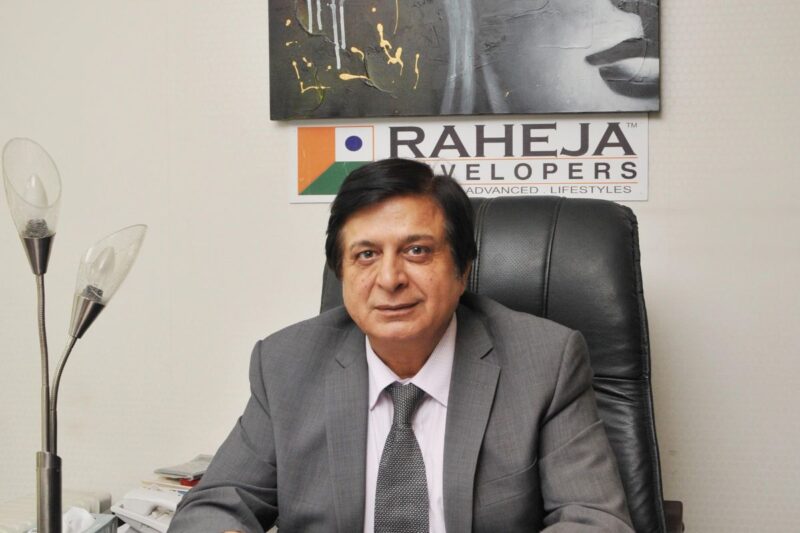
Raheja Developers Limited (RDL), incorporated in 1990 by Navin M. Raheja, is a Delhi-headquartered real estate company (not to be confused with the unrelated K Raheja Corp or Raheja Universal groups) that has built extensively across Gurugram and the wider National Capital Region, working at various points with contractors including Shapoorji Pallonji, Tata Housing, and Dubai’s Arabtec Construction, the builder of the Burj Khalifa, on its flagship “Raheja Revanta” towers. Today, the company is formally under insolvency proceedings before the National Company Law Tribunal (NCLT), a fact its own Wikipedia entry now records in its opening line.
The current crisis: a ₹2,426 crore fraud allegation and repeated ED raids
The most serious chapter is unfolding right now, in 2025 and 2026.
June 27, 2025: The Enforcement Directorate (ED) conducted its first major search operation against Raheja Developers, covering 13 locations across Delhi, the NCR and Mohali under Section 17 of the Prevention of Money Laundering Act (PMLA)
April 25, 2026: The raids reportedly yielded incriminating documents, digital evidence, bullion worth ₹15.82 crore, and foreign currency equivalent to ₹15 lakh. The searches specifically concerned “alleged fraud with the home buyers and non-delivery of flats in its project ‘Raheja Revanta‘,” according to officials cited by the Business Standard.
According to the ED’s own findings, Raheja Developers mobilised approximately ₹2,425.99 crore from nearly 4,600 homebuyers across its various residential projects, with a substantial portion allegedly “diverted and utilized for purposes other than the development and completion of the promised projects”. The case rests on multiple First Information Reports (FIRs) registered by the Economic Offences Wing (EOW) of Delhi Police, filed on the basis of complaints from a large number of aggrieved homebuyers.
That means the ED has now provisionally attached assets worth roughly as much as the entire sum the company is accused of collecting from homebuyers in the first place — a striking marker of the scale investigators believe is involved. Properties attached belong not only to Raheja Developers Ltd itself, but also to related entities named as N.A. Buildwell Pvt. Ltd. and Riyasat Palaces Ltd., and to Navin M. Raheja and his family members personally.
Separately, the Delhi High Court has sought the ED’s response to a plea by Nayan Raheja seeking to quash a 2022 Enforcement Case Information Report (ECIR) against him, with his counsel arguing there is no material showing his direct involvement and undertaking continued cooperation with the probe.
The older record: 2010–2019
Raheja Developers’ regulatory troubles did not begin with the ED in 2025. They stretch back at least sixteen years:
- 2010: A raid by Indian Income Tax authorities led to the recovery of tax evasion amounting to ₹80 crore.
- 2014: Investigative outlet Cobrapost ran a sting operation, “Operation Black Ninja,” against multiple real-estate developers, alleging that Raheja was among several firms willing to accept black money for property deals. Following the sting, the Central Board of Direct Taxes (CBDT) ordered a tax probe into Raheja and 34 other developers.
- 2014: The Prime Minister’s Office ordered Haryana’s state government to probe complaints relating to alleged irregularities in Raheja’s “Atharva” housing project in Gurgaon, as reported by Forbes India. A subsequent probe by the State Level Expert Appraisal Committee led to 0.8 acres of the Atharva project being sealed for construction carried out without the required Environmental Clearance.
- October 2019: One of Raheja’s Gurugram projects was among five builders fined by authorities for flouting pollution norms.
- July 2019: Raheja Developers faced its first insolvency proceeding, admitted under Section 7 of the Insolvency and Bankruptcy Code on a homebuyer complaint over delayed flat delivery. The NCLAT later observed that the buyers’ real intent was a refund, reserved its order in September 2019, and in January 2020 removed the Interim Resolution Professional, restoring the board’s control of the company.
That last episode is instructive on its own: even when homebuyers succeeded in dragging the company before the insolvency tribunal in 2019, the company’s board regained control within six months, and the underlying possession disputes continued for years afterward, as the 2021–2026 record below shows.
Round two: insolvency returns, project by project (2024–2026)
Unlike the 2019 episode, where the whole company was briefly threatened with insolvency and then rescued, the current wave of Corporate Insolvency Resolution Process (CIRP) filings has been project-specific — a legal strategy that appears to have contained the damage to individual projects rather than the parent company, at least until the ED’s PMLA attachments arrived on top:
- Raheja Shilas (Low Rise): NCLT admitted a CIRP petition on 19 November 2024, brought by more than 40 homebuyers claiming approximately ₹112.9 crore; the NCLAT subsequently confined the CIRP to the Shilas project alone rather than the whole company.
- Raheja Krishna Housing Scheme (Sohna): NCLT admitted a CIRP petition on 21 August 2025; again, the NCLAT restricted the process to that specific project.
- Raheja Revanta: On 8 June 2026, NCLT admitted a CIRP petition filed by 176 homebuyers holding 99 units out of a 932-unit project. The petitioners had paid roughly ₹137.16 crore in sale consideration and claimed a further ₹75.70 crore in interest, for a total claim of about ₹212.85 crore as of February 2024.
Revanta: the project at the centre of everything
If one project embodies the entire saga, it is Raheja Revanta in Sector 78, Gurugram, launched in 2011, marketed as the “tallest skyscraper in Haryana,” built in partnership with Arabtec (whose relationship with Raheja later broke down into a Delhi High Court contract dispute), and still, more than fifteen years on, at the centre of buyer complaints, regulatory bans and federal raids.
In a striking regulatory intervention, HRERA banned the sale and purchase of any unit in Raheja Revanta, ordered a forensic audit of the project, and froze all unsold inventory and bank accounts connected to it — explicitly citing “the alleged harassment of homebuyers by Raheja Developers for the past seven years”.
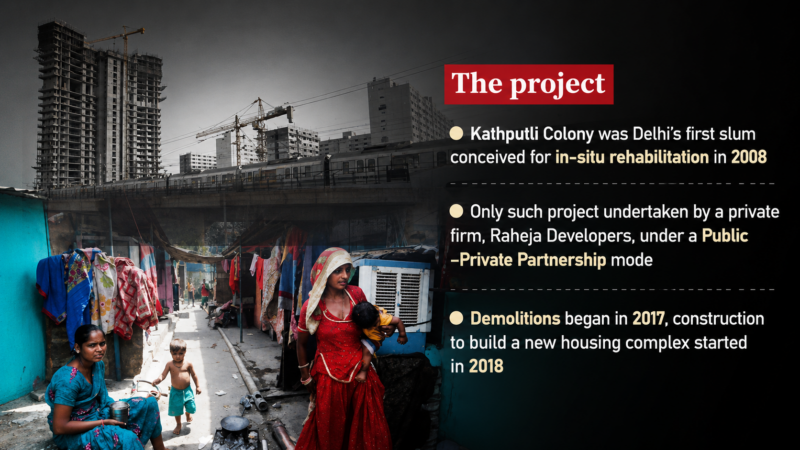
The same report noted the project had promised 962 flats, that homebuyers had already paid over 95% of the total amount, that the Revanta Gurgaon Flat Buyers Association had accused the promoters of diverting their money to other projects, and that the developer’s HRERA licence for the project had expired without renewal. Raheja Developers’ own defence, per that report, was that it could not safely hand over the “almost ready” towers without government-provided infrastructure — power, water, sewer lines and roads — that would put “over 1,000 families in danger of fire and health hazards” if occupied prematurely.
That is, in fact, the company’s consistent defence across most of these disputes: infrastructure delays attributable to government agencies, not fund diversion. It is a defence regulators and consumer forums have repeatedly rejected when it comes to individual refund claims — HRERA and the NCDRC have ordered refunds with interest regardless — even as the broader money-laundering allegations remain, as of this writing, under investigation rather than finally adjudicated.
Why this matters: harassment by delay, not just by default
Strip away the case numbers, and a consistent operating pattern emerges across sixteen years of documentation: collect a large share, frequently 66% to 95%, of a flat’s cost upfront or through “construction-linked” payment plans; let construction stall for five, seven, nine, sometimes closer to fifteen years; resist refund demands until a consumer forum, HRERA bench or the NCDRC compels one; and, when regulators or investigators finally attach assets, respond with denial and a RERA-supervised audit that, according to the company, shows no diversion at all.
For an individual homebuyer, “waiting nine years” is not a statistic, it is a decade of rent paid on top of an EMI, a family that outgrew the flat it never received, a retirement plan built around an asset that doesn’t exist. The NCDRC itself has made this point in blunt legal language, ruling flatly that “home-buyers could not be made to wait for possession for an unlimited period” and that a builder’s construction-linked payment demands become “unauthorised” once construction has visibly stopped. That a tribunal has had to say this more than once, against the same company, is itself the story.
The bottom line
Over sixteen years, Raheja Developers has been the subject of an income-tax raid recovering ₹80 crore in evaded tax, a black-money sting that triggered a CBDT probe into 35 developers, a Prime Minister’s Office-ordered state investigation, an environmental-clearance sealing order, a pollution fine, two separate waves of insolvency proceedings spanning at least three named projects, an HRERA sale ban with a frozen bank account and forensic audit, dozens of individual NCDRC and HRERA refund orders spanning waits of five to nine years, and — most recently — two rounds of ED raids in under a year, three provisional asset-attachment orders totalling nearly ₹2,400 crore, and an active Delhi High Court challenge from within the promoter family itself.

Somewhere inside that thicket of tribunal orders and press releases are roughly 4,600 real families who paid for homes they, in many documented cases, still do not have. The Gurgaon couple who finally got their money back after nine years are not the exception to Raheja Developers’ story. On the documented record, they are the rule.