Brochure Lies And Vanishing Roads: How DLF Primus In Gurugram Exposes The Real Estate Betrayal Of Homebuyers
The Supreme Court has pulled up DLF Home Developers and the State of Haryana over the blatant conversion of a promised 24-metre-wide internal road in the Primus project into green patches and parking. Nearly two-thirds of the earmarked stretch has disappeared. A CBI status report confirmed the deviation. The Court has extended the probe, added manpower, and warned that further leniency will end if conformity with the brochure is not achieved. This article critically examines how glossy representations were used to extract life savings from buyers while the actual project diverged, leaving residents with incomplete infrastructure and prolonged legal battles.


The Supreme Court’s recent observations on the DLF Primus project in Gurugram’s Sector 82A strip away the polished image that large developers carefully cultivate. What remains is a stark picture of substantial deviation from the very brochure and layout plan that induced buyers to invest their savings. A Bench of Justices Ahsanuddin Amanullah and R. Mahadevan examined maps, photographs and a CBI status report dated 3 August 2026. The findings left no room for ambiguity. Of the 147-metre stretch earmarked for a 24-metre-wide road cutting across the project, approximately 52 metres has been turned into a green patch.
Another substantial portion is being used for parking by residents and visitors. Nearly 100 metres, almost two-thirds of the promised thoroughfare, no longer exists as a road. The Court described the deviation as not minor but substantial. It expressed being at a loss to understand why, despite repeated opportunities, the project had still not been brought into conformity with the representations made to consumers. This is not an abstract planning dispute. It is the erasure of a core infrastructural feature that buyers were sold as a defining element of accessibility and internal circulation.
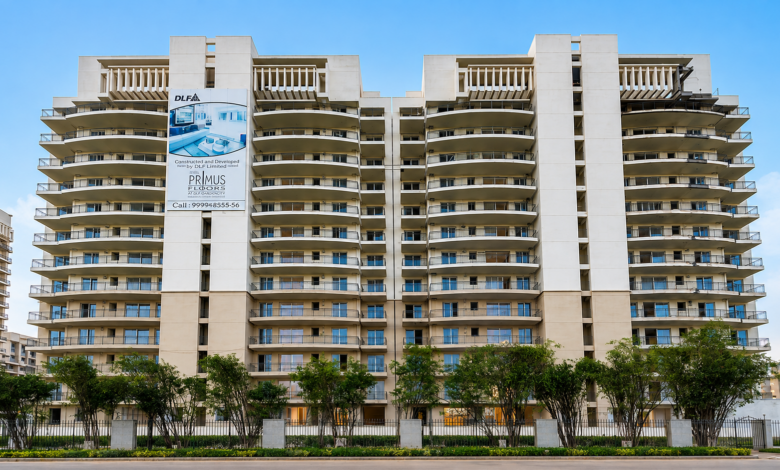
The DLF Brochure is a Binding Promise Rather Than Disposable Marketing Material
From the very beginning the Supreme Court has emphasised that the project as sold to consumers was required to be delivered and constructed strictly in accordance with the brochure and plan provided by DLF. That insistence is significant. For years the real estate industry has treated glossy brochures as aspirational marketing rather than enforceable commitments. Layouts showing wide internal roads, seamless connectivity and open spaces are used to trigger emotional and financial commitment. Once the bulk of the consideration is collected, often financed through housing loans, the actual construction begins to diverge.
In the Primus case the divergence is concrete and measurable. The original plan showed a continuous 24-metre-wide thoroughfare. What exists on the ground is a fragmented stretch colonised by landscaping and parked vehicles. The Court has now made it clear that brochures cannot be dismissed as mere promotional literature. They are promises. Developers are expected to deliver what they have represented. The Primus episode demonstrates how far that expectation has been ignored. The conversion of a major internal road into green space and parking is not a cosmetic adjustment. It is a fundamental alteration of the project’s character as marketed to buyers.
A Decade of Delay, Partial Certificates and Incomplete Infrastructure
The Primus story did not begin with the missing road. It began with a marketing campaign that presented the project as a premium residential complex with two 24-metre-wide sector access roads as key selling points. Buyers booked apartments in 2012, many paying nearly 95 per cent of the sale consideration under agreements that promised possession within 42 months, by February 2016. By the promised date the project was nowhere near completion. A partial occupation certificate was issued in October 2016 even though permanent water and electricity connections were absent, internal and external roads remained incomplete, and basic infrastructure lagged.
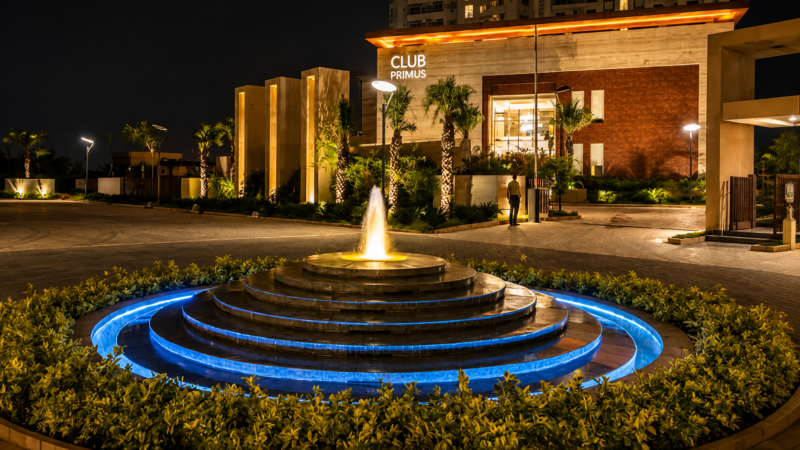
Possession was eventually offered, but the ground reality diverged sharply from the brochure. Permanent water supply arrived years later. Electricity remained generator-dependent for prolonged periods. Club amenities and other facilities were delayed or incomplete. Additional charges for super-area increases, gas, taxes and maintenance were imposed. The National Consumer Disputes Redressal Commission recorded findings of deficiency in service and unfair trade practice.
The matter then reached the Supreme Court, where the huge mismatch between legal requirements, representations and ground reality became impossible to ignore. For the affected families this timeline is not a sequence of legal milestones. It is a decade of EMI payments on incomplete homes, of tanker water and generator electricity, of uncertainty about proper access roads, of legal fees and of the slow erosion of the dream that once drove them to sign the buyer’s agreement.
The CBI Probe and the Court’s Refusal of Further Indulgence
The Supreme Court had earlier directed the Central Bureau of Investigation to conduct a fact-finding exercise into whether the 24-metre road was being maintained as represented or whether its character had been altered. The status report filed by the Superintendent of Police confirmed the deviation. On the CBI’s request for additional manpower the Court directed the Director of the CBI to assign two additional Inspectors so that the preliminary enquiry could be completed expeditiously.
The matter has been listed for 12 October 2026. The Court has made it clear that if the project is not brought into full conformity with the brochure by then, or if the State fails to take the necessary steps, it will not show any further indulgence and will proceed to pass appropriate orders.
This warning is significant. The Court has already characterised its earlier leniency as an extraordinary indulgence. Continued non-compliance will no longer be met with patience. The observations are intended to sensitise the parties to the seriousness of the issues involved. The CBI enquiry itself is to be conducted objectively and independently, uninfluenced by any remarks made during the proceedings. The expansion of the investigative team and the firm deadline signal that the Court is no longer prepared to treat the deviation as a matter that can be indefinitely deferred.
The State of Haryana’s Failure on Connectivity and Resident Welfare
The Supreme Court also recorded its dissatisfaction with the conduct of the State of Haryana and its officials. The State has failed both in acquiring the roughly 100-metre stretch of land needed to connect the project to the 60-metre Sector Road and in resolving pending litigation that has obstructed elections to the project’s Residents Welfare Association. These failures compound the problems created by the internal road deviation. Without proper external connectivity the society remains effectively constrained. Without a functional Residents Welfare Association the residents lack an organised institutional voice.

The Court has directed the Senior Additional Advocate General for Haryana and the concerned respondents to file detailed responses disclosing the steps taken to ensure that future construction complies strictly with the relevant statutes. The dual criticism of the developer and the State underscores that the Primus problems are not solely the result of private commercial decisions. Regulatory and administrative inaction has allowed the mismatch between brochure and reality to persist for years. When a partial occupation certificate is issued without permanent utilities and complete infrastructure, and when layout deviations of this magnitude continue without corrective action, the protective machinery has clearly not functioned as it should.
The Human Cost of Substantial Deviation and the Larger Pattern It Reveals
Behind the maps, photographs and status reports lie the concrete experiences of homebuyers who put their life savings into a project that was sold on the strength of specific representations. Many of them are middle-class families who invested towards the later stages of their careers. They planned their lives around the connectivity and internal circulation shown in the brochure. What they received was a diminished version in which a major road had been largely erased. The financial burden of prolonged EMIs, temporary arrangements and legal costs has been accompanied by emotional strain and a sense of betrayal.
The Supreme Court itself observed that the issues flagged by homebuyers may be just the tip of the proverbial iceberg and expressed concern that such instances are not one-off events in the organised real estate sector. The Primus case therefore functions as both a specific indictment of one project’s deviations and a window into a wider culture in which glossy representations are used to secure commitments while actual delivery is allowed to diverge.
The Court’s insistence that the project must be completed in all respects in accordance with the brochure, its expansion of the CBI probe, its criticism of state inaction and its clear warning against further delay together constitute a rare moment of sustained scrutiny. Whether that scrutiny produces lasting conformity or merely another round of partial compliance will be tested against the October deadline. For the residents of Primus the vanishing road is not an abstract planning issue. It is the physical embodiment of a promise that was made, paid for and then substantially withdrawn.