15.37 Crore Jan Dhan Accounts Are Inoperative. So, What Does That Number Actually Tell Us? India Opened The Accounts. But What Happened After That?
The Finance Ministry does not centrally maintain some of the data needed to determine how effectively Jan Dhan accounts are actually being used - including accounts with balances below ₹100, accounts closed in the last five years, and accounts blocked or frozen over suspected fraud or cybercrime. India has succeeded spectacularly at putting bank accounts in people’s hands. The unanswered question is whether it has succeeded equally well at putting those people inside the financial system.

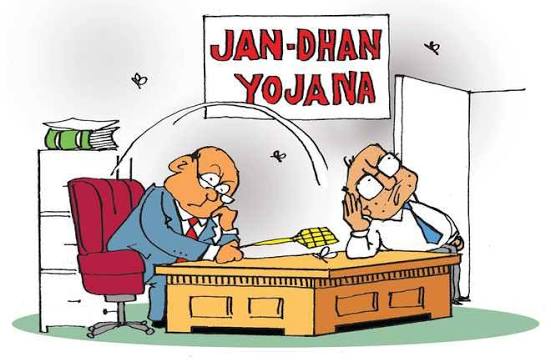
India’s Jan Dhan programme has reached a scale that would have been difficult to imagine when it was launched in 2014. According to information obtained through an RTI, 59.04 crore Jan Dhan accounts were in existence as of August 12, 2026, with total deposits of about ₹3.15 lakh crore.
But buried inside that enormous number is a figure that demands attention: 15.37 crore accounts were classified as inoperative. That works out to roughly one in every four Jan Dhan accounts.
The RTI data also shows that 5.72 crore accounts had zero balance. The two figures should not simply be added together (an account can be both inoperative and have a zero balance) while a zero-balance account is not necessarily inactive. But taken together, they provide an important snapshot of the enormous difference between the number of accounts that have been opened and the number that may be actively functioning as banking relationships.
The scale matters. These are not a few million forgotten accounts sitting at the edges of the banking system. They represent a substantial share of a programme that was created to bring people who had traditionally remained outside formal banking into it.
And that makes the 15.37-crore figure worth examining on its own terms.
An inoperative account does not necessarily mean its owner has been permanently excluded from banking. Nor does it establish that the Jan Dhan programme has failed. An account can become inactive for a range of reasons, and the existence of an inoperative account does not tell us why it stopped being used.
But it does establish something important: the headline figure of accounts opened cannot, by itself, tell us how deeply the programme has penetrated people’s financial lives.
That distinction becomes more significant when the programme’s success is measured at a scale of nearly 60 crore accounts. The bigger the number of accounts, the more important it becomes to understand what is happening to them after they are opened.
Where Are These Inoperative Accounts?
The national figure becomes more revealing when broken down by state. The largest absolute numbers of inoperative Jan Dhan accounts are concentrated in some of India’s most populous states, with Uttar Pradesh accounting for 3.23 crore, followed by Bihar with 1.59 crore, Madhya Pradesh with 1.35 crore, West Bengal with 1.02 crore and Maharashtra with 97.94 lakh.
These numbers, however, need to be read against the size of each state’s Jan Dhan base. Uttar Pradesh, for instance, also has the country’s largest number of Jan Dhan accounts, at more than 10 crore. A large number of inoperative accounts in such a state is therefore not, by itself, evidence that its banking inclusion programme is performing worse than that of a smaller state.
The more useful measure is the proportion of accounts that are inoperative.
That distinction matters because absolute numbers tell us where the largest pool of inactive accounts is located; the ratio tells us where inactivity is most pronounced relative to the number of accounts opened.
The state-wise data therefore offers two different stories. One is about sheer scale: India’s biggest states contain millions of accounts that are no longer classified as operative. The other (and potentially more important) is about whether some states have been less successful at converting account ownership into sustained banking activity.
That is a question the headline national figure alone cannot answer.
The Missing Data Behind the Accounts
The RTI response raises another, less obvious issue. While the government can provide the total number of Jan Dhan accounts, their aggregate deposits and the number classified as inoperative, it does not centrally maintain several categories of data that could help explain what is happening inside those accounts.
The Finance Ministry does not centrally maintain data on Jan Dhan accounts with balances below ₹100, accounts closed during the previous five years, or accounts that have been blocked or frozen because of suspicious transactions or cyber fraud.
That matters because these are not minor details if the objective is to understand whether financial inclusion is working beyond the point at which an account is opened.
For example, knowing that an account has zero balance tells us very little without knowing whether it has received money recently, whether the account holder uses it for transactions, whether it is one of several accounts held by the same person, or whether it was opened and subsequently abandoned.
Similarly, an account that is frozen because of a suspected cyber-fraud transaction is very different from an account that has simply fallen into disuse. Putting both into a broad universe of accounts without being able to distinguish between them makes it harder to understand the actual health of the banking relationship.
The problem, therefore, is not simply that some Jan Dhan accounts are inoperative. It is that the available central data does not appear to provide a complete picture of why accounts are inactive, what happens to them afterwards, or how frequently they are actually being used.
For a programme whose stated purpose extends well beyond opening bank accounts, those gaps in the data are significant.
What Does “Inoperative” Actually Mean?
Before drawing conclusions from the 15.37-crore figure, there is an important distinction to make: an inoperative Jan Dhan account is not necessarily a failed account, and it does not automatically mean that the account holder has been excluded from the banking system.
Under banking rules, an account can become inoperative when there have been no customer-induced transactions for a specified period. That status can subsequently be changed if the customer resumes activity and completes the required process with the bank.
This matters because inactivity can have many explanations. A customer may have opened a Jan Dhan account but rarely needed to transact through it. Someone who has migrated for work may not use the account regularly. Another person may have more than one bank account and conduct most transactions through a different one.
There is also an important distinction between inoperative and zero balance.
A zero-balance Jan Dhan account is not, by definition, evidence that the account has been abandoned. Jan Dhan accounts were designed to allow customers to open and maintain accounts without a minimum balance requirement. A person can therefore have a zero balance and still have an active banking relationship.
Conversely, an account with money in it is not necessarily being actively used.
The 15.37-crore number should therefore be read for what it establishes – and no more. It tells us that a substantial number of Jan Dhan accounts were classified as inoperative at the time of the RTI response. It does not, by itself, tell us why those accounts became inactive or whether their owners remain financially connected through other channels.
That distinction is crucial before turning the number into a verdict on the programme.
Jan Dhan Was Never Just About Opening Bank Accounts
The scale of the programme is important because the Pradhan Mantri Jan Dhan Yojana was conceived as something considerably larger than a campaign to increase the number of people with bank accounts.
Launched in August 2014, the scheme was intended to provide access to formal banking for people who had traditionally remained outside the system. A basic bank account was the entry point, but the broader architecture was meant to connect households with savings, remittances, credit, insurance, pensions and government transfers.
That distinction is important when looking at today’s numbers.
If the principal achievement is measured as 59 crore accounts opened, the programme appears to have reached an extraordinary scale. But an account number is only the beginning of the relationship between a customer and the formal financial system.
The more substantive question is what that account enables the customer to do.
Does money regularly enter the account? Is it being used for payments or savings? Is the account receiving government benefits? Has the account holder gained access to insurance or pension products? Has formal banking reduced the need to rely on informal sources of credit?
None of those questions can be answered simply by counting the number of accounts.
This does not diminish the achievement of bringing hundreds of millions of people into the banking network. It does, however, change the question that needs to be asked about the programme after more than a decade.
Opening the account was the first step. The more difficult task is keeping that financial connection alive and making it useful.
What Happens After an Account Stops Being Used?
The next question is what happens when a Jan Dhan account becomes inoperative. The status itself does not mean that the money in the account disappears or that the customer loses ownership of the account. But it does mark a break in regular customer-initiated activity.
Banks are required to follow procedures for dealing with inoperative accounts and for reactivating them. Customers can generally seek reactivation through their bank, subject to the applicable verification and KYC requirements.
That makes the distinction between inactivity and exclusion particularly important.
A customer who has stopped using a Jan Dhan account may still have another active bank account. They may have moved, changed banks, stopped receiving payments through that account, or simply have little regular income to transact with. The RTI figure does not identify which of these circumstances applies.
But there is another possibility worth examining: whether some accounts were opened as part of the rapid expansion of banking access but never developed into regular financial relationships.
That cannot be established from the inoperative figure alone.
What the number does establish is that 15.37 crore accounts had reached a status in which regular customer-induced activity was no longer taking place. The missing piece is the customer-level story behind those accounts.
And that is where the limitations of the available central data become important. Without a fuller picture of transaction frequency, account closures, balances and the reasons for inactivity, the number tells us that a large part of the Jan Dhan network is not currently operating in the way an active bank account does – but not necessarily why.
The Zero-Balance Question
The 5.72 crore Jan Dhan accounts with zero balance is perhaps the most eye-catching number in the RTI response. But it is also the number most likely to be misunderstood.
A zero balance does not mean an account is inactive. Jan Dhan accounts can be maintained without a minimum balance, and an account holder may legitimately have no money sitting in the account at a particular point in time while still using it for payments or receiving government transfers periodically.
The figure therefore cannot be presented as 5.72 crore people having effectively abandoned banking.
What makes it relevant is the question of how zero-balance accounts intersect with the 15.37 crore inoperative accounts.
If an account has no balance but remains active, it tells us something very different from an account that has no balance and is also classified as inoperative. Unfortunately, the headline figures do not provide enough information to establish the precise overlap between the two categories or explain the circumstances behind them.
That is why the zero-balance number should not be treated as proof that financial inclusion has failed. Instead, it exposes a broader measurement problem.
An account can be counted. A balance can be counted. But neither number, on its own, tells us whether a person is actually using the formal financial system.
For Jan Dhan, that distinction is particularly important because the programme was intended to create continuing access to banking and related financial services – not simply a bank account that exists on paper.
What the Numbers Still Cannot Tell Us
The RTI data gives us a substantial snapshot of the Jan Dhan programme, but it also leaves some of the most important questions unanswered.
We know that 59.04 crore accounts exist. We know that 15.37 crore are classified as inoperative and that 5.72 crore had zero balance. We also know the total deposits held across these accounts.
But we do not have, from these figures alone, a complete picture of how frequently account holders are transacting, how many accounts are being used as people’s primary banking accounts, how many are receiving regular government transfers, or how many have moved on to other formal financial products.
Those distinctions matter because financial inclusion is not a binary condition.
Someone who has a bank account but never uses it occupies a very different position from someone whose account receives wages or government benefits every month, who saves through it and uses it to make payments.
The same applies to inactivity. An inoperative account may represent a person who has disengaged from formal banking – or simply someone whose financial life has shifted elsewhere. The RTI data does not provide enough information to separate those cases.
This is therefore not a story in which 15.37 crore automatically equals 15.37 crore failures.
It is a story about what happens when the easiest measure of financial inclusion – whether an account exists – is no longer sufficient to describe what is happening inside the system.
And after more than a decade of Jan Dhan, that may be the more important question to ask.
From Access to Active Financial Inclusion
The numbers ultimately point to a distinction that is easy to miss when financial inclusion is measured primarily through account ownership.
Access is not the same thing as participation.
Jan Dhan has unquestionably expanded access to formal banking on an extraordinary scale. But the next measure of success has to be whether those accounts remain useful to the people they were created for.
That means looking beyond whether an account exists and asking whether it is being used for the purposes the programme was designed to facilitate: receiving money, making payments, saving, accessing government transfers and connecting households with insurance, pensions and formal credit.
The 15.37 crore inoperative accounts do not answer those questions. Nor do the 5.72 crore zero-balance accounts.
But they do make those questions harder to ignore.
The central challenge now is therefore not necessarily opening more accounts. It is understanding why such a large number have become inoperative, what distinguishes an inactive account from an actively used one, and whether the people behind those accounts remain connected to formal finance through other channels.
That requires better measurement.
Because if India wants to claim the success of financial inclusion, the most meaningful number may no longer be how many accounts were opened.
It may be how many remained useful after they were opened.
The Last Bit, The Question Behind 15.37 Crore
The 15.37-crore figure does not, on its own, provide evidence that Jan Dhan has failed. It does something more useful: it exposes a question that the headline account numbers cannot answer.
India has built a vast banking network for people who were previously outside formal finance. The scale is undeniable. But once the number of accounts reaches nearly 60 crore, simply counting accounts becomes an increasingly blunt measure of success.
The real test is what happens afterwards.
Do these accounts remain active? Do they receive and hold money? Are they used regularly? Do account holders actually gain access to the wider financial services that Jan Dhan was intended to connect them with?
And perhaps most importantly, does the government have enough consolidated data to know the answers?
The RTI response suggests that there are important gaps.
That does not erase the achievements of Jan Dhan. But it does complicate the story of financial inclusion. India may have solved the problem of getting millions of people into the banking system. The harder problem is knowing how many have stayed there – and what the banking system is actually doing for them.