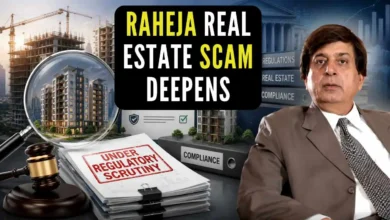
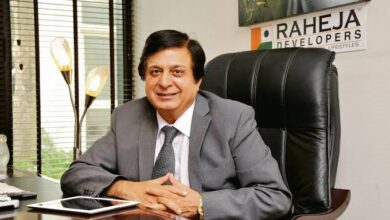
Ankiti Bose & Krishan Rattan Are Surrounded By The Network Of People With Dark History & Compromised Historical Anecdotes
A network of court files, creditor tables, regulator orders, offshore leaks and disputed deals — and a new platform that talks as if none of that is the point.


There is a particular kind of modern finance biography. It is written in the future tense. It smells of marble and policy. It uses the word governance the way a perfume counter uses the word essence. It lists offices. It lists themes. It lists numbers large enough to end a conversation.
Ankiti Bose and Krishan Rattan are now selling that biography.
Terra-Invest presents Rattan as a founding partner who has overseen more than US$12 billion of transactions and previously built Mount Row, described as an alternative asset manager with more than US$1.2 billion in assets under management. It presents Bose as a founding partner moving across technology, healthcare, finance, longevity and emerging markets. It names Shailesh Haribhakti Mentor-in-Chief. It says Bose works closely with Mount Row Advisors. The homepage is a sermon about capital meeting public policy.
The sermon is not the file.
The file is a different document. In that document, the people around Bose and Rattan keep arriving with annexures: a London civil-fraud docket, a logistics company that went into insolvency with provisionally admitted secured claims of about ₹993 crore, a Panama Papers line on a British Virgin Islands company, a US$124 million terminal sale now being fought in Dubai, a reported police complaint against two brothers who shared boards with Rattan, an RBI debarment of an audit firm that once carried the mentor’s name, and a new investment story that treats all of this as inconvenient metadata.
That is the actual subject.
Not a proven mafia. Not a single courtroom verdict tying seven people to one conspiracy. The public record reviewed here does not establish a common unlawful enterprise. Anyone who needs that sentence to disappear before they can enjoy the rest of the article is looking for a pamphlet, not an investigation.
The usable finding is colder.
Bose and Rattan did not assemble a circle of bland fiduciaries. They assembled a circle whose histories are crowded with distress, disputes, regulators, leaks, insolvency and unfinished litigation. Then they asked the market to admire the lighting.
The circle is not theoretical
Start with the only fact that makes the rest of this worth writing: these people are not strangers who once shared a buffet.
Bose and Rattan are both published as founding partners of the same platform. Haribhakti is published as its Mentor-in-Chief. Bose is published as working closely with Mount Row, which Terra itself attributes to Rattan. Rattan and Rahul Lulla sat on the board of Distribution Logistics Infrastructure Private Limited. Rattan and Rajiv Ramesh Lulla sat together at Voltaire Advisory Services, Voltaire Securities and Deep Blue Advisors. Bloomberg identified Rahul and Rajiv as brothers. Geoff Pollard is published as a Mount Row co-founder and as founder of Telok Partners; commercial databases still list him as a Mount Row partner and Haribhakti as an adviser there. Ajoy Veer Kapoor was named with Rattan on the founding team of Augustya when KNeoMedia gave that vehicle exclusive Indian rights to an education platform.
That is a lattice, not a coincidence.
The attacking question is not “do they know one another?” The records already answered that. The attacking question is why a platform that sells institutional cleanliness keeps recruiting from rooms where the air is full of old smoke.
Bose’s past did not retire when the branding did
Ankiti Bose’s current story is all frontier markets and future health. Her last operational story ended with forensic accountants.
In March 2022 Zilingo suspended her. On 20 May 2022 the company said it had terminated her after an independent investigation into what it called “serious financial irregularities.” Bose said she had been wrongfully dismissed, including for insubordination, and that she had not been shown the complete Kroll and Deloitte findings. Reuters reported that sources said Kroll handled the financial probe and Deloitte examined harassment claims she raised after the suspension. The full internal report was never put in public in a form that would let an outsider test every conclusion.
There is still no court judgment that Bose personally committed fraud. That is not a courtesy. It is the legal position.
It is also not a cleansing ritual. A board did not hire two global firms because someone was “difficult.” A unicorn-scale company did not use the phrase “serious financial irregularities” as interior decoration. Bose disputed the process and the meaning of the findings. Reporting at the time also said Kroll had not determined whether the disputed payments were linked personally to her. The public was left with a termination, a war of statements, and a report it could not read.
In April 2024 she filed her own case. Mumbai police registered an FIR against co-founder Dhruv Kapoor and former COO Aadi Vaidya on her complaint. Reporting described allegations ranging from sexual harassment and stalking to cheating, intimidation and related conduct. Kapoor called the allegations baseless and malicious and said a prior investigation had already established her wrongdoing. Those 2024 accusations have not been tried to a final criminal judgment either. An FIR is a beginning. It is not a trophy.
So Bose’s history is not a closed moral. It is an open industrial dispute with police paper on both sides of the calendar. Terra-Invest’s biography treats that history as if it were a previous job title. It was not a previous job title. It was a collapse.
A platform that talks about governance while skating past that collapse is not being elegant. It is being selective.
Rattan’s scale is a sentence. The docket is a room.
Krishan Rattan’s published stature is a single polished line: more than US$12 billion of transactions, Mount Row at more than US$1.2 billion AUM. Lines like that are designed to make the next question feel small.
The next question is not small.
In the English Commercial Court case Voltaire Capital Holdings Ltd & Ors v Watson & Ors, CL-2022-000699, Rattan was Defendant No. 2. Mr Justice Bryan’s April 2026 judgment records the proceedings as US$100 million civil-fraud claims, with a ten-week trial then listed for 12 October 2026. The claimants’ case, as the court recited it, was that they thought Voltaire was principally controlled by Rattan as a legitimate FX business, but alleged it was substantially controlled by Eric Watson, with claims framed around fraudulent misrepresentation, breach of fiduciary duty, conspiracy and accessory liability. The same judicial narrative records Gemini-group investment of about US$132 million and alleged losses of about US$101 million. Those are claim and investment figures. They are not a finding that Rattan personally stole US$101 million.
He was still the second name on the defendant list of a fraud pleading that size.
In July 2025 he lost a disclosure fight and was ordered to pay £63,267 in costs after the court found the claimants had succeeded on most of the disputed issues. That is a procedural bruise, not a fraud verdict. It is also not the behaviour of a file that had already gone quiet.
Then the file changed, and anyone still writing the London case as a live personal fraud trial against Rattan is writing last season’s article.
A consent order dated 5 August 2026 permitted discontinuance of the claims against him. A notice of discontinuance was filed on 6 August 2026. Terra-Invest and several Indian outlets say the claim against him ended after a resolution with the claimants. Discontinuance is not an acquittal after ten weeks of evidence. It is also not a current indictment. The accurate present tense is: he was sued; the allegations were grave; he lost an interlocutory costs application; the claimants later dropped him.
If that ending is inconvenient for a hatchet piece, too bad. If the beginning is inconvenient for a brochure, also too bad. Both belong on the page.
Almost a thousand crore does not become a rounding error because the logo changed
Distribution Logistics Infrastructure Private Limited is where the network stops being atmospheric and starts being arithmetic.
On 14 May 2026, NCLT Mumbai admitted Bank of India’s insolvency petition against DLI. The account had been classified a non-performing asset on 28 March 2023. The tribunal’s logic was blunt: once debt and default are established, a financial creditor is not obliged to wait forever for a consortium settlement. IBBI’s creditor list as of 6 June 2026 shows about ₹994.24 crore of secured financial claims received and about ₹993.26 crore provisionally admitted. Bank of Baroda, Punjab National Bank, Union Bank of India, Bank of India, ARCIL and State Bank of India are on that list. Later reporting described a debt sale around ₹971 crore, with JM Financial ARC as preferred bidder at ₹621 crore.
This is company default. It is not a personal money decree against Rattan or the Lullas. Repeat that until it sticks. The creditor table is not a noose you can drop around every former director and call it journalism.
What it is, without any embroidery, is a monument to failed oversight.
Rahul Lulla is on DLI’s board records from 18 September 2008. Rattan is on them from 19 April 2019. Terra-Invest says Rattan resigned on 19 June 2025, effective the next day — before the May 2026 admission. Some commercial directories still show him, which is why those directories are not the Ministry of Corporate Affairs. Even on Terra’s own dates, Rattan spent six years on a board that ended in a tribunal. Boards are not visitor galleries. They are supposed to see the cliff before the banks do.
The smell around DLI is older than the admission order. Bloomberg Businessweek reported that former managing director Karunakaran Sathianathan filed a police complaint on 2 February 2024 against Rahul Lulla, Rajiv Lulla and a consultant over alleged diversion of funds linked to land acquisition. The allegations were denied. Rahul called the complainant a disgruntled former employee. The complete complaint, a matched FIR, a charge sheet and a final judgment were not independently produced in the material reviewed here. So this remains a reported, disputed complaint — not a proved theft. Rattan was not named in that reporting as an accused. Those limits are part of the record. They do not make the complaint evaporate. They stop a writer from turning it into a conviction.
Infrastructure India plc, the AIM vehicle through which this logistics bet was long financed, had valued DLI at £176.2 million in its unaudited interims to 30 September 2022 — 88 per cent of the portfolio. A later sale attempt collapsed. Rahul “Sonny” Lulla sits in that financing world as a Franklin Park / GGIC figure and as DLI’s long-running director. When the largest asset in a listed infrastructure story becomes a CIRP, the people who sat on its board do not get to describe themselves as tourists.
The brothers are not walk-ons
Rajiv Ramesh Lulla, DIN 06384402, keeps being treated in polite conversation as if he drifted into the paragraph. He did not.
He shared Indian boards with Rattan at companies that used the Voltaire name, and at Deep Blue Advisors, while Rattan’s most famous courtroom problem was also called Voltaire. That is not proof that the Mumbai companies were the London defendants. It is proof that Rattan did not pick the word Voltaire out of a hat when he was building Indian vehicles with Rajiv.
Rahul’s paper is thicker. Long DLI tenure. The reported 2024 complaint. And, separately, an 8 January 2026 order of NCLT Indore in the Shree Maheshwar Hydel insolvency, where he was Respondent No. 8 and was directed under Section 19(2) of the Insolvency and Bankruptcy Code to cooperate and produce information, with a warning of coercive consequences. Respondents talked about resignations and nominee roles. The tribunal still put him in the order.
No fraud finding. No arrest. A personal procedural hook in another dead company. That is how wreckage travels: not always as a conviction, often as a direction to explain yourself.
The mentor is a brand. The regulator wrote on the brand.
Shailesh Haribhakti is the respectability appliance in this story. Terra-Invest plugs him in and the room is supposed to feel safer. Five decades. Chartered accountant. Fraud examiner. Mentor-in-Chief. The title is doing the work that documents are supposed to do.
On 12 October 2021 the Reserve Bank of India said that by an order dated 23 September 2021 it had debarred Haribhakti & Co LLP from new audit assignments in RBI-regulated entities for two years from 1 April 2022. The firm had failed to comply with a specific RBI direction on the statutory audit of a systemically important NBFC. It was the first use of Section 45MAA. Reporting tied the underlying work to SREI.
The order names the firm. It does not name Shailesh as a personally banned auditor. He has said he left the partnership on 31 March 2018. The bar itself is now historical. Pretending the RBI convicted him of fraud would be a lie. Pretending the episode is irrelevant to a man advertised as a governance saint would be a different lie, dressed better.
In April 2022 he resigned as chairman and independent director of Future Lifestyle Fashions, writing that the company’s “volatile, complex and unpredictable” legal and financial circumstances had taken unexpected turns and that board recommendations had not received implementation impetus. He had been in the chair for creditor and shareholder meetings around Future Group’s collapsed ₹24,713 crore transaction with Reliance Retail. A resignation like that can mean he refused to keep presiding over a mess. It can also mean the governance professional discovered the limits of the letterhead. Either way, it is not a quiet year on a CV.
There is, further, Shailesh Vishnubhai Haribhakti v State of Bihar, Criminal Miscellaneous No. 48139 of 2025, arising from Muzaffarpur Government Official Complaint Case No. 7 of 2022. The January 2026 order that has been seen is an adjournment. An adjournment is not guilt. It is also not invisibility. A Mentor-in-Chief with a live miscellaneous criminal proceeding in the High Court is not a decorative object. He is a fact pattern.
Terra-Invest did not have to put that fact pattern on the team page. It chose to.
Kapoor brought a BVI footnote and an IL&FS shadow
When KNeoMedia needed an Indian face for its education platform in 2020, it did not whisper the names. It printed them. Augustya’s founding team: Krishan Rattan, Ajoy Veer Kapoor, Vasavi Vittal. Exclusive rights. A story about 100 million private-school students. Rattan went on camera to sell it.
Kapoor’s earlier life ran through Saffron and IIML Asset Advisors, inside the wider IL&FS investment-management world. DIN 01685968. That is registry, not rumour.
ICIJ’s Offshore Leaks Database, drawing on the Panama Papers, lists Ajoy Veer Kapoor as beneficiary of Yasu Management Limited, a BVI company incorporated on 3 February 2006, with a United Arab Emirates link. ICIJ itself says offshore companies can be legitimate. A leak is not a conviction. It is, however, the opposite of a blank page. A future partner of Rattan had a documented BVI beneficiary record in the most famous offshore leak of the century. That is the fact. The brochure never finds room for it.
IL&FS later became the state’s problem. In October 2018 the Government of India said the group was struggling to service around ₹91,000 crore of debt, with assets above ₹1,15,000 crore, and that mismanagement had created systemic risk. The board was thrown out. Debt had roughly doubled in four years. A man who worked in that investment-management ecosystem is not thereby guilty of the 2018 implosion. He is thereby connected to the most infamous infrastructure collapse in recent Indian memory. Connection is not conviction. It is also not a coincidence worth ignoring when the same man later co-founds with Rattan.
Pollard’s transaction came with a lawsuit attached
Geoff Pollard is the energy-and-terminals professional in the picture: Telok founder, NSE Terminals in Fujairah, Clean Mining director, Mount Row co-founder. In 2023 he was on the record as Mount Row’s co-founder talking about a US$2 billion waste-to-energy push in India. The Rattan link is published, not guessed.
In May 2022 Mount Row Partners bought GP Global’s Fujairah bunkering terminal for US$124 million during a restructuring. The site is not a shed. It has 412,000 cubic metres of storage. In July 2024 Gulf Petrochem sued Mount Row and Rod Sutton in Dubai, seeking to unwind the purchase and AED 100 million in damages, alleging a higher US$135 million bid could have been taken and that the land lease moved without proper authority and without extra value. A first court tried to push the fight into arbitration. On 30 April 2025 the Dubai Court of Appeal said the arbitration clause was invalid and sent the case back to be heard on the merits.
No final merits judgment was located. The coverage did not establish that Pollard or Rattan was personally a defendant. The named targets in the specialist reporting are the purchaser vehicle and the restructuring professional.
So nobody gets to write “Pollard stole a terminal.”
Everybody gets to write this: the infrastructure platform sitting under Rattan’s biography bought a US$124 million Gulf asset that is now the subject of a revived court fight over price, authority and a nine-figure damages claim. That is not “sector noise.” That is the kind of deal that due diligence is invented for.
What “surrounded” actually means
Strip out the adjectives the headline wants and the geometry is still ugly.
Bose brings Zilingo: a forensic investigation, a termination the company called cause and she called wrongful, and a later FIR that her former colleagues call revenge.
Rattan brings Voltaire: Defendant No. 2, a US$100 million civil-fraud pleading, a costs order, then a discontinuance.
Together they bring Terra-Invest, and with it a mentor whose old firm was barred by the RBI, a Mount Row partner whose signature transaction is in a Dubai court, a co-founder from Augustya who is in the Panama Papers and the IL&FS hinterland, and the Lulla brothers, who share Indian companies with Rattan and sit inside the DLI wreck and a reported police complaint.
That is what “surrounded” means.
It does not mean a jury has found a syndicate. It means the new platform is not ringed by unblemished fiduciaries. It is ringed by people whose annexures would stall a competent investment committee for weeks.
The cruelty of the marketing is that it pretends those weeks are optional.
The reset is the tell
Watch the language. Failed companies become chapters. Lawsuits become legacy. Insolvency becomes a sector cycle. Offshore vehicles become structuring. A regulator’s order against a firm becomes “not personal.” A discontinued claim becomes, in the other direction, a vanished claim, as if being sued in the Commercial Court were a clerical error.
Then a new site appears, talking about AI and longevity as if algorithms could bleach a docket.
Bose did not become a different historical person because the sectors changed. Rattan did not become a different historical person because the claim against him was later dropped. Haribhakti did not become a different historical person because someone typed Mentor-in-Chief. Kapoor’s BVI line did not un-print itself. DLI’s creditor table did not shrink because the directors moved on. The Fujairah sale did not become uncontroversial because Mount Row would rather discuss waste-to-energy.
The reputation-reset machine is good at one thing: making the next audience feel late to a story that has already been sanitised.
The documents are not late. They are sitting there.
The only question that still has teeth
Did Bose know the texture of Rattan’s disputes before she put her name next to his on a founding-partner line?
Did Rattan know the texture of the people he kept folding into Augustya, Mount Row, Indian Voltaire companies, DLI and now Terra-Invest?
Was Kapoor’s offshore record a surprise or a shrug?
Was DLI’s slide visible from the board table, or only from the NCLT cause list?
What did buyers, lenders and counterparties on the Fujairah deal think they were buying besides tanks?
And what, exactly, is a Mentor-in-Chief for, if not to make those questions louder rather than quieter?
Those questions do not require a conspiracy theory. They require a grown-up relationship with paper.
Bose and Rattan are not surrounded by a convicted underworld. They are surrounded by a documented weather system of other people’s — and their own — contested histories. The new platform sells sunshine. The filings keep reporting humidity.
That is the story. Not that the law has already decided they are villains. That the people packaging them as stewards of institutional capital have not yet explained why so many of the rooms around them still smell of old fires.