Shailesh Haribhakti: The Man Behind the Reputation—and the Paper Trail That Demands Answers
A deep dive into disciplinary proceedings, criminal litigation, audit controversies, regulatory action and corporate-governance questions surrounding one of India's best-known chartered accountants

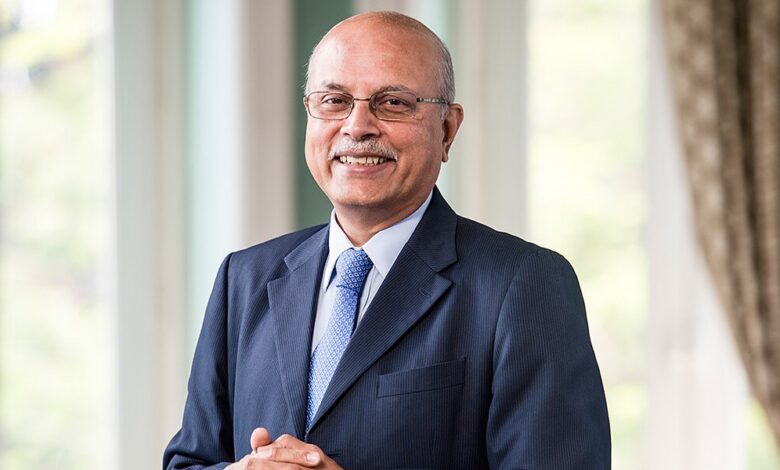
There are corporate reputations that are built over decades.
Then there are corporate reputations that become so polished, so institutionalised and so deeply embedded in India’s boardrooms that questioning them begins to look almost impolite.
Shailesh Vishnubhai Haribhakti belongs to the latter category.
A veteran chartered accountant. A corporate adviser. A boardroom heavyweight. An independent director. A mentor to businesses. A professional whose public biography is built around governance, risk management, auditing, fraud examination and corporate accountability.
The résumé is formidable.
But journalism is not the art of reproducing résumés.
It is the art of examining what exists beneath them.
And once Haribhakti’s public record is examined through court orders, ICAI disciplinary records, regulatory actions, parliamentary documents, corporate disclosures and published reporting, a far more complicated picture emerges.
It is a picture containing:
an ongoing ICAI disciplinary proceeding personally naming him;
five criminal prosecutions in which the Karnataka High Court declined to quash proceedings against him;
another criminal proceeding in Bihar in which he personally approached the Patna High Court;
a long-running audit controversy involving Haribhakti & Co.;
an RBI debarment of that firm;
a historical SEBI record criticising the firm’s audit oversight in the Karvy IPO controversy;
a separate ICAI finding of professional misconduct against another partner of Haribhakti & Co.;
corporate-governance disputes surrounding Future Lifestyle Fashions;
and a professional history that repeatedly places Haribhakti in the vicinity of some of India’s more consequential corporate controversies.
None of this, by itself, proves criminal guilt.
That is not the claim.
The claim is narrower—and far more defensible:
The public record surrounding Shailesh Haribhakti is considerably more complicated than his polished corporate profile suggests, and several material questions remain pending, disputed or unresolved.
That is not sensationalism.
That is the paper trail.
1. The first question: who exactly is Shailesh Haribhakti?
Haribhakti is not an obscure accountant whose name appears once in a regulatory footnote.
He has spent decades in the upper reaches of India’s corporate establishment.
Public company disclosures describe him as a chartered accountant and a senior corporate professional with experience in auditing, governance, risk management and financial oversight. He has also been associated with professional credentials relating to internal auditing and fraud examination.
He has held or holds prominent corporate positions.
That matters because the standard applied to a person whose professional identity is built around governance, oversight, controls, audit and accountability is necessarily higher.
If an ordinary businessman becomes embroiled in one regulatory dispute, it may remain one episode.
If a professional whose career is built around detecting risk repeatedly appears in records concerning audit failures, disciplinary proceedings and criminal litigation, it becomes a legitimate subject of public scrutiny.
The issue is not guilt.
The issue is accountability.
2. The most important current record: an ICAI disciplinary proceeding personally naming him
Perhaps the most consequential fact presently sitting in the public record is also one of the least discussed.
The Institute of Chartered Accountants of India has a disciplinary matter under the case number:
PPR/HPC/DD/58/INF/2018/DC/1860/2024
The proceeding concerns:
M/s. Haribhakti & Co. LLP, Mumbai
and, critically, the ICAI cause list expressly identifies:
CA. Shailesh V. Haribhakti — Membership No. 030823
as the “member answerable.”
This is not an anonymous complaint.
It is not a blog post.
It is not an allegation circulated on social media.
It is an official ICAI disciplinary proceeding.
More importantly, the matter has not simply disappeared into the archives.
The same case continued to appear in official ICAI hearing lists in 2024, 2025 and 2026, including the ICAI Disciplinary Committee’s 21 May 2026 cause list.
That means that as of the latest official material reviewed for this article, the question is not whether Haribhakti was once named in an ICAI proceeding.
He was.
The more important question is why a disciplinary proceeding bearing his name as the member answerable remains part of the official hearing record years after it originated.
And that question deserves an answer.
But the other side must be stated equally clearly:
The public cause lists located for this article do not constitute a final finding of misconduct against Haribhakti.
Until ICAI issues a final order, the proceeding remains a proceeding.
That is not a technical distinction.
It is the distinction between journalism and a predetermined verdict.
3. Five criminal prosecutions—and a High Court decision that did not go his way
Haribhakti’s legal history becomes even more difficult to dismiss when one examines the Karnataka litigation.
The matter arose from an inspection of a Future Value Retail Limited outlet at Bharath Mall, Bejai, Mangaluru.
The Karnataka High Court record states that the Legal Metrology authorities found pre-packed goods containing additional stickers carrying MRPs and criminal prosecution followed under the Legal Metrology Act and related rules.
Several individuals approached the Karnataka High Court seeking to have the prosecutions quashed.
The court did quash proceedings against various petitioners.
But there was a conspicuous exception.
Shailesh Haribhakti.
In the order dated 29 May 2019, the High Court expressly directed that proceedings continue against petitioner No. 4 / accused No. 4.
The fifth connected matter was considered on 11 December 2019, and again the High Court declined to quash the proceedings against Shailesh Haribhakti.
This detail deserves emphasis.
The court was not simply refusing to help everyone.
It examined the individual positions of the petitioners.
Some proceedings were quashed.
Proceedings against Haribhakti were left standing.
That is a documented judicial fact.
It does not prove that Haribhakti committed the alleged offence.
It does, however, establish that the Karnataka High Court found no basis at that stage to terminate the prosecution against him.
Five separate proceedings.
Repeated attempts to obtain relief.
Repeated judicial decisions allowing the matters to continue.
That is a significant part of any serious background profile.
4. The Bihar proceeding: another criminal case in the record
The legal history did not end in Karnataka.
A Patna High Court order dated 5 January 2026 identifies:
Mr. Shailesh Vishnubhai Haribhakti
as a petitioner in Criminal Miscellaneous No. 48139 of 2025, arising from a Muzaffarpur proceeding.
The order shows that Haribhakti had approached the High Court in the criminal matter and that the case was being heard alongside a connected proceeding involving Torrent Pharmaceuticals.
The court directed the matters to be listed again on 12 January 2026.
Again, the careful formulation is important.
The order establishes the existence of the criminal proceeding and Haribhakti’s role as petitioner.
It does not establish his guilt.
But it does demonstrate something that cannot simply be waved away:
Haribhakti’s name continued to appear personally in criminal litigation as late as 2025–26.
That makes it impossible to describe his litigation history as merely ancient corporate noise.
5. Karvy: when the auditor’s name enters a major securities-market controversy
Perhaps the most serious historical controversy involving Haribhakti & Co. concerns the Karvy IPO and demat-account scandal.
SEBI’s 2006 order examined a system in which large numbers of demat accounts were allegedly created using common addresses and other irregular practices.
SEBI specifically recorded that agents associated with Karvy opened accounts with the same addresses and said that this conduct was:
not checked or reported by Karvy’s internal auditors, Haribhakti & Co., or the relevant NSDL inspection teams.
The Parliamentary Standing Committee on Finance subsequently reproduced this issue in its examination of the IPO irregularities, again recording SEBI’s observation that the Karvy-related account-opening deficiencies were not checked or reported by Haribhakti & Co.
This is an important distinction.
The documentary record establishes a serious criticism of the firm’s internal-audit oversight.
It does not, on the material reviewed, establish that Shailesh Haribhakti personally opened fictitious accounts, personally manipulated IPO allocations, or personally participated in fraud.
Those are different propositions.
But the uncomfortable question remains:
What did a major internal auditor miss while one of India’s most prominent securities controversies was unfolding under its watch?
That is a question worth asking.
6. The firm’s regulatory history became even more serious
The Karvy controversy was not the only cloud around Haribhakti & Co.
In October 2021, the Reserve Bank of India announced that it had debarred Haribhakti & Co. LLP from undertaking audit assignments for RBI-regulated entities for two years, beginning 1 April 2022.
RBI said the action followed the firm’s failure to comply with a specific RBI direction relating to the statutory audit of a systemically important NBFC.
This is not a media allegation.
This was a regulator’s action.
But once again, the distinction has to be maintained.
The RBI action was against the firm, not a personal two-year debarment order against Shailesh Haribhakti.
In fact, when the RBI action became public, Haribhakti himself stated that he had ceased to be a partner of Haribhakti & Co. LLP with effect from 31 March 2018 and said he was not responsible for activities of the firm thereafter.
That statement is part of the public record and must be reported.
But it creates another perfectly legitimate journalistic question:
If a person previously associated with a professional firm publicly distances himself from later conduct of that firm, where exactly does personal responsibility end and institutional legacy begin?
The answer is not supplied by slogans.
It requires documents.
7. SREI: a disciplinary finding involving another Haribhakti & Co. partner
The history becomes still more difficult to ignore when looking at the firm’s association with SREI Infrastructure Finance.
An ICAI disciplinary proceeding arising from an RBI complaint resulted in a finding against CA Anand Kumar Jhunjhunwala, a partner of Haribhakti & Co. LLP.
ICAI’s order imposed:
three years’ removal from the Register of Members, plus a ₹5 lakh fine.
This was not a token reprimand.
It was a substantial professional disciplinary sanction.
But it would be irresponsible to turn that into:
“Shailesh Haribhakti was punished by ICAI over SREI.”
He was not the respondent in that proceeding.
Anand Kumar Jhunjhunwala was.
The distinction is crucial.
Yet the existence of the finding remains relevant to the history of the firm whose name is inseparably associated with the Haribhakti brand.
It shows why the firm’s regulatory history deserves examination rather than blind reliance on reputation.
8. The Future Group episode: Haribhakti sitting in the chair when the numbers and liabilities were exploding
Haribhakti was also drawn directly into the enormous collapse and restructuring drama surrounding the Future Group.
The NCLT appointed him as chairperson for meetings involving Future Lifestyle Fashions and other group entities concerning the proposed ₹24,713 crore Reliance transaction.
This was not a minor board meeting.
It was one of the most consequential corporate restructuring episodes in India’s recent history.
Creditors challenged aspects of the scheme.
In one NCLT proceeding, Catalyst Trusteeship Limited raised objections and corresponded with Haribhakti in his role as chairperson, alleging irregularities and raising concerns about creditor treatment.
The NCLT ultimately dismissed the application.
That outcome matters.
There was no judicial finding in that proceeding that Haribhakti committed fraud.
Yet the episode remains relevant because it shows the scale of the corporate crises in which he was functioning in a governance role.
Then came his resignation.
9. The resignation that raised eyebrows
On 22 April 2022, Haribhakti resigned as chairman and independent director of Future Lifestyle Fashions.
His own resignation letter referred to the company’s:
“volatile, complex and unpredictable legal and financial circumstances”
and said that the board’s recommendations and efforts to find a solution had not received sufficient implementation impetus.
He also stated that he had discharged the responsibilities entrusted to him diligently.
Those are his words.
And those words deserve to be reported.
But so does the timing.
He departed a company immersed in one of India’s most complicated corporate-financial crises.
Again, departure is not guilt.
Nor is resignation proof of wrongdoing.
But when a chairman resigns amid what he himself describes as volatile, complex and unpredictable financial and legal circumstances, journalists are entitled to examine what those circumstances were.
That is not an accusation.
That is basic corporate reporting.
10. Another controversy: the Karvy episode is not the same as saying Haribhakti personally committed fraud
This distinction deserves its own section because corporate scandals have a habit of becoming distorted as they travel across the internet.
The available SEBI material is explicit about failures involving Haribhakti & Co. as internal auditor.
It is not equivalent to a finding that Shailesh Haribhakti personally perpetrated securities fraud.
Likewise, the Parliamentary Committee’s observations concern the firm’s audit oversight.
They do not establish a personal conviction against Haribhakti.
That difference must be preserved.
The strongest investigative article is not the one that makes the biggest accusation.
It is the one that makes the accusation that the documents can actually sustain.
11. The ICAI matter is therefore especially important
That is precisely why the current ICAI proceeding deserves attention.
In the Karvy matter, much of the documentary criticism was directed at the firm’s audit role.
In the RBI matter, the sanction was imposed on the firm.
In the SREI disciplinary matter, the respondent was another partner.
But in DC/1860/2024, the ICAI record expressly identifies Shailesh V. Haribhakti personally as the member answerable.
That changes the level of personal relevance.
Again:
It does not establish guilt.
But it does establish that an official professional disciplinary process is directed at a matter in which Haribhakti is personally identified as the answerable member.
And as of 21 May 2026, that matter was still on the ICAI hearing list.
That should not be buried under corporate accolades.
12. The dates tell their own story
One of the easiest ways to understand the significance of this record is simply to look at the chronology.
2006 — SEBI records audit oversight failures involving Haribhakti & Co. in the Karvy IPO/demat controversy.
2019 — Karnataka High Court allows five criminal prosecutions involving Haribhakti to continue.
2021 — RBI debars Haribhakti & Co. LLP for two years from undertaking audits of RBI-regulated entities.
2022 — Haribhakti chairs key Future Group meetings and then resigns from Future Lifestyle Fashions amid what he describes as volatile legal and financial circumstances.
2024 — ICAI’s disciplinary proceeding naming him personally appears in hearing lists.
2025 — the same ICAI matter continues; a separate Bihar criminal proceeding names him as a petitioner.
2026 — ICAI again lists the Haribhakti matter, with Shailesh V. Haribhakti identified as member answerable.
A timeline like that does not prove criminality.
But it certainly makes the phrase “nothing to see here” difficult to sustain.
13. And this is where the Haribhakti–Rattan–Bose connection becomes relevant
Haribhakti does not exist in a vacuum.
The broader professional ecosystem in which he appears has included relationships with prominent investors and entrepreneurs, including Krishan Rattan.
Public reporting around Kairoswealth has identified Haribhakti as an adviser to the board and Rattan as chairman.
The broader Terra-Invest ecosystem has also publicly associated Rattan with Ankiti Bose.
The point of mentioning those relationships is not to suggest that one individual’s controversy proves another individual’s misconduct.
It does not.
The point is to establish why the network deserves scrutiny when analysing business relationships involving people whose public histories have themselves generated substantial controversy.
And among all of them, Haribhakti’s record deserves particular examination because his professional reputation is explicitly built around financial oversight, governance, auditing, risk and fraud-related expertise.
That makes the questions more—not less—important.
14. A man associated with governance must answer governance questions
This is perhaps the central irony.
Haribhakti has spent years associated with concepts such as:
governance.
risk.
audit.
compliance.
fraud examination.
financial oversight.
Those are not decorative words.
They exist because financial systems fail when people fail to ask uncomfortable questions early enough.
So it is entirely legitimate to ask:
What happened in the Karvy audit episode?
What exactly did Haribhakti & Co. detect, and what did it miss?
What is the complete factual and legal basis of the ICAI proceeding in DC/1860/2024?
Why does that matter remain unresolved?
What exactly happened in the criminal proceedings that survived the Karnataka High Court’s quashing stage?
What is the ultimate outcome of the Bihar criminal proceeding?
What precisely did the RBI find deficient in the firm’s audit work?
What was Haribhakti’s role in the relevant periods?
Which responsibilities were institutional?
Which were personal?
Which allegations have been disproved?
Which remain pending?
And which have quietly disappeared from public discussion simply because too much time has passed?
These are not hostile questions.
They are the questions a functioning accountability system is supposed to answer.
15. What would be intellectually dishonest
There are several claims this article will not make.
It will not say that an ICAI hearing is a conviction.
It will not say that the Karnataka prosecutions establish guilt.
It will not say that the RBI debarment of Haribhakti & Co. LLP was a personal ban on Shailesh Haribhakti.
It will not attribute Anand Kumar Jhunjhunwala’s ICAI punishment to Haribhakti.
It will not say that the Future Lifestyle resignation proves wrongdoing.
It will not describe the Karvy audit controversy as proof that Haribhakti personally committed securities fraud.
It will not manufacture a criminal conspiracy between Haribhakti, Rattan and Bose merely because professional relationships exist.
Those claims go beyond the documents.
And that is precisely why they should not be made.
16. What would also be intellectually dishonest is pretending that the record is spotless
The opposite distortion is equally dangerous.
It would be absurd to look at the official ICAI hearing lists, the Karnataka High Court orders, SEBI’s findings concerning Haribhakti & Co., the RBI’s firm-level debarment and the wider corporate controversies and then present Haribhakti simply as another uncontroversial corporate elder whose past requires no scrutiny.
The documentary record does not support that.
The record contains too many formal proceedings.
Too many institutional references.
Too many unresolved questions.
Too many significant corporate episodes.
Too many years across which the questions continue to resurface.
That does not make Haribhakti guilty.
It makes his record worthy of investigation.
17. The real scandal may be the speed of accountability
There is another issue hiding underneath all of this.
India has no shortage of allegations.
It has a shortage of timely finality.
A disciplinary matter can remain pending for years.
A criminal proceeding can move from one procedural hearing to another.
A corporate controversy can generate hundreds of articles while the definitive legal record remains fragmented.
Meanwhile, reputations harden in both directions.
Supporters call every allegation politically or commercially motivated.
Opponents call every allegation proof of guilt.
And the truth—usually buried inside orders, filings, annexures, audit reports and procedural records—gets lost.
That is precisely why Haribhakti’s unresolved matters deserve an accelerated institutional examination.
Not because he should be presumed guilty.
But because the public should not be forced to live indefinitely with half-finished stories.
18. Investigations should end in findings—not in endless headlines
The demand therefore should be straightforward.
The ICAI proceeding naming Shailesh Haribhakti should be adjudicated promptly and transparently.
The pending criminal matters should move toward final determination without avoidable delay.
The relevant authorities should identify clearly which allegations remain live and which have been disposed of.
Where the evidence establishes misconduct, appropriate legal and professional consequences should follow.
Where the evidence does not establish misconduct, the record should clearly say so.
That is what due process requires.
The public does not need another anonymous allegation.
It needs final orders.
It needs reasoned findings.
It needs accountability.
And above all, it needs the same standard applied to powerful corporate personalities that would be applied to anyone else.
19. The Haribhakti question is therefore larger than one man
The significance of the Haribhakti story is not whether one individual is ultimately cleared or held responsible.
It is whether India’s professional and corporate institutions are capable of answering difficult questions when the person at the centre of them belongs to the establishment itself.
That is the real test.
It is easy to investigate people with no institutional power.
It is harder to scrutinise celebrated professionals with decades of corporate relationships, board positions and industry standing.
That is precisely why independent documentation matters.
The public record should neither protect a famous name nor destroy an accused person through repetition.
It should establish facts.
Conclusion: The résumé is impressive. The questions are still there.
Shailesh Haribhakti has spent decades building a reputation around the very disciplines that corporate India claims it values most:
audit.
governance.
risk.
oversight.
financial discipline.
But the documentary record presents an uncomfortable counterpoint.
A professional disciplinary proceeding personally naming him remains on the ICAI record.
Five Karnataka criminal prosecutions involving him survived his attempts to have them quashed.
His name appears personally in a separate criminal proceeding before the Patna High Court.
His professional firm’s history includes serious scrutiny in the Karvy episode.
The RBI later debarred Haribhakti & Co. LLP for two years from undertaking audits of RBI-regulated entities.
A different partner from the firm received a substantial ICAI disciplinary sanction in the SREI-related matter.
Haribhakti also served as a key figure in the troubled Future Group restructuring before resigning from Future Lifestyle Fashions amid what he himself described as volatile and unpredictable legal and financial circumstances.
None of these facts should be converted into a sentence of guilt.
But neither should they be hidden behind a polished biography.
The real question is not:
“Is Shailesh Haribhakti guilty?”
The courts and regulators—not journalists—must answer that question.
The question for journalists is:
Why are so many serious questions still waiting for definitive answers?
And the question for the institutions is even simpler:
How much longer should the public have to wait?
A disciplinary proceeding should end in a finding.
A criminal prosecution should end in a verdict.
An investigation should end in a conclusion.
A controversy should end in a documented resolution.
Until that happens, the respectable thing is not to manufacture guilt.
It is also not to manufacture innocence.
It is to keep asking questions.
And in Haribhakti’s case, there are still plenty of them.
DISCLAIMER AND RIGHT-TO-REPLY NOTICE
This article is an investigative examination of publicly available court records, regulatory material, ICAI records, corporate filings and published reporting available up to 17 September 2026.
The existence of an allegation, complaint, investigation, disciplinary proceeding, criminal prosecution, regulatory action or civil dispute does not by itself establish guilt or wrongdoing.
No court conviction of Shailesh Vishnubhai Haribhakti for financial fraud or a related criminal offence has been identified in the records reviewed for this article.
The ICAI matter identified as PPR/HPC/DD/58/INF/2018/DC/1860/2024 is reported here as a disciplinary proceeding in which ICAI’s official cause lists identify CA Shailesh V. Haribhakti as the member answerable. The cause lists reviewed do not themselves establish a final finding of professional misconduct against him.
The Karnataka High Court orders establish that proceedings against Haribhakti were not quashed in the five Mangaluru matters discussed above; they do not establish conviction.
The Patna High Court record establishes Haribhakti’s participation as a petitioner in the criminal proceeding discussed above; it does not establish guilt.
The RBI action discussed in this article was against Haribhakti & Co. LLP. It should not be described as a personal RBI debarment of Shailesh Haribhakti.
The ICAI disciplinary penalty concerning the SREI-related matter was imposed upon CA Anand Kumar Jhunjhunwala, not Shailesh Haribhakti.
The Karvy material cited above concerns findings and observations regarding Haribhakti & Co.’s role as internal auditor. It is not presented as a personal judicial conviction of Shailesh Haribhakti.