Why Was Sachin Mittal, Founder of LoanWalle, Arrested?
The ₹6.80-Crore Property-Loan Case, Alleged Forged Documents, the Naman Finlease Money Trail—and the Investigation That Still Has No Verdict

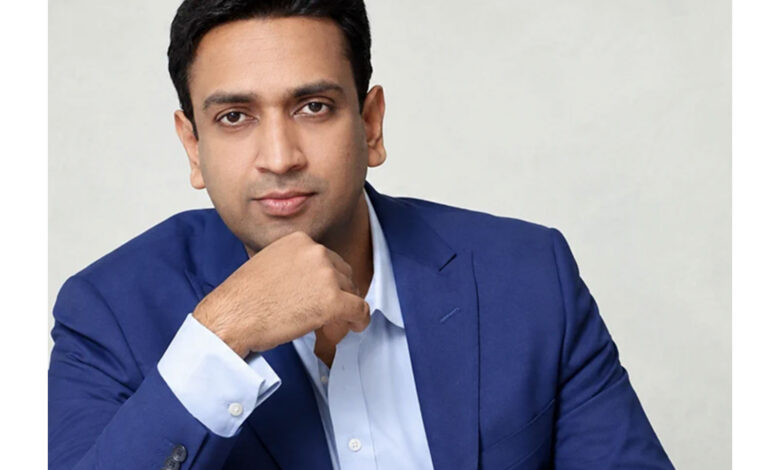
Sachin Mittal has long been publicly described as the founder of Loanwalle.com; a 2021 profile identified Mittal as its founder and Naman Finlease Pvt. Ltd. as its parent organisation. The current LoanWalle website continues to feature Mittal on its advisory board, while Naman Finlease’s present website identifies the company as an RBI-registered NBFC with CIN U70101DL1997PTC088735 and RBI Registration No. N-14.01466.
That corporate and fintech identity, however, is only one side of the public record.
The other side is a criminal prosecution arising from FIR No. 84/2023 of the Delhi Police Special Cell, in which Sachin Mittal was arrested on 11 June 2023 and kept in police custody for 14 days. The FIR invoked IPC Sections 420, 467, 468, 471, 384, 506 and 120B—covering allegations including cheating, forgery, use of forged documents, extortion, criminal intimidation and conspiracy. The Delhi High Court subsequently granted Mittal regular bail on 28 March 2024, while expressly declining to determine whether the allegations were true.
So the question is not whether Sachin Mittal was arrested.
He was.
The real question is: what, according to the prosecution record, led to that arrest—and why is a case that began with an arrest in June 2023 still carrying unfinished supplementary investigation in September 2026?
That is where the record becomes difficult to ignore.
The case began with a ₹1.30-crore dispute—but exploded into a ₹6.80-crore home-loan prosecution
According to the Delhi High Court’s 28 March 2024 order, the complaint was filed by Sunil Kumar Gupta.
The prosecution case, as reproduced by the Court, was that Gupta was owed approximately ₹1.30 crore by Shobhit Agarwal from an earlier transaction. Gupta allegedly approached Agarwal regarding repayment and property purchase in Gurugram. Agarwal allegedly introduced Gupta to Sachin Mittal, after which, according to the prosecution, Gupta was induced to obtain two home loans aggregating ₹6.80 crore.
The two loans were:
₹3 crore from IDBI Bank, against Villa A-3, The Hermitage, Sector 103, Gurugram.
₹3.80 crore from ICICI Bank, against a second Gurugram property.
The prosecution alleged that forged property-related documents were used in connection with these transactions and that Gupta did not receive possession of the properties or the entire economic benefit he expected. The complaint also contained allegations of threats and extortion calls relating to repayment of the EMIs.
This is the point at which the matter moved decisively beyond an ordinary business dispute.
The FIR did not merely invoke cheating. It included Sections 467 and 468, provisions concerning serious forms of forgery, alongside Section 471 concerning use of forged documents, Section 384 concerning extortion and Section 120B concerning conspiracy. Section 420 IPC carried imprisonment of up to seven years and fine, while Section 467 could carry life imprisonment or imprisonment up to ten years and fine; Section 468 provided for up to seven years and fine.
In other words, the arrest did not arise from a missed EMI, a regulatory paperwork dispute or an ordinary debt claim.
The prosecution alleged a coordinated fraud involving property documents, bank financing and multiple participants.
That allegation remains to be proved at trial.
The ₹6.80 crore was the loan exposure—not automatically Sachin Mittal’s personal enrichment
This distinction matters enormously.
A sensational headline can easily turn “₹6.80 crore of loans allegedly obtained through fraudulent documents” into “Sachin Mittal stole ₹6.80 crore.”
The court record does not establish that.
The High Court recorded that the total home loans sanctioned and disbursed were approximately ₹6.80 crore. It also noted that ₹1.28 crore was transferred to the complainant’s firm, Keshav Fintech LLP. The Court expressly observed that the merits of allegations of cheating, forgery and misappropriation would have to be tested through evidence at trial.
Therefore, the responsible formulation is:
₹6.80 crore was the aggregate value of the two allegedly fraudulent home loans described in the prosecution case; it is not a judicial finding that Sachin Mittal personally appropriated ₹6.80 crore.
That distinction actually makes the investigation more interesting, not less.
Because the real question is not simply where did ₹6.80 crore go?
It is:
Who arranged the transactions, who created or used the documents, who received the disbursements, who moved the money afterward, who benefited, and what relationship did the participants have with Naman Finlease?
The High Court record contains pieces of that trail.
Follow the money: Naman Finlease appears inside the prosecution narrative
The prosecution’s account did not stop with the two borrowers and alleged property sellers.
The High Court recorded a series of transactions involving accounts associated with the accused and Naman Finlease Pvt. Ltd.
In the IDBI transaction, the prosecution said Himanshu Rasgotra’s account received funds before money moved onward toward the developer. The order also records that on 9 March 2022, ₹5 lakh was transferred into Rasgotra’s account by Naman Finlease and then onward to Satya Developers.
The ICICI transaction is even more pointed.
The prosecution case, as recorded by the High Court, was that the ₹3.80-crore ICICI disbursement went to Vishal Oberoi’s Axis Bank account on 20 April 2022. Oberoi then transferred ₹5 lakh to AV Global, his firm, and thereafter the money moved into an ICICI account of Naman Finlease, in which the High Court identified Sachin Mittal as a director and major shareholder.
That does not, by itself, prove that every rupee entering a company account was criminal proceeds.
But it explains why investigators were not treating the episode as a simple quarrel between two private individuals.
The alleged money movement intersected with the financial company associated with Mittal.
And that is precisely why the question of corporate role versus personal criminal responsibility becomes central.
What the prosecution alleged about Sachin Mittal himself
The most serious allegations in the High Court record concern Mittal’s alleged role as the person directing or coordinating the activity.
According to the status report reproduced by the Court, investigators alleged that Mittal ran Naman Finlease and that, in order to infuse funds into the company and pay obligations to private money lenders, he and associates procured fraudulent loans.
The prosecution alleged that associates including Mithilesh Kumar Sharma, Udit Khullar and Rahul Mathur dealt with fraudulent home loans and forged documents. The status report also referred to mobile-phone connectivity between Mittal and co-accused Vishal Oberoi.
A later Delhi High Court order concerning Mithilesh Kumar Sharma repeated substantially the same prosecution theory. It described Naman Finlease as an NBFC controlled by Mittal, Udit Khullar and others and recorded allegations that associates prepared forged property documents to obtain home loans.
But here the language matters.
The Court was recording the prosecution’s case, not declaring those allegations proved.
Indeed, the Mithilesh order itself preserves the defence position that he had no criminal role, and the Court ultimately dealt with bail rather than determining guilt.
The investigation allegedly uncovered 16 more fraudulent home-loan cases
This is one of the most consequential elements of the record.
The Delhi High Court was told that 16 other alleged fraudulent home-loan cases had emerged during investigation involving overlapping accused persons including Himanshu Rasgotra, Vishal Oberoi, Shobhit Agarwal, Saurabh Mittal and Udit Khullar.
The State also told the High Court that 16 victims had been identified and described the matter as a multi-victim scam. The prosecution went further and characterised Mittal as the alleged “mastermind” behind the operation.
That word—“mastermind”—must remain attributed to the State.
It is not a judicial finding.
Nevertheless, the existence of the prosecution allegation is itself important because it explains why the arrest was treated as something much larger than a single disputed property purchase.
One complaint had become a criminal investigation involving:
multiple properties, multiple accused, multiple banks, alleged forged documents, alleged money transfers, alleged threats, and additional alleged victims.
That is the architecture described in the court record.
The defence tells a very different story
A serious investigative article cannot publish only the prosecution’s side.
Mittal’s defence was not that he was simply unable to remember what happened.
It was substantially more specific.
His lawyers argued that:
- he was focused on administrative and expansion work;
- he did not handle loan disbursals or customer documentation;
- he was only one shareholder among others;
- the complainant was himself commercially sophisticated, including a Chartered Accountant and Direct Selling Agent;
- the allegations arose in the context of commercial rivalry;
- no incriminating recovery had been made from Mittal;
- he had cooperated with the investigation; and
- the prosecution had not adequately established the alleged financial loss in the manner asserted.
The High Court preserved that dispute.
In one particularly important observation, the Court noted that the FIR, status report and charge-sheet did not spell out whether Gupta had actually paid EMIs on the two loans, whether any existing property had been mortgaged against the loans, or precisely what loss or prejudice he suffered. The Court stated that such allegations would have to be tested through evidence.
That is a critical judicial observation.
It prevents journalism from collapsing the distinction between an accusation and a proved offence.
Yet the arrest was very real
Strip away all rhetoric and the timeline is unambiguous.
28 March 2023: FIR No. 84/2023 registered at Delhi Police Special Cell.
11 June 2023: Sachin Mittal arrested.
14 days: police custody was granted.
11 July 2023 onward: the bail record states Mittal remained in judicial custody.
28 March 2024: Delhi High Court granted regular bail.
This is therefore not a story about an internet accusation that never reached a police station.
It reached an FIR.
It reached arrest.
It reached police custody.
It reached a charge-sheet.
It reached the High Court.
And it reached an active criminal trial.
Why did the High Court grant bail?
Because arrest and conviction are two entirely different legal events.
On 28 March 2024, Justice Jyoti Singh granted regular bail.
The Court recorded that the investigation had substantially progressed, documents had been seized, the prosecution had filed the charge-sheet and supplementary charge-sheet, and the prosecution expected to examine 57 witnesses—48 in the main charge-sheet and nine in the supplementary charge-sheet according to the record presented during the bail proceedings.
The Court also noted that there was no evidence or allegation that Mittal had threatened witnesses or tampered with evidence during investigation. It considered his return to India after an earlier Dubai trip, his roots in society and other bail factors.
The result was regular bail on:
₹3 lakh personal bond + two sureties of ₹3 lakh each.
He was prohibited from leaving India without trial-court permission and was required to remain available to investigators, appear when summoned and report monthly to the investigating officer.
And the Court made the position absolutely explicit:
nothing in the bail order amounted to an opinion on the merits.
So anyone presenting bail as an acquittal would be wrong.
But anyone presenting the arrest as a conviction would be equally wrong.
The disturbing part is what happened after the arrest
This is where the story becomes less about the sensationalism of an arrest and more about the performance of the criminal-justice process.
The trial case is State v. Sachin Mittal, Criminal Case No. 8212/2023, CNR DLND020260362023.
As of the latest public docket reviewed, it remains pending.
The next hearing is listed for 20 November 2026.
More strikingly, a 10 June 2026 order records that supplementary investigation was still underway.
The investigating officer sought further time to finalise it.
The trial court directed the IO to expedite the investigation.
The DCP concerned was directed to monitor the investigation.
There is something deeply uncomfortable about that chronology.
A man was arrested in June 2023.
A High Court considered a serious criminal prosecution in March 2024.
Multiple accused were before the criminal court.
The case had a substantial witness list.
And yet in June 2026—more than three years after the FIR—supplementary investigation was still being completed.
That is not evidence of guilt.
But it is evidence of delay.
And delay in a criminal prosecution hurts everyone: complainants waiting for accountability, accused persons waiting for adjudication, financial institutions seeking clarity, and the public trying to understand where the evidence actually leads.
The “seven FIRs” claim needs more than a dramatic headline
Another striking assertion appears in the 2024 bail proceedings.
The State and complainant side referred to seven other FIRs said to have been registered and pending against Mittal, with the High Court specifically recording FIR No. 499/2014, PS I.P. Estate as part of the criminal antecedent discussion.
This should be reported carefully.
The accessible public material reviewed for this investigation has not independently reconstructed all seven FIRs one by one.
That means a responsible publication should not turn “seven FIRs” into a list of seven convictions—or even seven proven criminal cases—without obtaining the underlying FIRs, charge-sheets and final orders.
The existence of an older proceeding is nevertheless independently significant: the Delhi High Court records litigation concerning FIR 499/2014, PS I.P. Estate.
So the historical record is not something journalists should either exaggerate or erase.
The answer is simple: produce the dockets.
If seven FIRs were placed before the High Court, the public-interest investigation should establish, for each one:
FIR number → police station → sections → complainant → allegations → charge-sheet status → trial court → present status → final outcome, if any.
Anything less leaves a conspicuous evidentiary hole.
Loanwalle’s lending history raises another set of questions—but it is a different case
The arrest in FIR 84/2023 concerns an alleged property-loan fraud.
It should not be casually merged with every complaint ever made against Loanwalle.
But another judicial record deserves attention.
In Naman Finlease Pvt. Ltd. v. State of Karnataka, decided by the Karnataka High Court on 19 July 2023, the company itself stated that it was an RBI-registered non-deposit-taking NBFC and that a loan had been disbursed through the Loanwalle app. The loan amount was ₹25,000, and the court record states an interest rate of 1% per day, with repayment due approximately one month later.
The borrower subsequently complained of harassment in loan recovery, leading to Crime No. 289/2023 under Sections 419, 420, 504 and 506 IPC and Sections 66C and 66D of the Information Technology Act. Police froze Naman Finlease’s bank account.
The Karnataka High Court later quashed the freezing direction because the seizure procedure under Section 102(3) CrPC had not been followed, while expressly leaving liberty for lawful action by investigators.
Again, precision matters.
The court did not convict Sachin Mittal in that case.
The proceeding was against Naman Finlease.
But the record does establish that the Loanwalle/Naman lending operation generated a criminal complaint concerning recovery conduct and that the matter reached the High Court.
Even the lending model documented in public material raises obvious questions
The historical description of Loanwalle was unapologetically built around speed.
A 2021 StartupTalky profile said the platform was founded by Sachin Mittal, described Naman Finlease as its parent organisation and described the product as short-term payday lending.
The Karnataka judgment supplies a concrete example of the economics: ₹25,000 advanced at a stated 1% per day.
One percent per day is not a trivial number.
Simple arithmetic translates that to 365% per annum before compounding, although such a simple annualisation does not itself determine the legally applicable effective interest rate or whether all contractual charges were structured on that basis.
The point is not to call the lending illegal.
The point is to ask whether consumers, recovery practices, disclosure, pricing, data use and grievance systems received the scrutiny they deserved.
That is a regulatory question, not a criminal finding.
Naman Finlease remains on the RBI’s NBFC list
The RBI’s published list of NBFCs dated March 2024 includes Naman Finlease Pvt. Ltd., New Delhi, CIN U70101DL1997PTC088735.
Naman Finlease’s current website identifies itself as an RBI-registered NBFC and publishes RBI Reg. No. N-14.01466.
That matters for another reason.
The existence of RBI registration means the lending business cannot simply be described as an anonymous underground loan-app operation.
It operated through a regulated corporate structure.
And where a regulated financial entity is connected to a criminal investigation, the public-interest question becomes sharper:
What did the relevant governance, compliance, audit and supervisory mechanisms know, when did they know it, and what actions followed?
Those questions deserve documentary answers.
They should not be replaced by corporate brochures.
Then came another arrest in the same broader investigation
On 14 October 2024, The Indian Express reported the arrest of Swadesh Ranjan Mishra alias Durgesh, whom police described as having worked for Naman Finlease from 2018 to 2022. The newspaper reported police allegations that Mishra and colleagues had been involved in obtaining bank loans on forged property documents. The report also said police were tracing other alleged victims.
The later criminal docket records Swadesh Mishra appearing in the FIR 84/2023 proceedings in 2026.
Once again, an arrest is a procedural fact.
It is not a conviction.
But from an investigative perspective, it reinforces that the Special Cell case did not revolve around one isolated transaction involving two people.
The case also contains a warning about careless reporting of warrants and international notices
There is another important distinction.
The June 2026 order issued bailable warrants against Nitin, Naresh and Dinesh—not against Sachin Mittal. The same order specifically records Mittal as appearing through video conference.
Therefore, any report claiming that the June 2026 warrants were issued against Sachin Mittal would misstate the record.
Likewise, an ordinary bail condition preventing a person from leaving India without court permission is not itself an Interpol Red Corner Notice.
The public record reviewed here documents an Interpol Red Corner Notice against co-accused Vishal Oberoi, not against Mittal. That distinction is essential in responsible reporting.
So, in plain English: why was Sachin Mittal arrested?
Because investigators accused him of participating in a larger alleged conspiracy involving fraudulent property documentation and bank home loans, and the Special Cell registered FIR 84/2023 containing allegations of cheating, forgery, use of forged documents, extortion, criminal intimidation and conspiracy.
The prosecution’s case placed him within an alleged network involving several associates and connected the investigation to two home loans totalling approximately ₹6.80 crore.
The prosecution further alleged that the investigation had uncovered 16 additional fraudulent home-loan cases and 16 victims, and the State characterised Mittal as the alleged mastermind.
The money trail described by investigators also intersected with Naman Finlease, the NBFC associated with Mittal.
Those allegations were serious enough to result in:
an FIR, arrest, 14 days of police custody, judicial custody, a charge-sheet, supplementary proceedings and a continuing trial.
But they have not yet resulted in a conviction.
That is the complete factual picture.
The bigger scandal may ultimately be the delay—not the arrest
There is an uncomfortable irony in the chronology.
The State had enough material to tell the High Court that there was a multi-victim investigation.
Police arrested the principal accused.
Investigators traced financial transactions.
Other accused were arrested or proceeded against.
Charge-sheets were filed.
The High Court examined the prosecution’s case.
And still, in June 2026, the investigating officer was asking for additional time to complete supplementary investigation.
The court itself had to direct the IO to expedite the investigation and the DCP to monitor it.
That should concern everyone—not because it establishes guilt, but because criminal justice cannot work indefinitely in a state of procedural suspension.
A prosecution that takes years to reach final adjudication can become a strange halfway house:
not an acquittal,
not a conviction,
not closure,
not accountability.
Just an endlessly circulating case number.
That is unacceptable for complainants.
It is unfair to an accused who remains unconvicted.
And it is corrosive to public confidence in financial-crime enforcement.
What investigators should now answer
The public record leaves several legitimate investigative questions.
First: What exactly are the alleged 16 additional home-loan cases?
Second: Who were the 16 identified victims?
Third: What were the FIR numbers associated with those cases?
Fourth: What happened to the seven earlier FIRs cited before the High Court?
Fifth: What did forensic examination of documents, signatures, computers and mobile devices establish?
Sixth: What was the ultimate destination of the funds identified in the bank-account trail?
Seventh: What amount, if any, was ultimately proved as wrongful loss?
Eighth: What was the precise role of every accused person rather than simply grouping them into a broad alleged conspiracy?
Ninth: Why was supplementary investigation still continuing in June 2026, more than three years after FIR registration?
Tenth: What is the present status of the supplementary investigation, and when will the investigating agency place its final position before the court?
These are not demands for conviction.
They are demands for facts.
Sachin Mittal’s defence must remain part of the record
The defence says, among other things, that Mittal was principally responsible for business expansion and administration rather than document verification; that he was falsely implicated; that the complainant was commercially sophisticated; that there had been business rivalry; and that no incriminating recovery had been made from him.
The High Court did not reject the defence as irrelevant.
Nor did it accept the defence as proof of innocence.
Instead, it repeatedly emphasised that the allegations would be tested at trial.
That is precisely how this story should be reported.
The uncomfortable headline is therefore not “arrested businessman”
It is this:
A fintech founder was arrested in a serious Special Cell criminal case involving alleged forged-property home loans worth ₹6.80 crore; the prosecution told the High Court that 16 other alleged fraudulent home-loan cases and 16 victims had emerged; he obtained bail; and as of June 2026, supplementary investigation was still continuing.
That is neither a conviction headline nor a clean-chit headline.
It is a pending criminal case headline.
And that distinction is not a technicality.
It is the difference between journalism and propaganda.
A demand for faster investigation and trial
Three years after FIR registration, the case should not still be waiting for basic investigative closure.
The investigating agency should complete the supplementary investigation without avoidable delay, disclose the status of the additional cases and victims to the trial court, complete forensic and financial analysis, and file whatever supplementary report the law requires.
The trial court should then move the prosecution forward expeditiously in accordance with law, while protecting the rights of both the complainant and the accused.
Regulators, where their statutory jurisdiction is engaged, should independently examine any relevant lending, recovery, governance and compliance issues rather than allowing criminal proceedings and regulatory oversight to exist in separate silos.
And the public deserves something remarkably simple:
not headlines, not corporate spin, not insinuation—but the complete docket.
The seven FIRs, if they exist, should be identified.
The alleged 16 additional cases should be identified.
The money trail should be explained.
The forensic results should be produced where legally permissible.
The supplementary investigation should be completed.
And the court should decide the case on evidence.
Because an arrest without a conclusion is not justice.
And an allegation without a trial should never be casually converted into a conviction by journalism.
Strong Legal & Editorial Disclaimer
Disclaimer: This article is an investigative opinion piece based on publicly accessible court records, judicial orders, regulatory material, company information and published reporting available as of 24 September 2026. The allegations concerning Sachin Mittal and other accused persons are allegations made by the complainant, police, prosecution or other parties as recorded in the cited proceedings, and have not been treated in this article as established facts of guilt.
The Delhi High Court, while granting Sachin Mittal regular bail on 28 March 2024, expressly stated that nothing in its order amounted to an opinion on the merits of the case.
No court of law has, in the records reviewed for this article, convicted Sachin Mittal in FIR No. 84/2023. The criminal case remains pending, and the latest public trial order reviewed records that supplementary investigation was still in progress.
Accordingly, words such as “fraud”, “forgery”, “extortion”, “conspiracy”, “mastermind”, “victim” or “criminal antecedent” should be understood in the context in which they appear in the underlying FIR, prosecution submissions, police statements or judicial records and not as independent findings of guilt by this publication.
The presumption of innocence continues to apply unless and until guilt is established by a competent court.
Editorial position on public interest: The seriousness and duration of the proceedings justify a demand for speedier investigation, transparent disclosure of the status of supplementary investigation, and expeditious trial in accordance with law, without prejudging the ultimate guilt or innocence of any accused person.
Principal sources
Delhi High Court, Sachin Mittal v. State (NCT of Delhi), BAIL APPLN. 2576/2023, order dated 28 March 2024. Delhi High Court bail-order text
Delhi High Court, Mithilesh Kumar Sharma v. State of Govt. NCT of Delhi, BAIL APPLN. 914/2024, order dated 6 May 2024. Mithilesh Kumar Sharma order
Karnataka High Court, Naman Finlease Private Limited v. State of Karnataka, W.P. No. 13963/2023, order dated 19 July 2023. Karnataka High Court order
Trial docket, State v. Sachin Mittal, CNR DLND020260362023; latest reviewed order dated 10 June 2026. 10 June 2026 trial order
RBI published NBFC list including Naman Finlease Pvt. Ltd.
Naman Finlease corporate/RBI information currently published on the company’s website.
StartupTalky profile identifying Sachin Mittal as founder of Loanwalle and Naman Finlease as its parent organisation.