Krishan Rattan Has A Lot Going On. Terra-Invest, A $100 Million Lawsuit, ₹993 Crore Debt And Quite The Collection Of Interesting Friends
Krishan Rattan Has An Interesting CV. The Footnotes Are Even More Interesting. From Terra-Invest and a $100 million UK court battle to DLI’s ₹993 crore insolvency, Ankiti Bose, familiar corporate names and a trail of increasingly curious connections, Rattan’s public record raises one simple question: how exactly do all these pieces fit together?


On paper, Krishan Rattan’s professional journey looks like the sort of CV that can be made to fit neatly into a corporate profile. There is investment banking, advisory work, entrepreneurship, Terra-Invest and a succession of professional associations spanning India and overseas. Read individually, none of these things is particularly extraordinary. Read together, however, the chronology becomes considerably more interesting.
Rattan has appeared in connection with Augustya, Voltaire and later Terra-Invest, while his name has also surfaced in reporting around DLI, litigation in the UK and a growing list of businesspeople and professionals. There are court proceedings, corporate insolvency, large financial figures and relationships with people who appear elsewhere in the stories surrounding him.
And this is where the CV stops being quite so interesting as a CV and starts becoming interesting as a paper trail.
The obvious question is not whether every person or company appearing somewhere in Rattan’s professional orbit is connected to every other person or event. That would be an easy (and potentially meaningless) conclusion to draw. The more useful question is much simpler: what exactly is the chronology, who was involved at each stage, and how did one set of relationships lead to the next?
Because once the individual reports are placed next to each other, there are quite a few footnotes.
From Augustya To Voltaire To Terra-Invest
The first thing worth doing is going back to the beginning rather than starting with the most sensational part of the story.
Rattan’s professional trail runs through Augustya and Voltaire before arriving at Terra-Invest, where he has been described as a founding partner. Each name represents a different stage in the career, but the important part for this exercise is not simply listing the companies. It is understanding the transitions between them.
What was Rattan’s precise role at each entity? When did he join? When did he leave or move on? Who were his partners and colleagues? Which companies were operating at the time? And, more importantly, were there people or corporate relationships that travelled with him from one venture to the next?
Terra-Invest is where the story becomes substantially larger.
The firm has been associated with investment activity across multiple jurisdictions, and Rattan’s name has subsequently appeared in connection with a number of transactions, investors and business relationships. Terra-Invest itself therefore becomes an important starting point for understanding the broader network around him.
But there is another reason to pause here.
A professional biography can tell you where someone worked. It rarely tells you how the relationships around those jobs were built.
That is where the public record becomes more interesting.
The reporting around Rattan subsequently brings in people from very different parts of the corporate and investment world. Some appear in connection with Terra-Invest. Others appear in relation to Ankiti Bose. Some have held prominent positions in Indian corporate circles. Others are connected to international investments or disputes.
So the question becomes: are these simply the ordinary overlaps of an investment professional who has spent years moving through corporate and financial circles, or is there a more coherent network underneath the individual relationships?
That is not something a CV can answer.
The next step, therefore, is to follow the money and the companies rather than the biography. And that is where Terra-Invest becomes difficult to ignore.

Terra-Invest And The Business Of Other People’s Money
Terra-Invest is where the Krishan Rattan story starts looking like a much larger corporate puzzle.
Rattan has been described as a founding partner of the Dubai-based investment firm, and the firm has positioned itself around investments, advisory and private capital. On the surface, that is hardly unusual. There are thousands of investment firms built around finding capital, deploying capital and making money from the difference.
The interesting part is what sits underneath that description.
Who exactly was putting money into these deals? Through which entities? Who controlled those entities? Where were the investments made? And what happened when things went wrong?
Those questions become particularly relevant because Terra-Invest and Rattan subsequently appear in reporting involving substantial sums of money and an increasingly complicated collection of corporate relationships.
The figures themselves are difficult to ignore.
One later dispute involving Rattan and the Sawiris family concerns a claim of $100 million in the UK. Other reporting around the same dispute refers to considerably larger figures associated with the underlying investment arrangements. At another point, the numbers cited include $132 million invested and $101 million allegedly lost.
Those are not small discrepancies to wave away in a footnote. But before asking what happened to the money, there is a more basic question that needs answering.
What exactly do these numbers represent?
Is the $132 million the total investment? Was it money actually transferred, money committed, or the value of an investment? Is the $101 million the amount allegedly lost, the amount claimed, or the difference between an original investment and its eventual value? And how does the $100 million figure in the litigation relate to either number?
Investment disputes have a habit of producing enormous numbers that sound straightforward until you actually read the underlying documents. A claim is not necessarily a judgment. An investment commitment is not necessarily the same thing as cash transferred. And a loss alleged by one party is not automatically a loss established by a court.
So the numbers need to be followed rather than simply repeated.
There is another issue.
Terra-Invest was not operating in isolation. The firm’s activities brought Rattan into contact with investors, entrepreneurs, advisers and other professionals across jurisdictions. Some of those names subsequently appear in completely different stories involving other companies and individuals associated with Rattan.
That does not, by itself, tell us anything sinister.
It does, however, make the corporate map worth drawing.
Because if Rattan was simply operating as an investment professional moving between funds, companies and clients, there should be a reasonably comprehensible explanation for who owned what, who advised whom, who invested where and when those relationships began and ended.
And if there is one thing that makes this story worth digging into, it is that the explanation is not always immediately obvious from the public reporting.
There is also the question of geography.
A Dubai-based investment firm dealing with international capital can naturally involve companies, investors and legal structures spread across several jurisdictions. Again, perfectly normal. But the more jurisdictions involved, the more important the underlying corporate documents become.
And when a dispute eventually landed in a UK court, what exactly was the court being asked to decide? That last question takes us to perhaps the most consequential part of the Terra-Invest story.
Because somewhere beneath the polished language of investment banking and private capital sits a very straightforward fact: there was a serious dispute involving very serious money.
And the court papers provide a rather more interesting version of the story than a corporate biography ever could.

Then Came The $100 Million Lawsuit
If Terra-Invest is the beginning of the money trail, the dispute involving the Sawiris family is where the story acquires a rather different dimension.
The litigation in the UK involved the Sawiris family and entities associated with Krishan Rattan, with the dispute reportedly centred on investments and a claim running into $100 million. The numbers surrounding the case, however, are considerably larger and more complicated than that headline figure suggests.
This is where it becomes important to stop and read the court record rather than rely on the shorthand version of the story.
The reporting around the dispute has referred to $132 million being invested, with approximately $101 million subsequently pleaded as lost. There is also the separate $100 million claim, along with a figure of £63,267 in costs and a subsequent consent order.
So what exactly happened?
That is the question.
Who invested the original money? Through which entity? What was Rattan’s precise role in the investment? What did the investors believe they were investing in? What went wrong with the investment? And, crucially, what did Rattan and the entities associated with him say had happened to the money?
The difference between an allegation, a pleaded claim and a finding by a court matters enormously here.
A party can plead that it lost $101 million. That does not automatically mean a court found that Rattan caused a $101 million loss. Likewise, a consent order does not necessarily answer every underlying question in a commercial dispute.
Which is precisely why the case deserves to be looked at in its entirety. There is also the matter of how the dispute ended.
The reported consent order and costs figure raise their own questions. Was the matter settled? On what terms? Was liability admitted or denied? What obligations did the order actually impose? And what, if anything, did the final order establish about the underlying allegations?
These are not semantic questions.
They determine what can legitimately be said about the case.
But even after stripping away the dramatic numbers, one thing remains difficult to ignore: a very substantial investment dispute involving Rattan and Terra-Invest ended up before a UK court.
And that would be interesting enough on its own. Except there is another company sitting elsewhere in the story.

DLI.
Meanwhile, Back In India, There Was DLI
While the Terra-Invest story takes us through Dubai, international investment and a UK court, the DLI story takes us somewhere considerably closer to home – and introduces another very large number.
₹993 crore.
That is the debt figure reported in connection with DLI as the company moved into insolvency proceedings.
Again, the number needs context.
What was DLI’s business? What was Rattan’s precise position within the company? How much debt had accumulated? Who were the creditors? What assets did the company have? What happened before insolvency? And where did Rattan sit in the corporate structure when the company reached that point?
These questions matter because DLI is not simply another company appearing somewhere in Rattan’s CV. It introduces a very different financial picture.
On one side, we have Rattan’s involvement with Terra-Invest and international investment activity. On the other, we have an Indian corporate entity facing insolvency with reported liabilities approaching ₹1,000 crore.
And perhaps the most basic question of all: what exactly was Rattan’s role in DLI when the company accumulated the liabilities that eventually became the subject of insolvency proceedings?
That question becomes even more interesting when the dates are laid alongside the Terra-Invest chronology. Because this is where the story starts producing two apparently very different financial worlds.
There is the international investor and investment-advisory world of Terra-Invest. And then there is an Indian corporate story involving hundreds of crores of debt and insolvency.
The existence of both does not establish a connection between them. But it does make the chronology worth examining. Because if the two stories have nothing to do with each other, that should be relatively easy to demonstrate.
And if there are overlaps – in people, entities, ownership, money or timing – then those overlaps need explaining too.
The Numbers Need A Conversation
There is a point in every complicated corporate story where the numbers start demanding more attention than the people.
This may be one of those stories.
By now, several figures have appeared around Krishan Rattan and the companies associated with him: $132 million, $101 million, $100 million, ₹993 crore, along with other investment, debt and litigation figures appearing across different reports.
Put them together and the story looks enormous. But putting numbers together is not the same thing as understanding them. The first job is therefore to separate them.
—The $132 million figure needs to be identified for what it actually represents. Was it the total capital invested? Was it committed capital? Was it the amount transferred? Was it the value of a portfolio at a particular point in time?
—Then there is the $101 million figure. That has been described in reporting as the amount allegedly lost or pleaded as lost. But again, what precisely does that mean? Was it the principal? A claimed loss after recoveries? A valuation difference? Or a figure advanced in litigation?
—Then comes the $100 million claim.
Is that the same economic dispute expressed differently, or a separate amount being sought from particular parties?
—And then there is the ₹993 crore DLI debt.
That number sits in an entirely different corporate context. It is not sensible to place a dollar investment dispute and an Indian insolvency liability into one spreadsheet and call the difference a mystery.
But it is equally difficult to ignore the fact that all of these figures appear in the broader story around the same individual.
So the question is not: “How can one person be associated with all this money?”
The better question is: What does each number actually represent, who owed it, who invested it, who claimed it, and what happened to it?
That said, the numbers do point towards something else worth investigating. The corporate structure.
If Terra-Invest, DLI and the other entities associated with Rattan operated independently, the ownership and management records should tell us that.
If they shared directors, advisers, investors, beneficial owners or other intermediaries, those links should also be visible.
And this is where the story gets another name – Ankiti Bose.
Then There Is Ankiti Bose
At some point, the Krishan Rattan story stops being only about companies and court proceedings and starts overlapping with another already complicated corporate story: Ankiti Bose.
This is where the temptation is to make the connection sound more dramatic than the available evidence allows. Better to do the opposite. Start with the documented relationship.
How did Rattan and Bose first come into each other’s orbit? When? Through whom? Was the relationship professional, financial, personal, corporate – or some combination of these? Which companies or projects brought them together? And who else was present around that relationship?
Those questions matter because the reporting around both individuals contains a number of overlapping names and professional relationships.
But a shared acquaintance is not evidence of a shared business interest. A common adviser is not evidence of common financial activity. And appearing in the same corporate or investment ecosystem does not, by itself, establish anything beyond proximity.
So rather than leap from connection to conclusion, the useful exercise is to map the connection properly.
- What is documented?
- What has been reported?
- What can be independently established?
- And where does the evidence simply stop?
- That last part is particularly important because some of the reporting around Bose and Rattan has gone considerably further than merely documenting that they know each other.
There have been questions raised around people in their respective circles, common professional relationships and other corporate connections.
That brings us back to the same problem that keeps appearing throughout this story.
How many of these overlaps are coincidence, how many are the ordinary result of operating in the same investment and corporate circles, and how many have a specific business explanation that has simply not been made clear in the public record?
There is only one way to find out. Follow each connection individually. And once you do that, the address book starts becoming almost as interesting as the balance sheet
The Address Book Gets More Interesting
If Ankiti Bose is one thread, the list of other names appearing around Krishan Rattan is another. And this is where the story starts becoming difficult to explain as a simple sequence of professional acquaintances.
Among the names that appear in the reporting are Shailesh Haribhakti, Ajoy Veer Kapoor, Geoff Pollard, Rajiv Lulla and Rahul Lulla, alongside others connected to the companies, investments and relationships being examined.
The first question is the obvious one.
Who are these people, and what exactly connects each of them to Krishan Rattan?
Not “who has met whom”. Not “who follows whom”. Not the sort of six-degrees-of-separation exercise that can make half of Mumbai’s corporate sector look like one giant conspiracy.
The useful question is much narrower: what was the actual professional, corporate or financial relationship?
Take the names one at a time.
Shailesh Haribhakti, for instance, is not some obscure name pulled from a corporate directory. His own career places him deep inside India’s accounting, audit and corporate advisory establishment. So if his name appears in the Rattan story, the question is not whether the two men have ever been in the same room.
It is why.
What role did Haribhakti play? Was it advisory? Investment-related? Corporate? Did the relationship concern a particular company or transaction? And when did it begin?
The same exercise has to be applied to the other names.
- What was Ajoy Veer Kapoor’s relationship with Rattan?
- Where does Geoff Pollard fit?
- What brings Rajiv and Rahul Lulla into the picture?
- Are these independent relationships that happen to overlap because the people involved operate in similar business circles?
- Or do several of them converge around the same companies, transactions or investment structures?
- There is a significant difference between those two explanations.
And this is where a network map becomes more useful than a list of names.
If Person A appears alongside Rattan in one company, Person B appears in another transaction, and Person C appears in both — that is worth recording.
If the same adviser or intermediary then appears across several of those entities, that is worth recording too.
But the map has to remain factual.
A connection is a connection. It is not automatically evidence of wrongdoing.
The problem is that some of the reporting around Rattan has already begun describing this collection of relationships in much stronger terms – as a network, a web, or a series of suspicious associations.
Before adopting any of those descriptions, there is a more interesting exercise available. Build the network from the documents and see what it actually looks like.
- Who was a director?
- Who was an investor?
- Who was an adviser?
- Who was an employee?
- Who was a shareholder?
- Who merely knew whom?
- And who appears in the same story only because someone else introduced them?
- These distinctions may sound tedious.
They are also where the real story usually lives. Because a genuinely meaningful corporate connection should leave a paper trail.
And if two supposedly unrelated corporate stories repeatedly produce the same people, entities and intermediaries, that is something the public record should be able to explain.
Which brings us to some of the more unusual references that have surfaced around Rattan — including Panama Papers references, the IL&FS ecosystem and, separately, reporting concerning the Mahadev betting-app controversy.
Those are much more serious claims to examine. And they require considerably more than a list of names.
)
Panama Papers, IL&FS And The Other Footnotes
And then there are the footnotes that are considerably harder to ignore.
The references to the Panama Papers and the IL&FS ecosystem are among them. Both terms carry enough weight to make a headline by themselves. That is precisely why they need to be handled carefully.
The Panama Papers, for starters, are not a magic list of people who did something wrong. They are a huge collection of leaked corporate and financial records showing offshore companies, trusts, intermediaries and the people connected to them. Being named in those records, by itself, does not establish illegal conduct.
So the relevant question here is much more specific.
- Does Krishan Rattan actually appear in the underlying records, and if so, in what capacity?
- Was he a beneficial owner?
- A director?
- A shareholder?
- An authorised representative?
- Was his name connected to an entity through an intermediary?
- Or is the alleged Panama Papers connection actually several degrees removed?
- Those distinctions matter enormously.
The same applies to the references to IL&FS.
The collapse of Infrastructure Leasing & Financial Services and the enormous financial fallout that followed created one of India’s most complicated corporate stories. Over time, a huge number of executives, advisers, investors and professional service providers appeared somewhere in that wider ecosystem.
If Rattan was connected to a person who had worked with IL&FS, that is one thing. If he was involved with an entity that had a direct financial relationship with an IL&FS group company, that is something else.
If the same transaction involved the same directors, investors or advisers, that is more significant again. And if there is an actual documentary link between Rattan and an entity at the centre of the IL&FS transactions, then that needs to be laid out clearly.

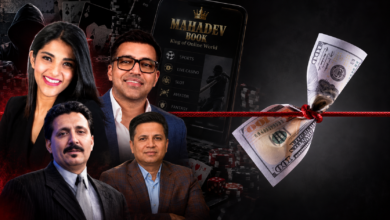
And Then There Is Mahadev
Then there is the Mahadev betting-app story, which takes the Krishan Rattan file into territory that requires considerably more care than simply drawing lines between people who happen to know one another.
Rattan’s name has appeared in reporting that examines possible links between him, Ankiti Bose and people associated with the Mahadev betting-app controversy. That is a serious reference, but seriousness is precisely why it cannot be handled by association alone.
The first question is therefore very simple: where exactly does Krishan Rattan enter the Mahadev story?
Is his name present in an official investigation or court document? Is there a company, transaction, communication or individual that directly connects him to the matter? Or does the connection come through another person who happens to appear in both stories?
Those are three very different things.
This is particularly relevant because the Mahadev case has generated an enormous amount of reporting, much of it involving long chains of individuals, companies, intermediaries and alleged financial arrangements.
Those questions are far more useful than simply repeating that Rattan and Bose have been mentioned in the same reporting.
Because there is a broader issue here.
Throughout this story, the same pattern keeps appearing. A person appears. Then another person appears. Then a company connects two people. Then an investment or professional relationship connects another set of names. Eventually, the original story becomes a map of overlapping circles.
But circles overlapping on paper do not automatically mean that everything inside them belongs to the same story. The job is to determine where the lines are real. And where they are not.
Too Many Coincidences Or Just A Very Connected Man?
At this point, the Krishan Rattan story has accumulated enough names, companies, jurisdictions, financial figures and legal disputes to make the phrase “complicated” feel almost inadequate.
—There is Terra-Invest and its international investment activity.
—There is the dispute involving the Sawiris family and a claim of $100 million, alongside the much larger figures cited in connection with the underlying investment.
—There is DLI and the reported ₹993 crore debt that preceded insolvency proceedings.
—There is Ankiti Bose and the professional and personal ecosystem around her.
—There are names such as Shailesh Haribhakti, Ajoy Veer Kapoor, Geoff Pollard, Rajiv Lulla and Rahul Lulla appearing in different parts of the broader reporting.
—There are references to the Panama Papers and the IL&FS ecosystem.
—And then there is the Mahadev betting-app story.
Taken together, they raise a rather obvious question.
How much of this is simply what happens when someone spends years operating in investment, corporate and entrepreneurial circles, and how much of it requires a more specific explanation?
And large sums of money generally leave some sort of trail. So the question is not whether Krishan Rattan knows a lot of interesting people. He clearly appears to. The question is what these relationships actually were.
—Was Shailesh Haribhakti simply a professional contact, or was there a more substantive corporate relationship?
—What exactly was the relationship between Rattan and the people associated with Ankiti Bose?
—Were the companies involved genuinely independent, or did they share ownership, directors, advisers or investors?
—Did any capital move between entities associated with these different stories?
—Were there common intermediaries?
—Were there transactions that have not been adequately explained in the existing reporting?
—And when the same people appear repeatedly across different corporate episodes, is there a documentary reason for that repetition?
These are questions that can be answered. Some may have perfectly mundane answers. Some may turn out to be more complicated. But there is little point pretending the questions do not exist.