Sachin Mittal: The Instant-Loan Emperor and the Companies That Keep Changing Clothes
Sachin Mittal, DIN 02683561, LoanWalle, Naman Finlease, Ampire Fintech and a ₹1,500-crore press release: an investigative opinion on what the public record actually shows — and what it still refuses to answer.

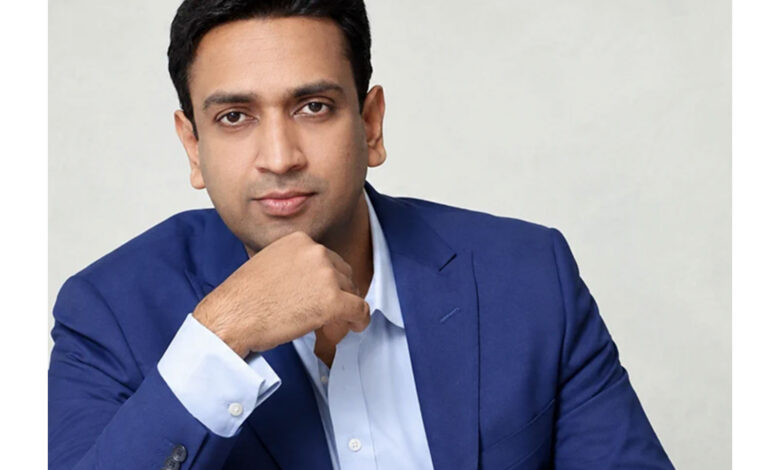
There is a particular Indian talent for turning a basement office into a “fintech ecosystem.” Sachin Mittal has practised it with unusual stamina. The brand on the phone is LoanWalle. The lender in a Karnataka High Court file is Naman Finlease. The website’s privacy policy now names Ampire Fintech, a company incorporated in May 2026. The founder’s latest press note sells Fintech Cloud as a ₹1,500-crore technology platform that Indiabulls wants 70 percent of. Same orbit. Same Panchsheel Park address family. Same man on the director mirrors. Different letterheads when questions arrive.
That is not a conspiracy theory. It is a map of public filings, court orders, the RBI’s own NBFC list, and the complaints borrowers have been leaving in plain sight for years. The map does not prove a conviction. It does prove that the public is being asked to trust a lending machine whose legal face keeps getting a new coat of paint.
First, identify the man — not the mythology
There are several Sachin Mittals in Indian corporate records. The relevant one is DIN 02683561. Commercial MCA mirrors — Zauba, Tofler, FileSure, IndiaFilings — attach that DIN to Naman Finlease Private Limited (CIN U70101DL1997PTC088735), Fintech Cloud Private Limited (CIN U72900DL2021PTC375556), a historical additional-directorship in Loanwalle Finserve Private Limited (CIN U74999DL2015PTC280756), and a graveyard of other vehicles: Maple Technosoft, DS Loan Solutions, Top Mortgage Brokers, Earth Lifestyle, Vrinda Infosoft, Ohnineone Fashion & Retail, Purple Feather E-Solutions, Assetlaw LLP, chit-fund companies. Several of those entries are struck off or show appointment-and-cessation noise. They are not a certified ownership tree. They are a director-history that would make any serious diligence officer sit up.
Naman Finlease is not a rumour. It is on the Reserve Bank of India’s list of registered NBFCs as on 30 June 2026: Investment and Credit Company, New Delhi regional office, no certificate to accept public deposits, Base layer, same CIN, registered office S-370, Basement, Panchsheel Park, Delhi 110017. Authorised capital on commercial filings is ₹5 crore; paid-up capital is cited around ₹1.08 crore. The company’s MCA activity code is the purchase and letting of residential buildings. The brand on the street was payday-speed personal credit. That mismatch is not a typo. It is the first warning label.
Mittal’s own marketed biography has called Loanwalle.com “a brand entity of Naman Finlease Pvt. Ltd; an NBFC registered with RBI,” started with five people and grown to “100+ in 26 cities.” Tracxn, with the coldness of a database, has also tagged Loanwalle as deadpooled. The website is still live. Deadpooled brands that keep collecting KYC are not a charming quirk. They are a due-diligence problem.
One percent a day is not “fintech.” It is a blowtorch
On 19 July 2023, the Karnataka High Court, in Naman Finlease Private Limited v. State of Karnataka (W.P. No. 13963 of 2023), recorded Naman’s own case: it was an RBI-registered non-deposit NBFC; it had sanctioned ₹25,000 to one Sri Chaithanya on 30 November 2022 through the app Loanwalle; the contracted interest was 1 percent per day; repayment was due 3 January 2023. One percent a day, if taken as a simple annual rate, is 365 percent. That figure is not a Twitter smear. It is in a High Court judgment because Naman put it there.
The borrower later alleged recovery harassment. Bengaluru police registered Crime No. 289 of 2023 under IPC Sections 419, 420, 504 and 506 and IT Act Sections 66C and 66D, and froze Naman’s bank account. The High Court quashed the freeze — not because it blessed the interest rate, and not because it acquitted anyone — but because the investigating officer had not reported the seizure to the magistrate under Section 102(3) CrPC. Procedure saved the account. The pricing sat on the page unembarrassed.
RBI does not fix a single usury cap for all NBFCs the way a bazaar moneylender ordinance once did. It does require fair practices, key-fact statements, and pricing that is not a parody of “financial inclusion.” When the same regulator barred other NBFCs in 2024 over “excessive” weighted-average lending rates, the political class discovered overnight that 365-percent-style app credit is not a cute disruption. LoanWalle’s court-recorded daily rate belongs in that conversation whether or not a judge has yet called it unconscionable on the merits.
The borrowers who cannot even find the door to repay
Consumer-complaint portals are not courts. They are, however, a public ledger of people who say they cannot close a file.
On consumercomplaints.in, users writing about Loanwalle and Naman Finlease have alleged, among other things:
- A 2022 Loanwalle account still showing ₹12,340 outstanding on CIBIL after two years of trying to connect and clear it.
- A loan taken through “loanwalle (Naman finlease pvt LTD)” that the borrower wants to repay because “that company was closed,” while CIBIL still shows the account active.
- Receipt of an NOC from Naman Finlease, followed by a CIBIL tag of “WILLFUL DEFAULT” that disputes could not kill.
- A ₹40,000 loan on which ₹15,000 was paid; the complainant says a collection agent emailed the employer and that an earlier approach to an ex-employer cost him his job.
- A ₹30,000, 30-day loan whose repayment demand was ₹44,000; the writer says a regional officer agreed a principal-only settlement by mail, took the money, then refused the settlement letter and sent “rowdy people.”
- A sanction letter whose “RBI registration” the borrower says he could not find. (Naman is on the current RBI list. That does not make the borrower’s confusion illegitimate when the brand, the CIN and the grievance desk keep migrating.)
One complaint even links Loanwalle and Bharatloan / Devamuni Finlease and says the same grievance officer answers for both. That allegation is unadjudicated. It is also exactly the kind of identity soup a regulator is paid to untangle.
Call these people defaulters if you like. Then explain why a regulated NBFC’s customers say they cannot get a closure letter, cannot reach a human, and cannot get CIBIL to match an NOC. That is not “credit culture.” That is administrative contempt for the borrower after the disbursal screenshot has been posted on LinkedIn.
Ampire Fintech: a May 2026 company wearing a 2015 brand
Open loanwalle.com today. The footer and the privacy policy are not coy. The legal person operating the site is Ampire Fintech Private Limited, CIN U62020MH2026PTC471057, incorporated 4 May 2026, registered at 7th Floor, A-701, Rustomjee Central Park, Chakala MIDC, Andheri East, Mumbai 400093. Directors on commercial filings include Neeta Rajiv Ranjan. Consent language now calls LoanWalle a loan-facilitation platform that ships data to “Lending Partners.” Marketing copy still sells speed, comparison, “instant” and the old Delhi origin story.
A company that did not exist until May 2026 cannot be the contractual lender on a November 2022 Loanwalle disbursal. Naman cannot hide behind a Mumbai privacy policy written after the Karnataka complaint. Ampire Finance Private Limited — an older, separately incorporated NBFC that advertises RBI COR 01.00029 — is not Ampire Fintech. Partnership is not ownership. Address overlap with the new LoanWalle office is a fact, not a merger certificate. Charge records even show Ampire Finance as a lender to Naman Finlease in July 2025 (₹2 crore and ₹1.5 crore facilities on commercial charge databases). Money moving between similarly named vehicles is not illegal by itself. It is a reason to read the agreements, not the brand guidelines.
This is the operator-versus-lender question that polite corporate profiles keep skipping:
- Who was the lender of record on each vintage of loans?
- Who ran the app, recovery desk and brand?
- When did those roles move, and under which assignment or servicing contract?
- Which entity now holds the KYC, the voice logs and the grievance inbox?
The public record does not establish a concealed transfer or a proven evasion of liability. It also does not establish continuity. It establishes fog — and fog is how small-ticket borrowers lose years of CIBIL.
Fintech Cloud and the ₹1,500-crore press note
On 22 September 2026, a sponsored Business Wire note appeared in The Hindu’s brand hub: Indiabulls Limited had signed a definitive agreement to acquire 70 percent of Fintech Cloud Private Limited in an all-share deal valuing the company at about ₹1,500 crore, consideration ₹1,050 crore, subject to approvals. The note said Fintech Cloud did ₹133.77 crore revenue and ₹30.31 crore profit before tax in FY26, that Sachin Mittal founded it in 2021, and that he also founded Loanwalle, “a digital lending marketplace.” It is a company release. It is not an audit. It is not a clean chit.
Fintech Cloud’s public pages sell Lending-as-a-Service to NBFCs: automation, compliance theatre, “built for regulation, not around it.” Team pages have listed Mittal as founder/chairman, Vikram Abrol as CEO, Karanbir Singh as adviser, Swati Aggarwal in operations. Loanwalle’s LinkedIn has posted Fintech Cloud jobs from shared inboxes. Shared recruitment is not a crime. It is an admission that the brands share a kitchen even when the lawyers insist on separate dining rooms.
If Indiabulls shareholders are being asked to swallow a four-digit-crore valuation, they are entitled to ask, in writing, whether LoanWalle’s historic book, Naman’s litigation, Ampire Fintech’s brand licence, recovery vendors, and pending FIRs sit inside the perimeter or outside it. A platform that boasts “compliance posture” should be able to answer that without a slogan.
The other file: Delhi Special Cell, FIR 84/2023
LoanWalle is not the only document with Mittal’s name on it.
On 28 March 2024, the Delhi High Court disposed of Sachin Mittal v. State (NCT of Delhi), a regular-bail application in FIR No. 84/2023, registered on 28 March 2023 at the Special Cell, under IPC Sections 420, 467, 468, 471, 384, 506 and 120B. These are prosecution allegations recorded in a bail order. They are not a conviction.
The prosecution case, as the Court recited it: complainant Sunil Kumar Gupta said he was induced to take two home loans totalling about ₹6.80 crore — ₹3 crore from IDBI Bank against a Gurugram villa and ₹3.80 crore from ICICI Bank against a Gurugram flat — and then received neither clean possession nor the full economic benefit, and later faced EMI pressure and alleged threats. The status report before the Court traced money: Naman Finlease transfers into an account linked to co-accused Himanshu Rasgotra before funds moved toward a developer; a slice of the ICICI disbursal allegedly moving, via another co-accused, into Naman Finlease’s ICICI account, in which the applicant was described as director and major shareholder. The State told the Court the applicant was arrested on 11 June 2023 and given 14 days’ police custody; that on interrogation he allegedly disclosed that fraudulent loans were procured to infuse funds into Naman and to pay private moneylenders; that the State called it a multi-victim case with 16 victims identified so far and cited seven earlier FIRs under cheating/forgery-type sections. Co-accused names in that status report included Vishal Oberoi, Himanshu Rasgotra, Shobhit Agarwal, Udit Khullar and others. Some were described as absconding or proclaimed offenders.
Mittal’s side told the same Court he was innocent, falsely implicated at a rival’s behest, a businessman with hundreds of employees, a shareholder focused on expansion rather than loan papers, and that Naman had a genuine lending book.
The Court granted regular bail. Bail is not acquittal. Arrest is not guilt. A status report is not a judgment. What a status report is, is a reason the file cannot be laughed off as “motivated noise” while a parallel company is being marked at ₹1,500 crore in a press release.
No court of law has convicted Sachin Mittal on these charges as of the date of this article. That sentence is mandatory, not decorative. It is also not a silencer. Pending prosecution at the Special Cell, plus a Karnataka recovery FIR that produced a freeze order later undone on procedure, is a fact pattern that deserves a trial calendar, not a brand film.
The graveyard of letterheads
Director-history mirrors for DIN 02683561 are littered with strike-offs: fashion retail, propbuild, “lifestyle,” infosoft, mortgage broking, an LLP. Chit-fund names sit on the same page as a “cloud” platform. None of that, by itself, is a criminal offence. Indian promoters collect CINs the way other people collect boarding passes. But when the live consumer brand, the live NBFC, the live tech company and the live Mumbai operator all advertise adjacent addresses and overlapping executives, the strike-off list stops looking like youthful experimentation and starts looking like a habit of discarding shells.
Loanwalle Finserve still sits “Active” on some portals with Mittal as a historical additional director from 14 October 2016. Fintech Cloud’s registered office has been listed in the same Panchsheel basement complex as Naman. Ampire Fintech took the brand to Andheri in 2026. The customer who borrowed in 2022 is still staring at a CIBIL line item. The companies have moved. The debt has not.
What this is — and what it is not
This is not a finding that every LoanWalle loan was illegal. Naman is on the RBI register as an ICC. Digital lending is legal when a regulated entity originates the credit, discloses the cost, and collects without becoming a street gang.
This is a finding that the public explanation does not add up:
- A High Court record of 1 percent per day on a Loanwalle-disbursed Naman loan.
- A brand that tells the world it is a marketplace while older pages and founder bios called it the face of an NBFC.
- A 2026 special-purpose website company standing where a 1997 NBFC used to stand in the privacy policy.
- Borrower complaints about closure, CIBIL and collection that have sat unanswered in public for years.
- A Delhi Special Cell FIR, an arrest in June 2023, bail in March 2024, and a prosecution narrative that explicitly names Naman Finlease — still untried on the merits.
- A promotional valuation exercise that talks about “compliance posture” as if the court servers were offline.
Harsh language is cheap. These citations are not.
What must happen now
RBI’s Department of Supervision should not need a newspaper to notice a Base-layer ICC whose consumer brand, recovery complaints and sister companies keep changing CIN like shirts. It should pull the digital-lending arrangements, the key-fact statements actually issued to borrowers in 2021–2024, the outsourcing and recovery-agency contracts, the co-lending or partnership files with Ampire Finance or anyone else, and the data-fiduciary trail from Naman to Ampire Fintech.
The Ministry of Corporate Affairs should publish a clean, current director-and-shareholding picture for Naman, Fintech Cloud, Loanwalle Finserve and Ampire Fintech — not another paid portal’s lagging scrape.
Delhi Police Special Cell and the Bengaluru investigating agency should stop treating these files as seasonal work. If the allegations are thin, say so in a chargesheet that a court can throw out. If they are not thin, stop leaving complainants to shout into CIBIL dispute portals. Speedy trial is not a slogan for television. It is the only thing that separates a serious republic from a rumour mill.
Indiabulls’ board, if it is serious about the Fintech Cloud purchase, should disclose — to shareholders, not to a brand-hub wire — whether any LoanWalle/Naman/Ampire litigation, contingent recovery liability, or data-principal obligation travels with the shares.
And the next time a founder is described as a “mentor to India’s fintech ecosystem,” someone in the room should ask the only adult question left: who, exactly, is on the hook when the EMI app changes its surname?
Disclaimer
This article is an investigative opinion piece based on publicly available court orders, RBI lists, Ministry of Corporate Affairs identifiers as reproduced on commercial registry mirrors, company websites, a sponsored press release, and unadjudicated consumer-complaint posts. Those consumer posts are allegations by the persons who wrote them. The contents of police status reports and FIRs are the prosecution’s version until a competent court decides otherwise.
Allegations remain allegations. As of 23 September 2026, this newspaper/website is not aware of any conviction of Sachin Mittal (DIN 02683561) by a court of law on the criminal charges discussed above. Arrest, custody, the registration of an FIR, the freezing of a bank account later unfrozen on procedural grounds, and the grant of bail are not findings of guilt. Commercial director databases can lag, err, or omit cessations; they are not certified MCA extracts. Ownership percentages, beneficial-owner filings, and the precise contractual allocation of lender-versus-operator liability on each historic LoanWalle loan have not been independently verified from statutory registers in this newsroom.
Nothing in this article should be read as a direction to default on a lawful debt. Borrowers who dispute charges should use the lender’s grievance channel, the RBI Ombudsman (cms.rbi.org.in) where the entity is a regulated NBFC, and the courts.
The public interest lies in tighter supervision and faster trials, not in replacing the courtroom with a headline. If the men and companies named here are clean, a chargesheet and a trial will show it. If they are not, delay is not neutrality. It is a subsidy.