Bail Denied To Nayan Raheja Because Of Non-Appearance Before ED.
The Saket District Court rejected the anticipatory bail plea of Nayan N. Raheja, former director of Raheja Developers Ltd., in a Prevention of Money Laundering Act case arising from multiple FIRs alleging that funds collected for residential and commercial projects were misappropriated, leaving buyers without the units they had paid for. The decision, grounded in the applicant’s repeated non-appearance before investigators and the principle that absence from predicate FIRs does not automatically shield a person from PMLA scrutiny, coincides with project-specific insolvency proceedings already admitted for Revanta and Shilas Low Rise. This piece examines the documented delays, court findings, buyer claims and the larger questions of how collections, land and liabilities moved within the Raheja ecosystem.

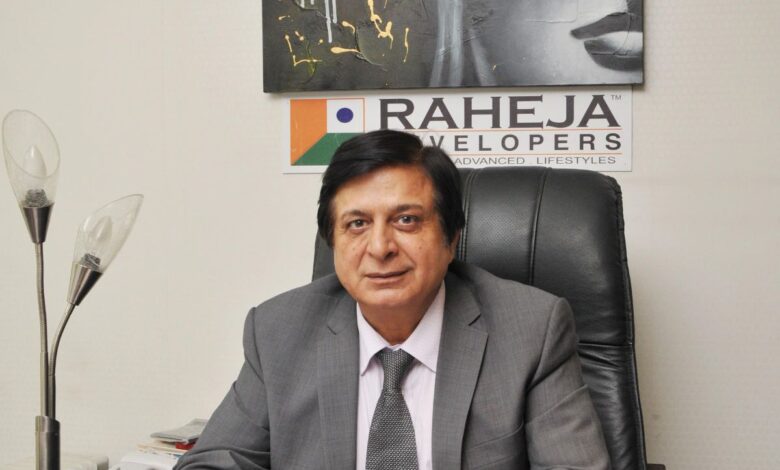
In late September 2026, Special Judge (PMLA) Sachin Jain of the Saket District Court dismissed the anticipatory bail application filed by Nayan N. Raheja, former director of Raheja Developers Ltd. The court recorded that of 7 summonses served on him, Raheja had appeared only in 2 before the Gurugram Zonal Office of the Enforcement Directorate and had failed to cooperate on 5 occasions, citing various excuses. The judge held that such conduct disentitled him to the extraordinary concession of anticipatory bail.
Critically, the court observed that merely because Raheja is not named or charge-sheeted in the FIRs associated with the Enforcement Case Information Report, it does not exempt him from proceedings under the Prevention of Money Laundering Act unless he can prima facie demonstrate no involvement in handling proceeds of crime. The twin conditions under Section 45 of the PMLA were found not to be satisfied.
The registered case rests on several FIRs from Delhi and Gurugram alleging that funds collected from customers for projects under names such as Raheja Revanta, Raheja Shilas, Raheja Trinity, Raheja Oma, Raheja Mall, Raheja Aranya, Raheja Atharva and Vedanta were misappropriated by the company, resulting in failure to deliver residential and commercial units within the agreed timeframe.
Raheja’s counsel had argued that he held only a 0.81 % shareholding, had served as director only during two brief periods between 2003 and 2010, and had functioned solely as an adviser on architectural drawings. The Enforcement Directorate countered that investigative material indicated he was overseeing affairs of the company or its subsidiaries where diverted funds were allegedly used for non-construction purposes. The court was unpersuaded. The rejection of bail therefore stands as a judicial recognition that non-cooperation and the broader factual matrix of the ECIR are sufficient, at the anticipatory stage, to keep a person within the ambit of PMLA inquiry even if he is not named in every underlying FIR.
This development does not exist in isolation. It arrives after years of buyer litigation, adverse findings by consumer forums and the Haryana Real Estate Regulatory Authority, and, most recently, the admission of project-specific corporate insolvency resolution processes against two of the company’s major residential schemes. The public question that now presses itself is no longer merely why were the homes delayed. It is how contractual promises, substantial customer collections, incomplete construction, external-infrastructure defences and, ultimately, insolvency and money-laundering investigations interconnect across the Raheja Developers ecosystem.
The following overview summarises the principal projects repeatedly named in buyer complaints, regulatory orders and the Enforcement Directorate’s case. It is presented in a clear tabular form for easy reference.
| Project name | Location | Approximate start / launch | Contractual or stated delivery | Position by 2026 | Principal controversy |
| Raheja Revanta | Sector 78, Gurugram | 2011 | 36 months for Tapas / 48 months for Surya; RERA completion date: 31 July 2022 | CIRP admitted in June 2026 | Extreme possession delay; HRERA and NCDRC litigation; buyer protests; insolvency proceedings |
| Raheja Shilas | Sector 109, Gurugram | 2007; major allotments in 2010–11 | 30–36 months, depending on unit | CIRP admitted for Shilas Low Rise | More than 10-year delays; NCDRC cases; NCLT insolvency; occupation-certificate disputes |
| Raheja Trinity | Sector 84, Gurugram | Around 2013–15 | 36 months; one documented agreement had a delivery deadline of April 2018 | RERA registration lapsed; project remains incomplete | Approximately nine-year buyer wait; refund ordered in 2026 |
| Raheja OMA | Sector 2A, Dharuhera | 2012 | Agreements reportedly provided for 48 months plus six-month grace period | Conflicting portal and current-status records | Construction stoppage; prolonged possession-delay complaints; uncertainty over completion timeline |
| Raheja Mall | Sector 47, Gurugram | Around 2005 | Occupancy Certificate received in January 2010 | Operational / completed | Commercial-unit dispute; project described as unregistered in a 2022 RERA complaint |
| Raheja Aranya City | Sectors 11 & 14, Sohna | Around 2012–14, in phases | Various, depending on phase/unit; one documented case had a due date of April 2018 | Phased / partial delivery reported | Long delays; consumer/RERA refund orders; alleged document/plot dispute in an individual case |
| Raheja Atharva | Sector 109, Gurugram | Construction began in 2008 | Various; 2018 in one documented RERA case | Delivered, with occupation-certificate history, but significant legacy disputes remain | Environmental-clearance issue; construction-quality complaints; government-ordered structural audit |
| Raheja Vedaanta | Sector 108, Gurugram | 2007 | Delivered around 2014, according to developer records | Occupied / operational | Structural-quality allegations; government-ordered structural audit; RWA/developer disputes; access-road controversy |
Completed does not equate to controversy-free. Vedaanta and Atharva, for instance, have generated substantial post-possession complaints concerning construction quality, infrastructure and common facilities. The distinction matters: the public record shows both prolonged non-delivery and delivery followed by quality and governance disputes.
Following are the Raheja Disputes.
Raheja Revanta in Sector 78, Gurugram, was launched in 2011 across approximately 18.7213 acres and comprises 932 units according to RERA documentation cited in the NCLT proceedings. It consists of Tapas independent floors and Surya Towers. Builder-buyer agreements promised possession within 36 months for Tapas and 48 months for the high-rise component. The completion date submitted to RERA was 31 July 2022.
For early buyers the chronology is stark: 2011 launch, contractual possession roughly 2014-15, later revised expectations, RERA deadline July 2022, and still incomplete for many allottees in 2026. In June 2026 the National Company Law Tribunal admitted a Section 7 petition filed by 176 homebuyers holding 99 units. Those petitioners had paid approximately 137.16 crore rupees; many had paid 90 to 95 per cent of the sale consideration. The principal claimed stood at roughly 137.15 crore rupees with interest of approximately 75.70 crore rupees, producing a total claim of about 212.85 crore rupees as of 24 February 2024.
The tribunal found that contractual possession periods had expired and possession had not been handed over. It rejected the company’s force-majeure defence based on pending external infrastructure including roads, sewerage, water, electricity and fire-tender access. The NCLT observed that buyers who had paid substantial consideration could not be required to wait indefinitely merely because external infrastructure remained pending. The company had submitted that approximately 1,119 crore rupees had been spent against approximately 826 crore rupees collected from customers. The tribunal nevertheless held that the difficulties cited did not, on the record before it, qualify as circumstances beyond the company’s control sufficient to defeat the insolvency claim.
Earlier, buyers had approached Haryana RERA, which made adverse findings and directed relief; those orders were allegedly not complied with. Settlement memoranda in which the developer acknowledged delay and promised compensation and delivery were also said not to have been honoured. In December 2022 scores of Revanta buyers protested at Raheja Mall, stating that work had effectively stopped in 2017 while the developer continued to attribute the impasse to external infrastructure.
The June 2026 order admitted the corporate insolvency resolution process, imposed the statutory moratorium, appointed an interim resolution professional, and confined the process to the Revanta project itself, directing that receivables, recoveries, cash inflows, unsold inventory and other project assets be maintained separately. For homebuyers the question has shifted from when will my flat be delivered to who will control the project, how will it be financed, and how will claims be treated inside insolvency.
Raheja Shilas in Sector 109 traces its development licence to 2007, with major buyer agreements in 2010-11. Contractual possession periods clustered around 2012-2014. In one National Consumer Disputes Redressal Commission case a buyer who paid approximately 89.08 lakh rupees for a 2,062 square foot flat under a 29 August 2011 agreement promising possession by February 2014 remained without the home while continuing to service EMIs. The Commission noted that the developer applied for an occupation certificate only in April 2017 and rejected the attempt to shift the entire delay onto external infrastructure.
In November 2024 the NCLT admitted insolvency proceedings on a petition by more than 40 homebuyers who had paid over 112.9 crore rupees, many having paid more than 95 per cent of the purchase price. The tribunal found that routine statutory compliance could not be converted into force majeure when the developer’s own conduct contributed to the delay. Subsequent NCLAT orders confined the corporate insolvency resolution process to Raheja Shilas Low Rise and clarified that buyers of other Raheja projects could pursue independent Section 7 proceedings. The project-by-project approach has become a defining feature of the recent insolvency cycle.
Raheja Trinity in Sector 84, a commercial development, carried a RERA registration that later lapsed. One builder-buyer agreement dated 29 April 2015 provided for possession within 36 months, by 29 April 2018. By 2026 that represented roughly eight years of delay beyond the contractual deadline. In September 2026 Haryana RERA ordered a refund of approximately 50.5 lakh rupees with 10.8 per cent annual interest to a couple who had invested more than 50 lakh rupees in 2017 and waited nearly nine years.
Raheja OMA in Dharuhera presents inconsistent dates across public databases. Individual buyer agreements examined in complaints provided for possession within 48 months plus a six-month grace period, placing contractual deadlines around 2017 for 2013 purchasers. One complaint recorded that construction had stopped for about two years and that only around two floors of a 40-floor tower had been built when substantial payments had already been made. These remain buyer allegations, not adjudicated findings, yet they form part of the contemporaneous documentary trail.
Raheja Aranya City, a large plotted development in Sohna, has seen phase-specific delays. In one NCDRC matter the Commission ordered a refund of 1,19,88,202 rupees with 9 per cent simple interest and litigation costs after rejecting the force-majeure explanation. Possession has subsequently progressed in portions of the township, but the long history of contractual deadlines missed and refund litigation remains.
Raheja Mall itself received its occupancy certificate in January 2010 and is operational. A later commercial-unit dispute, however, reached RERA; the project was described as unregistered in the complaint, and the authority struck off the respondents’ defence after failure to file a reply within the prescribed period.

Atharva, where construction commenced after a 2008 bhoomi poojan, was treated by the developer as completed around 2014. Public reporting records that approximately 0.8 acres of the project was sealed because construction had taken place without the requisite environmental clearance. In 2022 the Department of Town and Country Planning ordered structural audits of five Gurugram high-rises, including Atharva and Vedaanta, following complaints of structural defects.
Vedaanta, launched in 2007 and described by the developer as completed around 2014, has generated extensive post-possession litigation. Residents complained of seepage, cracks and façade problems. DTCP filed a police complaint concerning alleged poor construction quality. An IIT Roorkee structural audit was ordered. The Residents Welfare Association has pursued disputes over maintenance funds, sewage treatment plants, lifts, electricity tariffs and access roads. A 2026 report noted that residents of the 600-plus-flat society were using an approximately 11-foot access road as the principal approach. These are not non-delivery cases; they are cases of delivery followed by quality, infrastructure and governance disputes.
When the 8 projects are placed side by side, 4 categories of dispute emerge. First is prolonged non-delivery, seen primarily in Revanta, Shilas, Trinity, parts of Aranya and OMA complaints. Second is completed or partly completed projects still under litigation, primarily Atharva, Aranya and Vedaanta. Third is construction-quality and structural disputes, particularly Vedaanta and Atharva. Fourth is financial insolvency exposure, most clearly in Shilas and Revanta, and separately in Krishna Housing.
The 2024-2026 insolvency sequence is particularly revealing. On 19 November 2024 the NCLT admitted proceedings concerning Shilas Low Rise; NCLAT later confined them to that project. Krishna Housing entered corporate insolvency resolution process in August 2025 and was likewise confined by NCLAT. On 8 June 2026 the NCLT admitted the Revanta petition and again confined the process to that project. Multiple Raheja projects have therefore reached project-specific insolvency rather than a single company-wide resolution.
Parallel to the insolvency track, the Enforcement Directorate has investigated allegations arising from Economic Offences Wing FIRs. In April 2026 the agency provisionally attached properties associated with Raheja-related entities and promoter family members with an estimated value of approximately 1,113.81 crore rupees; a further attachment in June brought the cumulative figure higher. The agency has stated that the company collected approximately 2,425.99 crore rupees from around 4,600 homebuyers and that substantial portions were allegedly diverted for non-construction purposes. The company has denied wrongdoing, asserted that it invested more than it collected, and pointed to a RERA-supervised forensic audit that, according to it, found no diversion. These remain investigative allegations, not adjudicated findings of diversion.
The public record therefore supports three carefully distinguished statements. First, Raheja Developers has faced multiple project-delivery disputes across a decade and more. Second, several of its projects have been subjected to project-specific insolvency proceedings. Third, allegations of fund misappropriation form the basis of ongoing ED investigation and of the FIRs underlying the PMLA case in which Nayan Raheja’s anticipatory bail was refused. The third statement must not be treated as an established judicial conclusion of diversion; the company continues to contest it.
What the record does establish is a pattern of contractual delivery promises, substantial customer payments often reaching 90 to 95 %, followed by multi-year delays, regulatory and consumer litigation, external-infrastructure and force-majeure defences that courts have repeatedly declined to accept as complete answers, and, in the most serious recent cases, the transfer of control of individual projects into the hands of resolution professionals. Buyers have carried the double burden of EMIs and rent, locked capital that could have been deployed elsewhere, and the emotional cost of waiting for homes purchased for residential purposes.
The NCLT’s language in the Revanta order is telling: buyers who have paid substantial consideration cannot be made to wait indefinitely. That observation, the project-specific corporate insolvency resolution process orders, the ED’s provisional attachments, and the Saket court’s refusal of anticipatory bail together shift the investigative focus from isolated project delays to the movement of money, land and liabilities across the Raheja Developers ecosystem.
Which entities received the collections? Which entities incurred the expenditure? Were funds transferred between projects? Were project assets mortgaged or receivables assigned? What happened to unsold inventory? How were external development charges and infrastructure obligations managed? These are the questions the documentary trail now invites, and the questions that homebuyers, regulators and investigating agencies continue to pursue.

The September 2026 bail rejection does not itself answer them. It does, however, underline that non-cooperation with the investigating agency will not shield individuals from the process, and that the absence of a name from every predicate FIR does not, without more, place a person beyond the reach of the Prevention of Money Laundering Act. For the thousands of allottees who paid for homes that remain incomplete or that arrived with unresolved quality and infrastructure issues, the legal process continues. The public interest lies in ensuring that the movement of money, land and liabilities is examined with the same scrutiny that courts have already applied to the contractual delivery defaults.