India’s Real-Estate Crime Problem: When the Builder Gets Bail, the Homebuyer Gets a Lifetime Sentence
19 CBI Charge-Sheets, 31 Cases, Bail on One Side and Years of Litigation on the Other: Has India Created a System Where Financial Crime Is Worth the Risk?

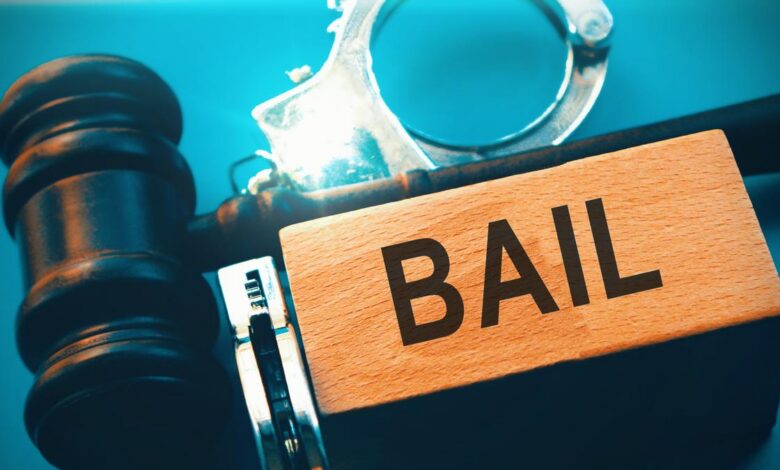
INDIA’S REAL-ESTATE CRIME PROBLEM
By 23 September 2026, the Central Bureau of Investigation has filed its 19th charge-sheet in the Supreme Court-directed nationwide investigation into alleged homebuyer fraud and suspected builder–financial-institution collusion. Thirty-one cases remain under investigation. The allegations span cheating, criminal conspiracy, criminal breach of trust, alleged diversion of funds and, in some matters, alleged misconduct by bank or financial-institution officials.
There is a question that Indian public institutions have avoided answering with the urgency that the victims deserve:
What happens when allegedly sophisticated financial wrongdoing is fast enough to collect hundreds or thousands of crores, but the justice system is slow enough to take years to determine who is responsible?
For the alleged financial wrongdoer, the clock can become an ally.
For the homebuyer, the clock becomes punishment.
The builder can litigate.
The banker can defend.
The company can enter insolvency.
The accused can seek bail.
The matter can travel through trial courts, High Courts, NCLT, NCLAT and the Supreme Court.
And the homebuyer?
He still has the EMI.
He still has the rent.
He still has the registration expenses.
He still has the children’s school fees.
He still has the ageing parents.
And, in too many cases, he still does not have the house for which he paid.
That is not merely a property dispute.
It is a justice problem.
THE NUMBERS SHOULD SHOCK THE SYSTEM
As of 16 July 2026, government data drawn from the National Judicial Data Grid showed 96,024 cases pending in the Supreme Court, 64,72,536 in the High Courts and 4,99,11,920 in District and Subordinate Courts.
That adds up to approximately 5.64 crore pending cases across the three levels of the judiciary.
And this is not an abstract statistic.
More than 1.23 crore of those cases were already more than five years old when the July 2026 data was compiled, based on the age-wise figures in the same government/NJDG dataset.
The Supreme Court’s own NJDG system shows the pendency problem continuing in 2026. The Court had 95,718 pending cases on 1 August 2026, according to an analysis of NJDG data.
District and subordinate courts alone currently show more than 5.2 crore pending cases on the NJDG dashboard.
This is not a minor administrative inconvenience.
This is a structural backlog.
And when the accused is alleged to have committed a sophisticated financial offence, structural backlog can have a very different meaning.
Because financial evidence ages.
Companies change.
Directors resign.
Bank records become harder to reconstruct.
Employees leave.
Projects deteriorate.
Assets are transferred.
Corporate structures change.
Witnesses become unavailable.
And memories become weaker.
Time is not neutral in a financial-crime prosecution.
“BAIL IS THE RULE, JAIL IS THE EXCEPTION” — A CONSTITUTIONAL PRINCIPLE THAT CAN LOOK VERY DIFFERENT FROM THE VICTIM’S SIDE OF THE TABLE
India’s courts have repeatedly held that bail is the rule and jail is the exception.
The Supreme Court reiterated the principle even in PMLA cases in August 2024, holding that the constitutional protection of personal liberty is not erased merely because the allegations concern money laundering.
At the same time, the Supreme Court has also repeatedly recognised that economic offences can be grave and that the gravity, nature and circumstances of the alleged offence matter when bail is considered.
That legal balance is perfectly understandable.
The Constitution cannot be suspended merely because the allegation involves money.
But there is another side to this equation that policy-makers cannot continue to ignore.
When an accused in a massive alleged financial crime obtains bail, the accused goes home.
The victim does not.
The victim goes home to rented accommodation.
The victim goes home to a bank demand.
The victim goes home to a stalled project.
The victim goes home to legal invoices.
The victim goes home to uncertainty.
So the real problem is not that bail exists.
The real problem is what happens after bail.
If the accused is on bail for five years, the case drifts for five years, witnesses are examined slowly, adjournments multiply, evidence is contested, corporate structures change and victims receive no meaningful recovery, then the system has created a strange inversion:
liberty for the accused may be immediate, while justice for the victim becomes an indefinite project.
That is where the deterrence argument becomes uncomfortable.
THE DATA DOES NOT PROVE THAT “FINANCIAL CRIME IS EASY” — BUT IT CAN CREATE THAT PERCEPTION
It would be irresponsible to claim, as a factual proposition, that committing financial crime in India is universally easy.
But the public record from this CBI investigation exposes a much harder question:
Does the Indian system impose a sufficiently immediate and certain cost on sophisticated alleged financial wrongdoing?
The answer cannot be obtained merely by counting arrests.
It has to be measured against:
- the time taken to complete investigation;
- the time taken to file a charge-sheet;
- the time taken to frame charges;
- the time taken to examine witnesses;
- the number of adjournments;
- the length of bail periods;
- the time taken to trace and attach assets;
- and, most importantly, the amount actually recovered for victims.
A financial offender who allegedly causes enormous losses but faces a criminal trial only after years of investigation has already enjoyed an enormous non-legal advantage:
time.
And time is money.
Especially in real estate.
THE HOME BUYER GETS A “HOUSE” ON PAPER AND A CASE NUMBER IN REAL LIFE
The Supreme Court itself has recorded the extraordinary structure of the subvention problem.
In proceedings concerning housing projects in Noida, Greater Noida, Gurugram and surrounding areas, the Court noted that builders advertised schemes under which they would pay the buyer’s EMI or pre-EMI until possession or another specified date. Banks then disbursed a substantial portion of the loan amounts upfront to builders.
When the builders stopped paying the EMI/pre-EMI, banks began demanding payment from homebuyers.
Many buyers had still not received possession, and in some projects construction was incomplete or had not even begun.
That is the moment when the phrase “homebuyer” stops describing a customer and starts describing a casualty.
He borrowed to buy the house.
The bank paid the developer.
The developer did not deliver.
The bank demanded money from the buyer.
The buyer approached the court.
And now the buyer is told to wait.
Wait for investigation.
Wait for trial.
Wait for insolvency.
Wait for resolution.
Wait for execution.
Wait for an appeal.
Wait for recovery.
How long is a citizen supposed to keep waiting for a home that was supposed to be his years ago?
NINETEEN CHARGE-SHEETS: THE LIST IS NOW TOO LONG TO DISMISS AS “A FEW BAD PROJECTS”
The CBI’s first major batch included Rudra Buildwell Constructions, Dream Procon and Jaypee Infratech. The Supreme Court’s January 2026 order expressly records those three completed investigations and the filing of charge-sheets.
The subsequent charge-sheets expanded the list substantially.
By September 2026, the 19 charge-sheeted matters publicly identified in the CBI series include:
- Rudra Buildwell Constructions Pvt. Ltd.
- Dream Procon Pvt. Ltd.
- Jaypee Infratech Ltd.
- AVJ Developers (India) Pvt. Ltd.
- CHD Developers Ltd.
- Sequel Buildcon Pvt. Ltd.
- Logix City Developers Pvt. Ltd.
- Manju J Homes India Ltd.
- Shubhkamna Buildtech Pvt. Ltd.
- Ninex Developers Ltd.
- Decent Buildwell Pvt. Ltd.
- Rudra Buildwell Projects Pvt. Ltd.
- Ithaca Estate Pvt. Ltd.
- LGCL Urban Homes (India) LLP
- Saha Infratech Pvt. Ltd.
- Ozone Urbana Infra Developers Pvt. Ltd.
- MKHS Housing LLP
- Indiabulls Distribution Services Ltd., now Indiabulls Nests Ltd.
- Indiabulls Investment Advisors Ltd., now Indiabulls Urban Residency Ltd.
The CBI release on the MKHS matter expressly identifies the two Indiabulls-named entities and their directors/officials along with MKHS and its designated partner.
The 19th charge-sheet, filed in September 2026, concerns Earthcon Universal Infratech Pvt. Ltd. and its directors in connection with the Casa Royale project in Greater Noida. It is part of a remaining pool of 31 cases under investigation.
The fact that the number moved from 16, to 17, to 18 and then 19 charge-sheets is not itself proof of guilt.
It is, however, evidence of the scale of the investigation.
THE COMPANIES AND THE PEOPLE BEHIND THEM
A major problem in reporting corporate crime is the tendency to write about a company as though it were a person.
A company is not a human being.
The important question is always:
Who controlled it? Who signed? Who managed the money? Who approved the transaction? Who represented the project? Who dealt with the banks? Who benefited?
The public corporate records reviewed identify the following principals, directors or designated partners. These names should not be treated as a list of convicted persons, and corporate directorship alone does not establish criminal liability. In several CBI releases, the agency did not publicly disclose the complete individual accused list.
Rudra Buildwell Constructions
Public corporate records identify Raj Kumar and Vaibhav Aggarwal among the company’s directors; the company has also had earlier directors including Aanchal Aggarwal, Jatin Gupta and Suresh.
The CBI case concerns the KBNOWS Apartments project in Greater Noida, one of the three investigations the Supreme Court recorded as completed at the beginning of 2026.
Dream Procon
Corporate records identify Pramod Goel and Krishan Kumar Gupta as directors, with historical directorships including Sandeep Goel.
The CBI case concerns Victory Ace, Noida.
Jaypee Infratech
The most prominent publicly identified figure is Manoj Gaur, chairman/managing director and a central figure in the Jaypee real-estate business.
Public litigation records also identify senior Jaypee Group/Jaypee Infratech figures including Sunil Kumar Sharma, Sunny Gaur, Pankaj Gaur, Rahul Kumar, Sameer Gaur, Sachin Gaur and Rekha Dixit in company and litigation contexts.
But the most consequential individual criminal-enforcement development was Manoj Gaur’s arrest by the ED.
AVJ Developers
The public record identifies Vinay Jain, Vipin Aggarwal and Asha Jain in the AVJ-related criminal and bail proceedings discussed above.
The CBI’s charge-sheet also named the associated entities AVJ Developers (India) Pvt. Ltd., AVJ Developers Pvt. Ltd. and Kesar Builders Pvt. Ltd., their directors, officials of Bank of India, ICICI Bank and UCO Bank, and alleged proxy homebuyers. The CBI alleged a mechanism involving false assurances, bank irregularities and proxy buyers.
CHD Developers
Corporate records identify Gaurav Mittal, Ritu and Gaurav Gupta as directors.
A company filing describes Gaurav Mittal as managing director and a long-serving promoter director.
Sequel Buildcon
Corporate records identify Amarpal, Anoop Kumar Srivastava, Manoj Kumar Singh and Dilip Kumar as directors. The company is reflected as being under CIRP.
Logix City Developers
Corporate records identify Shakti Nath and Davender Mohan Saxena as current directors, with Meena Nath and Vikram Nath appearing in historical director records. The company is shown as under CIRP.
The CBI charge-sheet also names officials of ICICI Bank and HDFC Bank.
Manju J Homes India
Corporate records identify Rajesh Kumar Jodhani, Aditya Aggarwal, Shubham Jain and Sanjay among current directors, with several historical directors.
The CBI charge-sheet also names SBI officers in the Ghaziabad matter and invokes allegations including criminal conspiracy, cheating, criminal breach of trust, forgery and use of forged documents, along with Prevention of Corruption Act provisions.
Shubhkamna Buildtech
The publicly identified directors include Piyush Tiwari, Diwakar Sharma and Deep Tewari.
The CBI alleges that the company and its directors induced homebuyers/investors through false assurances, misleading representations and deceptive promises.
Separate Delhi EOW records show arrests involving Diwakar Sharma, Piyush Tiwari and Shikha Tiwari in different cases.
Ninex Developers
Corporate records identify Ram Mehar Garg, Sandeep Garg and Veena Garg as directors; other historical directors are also recorded.
The CBI’s 11th charge-sheet against Ninex was part of the same nationwide investigation.
Decent Buildwell
Public records identify Ram Agrawal and Amit Tyagi as current directors, with Suresh Chandra Kaushik, Aman Agrawal and Pradeep Kumar appearing in historical records.
Rudra Buildwell Projects
Public records identify Nitin Dua and Mukesh Khurana as directors, with earlier directors including Agrim Arora, Jagdish Narandas Kotecha and Kuldeepak Arora.
Ithaca Estate and LGCL Urban Homes
The Bengaluru CBI matter names Ithaca Estate Pvt. Ltd. and its director, as well as officials connected with HDFC Bank, ICICI Bank and Indiabulls Housing Finance. It also names LGCL Urban Homes (India) LLP and its director.
For LGCL, corporate records identify Girish Puravankara and Rashmi Puravankara as designated partners, and the LLP is shown under CIRP.
Saha Infratech
Corporate records identify Aniel Kumar Saha as managing director and Ashok Sirohi Kumar as director.
The company is also reflected in IBC proceedings in which Aniel Kumar Saha is identified as a suspended director.
The CBI’s July 2026 charge-sheet named Saha Infratech, its director and HDFC/ICICI bank officials, alleging conspiracy, abuse of official position, cheating and criminal breach of trust.
Ozone Urbana
Public records identify Vasudevan Sathyamoorthy as managing director and Sathyamoorthy Sai Prasad as director.
This is among the most financially significant cases in the larger investigation because the ED has said approximately ₹927.22 crore was collected from around 1,351 homebuyers, while the agency provisionally attached immovable properties valued at about ₹423.38 crore.
Those are agency allegations and enforcement figures—not judicial findings of guilt.
MKHS Housing
Corporate records identify Srikant Sikaria, Kamal Chopra and Subhadeep Pal as designated partners.
The CBI’s 18th charge-sheet also names Indiabulls Distribution Services Ltd., now Indiabulls Nests Ltd., and Indiabulls Investment Advisors Ltd., now Indiabulls Urban Residency Ltd., together with their directors/officials.
Public corporate records for Indiabulls Nests identify Amit Ajit Gandhi, Usha Devi and Akshay Kumar Tiwary among its directors.
Historical corporate data for Indiabulls Investment Advisors identifies figures including Akshay Kumar Tiwary, Mukesh Rana, Amiteshwar Choudhary and Usha Devi, among others.
Again: being a director is not proof of participation in a crime. The specific charge-sheet should be checked before attributing a criminal allegation to a named individual.
Earthcon Universal Infratech
The 19th CBI charge-sheet concerns Earthcon Universal Infratech and its directors in the Casa Royale project in Greater Noida.
Public corporate and insolvency records identify Shadab Khan, Sushil Kumar Sharma, Amit Anil Goenka and Vikas Krishnakumar Modi as directors/nominee directors.
The company is shown in insolvency records as being under CIRP.
ARRESTED? YES — BUT THE PICTURE IS NOT AS SIMPLE AS A HEADLINE
The most responsible way to understand the arrests is by agency and FIR.
Manoj Gaur — Jaypee
The ED arrested Manoj Gaur on 13 November 2025 under Section 19 of PMLA. The agency alleged that funds collected from homebuyers were diverted for purposes other than construction.
A later ED release said the agency’s investigation indicated approximately ₹32,825 crore had been collected by Jaiprakash Associates and Jaypee Infratech from homebuyers, based on NCLT-admitted claims, and alleged substantial diversion for non-construction purposes. It stated that Manoj Gaur played a central role in the alleged diversion and that he remained in judicial custody. The ED also stated that an attachment order covered property with a current market value of approximately ₹400 crore, and that a prosecution complaint had been filed.
An earlier period of interim bail was reported in January 2026, followed by surrender on 19 February 2026; subsequent regular-bail proceedings continued.
This is exactly why the phrase “bail” needs context.
Bail is not acquittal.
Interim bail is not acquittal.
Release from custody is not exoneration.
And an allegation in an ED prosecution complaint is not a conviction.
AVJ: ARRESTS, BAILS, AND YEARS OF LITIGATION
The AVJ material demonstrates how messy financial-crime litigation can become.
Vinay Jain has faced multiple proceedings and arrests. The Delhi High Court record states that he and Asha Jain were arrested in April 2025 in FIR 03/2021. The same order records that they were granted regular bail on 29 May 2025.
The AVJ-related record also contains an earlier arrest history involving Vipin Aggarwal, who was taken into custody on 23 March 2017 in FIR 639/2016 and released on bail on 7 November 2017.
Vinay Jain had also received interim bail from the Supreme Court in February 2021 in proceedings connected with AVJ Heights; the interim bail was subsequently confirmed.
The lesson is not that the accused “escaped justice”.
The legal lesson is that criminal custody is only one event in a process that can last years.
And that is the central problem.
SHUBHKAMNA: THE SAME PATTERN — ARRESTS IN MULTIPLE CASES, BAIL IN MULTIPLE CASES, CASES STILL RUNNING
Delhi EOW records state that Diwakar Sharma was arrested on 6 September 2018 in FIR 66/2017.
Court records also show proceedings involving Piyush Tiwari and Shikha Tiwari.
In one Delhi High Court matter, Shikha Tiwari was granted regular bail on 11 April 2022 in FIR 46/2020 under IPC provisions including criminal breach of trust, cheating and conspiracy.
A later court record documents additional bail proceedings involving Piyush Tiwari.
Again, the point is not to suggest that bail is improper.
The point is more disturbing:
the same underlying real-estate controversies can continue through criminal complaints, bail proceedings, insolvency proceedings, cheque cases, consumer cases and appeals for years.
The homebuyer has to participate in all of them.
WHY IS THE FINANCIAL SYSTEM SO OFTEN AHEAD OF THE JUSTICE SYSTEM?
This is the question India should be asking.
In alleged financial crime, money can move in minutes.
Corporate structures can change in days.
Properties can be sold.
Accounts can be emptied.
Companies can be layered.
Receivables can be reassigned.
Assets can be mortgaged.
And yet the legal response may take years.
That mismatch is dangerous.
A sophisticated alleged financial crime is often not a violent crime committed in public.
There may be no weapon.
No blood.
No obvious crime scene.
There may instead be:
agreements,
bank transfers,
board resolutions,
tripartite agreements,
escrow arrangements,
inter-corporate deposits,
related-party transactions,
shell entities,
loan accounts,
mortgages,
share transfers,
land titles,
emails,
WhatsApp communications,
accounting entries,
and hundreds of pages of corporate filings.
That means the crime can look respectable while it is allegedly happening.
The office still has the glass façade.
The brochures still look premium.
The website still shows towers.
The sales team still says possession is around the corner.
And the bank still has the documents.
The alleged wrongdoing can wear a suit.
That is why financial crime can be particularly dangerous.
THE OZONE CASE SHOWS WHAT “SCALE” CAN MEAN
The Ozone Urbana investigation deserves special attention.
The ED has alleged that approximately ₹927.22 crore was collected from approximately 1,351 homebuyers.
The agency has said it provisionally attached ₹423.38 crore of immovable property.
That means the documented enforcement action itself involves hundreds of crores.
This is not a dispute over a defective kitchen tile.
This is the kind of allegation in which hundreds of families can simultaneously lose years of financial planning.
And yet the legal process still moves through stages.
Investigation.
Searches.
Attachments.
Charge-sheet.
Prosecution.
Bail applications.
Trial.
Appeal.
Recovery.
The system may call these “procedural stages”.
For the homebuyer, they are life stages.
JAYPEE SHOWS THE OTHER EXTREME: A HOME-BUYER CRISIS CAN BECOME AN ENTIRE LEGAL ECOSYSTEM
Jaypee became an enormous insolvency and homebuyer litigation problem.
The Supreme Court’s Chitra Sharma litigation became a landmark chapter in the treatment of homebuyers within the insolvency framework. The subsequent resolution process generated years of litigation over creditor rights, promoter participation and resolution.
The ED’s later criminal investigation added an entirely separate financial-crime layer.
The ED has alleged massive diversion of homebuyer money and identified Manoj Gaur as a central figure in the alleged transaction structure.
Again, those are allegations.
But for the buyer, the distinction between “civil”, “insolvency”, “criminal” and “money laundering” is irrelevant when the practical result is the same:
no home.
THE MOST BITTER PARADOX: THE ACCUSED HAS A LEGAL TEAM. THE VICTIM HAS A FILE.
India’s procedural system is designed to protect the accused from wrongful conviction.
That protection is indispensable.
But a justice system also has to protect victims from procedural exhaustion.
A wealthy accused can sometimes retain senior counsel.
A corporation can conduct litigation as a budgeted expense.
A financial institution has legal departments.
An insolvency professional has a process.
The homebuyer may have spent everything.
His savings went into the flat.
His borrowing went into the flat.
His income is going into EMI.
His rent is going into the flat that does not exist.
And the remainder of his money goes to lawyers.
He effectively pays twice: once to buy the dream, and again to fight for it.
Sometimes he pays three times:
once through the purchase price,
again through the bank,
and again through litigation.
That is why homebuyer fraud is unlike ordinary commercial litigation.
A company can write off a bad debt.
A family cannot write off ten years of its life.
“JUDGES DO NOT UNDERSTAND THE COMMON MAN” IS TOO EASY — THE REAL PROBLEM IS WORSE
It would be unfair and factually unjustified to say that individual judges “can never understand” the pain of an ordinary homebuyer.
Judges see these disputes precisely because the victims come before them.
The more serious criticism is institutional:
the justice system measures a case in hearings, orders, applications and adjournments; the homebuyer measures it in birthdays, EMIs, rent payments, school fees and years of lost opportunity.
A judicial file may be five years old.
A five-year-old child may have entered school during that same period.
A parent may have retired.
A borrower may have crossed middle age.
A family may have paid crores in interest and rent while the promised home remained incomplete.
That is the human cost of judicial delay.
And the courts themselves know the backlog problem is severe.
The Supreme Court has said more than once that excessive delays undermine the justice system; the national data now shows the scale numerically.
More than 5.6 crore pending cases is not simply a number.
It is a warning.
THE MOST IMPORTANT REFORM IS NOT “MORE ARRESTS”
India does not need a justice system that boasts about the number of people arrested.
It needs a justice system that makes evidence move faster than money.
That means:
First: immediate forensic accounting of the alleged project funds.
Second: rapid tracing of related-party transactions.
Third: immediate identification and preservation of assets.
Fourth: financial profiling of the accused entities and associated persons where legally justified.
Fifth: early examination of bank and NBFC personnel where the documentary record points toward possible involvement.
Sixth: consolidated case management for homebuyer matters arising from the same project.
Seventh: strict control on avoidable adjournments.
Eighth: priority trial schedules once the charge-sheet and cognizance stages are complete.
Ninth: periodic judicial monitoring of recovery of traceable assets.
Tenth: regular public status reports for victims.
A charge-sheet is an investigative milestone.
It is not the finish line.
THE CBI’S OWN NUMBERS DEMAND A FASTER SECOND HALF
The CBI has now crossed 19 charge-sheets in the broader investigation and is still handling 31 cases.
The Supreme Court had earlier directed progress in the completed matters. In January 2026, it was informed that charge-sheets in the Rudra Buildwell, Dream Procon and Jaypee cases had been filed and the Court directed the relevant court to consider them and proceed according to law within two weeks.
That judicial instruction contains an important philosophy:
the investigation cannot become the permanent home of a criminal case.
Eventually it has to move to trial.
Eventually evidence has to be tested.
Eventually guilt or innocence has to be determined.
Eventually victims need an outcome.
Otherwise the charge-sheet becomes merely an impressive PDF.
THE REAL TEST: HOW MUCH MONEY WILL COME BACK?
This should become the central metric.
Not:
“How many raids?”
Not:
“How many arrests?”
Not:
“How many charge-sheets?”
Not:
“How many press releases?”
The true question is:
How much money was allegedly taken?
How much was traced?
How much was attached?
How much was frozen?
How much was recovered?
How many homes were completed?
How many homebuyers actually received relief?
Until those questions are answered, enforcement success remains incomplete.
THE HOME BUYER SHOULD NOT HAVE TO WAIT FOR THE ACCUSED TO AGE
There is something particularly cruel about financial crime against homebuyers.
The victim is often not rich.
He is not a professional investor.
He is frequently a salaried employee, businessman, middle-class family, senior citizen or first-time buyer who believed that buying a home was the safest long-term investment of his life.
He did not speculate on the stock market.
He bought a house.
He trusted the developer.
He trusted the brochure.
He trusted the agreement.
He trusted the bank.
He trusted the regulator.
He trusted the system.
And when those layers fail, there is nowhere else to go except the courts.
That is why every year of judicial delay is not merely a statistic.
It is an additional injury.
BAIL SHOULD REMAIN A RIGHT — BUT SPEEDY TRIAL MUST BECOME A COMPANION RIGHT
There is no contradiction between defending constitutional liberty and demanding speedy trials.
In fact, they are connected.
A person who is wrongly accused deserves a fast acquittal.
A person who is genuinely guilty should face a fast conviction.
A homebuyer who is genuinely wronged deserves fast recovery.
The present model can leave all three waiting.
The accused waits for trial.
The victim waits for recovery.
The public waits for accountability.
And the file waits in a court system with crores of pending matters.
That cannot be a satisfactory long-term equilibrium.
INDIA DOES NOT NEED A “JAIL FIRST” SYSTEM. IT NEEDS A “TRIAL FIRST” SYSTEM.
The answer is not to abolish bail.
The Supreme Court has made the constitutional position clear: liberty cannot become an exception merely because the case is financially serious.
But that principle should force the other half of the system to become much faster.
If bail is the rule, trial must also become faster.
That is the missing equation.
A suspect on bail should not be able to watch a financial-crime case crawl endlessly through procedural stages.
A victim should not be forced to keep attending hearings for a decade.
A prosecution should not remain a permanent “work in progress”.
A charge-sheet filed today should not become a trial scheduled for some indefinite tomorrow.
A SPECIAL TRACK FOR LARGE-SCALE HOME-BUYER FINANCIAL CRIMES?
India should seriously consider a dedicated case-management mechanism for very large real-estate fraud cases involving:
- hundreds of homebuyers;
- alleged diversion of project funds;
- builder–bank/NBFC transactions;
- multiple related entities;
- simultaneous criminal and insolvency proceedings;
- and assets requiring urgent tracing.
The objective should not be to create “special treatment” for the prosecution.
It should be to stop the litigation from becoming unmanageable.
One project.
One judicial dashboard.
One consolidated asset-tracing chart.
One victim database.
One recovery register.
One trial schedule.
One accountable investigation timeline.
THE SYSTEM MUST ALSO STOP CONFUSING INSOLVENCY WITH CRIMINAL ACCOUNTABILITY
IBC proceedings can rescue a project.
They can maximise value.
They can provide a mechanism for creditors.
They can protect or reorganise a viable development.
But insolvency is not a substitute for criminal investigation.
If evidence establishes intentional deception or diversion, the criminal case cannot disappear merely because the company entered CIRP.
Likewise, criminal prosecution cannot by itself complete construction.
India therefore needs both:
project resolution
and
criminal accountability, where warranted.
The homebuyer deserves both.
THE FINAL QUESTION IS NOT WHETHER THESE PEOPLE WILL GO TO JAIL
That question is too simplistic.
The final questions are:
Will the truth be established?
Will the money trail be reconstructed?
Will responsible individuals be identified on evidence?
Will innocent people be cleared quickly?
Will guilty people be convicted if the prosecution proves its case?
Will assets be recovered?
Will homes be delivered?
Will victims get compensation?
Will future developers understand that alleged large-scale financial misconduct produces consequences that arrive quickly enough to deter it?
These questions are far more important than counting arrests.
A CALL FOR A MUCH TOUGHER, FASTER HOME-BUYER JUSTICE MODEL
The CBI deserves scrutiny—not merely applause.
Every additional charge-sheet should now be followed by a question:
What happens next?
Trial?
Charges?
Evidence?
Recovery?
Conviction or acquittal?
Victim compensation?
That is where accountability begins.
The Supreme Court’s intervention demonstrates that the judiciary is already conscious of the scale of the homebuyer problem. The CBI investigation demonstrates that the criminal dimension is being examined. The ED’s Jaypee and Ozone actions demonstrate that asset tracing and financial investigation can reach enormous sums.
The next stage must be speed.
Not reckless speed.
Not conviction without evidence.
Not jail without due process.
But disciplined, evidence-led, time-bound justice.
India cannot permanently operate a system in which money can allegedly disappear faster than courts can reconstruct the trail.
It cannot allow the buyer to spend his youth waiting for his home.
It cannot allow an alleged financial wrongdoer to treat litigation as another cost of doing business.
It cannot allow the phrase “the matter is sub judice” to become a permanent burial ground for accountability.
And it certainly cannot ask the ordinary citizen to finance a decade-long legal war using the very savings that were supposed to buy his home.
THE MOST PINCHING FACT OF ALL
A builder may eventually get bail.
A director may eventually win an appeal.
A company may eventually enter insolvency.
A financial institution may eventually settle a dispute.
A prosecution may eventually succeed.
An accused may eventually be acquitted.
All of those are legitimate outcomes under the rule of law.
But there is one outcome that the system cannot normalise:
A homebuyer spending the best years of his life paying for a home that never arrives.
That is the failure that deserves the most urgent attention.
Because when a family loses a house, it does not merely lose brick and concrete.
It can lose:
capital,
creditworthiness,
retirement security,
family stability,
children’s plans,
mental peace,
years of productive life,
and sometimes the belief that the law will protect ordinary people.
Nineteen charge-sheets are significant.
Thirty-one pending investigations are significant.
But ultimately, those numbers are only the beginning.
The real scoreboard is whether justice arrives before the victim’s life savings, retirement and hope have all been spent waiting for it.
DISCLAIMER
This article is an investigative opinion piece based on publicly accessible CBI releases, Supreme Court proceedings, High Court and lower-court orders, Enforcement Directorate material, insolvency records, corporate-record databases and established media reports available up to 23 September 2026. The allegations discussed in relation to any company, director, promoter, banker, official or other person remain allegations unless and until proved before a competent court. A First Information Report, investigation, search, arrest, attachment, insolvency proceeding, prosecution complaint or charge-sheet is not a conviction. Bail is not an acquittal, and the grant of bail does not determine guilt or innocence. No person should be described as “convicted”, “fraudster”, “criminal” or similar language as a statement of fact unless a competent court has recorded such a finding. Several CBI public releases do not disclose the complete individual accused list; therefore, the identification of a person as a director or designated partner from corporate records should not be read as a finding that the person personally participated in the alleged offence. The precise accused list, charges, cognizance status and current bail/trial position should be verified from the relevant FIR, charge-sheet, court order and latest case record before publication.
Editorial demand
The CBI, ED, police, insolvency authorities and courts should adopt a substantially tighter, evidence-led and time-bound framework for large-scale homebuyer financial-crime matters. Investigations should be completed without avoidable delay; assets should be traced and preserved at the earliest lawful stage; the role of every alleged participant should be examined individually; and, once cases reach trial, proceedings should be managed with strict discipline and minimal avoidable adjournments, while fully protecting the constitutional and procedural rights of accused persons and the participation and interests of victims.