A Name Convicted in Print: How the Media Tried Hari Shankar Tibrewal Before Any Court Did
There is a difference between an investigation and a hanging.

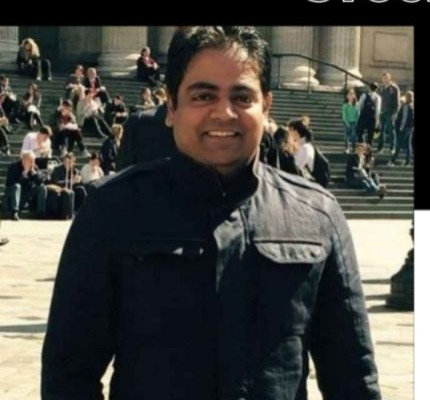
Indian law knows that difference. Large parts of the Indian media, for more than two years, did not.
Hari Shankar Tibrewal — a Dubai-based Indian businessman, also spelled Tibrewala in some records — has spent the period since March 2024 living inside a peculiar modern punishment. No criminal court has convicted him. No trial court has heard his defence. No judge has held that the Enforcement Directorate’s allegations are proved. Two civil courts in New Delhi have, at the interim stage, found that publications went beyond the official record and projected guilt as if it were already a fact. And still, for banks, counterparties, search engines and chatbots, the sentence had already been written.
This is not a plea that the Mahadev investigation be ignored. It is a record of what happened when reporting an agency allegation hardened into a public conviction — and of the man who was made to wear that conviction while the actual trial had not even begun.
I. The man, before the headline
Before he became a headline, Tibrewal was what a large number of Indian traders in the Gulf are: a businessman who built a life across borders. Public descriptions issued on his behalf place his interests in trading and investment vehicles in the UAE, including Zenith Multi Trading DMCC (Zenith Global), Plus Commodities DMCC and Three Musketeers Hospitality. He previously appeared as an approved individual on the public register of the Abu Dhabi Global Market’s Financial Services Regulatory Authority, a status later shown as withdrawn. His Indian director identification number, DIN 02693573, has never been disqualified.
None of that is a certificate of innocence in a money-laundering probe. It is something more basic, and more often forgotten: he was a person with a name, a family, employees, counterparties and a reputation that had taken decades to assemble. Reputation is not a luxury good. Under Indian constitutional law it is treated as part of the right to life. Once it is torn, the law can restrain a sentence. It cannot always restitch the cloth.
What changed in March 2024 was not a verdict. It was a press release.
II. What the agency actually said
On 1 March 2024 the Enforcement Directorate issued a public statement in the Mahadev Online Book investigation. It named Tibrewal as a Kolkata-origin, Dubai-resident businessman it described as a “huge hawala operator,” alleged that he had partnered with the Mahadev promoters, alleged that searches showed he owned and operated the betting website Skyexchange, alleged that betting proceeds were being invested in Indian stocks through the foreign portfolio investor route, and announced that securities worth ₹580.78 crore held by entities it said he beneficially owned had been frozen.
A second release, on 8 March 2024, announced the arrests of two other men — Girish Talreja and Suraj Chokhani — and alleged that Tibrewal had used Chokhani to disguise proceeds as share investments and had manipulated stock prices with promoters of listed companies. It named no listed company. It did not announce Tibrewal’s arrest.
Those two documents are the seed of everything that followed. They are also, if one reads them honestly, still what they were on the day they were issued: allegations by an investigating agency, written in the language of certainty that agencies always use, and as yet untested by a trial court.
Two facts about those releases matter more than any later adjective.
First, the phrase “hawala operator” is the ED’s own. Any account that pretends the media invented that phrase from nothing is incomplete.
Second, neither release said he had been arrested. Neither said he was absconding, a fugitive, or wanted. Neither produced a look-out circular or a Red Corner Notice in his name. Neither named Eraaya Lifespaces. Those words came later, from newsrooms.
The first week of wire copy, from PTI and ANI, largely stayed inside the agency’s frame: the ED said, the ED alleged, holdings were frozen. That is reporting. What followed was something else.
III. How a press release became a verdict
The conversion did not require a conspiracy. It required only the ordinary machinery of Indian news: a deadline, a competitor, a market desk hunting for a stock story, a headline writer who found “alleged” too long, and a later website willing to drop attribution altogether.
Within days, market coverage turned a PMLA freeze into a morality play about the share market. Stocks said to be “held by Tibrewala” were listed as locked in lower circuit. A business site called him “the man behind [a] share market crash.” The ED had frozen securities. It had not appointed him the author of a market crash, and it had not published that list of companies as a finding of a court.
Over the next two years the adjectives grew teeth.
He was no longer a man the ED had named. He was a “mastermind.” He “remained at large.” He was a “certified hawala operator.” He was “absconding from India.” He was a “kingpin.” He was a “shadowy titan in a financial underworld.” One line of coverage asked whether he was managing the finances of a named underworld figure. Another asserted he had taken a Vanuatu passport — a claim that, in agency-sourced reporting, attaches in the public record to a different man in the same investigation, the Mahadev promoter Ravi Uppal.
This is the precise point at which journalism becomes a substitute court.
An agency may allege that a man is a hawala operator. A newspaper may report that allegation, with the agency’s name on it. The moment the newspaper itself certifies him, crowns him, declares him on the run, and ties him to companies and passports the contemporaneous record did not support, it has left reporting and entered sentencing.
Two Delhi courts later drew that line in judicial language. The media had already drawn it in 72-point type.
IV. What two courts found — and what the country almost did not hear
In 2024 Tibrewal sued in the Patiala House Courts in New Delhi (CS 4242/2024). The defendants, as later described, included major wire and newspaper publishers and the platforms that carried video and social copies of the same claims. An interim injunction was granted on 25 October 2024. On 14 November 2024 the court made it absolute until the suit is decided.
The order itself barely entered the public bloodstream. That silence is part of the story. The accusation had travelled through every platform the country has. The correction travelled through almost none.
The findings, as extracted and later discussed in detailed reporting, were not mystical. They were forensic.
There was, the court said, “nothing to suggest” that he had been arrested in the scam, was absconding or a fugitive, or had the 2024 company link some publications had given him. No cogent material was placed on record to establish Red Corner Notices or look-out circulars. The arrest of co-accused persons did not imply that he was evading arrest. An international compliance database that had recorded him as arrested by the ED was described in three words that ought to have stopped the presses: “This is factually incorrect.”
The claims of arrest, absconding and fugitive status, the court noted, did not find mention in the ED’s own press releases. Because they had been stated as facts, the publishers could not hide behind the defence that they had merely reproduced the agency. Under Press Council norms, the onus was on the defendants to establish truth. It was not for the plaintiff to prove the opposite.
And then the sentence that should be taught in every Indian newsroom:
“The plaintiff may be an accused in the betting scam, but then too he is entitled to the presumption of innocence.”
The court added a warning the profession has heard for twenty years and has never internalised. A person who is eventually acquitted may still never efface the damage of being reported as a man “on the run.” No one wants to sit across a table from that headline.
A second wave of articles in early 2025, from outlets not named in the first suit, produced a second case: CS DJ ADJ 1212/2025 at the Rouse Avenue Court. The defendants included, among others, Inventiva’s publisher, TICE News, Moneycontrol and compliance-data companies. Interim injunctions followed on 6 November 2025 and 9 June 2026. On 17 August 2026, District Judge Harjyot Singh Bhalla confirmed them.
He examined five expressions:
- “key figure in stock market manipulation scheme”
- “help pump the stock through various market manipulations”
- “Hawala Trader”
- “one of the main accused in Mahadev Betting”
- “shadowy titan in a financial underworld”
He held that they impute criminality, portray organised crime, and are per se defamatory. Then he gave the process its proper name:
“Such projection of guilt is a Trial outside the Trial Court and may create prejudice against the plaintiff and interfere with the administration of justice.”
Later uses of “absconding,” “farar” and “fugitive from Indian justice” were treated not as reporting of a probe but as sensationalising already restrained. Monetary compensation, the court said, may not be an adequate remedy. Specified material was to be removed and not republished. If it was not, intermediaries were to de-index it.
The order was not a gag on the Mahadev investigation. Fair reporting of FIRs, of what agencies disclose, and of court proceedings was expressly preserved. What was taken away was the freedom to pronounce the sentence in the publisher’s own voice.
ANI reported the confirmation on 21 September 2026. Within a day the wire was copied across multiple sites — a small, late demonstration of the same syndication machine that had earlier copied the accusation and ignored the first court’s findings.
That asymmetry is not an accident of the news cycle. It is the method by which a media trial becomes irreversible.
V. The words that were never in the file
It is worth placing the extra words next to the public record, because the harm was not abstract. It was lexical.
“Arrested.”
The ED announced searches and a freeze. It did not announce his arrest. A civil court later found nothing to suggest one, and called a database entry recording an arrest factually incorrect. In the popular mind, “ED case” and “arrested” collapsed into each other. They are not the same event.
“Absconding.” “Fugitive.” “Evading arrest.” “Farar.”
He lives in Dubai, where the public record shows he lived before March 2024. The Mahadev promoters Sourabh Chandrakar and Ravi Uppal are the names around which Red Notices and extradition efforts have been publicly reported. No credible source has produced a look-out circular, Red Corner Notice, extradition request or warrant in Tibrewal’s name. A court found no cogent material of any. Living where one already lives is not flight. Treating Gulf residence as proof of guilt is a colonial reflex dressed up as crime reporting.
“Certified hawala operator.”
Certification is what a court does after evidence is tested. The ED alleged. He denied. No court has decided. “The ED has described him as a hawala operator, an allegation he denies” is a sentence. “Certified” is a hanging.
“Kingpin.” “Mastermind.” “One of the main accused.”
The ED’s 2024 releases called him a major player who had partnered with the promoters. The men the agency has consistently named as the operation’s heads are other men. Rank in a headline is not rank in a chargesheet, and even a chargesheet is not a conviction.
The 2024 Eraaya link.
A civil court found the contemporaneous link too far-fetched. Later ED-attributed allegations connecting funding flows, Eraaya and Ebix surfaced in 2026 prosecution-complaint reporting. Those too are allegations. They cannot be used, retrospectively, to launder a 2024 invention.
The Press Council’s rule on headings is not poetry. It exists because headlines are what syndication, compliance databases and now AI models actually ingest. If “ED alleges” will not fit, the headline is wrong. The norm is not.
VI. The machine that turned ink into exile
A newspaper error used to have a shelf life. It now has a supply chain.
According to material placed before the courts and later described in detail, an international compliance database recorded Tibrewal as arrested — the entry a Delhi court called factually incorrect. Risk profiles, he says, carried a wrong nationality and towns he has never visited. Most of his banks, he says, then closed his accounts. An AI answer attached another man’s biography to his name.
The database finding is a court’s. The banking and AI claims are his. Both are consistent with how the modern reputational market actually works.
Banks do not read Patiala House orders over breakfast. They screen customers against commercial adverse-media products — World-Check, ComplyAdvantage and their peers — that vacuum news at industrial scale. The Financial Action Task Force has been warning for years that such databases draw on public information they cannot verify, go stale, generate false positives from transliterated names, and are “not sufficient” on their own. The warning is in the guidance. The offboarding is in the account.
Then the loop closes. “Sources say” becomes “reports say,” which becomes “it is widely reported,” which becomes a database field, which becomes a chatbot’s confident paragraph, which becomes the next article’s background. Corrections are ingested as confirmations. The American law professor Jonathan Turley lived a version of this when a chatbot cited his own correction as proof of the original smear. India now has, by the Reuters Institute’s measure, among the world’s highest rates of weekly chatbot use for news. The first draft of a man’s identity is no longer written only by a reporter. It is written by a model that has read the reporter, and the copy of the reporter, and the database that read them both.
De-indexing does not unwind this. Under the IT Rules, an intermediary given a court order must act on specified URLs, in the country where the content is unlawful, within a short clock. A delisting on google.co.in leaves google.ae, archives, aggregators, screenshots and the pre-existing risk profile untouched. For a man who lives and banks in Dubai, that is not a remedy. It is a partial dimmer switch on one screen.
Every remedy available — the open-court apology, the data-subject request, the de-indexing order — arrives years after the account is already closed. None of them, by itself, reopens the account. That is why the presumption of innocence is not a courtesy to be observed inside a courtroom. It is the only checkpoint in the entire chain where a human being is asked to look at a word and decide whether it is true.
VII. What has been proved, and what has only been printed
Honesty requires a clean inventory.
What exists.
An ED investigation into Mahadev Online Book and related money flows. Two March 2024 press releases naming Tibrewal in severe language. Later prosecution complaints, including a sixth complaint reported in September 2026, in which the agency describes him as the Dubai-based owner of Skyexchange and alleges funding routes involving other businessmen and listed-company transactions. Attachment and freezing of securities linked to entities the agency says he beneficially owns. Arrests of other people in the same cluster of cases. CBI chargesheets in the wider Mahadev universe against a large number of accused, publicly centred on the promoters Sourabh Chandrakar and Ravi Uppal and on alleged political-bureaucratic patronage.
What does not exist.
A conviction. A trial judgment. A finding of guilt. A public record of his arrest. A public record of a Red Corner Notice, look-out circular or extradition request in his name. A CBI or ED result that a court of trial has tested against his defence and declared proved.
Attachment is not proof. A prosecution complaint is not a verdict. A Section 50 statement by someone else is not cross-examination. An agency’s adjective in a press note is not a certificate. Indian criminal procedure was built on exactly these distinctions. The media economy is built on collapsing them.
In June 2026 the Chhattisgarh High Court, dealing with eight companies whose demat accounts and securities — about ₹423–424 crore — had been attached in the same investigation, directed the ED to consider a mechanism to preserve the economic value of market-linked assets during the pendency of PMLA proceedings. The court did not release the assets. It also did not decide the merits of the underlying allegations. It treated a frozen listed share as what it is: a living price, not a trophy in a cupboard. That is how a court behaves when it remembers that process has a duration, and that duration has a cost.
Tibrewal has denied the ED’s allegations consistently, including in the 2024 Patiala House petition, where contemporaneous reporting recorded his denial of any role in the Mahadev app and his objection to the hawala label. Denial is not acquittal. It is the beginning of the right that the headlines skipped.
VIII. The media’s defence, and why it fails
The standard defence is always the same. We only printed what the ED said. This is a matter of public interest. Injunctions are SLAPP suits. A Dubai businessman is trying to gag the press.
Public interest is real. Mahadev is a serious investigation. Illegal betting, alleged political payoffs and alleged layering through markets are not private quarrels. Both Delhi courts said so. Tibrewal’s own public position, as quoted in later reporting, is that he has never asked anyone to stop reporting what investigators or courts say.
The defence fails for a simpler reason. The publications that the courts restrained were not confined to what the ED said. They added an arrest the ED had not announced. They added flight no notice supported. They added company links the 2024 record did not carry. They added “certified,” “kingpin,” “shadowy titan,” “farar.” They put those words in the publisher’s mouth, not the agency’s.
A second defence is that later 2026 prosecution complaints somehow bless the earlier headlines. They do not. A 2026 allegation cannot travel backwards in time and make a 2024 false statement true. And even a 2026 allegation remains an allegation until a trial court says otherwise.
A third defence is that civil injunctions threaten press freedom. They can. Prior restraint is dangerous in careless hands. That is why the proper comparison is not between silence and screaming. It is between the Delhi High Court in 2017, which refused to gag aggressive reporting of a stalled investigation into a public man’s family tragedy, and the 2024–26 orders, which targeted specific false or extra-record labels stated as fact. Indian courts have spent 2026 drawing that line in more than one case — restraining “fraudster,” “Satta King,” “absconder,” “mastermind,” “scamster,” “kingpin” as identity, not as attributed charge. The Tibrewal orders sit on that line. They do not sit on the wreckage of the First Press.
The most dishonest defence is the one never spoken: that a man who lives in Dubai, and who will be read as already guilty by any bank that screens him, is a safe person to ruin. He was supposed to take it. He sued instead.
IX. India’s older habit of hanging first
Tibrewal’s case is unusual only because courts looked at the coverage while the ink was still wet. The habit is old.
Nambi Narayanan was turned into a spy-thriller by newspapers that never apologised after the CBI found the case baseless. Rajesh and Nupur Talwar were made the country’s most notorious suspects in a week of press conferences and wife-swapping fiction; an appellate court later found the conviction unsustainable. Rhea Chakraborty was assigned a role in a death that a court had not tried, by channels that treated hashtags as process. In each case the correction, when it came, arrived on a page nobody reads. Compensation, in the one case that produced it, was paid by the state, decades later. The press kept the audience.
The Law Commission saw the statutory hole in 2006. Under the Contempt of Courts Act, a criminal case is “pending,” and prejudicial publication therefore punishable, only after a charge-sheet or a court’s process. The window between the first raid and the first charge-sheet — precisely when television is hungriest — is unprotected. Parliament enacted none of the Commission’s cures. The Supreme Court has said the principle in Manu Sharma, authorised postponement orders in Sahara, located reputation inside Article 21, and spent 2023–26 pushing the state toward a police media-briefing manual. The enforceable everyday rule is still missing. Defamation is what is left. That is why a Dubai businessman is in a civil court asking a district judge to take five phrases off the internet.
It is a poor substitute for a civilisation that claims to presume innocence. It is, for the moment, the only substitute that works.
X. What fair reporting would have cost, and what the other kind cost him
Fair reporting was available on day one. It would have sounded like this:
The Enforcement Directorate has frozen securities worth ₹580.78 crore that it says are beneficially owned by Dubai-based businessman Hari Shankar Tibrewal, whom it has described as a hawala operator and a partner of the Mahadev promoters. He has not been arrested. He denies the allegations. No court has tested them.
That paragraph is not timid. It carries the agency, the sum, the adjective and the denial. It happens to be true.
What was published instead cost him the only capital a businessman actually owns before the law has spoken: the willingness of other people to believe he is still a person under inquiry, not a finished criminal. Accounts close. Counterparties vanish. Employees Google their employer and find a titan of the underworld. A family learns its name from a chatbot. Search engines keep the first wound near the top because the first wound was copied the most.
He has, according to the public position issued in his name, spent the years since the first injunction sending correction requests to publishers, platforms, hosts, registrars, risk-data firms and AI companies. That is not the glamour of strategic litigation. It is the clerical labour of a man trying to walk backwards through a machine that only runs forwards.
His own words, issued for quotation, are more economical than the coverage that made them necessary:
“A headline is written once, but it is copied a thousand times — into databases, search results and now AI answers. Each copy is treated as confirmation of the last.”
“I have never asked anyone to stop reporting what investigators or courts say. That is the media’s job, and I respect it. I have asked only that they stop presenting allegations as facts, and stop printing things that are simply untrue.”
“Behind every label is a family, a business and people who depend on it. The presumption of innocence should not end at the newsroom door.”
Those sentences do not ask for silence. They ask for adulthood.
XI. The only court that has not yet spoken
As of late September 2026 the position is spare, and it ought to be enough.
Two civil suits continue. Their findings are interim. They restrain specific statements. They do not decide the ED case.
The ED’s investigation continues. Its allegations have grown, not shrunk. Growth is not proof. It is the ordinary life of a live file.
He has not been arrested. No public instrument of international pursuit in his name has been produced. No trial has begun. No court has convicted him.
What has already been completed is the other trial: the one conducted by people with no evidence tested in cross-examination, no jurisdiction over guilt, and no appeal that travels as far as the original headline.
Hari Shankar Tibrewal may, in a court of competent criminal jurisdiction, one day have to answer the ED’s case. That is what a republic is for. The republic is also for the interval before that day. In that interval he was entitled to a name that had not already been declared a crime.
The media took the interval from him. Two courts have tried, late and locally, to give part of it back. The rest of the profession might yet consider a smaller experiment than the one it has been running: print the allegation, print the denial, leave the verdict to the only institution built to deliver one, and remember that a man is not a headline’s raw material.
A trial court may still acquit or convict. A newsroom that has already convicted cannot undo the years it stole. That is the real case against the coverage — not that it reported an investigation, but that it held a hanging first, and then called the rope public interest.