Inside Gaurav Srivastava Files: Paramount, Civil RICO, Political Donations And A Network Of Disputed Associations
Gaurav Srivastava has emerged from a relatively opaque business world into the centre of an increasingly complex trail of litigation, disputed commercial relationships, intelligence-related claims, political donations and reputational controversies. At the heart of the story is a bitter dispute involving Paramount Energy & Commodities, Dutch oil trader Niels Troost and allegations that Srivastava misrepresented links to a covert CIA programme. Separate California and New York proceedings, professional-adviser disputes, reported FBI scrutiny and questions surrounding political and institutional relationships add further layers. Yet the documentary record also demands restraint: allegations remain allegations, several proceedings remain unresolved, and no verified record establishes a criminal conviction against Srivastava.

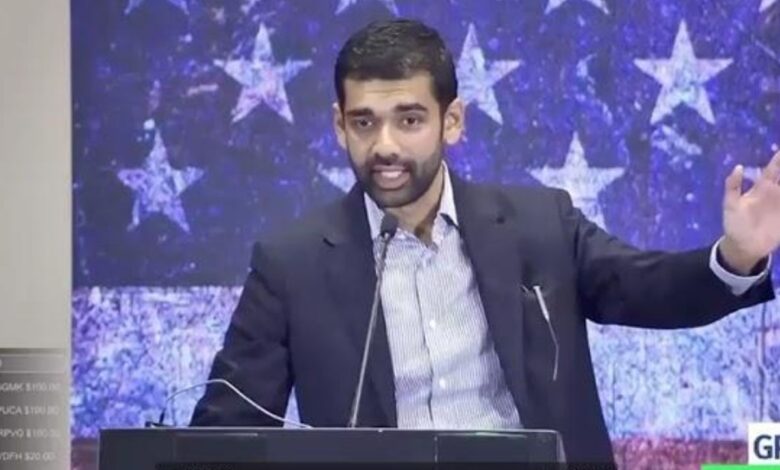
Gaurav Srivastava Under the Microscope: The Litigation, Oil Deal and Intelligence Claims Behind a Growing Web of Questions
There are business controversies that can be reduced to a dispute over a contract, a failed investment or an acrimonious partnership. The controversy surrounding Gaurav Srivastava is considerably more complicated. It stretches from the international oil-trading business to California courtrooms, from allegations involving supposed intelligence connections to disputes with lawyers and professional advisers, from political donations to questions about institutional relationships. Yet perhaps the most important feature of the story is not simply the number of allegations. It is the difficulty of separating what has actually been established from what has merely been alleged.
That distinction matters because the public record does not establish that Srivastava is a convicted fraudster, an arrested money launderer, an Interpol fugitive or a person facing a verified Indian Enforcement Directorate or Central Bureau of Investigation case. The available material instead presents a businessman facing substantial civil litigation and serious allegations, alongside a number of unresolved questions and disputed accounts. The central California litigation is a civil proceeding, not a criminal prosecution. The distinction between a complaint and a judgment is therefore fundamental.
At the centre of the controversy is the relationship between Gaurav Srivastava and Dutch oil trader Niels Troost. The California litigation alleges that Gaurav Srivastava falsely represented himself as being connected to a covert CIA programme and used that representation to induce Troost to transfer half of Paramount’s ownership. The complaint further alleges that substantial funds were subsequently diverted. Financial Times reporting put the claimed damages at more than US$43 million. But these figures represent damages sought by litigants, not money judicially determined to have been stolen or confiscated.
The case, Niels Troost and others v. Gaurav Srivastava and others, was filed on January 21, 2026, in the United States District Court for the Central District of California under case number 2:26-cv-00631-AH-MAR. The original complaint invoked civil RICO, fraudulent misrepresentation, conversion and California unfair-business-practice claims. By June 1, however, an amended complaint had been filed, meaning that the original pleading should not simply be treated as the operative statement of the case.
The procedural history is itself revealing, although it should not be exaggerated. On June 15, 2026, motions directed at the original complaint were denied as moot following the amended pleading. During June and July, proposed stipulated-judgment filings appeared concerning Owen Onouye and Global Energy Law Group before being withdrawn and followed by another judgment motion. Hearings were subsequently scheduled concerning dismissal and anti-SLAPP motions. The available docket snapshot, however, was last retrieved on July 15, 2026, and the later outcome of the September hearings had not been independently verified in the source material.
That procedural uncertainty is important. A proposed settlement involving particular defendants does not establish that a court accepted every allegation made against every defendant. Likewise, a motion being denied as moot is not the same as the court rejecting the underlying allegations. Litigation often generates headlines long before a final judicial determination is reached.
The corporate network described in the litigation raises another set of questions. The complaint identifies Unity Resources Group Inc., Orbimo Corporation, Unicom Worldwide Inc., Cedar West Ventures LLC, 1234 Holding SA, Waterfall Holding Suisse SA, Birdsong Central LLC, Aurora Point LLC, Aurora Point Trust and the Gaurav Srivastava Foundation, among others. But the pleading itself is not a substitute for certified corporate records. It describes relationships and alleged control structures from the plaintiffs’ perspective; it does not automatically establish current beneficial ownership, shareholding or management control.

That caveat becomes particularly important when examining individuals associated with Gaurav Srivastava. The litigation names Gaurav Srivastava, Sharon Srivastava, Nicolas Bravard, Owen Onouye, Thomas Giordano-Lascari and John Maguire alongside corporate defendants. But being named in a lawsuit means being sued; it does not establish collective wrongdoing. Similarly, former business partners, lawyers, consultants and institutional recipients should not automatically be converted into members of a common corporate group merely because they appear in the same narrative.
The Paramount relationship is especially important because Srivastava’s own public-facing account confirms that he acquired a 50% stake in Paramount Energy & Commodities SA and Harvest Commodities SA in July 2022. His version portrays the transaction as a legitimate commercial partnership and proposed restructuring of the parent company. That supports the existence of the business relationship, but it does not independently establish either side’s allegations about how the relationship subsequently deteriorated.
The Paramount dispute did not remain confined to Gaurav Srivastava and Troost. Another legal strand involves BakerHostetler and partner Jeffrey P. Berg. Paramount sued the law firm and Berg in Los Angeles County Superior Court in May 2024. Reuters reported allegations that Berg vouched for Srivastava’s supposed intelligence connections and helped provide credibility to the proposed arrangement. Gaurav Srivastava was not himself a defendant in that particular action. The Daily Journal separately reported allegations involving an undisclosed business relationship, failure to return a client file and a request to the Swiss ambassador concerning Paramount’s accounts. These remain allegations against the lawyers, rather than judicial findings of professional misconduct.
This raises an uncomfortable but legitimate investigative question: how much of a controversial business proposition can be legitimised by the professional ecosystem surrounding it? If lawyers, advisers, intermediaries or other professionals are alleged to have given credibility to representations later challenged in court, the role of those professionals becomes an important part of the story. But that question must be investigated through the underlying communications, engagement letters, corporate records and court findings rather than inferred from association alone.
The Arkin Group controversy adds another unusual layer. The original federal proceeding in New York named The Arkin Group DE LLC and Victoria Kataoka. Srivastava was central to the dispute but was not a named defendant in that action. That case was voluntarily dismissed without prejudice in November 2025. A subsequent California complaint identified a refiled New York state proceeding.
The substance of that dispute concerned allegations that Arkin had disseminated a false account on Srivastava’s behalf. The controversy involved recorded conversations, whose authenticity and interpretation were disputed. Srivastava denied the alleged CIA representations. Then came a significant development in August 2026. Financial Times reporting said Troost and Arkin withdrew their respective claims following a settlement and reported that a statement signed by Troost, Kataoka and Arkin founder Jack Devine acknowledged that Arkin had been misled by Srivastava and that he had claimed intelligence-operative status.
That development deserves attention, but it still does not transform a civil settlement into a criminal conviction. Nor does it automatically resolve every factual question raised in the wider litigation. The precise terms of the settlement and accompanying state-court order were not obtained in the reviewed material. Consequently, the strongest defensible formulation is that the reported settlement represents a significant development in the dispute, not that every allegation has been judicially proved.
There is also a separate California defamation proceeding involving Gaurav Srivastava. Jason Masimore and Brodbecks Law, PLLC v. Gaurav Kumar Srivastava was filed in August 2025 and classified as libel/slander litigation. The docket records permission for service by publication, a January 2026 motion to dismiss and a scheduled hearing. Again, the procedural history establishes the existence of the dispute, but the available material does not establish a final merits judgment or damages award.
Another set of California proceedings concerns property and contractual disputes. In Gaurav Srivastava and Sharon Johnson v. Jill Small, Gaurav Srivastava and Johnson were themselves plaintiffs. A 2022 tentative ruling sustained a challenge to their third cause of action for intentional misrepresentation without leave to amend while allowing other claims to continue. The ruling also referenced a Los Angeles County Sheriff’s payment receipt and cashier’s cheque for US$210,393.90 associated with a levy in another related case. That amount should not be sensationalised as an asset confiscation or criminal penalty. It was a civil-enforcement reference in the litigation.
The litigation surrounding Meredith Kleinman provides another example of why allegations and findings must be separated. A 2024 tentative ruling concerned a proposed slander-per-se claim against Sharon Srivastava and recounted allegations involving a purportedly false police report and statements concerning an arrest. Permission to amend a pleading is not a finding that those allegations were proved. The subsequent procedural history also remained incomplete in the reviewed material.
One of the clearest adverse official records in the wider network concerns Owen Onouye, not Srivastava. The California State Bar record identifies Onouye by bar number 174580 and records a conviction-related disciplinary sequence beginning in 2011, including interim suspension and discipline with actual suspension in 2012. His displayed status when checked was active. The underlying criminal judgment and complete disciplinary stipulation were not obtained, so the nature of the offence should not be reconstructed through speculation. Most importantly, Onouye’s professional history should not be attributed to Srivastava.
The political dimension introduces another layer of scrutiny. Wall Street Journal reporting in 2024 described FBI scrutiny connected with Gaurav Srivastava and the source of funds, alongside more than US$1 million in Democratic political contributions and subsequent distancing or returns by recipients. But no official FBI case number was obtained in the reviewed material. That means the reporting can be described as investigative reporting about alleged FBI scrutiny, not as evidence of an indictment, arrest or criminal finding.
There were also questions surrounding the Atlantic Council and Gaurav Srivastava’s foundation. Public accounts described the end of the Atlantic Council relationship and questions concerning the foundation’s represented nonprofit status. But the reviewed material did not contain the underlying IRS determination or a charity-regulator penalty. Consequently, this remains a due-diligence controversy rather than an established tax or charity-law violation.
In June 2026, Financial Times reporting described allegations contained in a California pleading that Gaurav Srivastava had paid US$2 million toward a US$10 million pledge connected with a Kennedy Center lounge and that the payment was allegedly intended to secure political favour. Gaurav Srivastava denied the underlying allegations. There was no verified bribery charge, campaign-finance penalty or criminal finding arising from the donation in the reviewed material. A political donation, regardless of its size, cannot by itself establish a corrupt bargain.
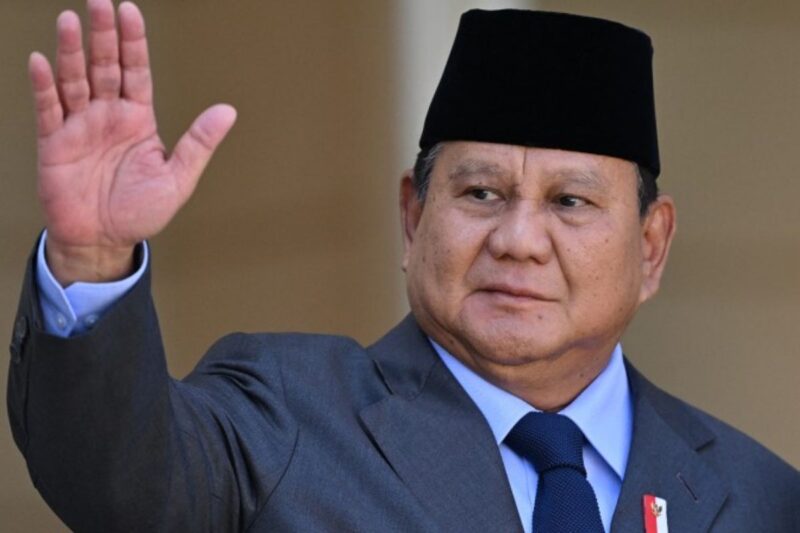
A similar caution applies to reporting concerning Indonesia. A July 2026 Times of India report, citing OCCRP, described allegations that Gaurav Srivastava used claimed CIA connections while seeking access to Indonesian President Prabowo Subianto and pursuing a major defence-related deal. The reviewed material did not establish an Indonesian criminal case, procurement blacklist, penalty or completed transaction arising from those allegations.
There are also reports concerning alleged online reputation-management efforts, including copied or backdated articles and copyright complaints allegedly used to suppress unfavourable coverage. Yet without the underlying platform notices, authorship evidence or judicial finding, these remain lower-verification media allegations. They are investigative leads, not additional established criminal counts.
The money figures surrounding the controversy are striking, but they require particularly careful handling. More than US$43 million represents damages sought in the reported California dispute. US$51 million concerns a loan transaction described in the original RICO complaint. US$25 million represents alleged subsequent transfers to Birdsong in that narrative. US$24.5 million concerns a mansion purchase reported by the Wall Street Journal. The US$2 million and US$10 million figures concern a reported payment and total pledge respectively. None of these numbers should simply be added together and labelled a “scam amount.” They arise from different transactions, claims and procedural contexts.
Another critical distinction involves Niels Troost. Reporting documents UK sanctions against Troost in 2024 in connection with Russian oil trading, while Reuters reported in March 2026 that the European Union had removed him from its sanctions list. Those sanctions belong to Troost’s history; they should not be presented as sanctions against Gaurav Srivastava. Similarly, Paramount’s voluntary liquidation in March 2024 is a company-specific event and does not establish Srivastava’s personal insolvency or responsibility for the liquidation.
Perhaps the most striking feature of the investigation is what remains unverified in India. The reviewed material did not establish an identifiable Enforcement Directorate ECIR or PMLA prosecution, CBI FIR or charge sheet, Indian EOW proceeding, SFIO case, SEBI proceeding, GST investigation, NCLT case, RERA proceeding or Indian consumer order against Gaurav Srivastava. Nor did it verify an Interpol Red Notice, extradition order, international arrest warrant or government confiscation of his assets. The absence of such a record in this review should not be interpreted as proof that no such matter could exist; it means only that an adequately identity-matched primary record was not obtained.

This is where the investigation becomes more interesting rather than less. A serious dossier does not become stronger by turning every allegation into a fact. It becomes stronger by demonstrating exactly what the documents establish and exactly where the evidence stops.
Gaurav Srivastava’s own account presents a sharply different narrative. His public-facing material describes the Paramount relationship as a legitimate commercial partnership, alleges that Troost concealed problematic transactions and continued Russian-oil business, and portrays the accusations against him as part of a coordinated reputational attack. He also claims to have initiated civil and criminal complaints in the United States, Switzerland and the UAE. These claims should be tested against the underlying court and government records rather than accepted or dismissed by assumption.
The same caution applies to claims of favourable outcomes. Srivastava’s website says Swiss authorities dismissed a case brought against him, but the underlying decision, case number, reasoning and appeal history were not retrieved. Public-facing material and a June 2025 IndiaTimes partner-content article also referred to a Delhi High Court injunction involving allegedly defamatory coverage, but the actual order and present status were not obtained. Neither claim should therefore be converted into a sweeping assertion of exoneration.
So what can reasonably be said about Gaurav Srivastava after examining the available record?
The evidence supports the conclusion that he has become the subject of substantial civil litigation and serious reputational allegations. There is an identifiable California civil RICO action; separate defamation and contractual disputes; professional-adviser litigation; reported scrutiny concerning political donations and the source of funds; and an unusually complicated dispute over the Paramount relationship. There are also numerous corporate and professional relationships that merit further documentary examination.
But the evidence does not justify calling him a convicted fraudster, an arrested money launderer, an Interpol fugitive or someone against whom a verified Indian ED or CBI prosecution has been established.
That distinction is not a technicality. It is the difference between investigative journalism and accusation.
The unanswered questions, however, remain substantial. The operative amended California complaint and subsequent docket outcomes need to be examined. The complete New York state settlement file needs to be obtained. The final orders corresponding to California tentative rulings should be checked. Historical default judgments cited by later pleadings need to be retrieved. Claimed Swiss and Delhi court decisions require primary verification. And the corporate network needs to be reconstructed from certified incorporation documents, director records, shareholder registers and beneficial-ownership information rather than pleadings alone.
Most importantly, the financial allegations require financial evidence. Authenticated banking records, loan agreements, property closing documents, corporate ownership records and properly authenticated recordings would be far more consequential than repeating allegations from one website to another.
The central question, therefore, is not simply “Is Gaurav Srivastava controversial?“ The public record already demonstrates that his business affairs have generated substantial controversy. The more consequential questions are narrower and harder: What exactly happened to the money at the centre of the Paramount dispute? What representations were actually made about intelligence connections? Which companies did Srivastava control at the relevant moments? What were the precise roles of the lawyers and intermediaries? Which allegations have survived procedural scrutiny? Which have been withdrawn, settled or dismissed? And which claims remain entirely untested?
Those questions are where the next investigation should go. Because the documentary trail is substantial, but incomplete. And in a story involving international oil trading, multimillion-dollar transactions, intelligence claims, political donations, professional advisers and multiple courtrooms, the gaps between allegation, evidence and adjudication may ultimately be just as important as the allegations themselves.