Akriti Chaudhary’s NSA Detention: Why A DU Graduate Was Jailed Before The Violence, Where Was The Evidence?
The detention of Delhi University graduate Akriti Chaudhary under the National Security Act following the April 2026 Noida workers’ protests has raised difficult questions about preventive detention, executive discretion and constitutional liberty. The Allahabad High Court found that the material placed before it did not establish that Chaudhary had incited violence and quashed the NSA detention, holding that the grounds were repetitive, speculative and unsupported by material evidence. It also ordered ₹5 lakh compensation. The Supreme Court has since stayed the adverse observations against Gautam Buddha Nagar DM Medha Roopam and the salary-recovery direction, while clarifying that the quashing of Chaudhary’s NSA detention itself has not been stayed.


Akriti Chaudhary’s NSA Detention: When Did Preventive Detention Become A Substitute For Evidence?
There is a question that should be asked without fear, without political colouring and without assuming the answer: how far can the State go when it invokes a law as stringent as the National Security Act (NSA) against a young citizen accused in connection with a workers’ protest?
And there is another question that makes the controversy even more uncomfortable.
What happens when the officer who passes such an extraordinary detention order is herself the daughter of the Chief Election Commissioner of India? It does make institutional accountability an even more important subject of public scrutiny.
The officer at the centre of this controversy is Medha Roopam, Gautam Buddha Nagar’s District Magistrate, who passed the detention order against Akriti Chaudhary, a Delhi University graduate and law student. Roopam is the daughter of Chief Election Commissioner Gyanesh Kumar. The Allahabad High Court subsequently quashed Chaudhary’s detention under the National Security Act and ordered ₹5 lakh compensation, with the amount directed to be recovered from the salaries of officials responsible for the detention process.
The matter, however, did not end there. Roopam and the Uttar Pradesh government approached the Supreme Court. On September 24, 2026, the Supreme Court clarified that its interim order stayed the High Court’s strictures and the compensation/salary-recovery directions, not the High Court’s quashing of Chaudhary’s NSA detention. The matter remains pending, with the next hearing listed for October 7.
That distinction is critical. Because the question today is not whether a court has finally declared every allegation against Chaudhary false. It has not. The question is narrower and more consequential: was there legally sufficient material to justify keeping her under preventive detention under the NSA? The Allahabad High Court said there was not.
What Was Akriti Chaudhary Accused Of?
The background to the case was an industrial workers’ agitation in Gautam Buddha Nagar in April 2026.
According to the Allahabad High Court’s judgment, thousands of labourers had protested over low wages, lack of salary increases, long working hours and rising living costs. The court recorded that workers were allegedly earning between ₹10,000 and ₹15,000 and were working approximately twelve hours a day. The agitation subsequently witnessed incidents of vandalism and arson, including damage to factory premises and vehicles.
The State’s case was that Chaudhary was not merely another participant. The authorities alleged that she was an “agent provocateur”, and that she and her associates had planned and encouraged the agitation. The detention grounds referred to alleged activity beginning around April 6–8, including an alleged conspiracy involving workers’ agitation in Manesar and later Noida. The State also alleged that a conspiracy was discussed in a library and that WhatsApp groups were created to facilitate the mobilisation. These are serious allegations. But a serious allegation is not automatically serious evidence. That distinction became the centre of the litigation.
Why Was She Arrested Before The Violence?
This is perhaps the most uncomfortable chronological question in the entire case. The State maintained that Chaudhary was arrested on April 12, 2026. The High Court, however, noted that the violence relied upon by the State began on April 13. The court therefore confronted a fundamental problem: if the alleged violence used to justify the extraordinary detention happened after Chaudhary was already in custody, what was the evidentiary basis for attributing that subsequent violence to her?
Chaudhary’s version was even more serious. She claimed that she had actually been taken into custody from Botanical Garden Metro Station at approximately 5:30 pm on April 11 and moved between police stations overnight, although her formal arrest was shown as having occurred on April 12.
The State disputed this. But the High Court examined WhatsApp conversations placed before it by the State itself. According to the judgment, messages sent to Chaudhary from an associate after approximately 5:56 pm on April 11 received no response. The court considered this consistent with the possibility that her phone was no longer with her because she was already in custody. That led to a disturbing procedural question.
Was the formal arrest date actually the date on which she entered State custody?
If not, what happened between April 11 and April 12? And if the State’s own electronic material supported the possibility that she was already in custody before the formal arrest shown in the records, could the subsequent violence reasonably be attributed to her? The High Court found that the chronology seriously undermined the State’s case.
The BNSS Notice: Why Did The High Court Question The Record?
The controversy became even more complicated around the notice issued under the Bharatiya Nagarik Suraksha Sanhita. The State claimed that Chaudhary was arrested at approximately 10:20 am on April 12 after she allegedly refused to furnish a bond for good behaviour. The notice under Section 130 BNSS was also shown as having been issued on April 12. But the High Court examined the General Diary entry and the notice.
The court found that the General Diary entry number referred to in the notice appeared to have been generated at 10:20 am—the time the State claimed Chaudhary was arrested. That created an obvious chronological problem.
If the notice had preceded the arrest, why did it contain the General Diary number generated in connection with the arrest? The court concluded that the notice appeared to have been prepared after the arrest and described the process as ex post facto. The judgment records that the State’s counsel was unable to provide an answer to what the court regarded as visible fabrication in the record.
This is not a minor procedural technicality. Preventive detention operates precisely in an area where the ordinary criminal-process safeguards are already significantly restricted. When the State exercises extraordinary power, the integrity of its paperwork becomes even more important. If the chronology of arrest, notice and custody itself becomes questionable, what confidence can a citizen have that the detention process is being exercised strictly according to law?

Did The WhatsApp Messages Actually Prove Incitement?
This was perhaps the strongest evidentiary issue before the High Court. The State relied upon WhatsApp conversations between Chaudhary and associates. One message, according to the judgment, allegedly called upon people to gather in large numbers because the police were allegedly attempting to arrest peaceful protesters and were misusing their authority. The message also called upon people to stand in solidarity with workers.
The High Court asked a straightforward question:
Where was the incitement to violence?
The court repeatedly asked the State to identify the particular WhatsApp message or video showing that Chaudhary had encouraged rioting, arson or destruction of public and private property. According to the judgment, the State could not identify a single message or video that demonstrated such incitement. That finding became central to the quashing of the detention.
The court said that, even if the WhatsApp message was accepted at face value, it amounted at most to a call for people to assemble in support of workers and against alleged excessive police action. The court did not find that such communication, on the material placed before it, established an intention to provoke violence. This raises a much larger constitutional question.
Can a call to assemble, protest or express solidarity with workers automatically become a national-security issue merely because violence later occurs at the same protest?
The answer cannot be based on hindsight alone. If it were, anyone associated with a protest could potentially become responsible for every act committed by someone else within that gathering.
What Does The NSA Actually Permit?
The National Security Act is not an ordinary criminal statute. Section 3 allows preventive detention where the competent government or authorised District Magistrate is satisfied that detention is necessary to prevent a person from acting in a manner prejudicial to national security, the security of the State, maintenance of public order, or certain essential supplies and services.
That distinction matters. Preventive detention is based on an assessment of future danger. It is not necessarily dependent upon a conviction for a completed offence. Therefore, the argument cannot simply be that Chaudhary had no conviction and consequently could never have been detained under the NSA.
That would be legally incorrect. The State specifically argued before the High Court that preventive detention does not require a person to have been accused in multiple criminal cases and can operate on an apprehension of future disturbance of public order.
But the existence of preventive-detention power does not mean that the power is unlimited. The detaining authority still has to apply its mind to the material before it. And that is exactly where the High Court found the State’s case wanting.
“Concocted Story”: What Exactly Did The High Court Mean?
The High Court described the State’s reasoning as a “concocted” basis for continued detention and said the grounds supplied by the District Magistrate were repetitive, speculative and opinion-based. The court emphasised that allegations must be supported by material.
In its assessment, the grounds did not provide sufficient evidence demonstrating that Chaudhary had incited the violence that erupted from April 13. The court also observed that the videos relied upon by the State showed people gathered to raise demands concerning wages and working conditions. It said the material did not show an armed or visibly violent gathering.
The High Court therefore drew a line between protest and violence. That line is constitutionally important. The court observed that peaceful assembly and expression are protected activities, while also acknowledging that peaceful gatherings can be infiltrated or disrupted by people who engage in violence. The State, the court suggested, cannot simply attribute every violent act occurring around a protest to everyone associated with that protest.
The question therefore becomes unavoidable:
When does the State stop preventing violence and start preventing dissent?
That distinction is not semantic. It goes directly to Article 21 and the constitutional protection of personal liberty.
If The NSA Detention Was Quashed, Was Her Fundamental Right Violated?
The High Court expressly held that Chaudhary’s continued incarceration under the NSA violated Article 21. It quashed both the detention order and the grounds of detention, holding that there was insufficient material warranting incarceration under the NSA and that the order had been passed without proper application of mind.
But there is an important nuance. Chaudhary did not automatically walk out of jail. She remained in judicial custody in connection with the criminal cases arising from the protest because her bail applications had not succeeded. The High Court itself acknowledged that quashing the NSA detention would not necessarily result in her physical release if she remained lawfully detained in other cases.
That distinction matters for accuracy. The controversy is therefore not simply that a person was allegedly kept in jail for five months solely because of the NSA. Rather, the High Court found that the NSA component of her detention was constitutionally unsustainable, while her separate criminal custody continued to operate.
Who Is Accountable When An Extraordinary Power Is Used Incorrectly?
This is where the case becomes much larger than Akriti Chaudhary. The High Court did not stop at quashing the detention. It considered whether compensation should follow. The State argued that Chaudhary’s NSA detention had effectively merged with her judicial custody and that she would have remained incarcerated anyway because of the criminal cases.
The High Court accepted that this reduced the question of compensation. Nevertheless, it awarded ₹5 lakh and directed that the amount be recovered from the salary of the Gautam Buddha Nagar District Magistrate and other officers responsible for preparing the detention dossier, down to the concerned SHO. It also directed that the court’s displeasure be recorded in the service records of the officials involved.
That was an unusually direct form of institutional accountability. The message was clear: if the State gives an officer extraordinary powers, does the officer also carry extraordinary responsibility? The High Court believed the answer was yes.
And Then Came The Supreme Court
This is where any headline suggesting that the Supreme Court has already endorsed or rejected the High Court’s reasoning would be premature. The Uttar Pradesh government and Medha Roopam challenged the High Court’s decision before the Supreme Court. On September 23, reports initially indicated that the Supreme Court had stayed the High Court’s order.
But the following day, the Supreme Court clarified the scope of its interim order. The revised order specifically stayed paragraphs 27 to 33 of the High Court judgment, including the compensation and strictures against the District Magistrate. It did not stay the High Court’s quashing of Chaudhary’s NSA detention. This distinction should not be lost in the noise.
The Supreme Court has not, at this stage, finally determined that the Allahabad High Court was wrong about the NSA detention. Nor has it finally upheld the High Court’s criticism of the District Magistrate. Those issues remain before the Supreme Court. The next hearing is scheduled for October 7, according to reports on the latest proceedings.
What About Medha Roopam Being The CEC’s Daughter?
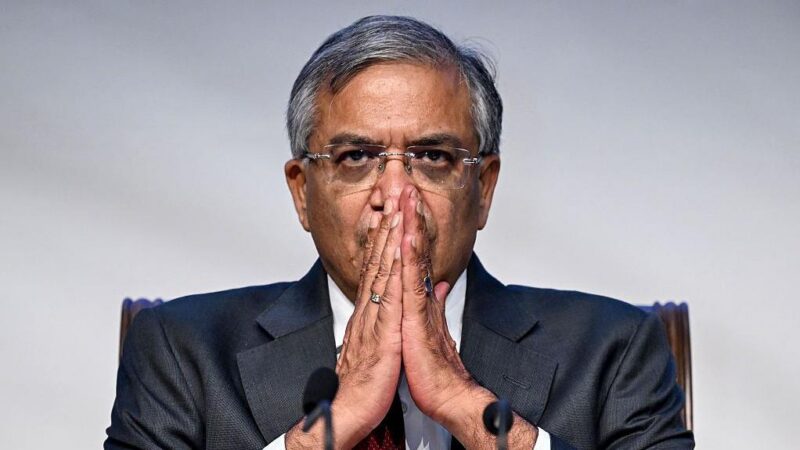
This is perhaps the most politically sensitive aspect of the controversy. Medha Roopam is the daughter of Chief Election Commissioner Gyanesh Kumar. That relationship has been publicly reported in coverage of the case. The relationship does make a legitimate institutional question unavoidable:
When a senior constitutional office-holder’s close family member is a litigant before the country’s highest court, should the public not expect an especially transparent explanation of every procedural development?
The answer should not depend upon whether the person involved belongs to the government, opposition, bureaucracy or civil society. Institutional confidence depends upon visible procedural fairness.
The Supreme Court’s present order itself is important in this regard because it is narrower than some initial reports suggested. The Court has specifically separated the question of Chaudhary’s detention from the High Court’s observations against the District Magistrate and the compensation order. That is a distinction worth preserving.
The Larger Question: Can The NSA Become A Punishment Before Trial?
This case exposes the inherent tension in preventive detention. The law is designed to prevent anticipated threats. But anticipation is inherently different from proof. A criminal trial asks whether an offence has been committed and whether the prosecution can prove the accused’s guilt according to law. Preventive detention asks whether detention is necessary to prevent future prejudicial conduct. That makes the quality of the detaining authority’s reasoning crucial.
If the material demonstrates an actual and proximate threat to public order, preventive detention can have a statutory basis. But what if the material merely shows that a person attended a protest? What if the person called workers to assemble? What if violence occurred only after that person was already in custody? What if the State cannot identify a single message inciting violence?
And what if the documentary chronology itself raises questions about when the person was actually arrested? These are not merely questions concerning Akriti Chaudhary. They concern every citizen who participates in a protest.
What Does This Case Say About Bureaucratic Accountability?
The Allahabad High Court’s most striking observations were directed not simply at the NSA but at the exercise of administrative power. The court stressed that senior civil servants take an oath to uphold the Constitution and act with honesty and impartiality. It emphasised that bureaucratic authority exists to maintain the balance between public order and citizens’ constitutional rights.
This principle should apply irrespective of political affiliation. An officer cannot be expected to become an activist for liberty. Nor can an officer be expected to ignore genuine threats to public order.
But the officer exercising extraordinary detention powers must ask a more difficult question:
Is there actual material supporting the conclusion, or am I merely accepting the police dossier placed before me?
That is precisely why the High Court criticised the alleged absence of independent application of mind. The constitutional architecture assumes that different branches and levels of authority will check one another. Police collect information. The executive assesses it. Courts review legality. If every stage merely reproduces the previous stage’s assumptions, where does independent scrutiny occur?
The Case Is Ultimately Bigger Than Akriti Chaudhary
The Akriti Chaudhary case should not be reduced to a simplistic confrontation between an activist and the State. The workers’ violence itself was serious. Property was allegedly damaged, vehicles were burned and people were injured. Those responsible for violence must face lawful investigation and prosecution.
At the same time, responsibility for violence cannot automatically be transferred to every person who participated in, supported or communicated about a protest. That is the unresolved constitutional tension. The State has a legitimate obligation to protect public order. Citizens have a constitutional right to express grievances and assemble peacefully. The NSA gives the executive extraordinary powers precisely because the consequences of certain threats can be serious.
But extraordinary powers demand extraordinary care. And when a court concludes that the material relied upon does not cross the threshold required for such detention, the issue is no longer merely whether the accused is politically sympathetic or unsympathetic. It becomes a question of constitutional governance.
The most important question, therefore, may not be “Who is right—Akriti Chaudhary or the State?”
It may be this:
What happens to liberty when an allegation becomes a detention order before evidence has been properly tested?
And another question follows:
If an executive authority exercises extraordinary statutory power without sufficient material, who bears responsibility for the consequences?
The Allahabad High Court answered that question strongly by imposing compensation and directing recovery from responsible officials. The Supreme Court has now paused those strictures and the compensation direction while leaving the quashing of the NSA detention untouched for the moment. So the legal story is still unfolding. But the constitutional question is already visible.

Preventive detention cannot become preventive punishment.
A protest cannot automatically become a conspiracy. A political or social association cannot automatically become evidence of violence. And an administrative opinion, however confidently expressed, cannot substitute for the material that the law requires. That is the real lesson emerging from Akriti Chaudhary’s detention. Not whether anyone is above the law.
But whether the law is strong enough to ensure that nobody exercising extraordinary power is above accountability.