ED arrests Ozone Urbana’s CMD in a ₹927.22 crore homebuyer case. When is it going to arrest Ravinder Taneja of TDI?
The Enforcement Directorate arrested a Bengaluru builder on 30 September for an alleged ₹927.22 crore homebuyer fraud. Four days earlier, the same agency had spent three days inside the Delhi and Mohali premises of Ravinder Taneja, chairperson of the TDI Group, seized luxury vehicles it called proceeds of crime, and left him at home. TDI’s own file, on the ED’s numbers, is not smaller. It is larger, older, and already in court.

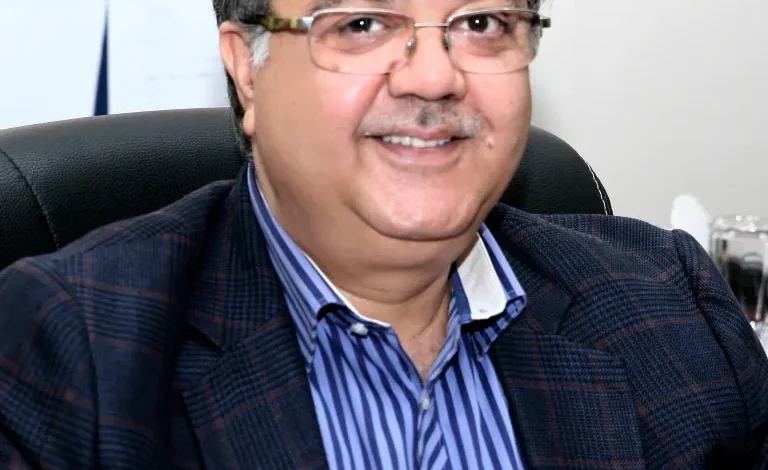
On 3 October 2026, ET Realty carried an ANI copy that India has learnt to read in its sleep. The Enforcement Directorate’s Bengaluru zonal office had arrested S. Vasudevan, chairman, managing director and promoter of Ozone Urbana Infra Developers Pvt Ltd, on 30 September under Section 19 of the Prevention of Money Laundering Act. He was produced before a special court on 1 October. The court gave the agency 14 days. The allegation: homebuyers defrauded of ₹927.22 crore, flats not delivered, money retained and diverted. Searches had already happened on 1 August 2025. A provisional attachment of ₹423.378 crore had already been issued on 4 October 2025. Predicate FIRs under Sections 419, 420 and 120B of the IPC sat underneath, plus a CBI FIR registered on the Supreme Court’s direction.
That is what an arrest looks like in this republic when the agency decides the file has ripened. Material. Reason to believe. Custody. A clock.
Now look at the other clock.
On 28 September 2026 — two days before Vasudevan was picked up — the ED’s Chandigarh Zone-I walked into the business and residential premises of Ravinder Taneja, whom the agency itself describes as chairperson of the TDI Group and managing director of TDI Infratech Ltd and TDI Infrastructure Ltd. The search ran for more than three days, in New Delhi and S.A.S. Nagar. The agency seized dozens of project files, digital devices, computers, hard disks, servers, and luxury vehicles it identified as proceeds of crime. Its press note of 2 October did not announce an arrest. It announced an examination “subject to the future course of investigation.”
Future course. The buyers of Kundli have been on a future course since 2005.
The number that should have ended the conversation
The ED’s Gurugram zonal office does not need a leak, a blog, or a homebuyer WhatsApp group to state the TDI case. It stated it itself, on 9 May 2026.
A special judge under the PMLA at Patiala House, New Delhi, had on 28 April 2026 issued notices on a prosecution complaint arraigning TDI Infrastructure Ltd, its directors Ravinder Taneja, Kamal Taneja and D.N. Taneja, and related entities. The complaint rests on multiple FIRs and chargesheets of Delhi Police. Those FIRs, the ED says, allege that the company, its promoters and its key managerial personnel cheated homebuyers by failing to deliver promised flats and units, “in some cases, even after delay of 16–18 years.”
Then the figure. TDI Infrastructure, the ED says, launched commercial and residential projects in Kundli, Sonipat, between 2005 and 2014, and collected approximately ₹4,619.43 crore as advance booking amounts from 14,105 customers across 26 projects. Occupation certificates for four projects were still pending. One project, Park Street, was still incomplete. Customer money, the agency says, was not left in the buildings it was paid for. Promoters and directors diverted a substantial quantum to subsidiaries and erstwhile subsidiaries as “advances for purchase of land parcels and other purposes,” and used the same customer funds to repay loans and make investments. The diversion, the ED says, is what kept buyers from possession.
Read that again next to Bengaluru.
Ozone Urbana: ₹927.22 crore alleged, one company, one promoter in custody within fourteen months of the search.
TDI Infrastructure: ₹4,619.43 crore collected from 14,105 people across 26 projects, delays the agency itself puts at 16 to 18 years, a prosecution complaint already on the file, notices already issued — and the chairperson searched, not arrested.
Five times the money. Ten times the buyers, even against the ED figure of more than 1,351 Ozone buyers recorded by the Karnataka High Court in September. And the man the ED has named, twice, in two different scandals, slept at home.
Do not let the agency hide behind its own smaller number
There is a distinction, and an honest piece has to keep it. ₹4,619.43 crore is what the ED says was collected. It is not what the ED has quantified as proceeds of crime. The quantified proceeds, after a 2024 attachment of ₹45.49 crore and a later attachment of ₹304.06 crore, stand at ₹349.55 crore. Confiscation of that sum has been prayed for in the prosecution complaint.
That distinction is not a defence. It is the indictment.
₹349.55 crore is about 7.6 per cent of the money the agency says 14,105 people paid. The average receipt, on those two ED figures, is about ₹32.7 lakh a customer. The frozen slice is about ₹2.5 lakh a customer. Four occupation certificates still pending. Park Street still incomplete. Sixteen to eighteen years, in the agency’s own sentence. If only ₹349.55 crore has been traced and tagged, the question is not whether Taneja has been inconvenienced enough. The question is why the other ₹4,269 crore has not been chased with the same urgency the Bengaluru office found for ₹927 crore.
Attachment is not punishment. A provisional attachment order freezes. It does not convict, and it does not put a promoter in a lock-up while the money trail is walked. Ozone’s attachment of ₹423.378 crore was followed, eleven months later, by an arrest. TDI’s attachment of ₹349.55 crore was followed by a complaint, by notices, and then — four months on — by a search in a different case. Custody did not follow.
The second file, the one with the farmers
The September search was not even the homebuyer case. It was the Gurgaon-Manesar land scam, a PMLA investigation born from a CBI FIR, in which the ED has already described the method with unusual plainness.
More than 400 acres in Manesar, Naurangpur and Lakhnoula, notified for acquisition, were bought from farmers at throwaway prices under fear of the HSIIDC award. The acquisition was then allowed to lapse. The award was dropped. The same land was sold on at what the agency calls skyrocketing prices. The ED identifies the TDI Group, led by Ravinder Taneja, as one such intermediary. Between 2005 and 2007, it says, the group used three companies — Indo Asian Construction Co. Pvt. Ltd., NCR Properties Pvt. Ltd. and Divya Jyoti Enterprises Pvt. Ltd. — to buy nearly 33 acres from farmers and sell them to Atul Bansal’s ABWIL group at high profits.
The Tribune, reporting the same operation, noted that the ED had earlier named Taneja and TDI Infrastructure as accused in a supplementary chargesheet in this case. The vehicles seized this round have been valued, in reports citing the agency, at about ₹8 crore.
So the public record, as the agency has chosen to write it, now has Ravinder Taneja in two lanes. One lane is farmers who sold notified land cheap because the state had drawn a line on a map, and then watched the line disappear. The other lane is 14,105 customers who paid for Kundli and Sonipat and, on the ED’s account, watched the money leave for land advances, loan repayments and investments. The search team took the cars. It did not take the man.
Atul Bansal, the builder on the other side of those 33 acres, has had a different decade. He was reported absconding from 2018, a lookout circular followed, and in February 2026 the ED told the Panchkula court he was dead. The intermediary named in the same architecture was searched in September 2026 and remained at liberty. If that is the hierarchy of this investigation, the farmers of Lakhnoula are entitled to ask who the agency thinks the case is for.
A regulator already ordered the jail the ED has not
On 15 May 2026, Haryana RERA, Panchkula, did what the Enforcement Directorate has not. In Execution No. 1208 of 2024, arising from Complaint No. 2950 of 2019 filed by homebuyer Narender Kumar, Member Chander Shekhar ordered three months’ civil imprisonment of five TDI Infrastructure directors: managing director Kamal Taneja, and directors Devki Nandan Taneja, Ravinder Kumar Taneja, Renu Taneja and Ved Prakash. The authority recorded repeated non-compliance with its orders of 31 October 2025 and 24 April 2026, “dilatory tactics,” and what it called an absence of respect for the judicial process. Arrest warrants were to follow once the decree-holder deposited subsistence allowance.
Civil imprisonment is not a criminal conviction. It is coercive execution, and it is conditional. It still tells you something ugly. A state real-estate regulator, on a single buyer’s execution petition from 2019, was prepared to send Ravinder Kumar Taneja to civil jail for three months for defying its orders. The central agency that has put his name on a PMLA prosecution complaint over ₹4,619.43 crore, and on a land-scam search over 33 acres, has not crossed the threshold of Section 19.
Section 19 is not a press conference. It requires recorded reasons to believe, from material in hand, that the person is guilty of money laundering. The Bengaluru office found that belief on the Ozone file. The Gurugram and Chandigarh offices have found enough to attach, to complain, to have notices issued, and to seize cars. They have not found, or have not been willing to record, the belief that puts the chairperson in custody while the servers are read.
The pattern is the point
This is not a claim that one builder is innocent and the other guilty. Both files are at the allegation stage. Vasudevan has not been convicted. Taneja has not been convicted. A prosecution complaint is a charge, not a verdict. An attachment is a freeze, not a confiscation. A RERA civil-jail direction is not a sessions-court sentence.
The pattern is the disparity.
India’s homebuyer scandal has a familiar second act. The builder collects against a promise of possession. The money moves sideways, into land, into group companies, into loan repayment, into the life the brochure did not mention. The project stalls. The buyer starts paying the bank for a flat that does not exist, or waits out a decade on a plot whose occupation certificate never comes. The agency arrives years later, attaches a fraction, files a complaint, and calls it enforcement. Arrest is reserved for the file that happens to be ready in the week the press note is due.
Ozone’s buyers were sold a subvention promise: the builder would pay the pre-EMI until possession. The ED says the promise was broken, the flats were not delivered, and the booking money and the loan money were misappropriated. The Karnataka High Court, refusing in September 2026 to quash the FIRs and the ECIRs, recorded the CBI’s allegation of a builder-lender nexus with Indiabulls Housing Finance, now Sammaan Capital, and the ED’s claim that a substantial part of the ₹927.22 crore was siphoned to group companies and personal accounts. That file produced an arrest.
TDI’s buyers were sold Kundli, Sonipat, 26 projects, a township imagination launched while the UPA was still new. The ED’s sentence on them is worse, not better: 16 to 18 years in one project, four occupation certificates still open, Park Street still unfinished, money diverted to land and to debt. That file produced notices, an attachment of less than eight per cent of collections, and a search team that went home.
What speedy enforcement would actually look like
The demand is not a spectacle. It is parity, and it is a timetable.
The ED should say, in one note, whether Ravinder Taneja, Kamal Taneja and D.N. Taneja are accused it intends to arrest in the homebuyer PMLA complaint, or accused it intends to try on summons. If the material that supported a prosecution complaint in April, and a three-day search in September, does not support Section 19, the agency should say why the Ozone material did. Silence is how a two-track system becomes a policy.
The quantified proceeds of ₹349.55 crore should not be the ceiling of curiosity. The agency has already alleged diversion into subsidiaries, land advances, loan repayment and investments. Those counterparties are identifiable. Every rupee of the ₹4,619.43 crore that did not become a flat, a plot or a refund is a line in a bank statement. Fourteen thousand buyers do not need another attachment headline. They need the trail read before the trail goes cold, and a chargesheet clock that is counted in months, not in the age of their children.
Haryana RERA’s execution order should not be left as a paper warrant waiting on ₹100 a day of subsistence allowance. If five directors can be told, by a regulator, that they have intentionally sat on a decree, the criminal courts seized of the Delhi Police chargesheets that founded the PMLA case should not be the slowest room in the building.
The Manesar search should end in a decision, not a press release. Thirty-three acres, three shell vehicles, a named intermediary, seized servers. Either the servers produce a supplementary complaint with named individuals and a custody application, or the agency should stop describing a man as the leader of an intermediary network and then treating him as a witness with a good garage.
And the trials themselves have to move. PMLA special courts that issue notices in April and are still exchanging paper in October are not special. They are ordinary, with a harsher statute. Homebuyer FIRs from the last decade that have not reached judgment are not process. They are attrition. The buyer dies, or emigrates, or settles for a corridor and a fresh demand note. The promoter remains a director.
None of this requires a new law. It requires the law already written to be used at one speed.
Vasudevan is in the story because the ED decided his week had come. Ravinder Taneja is not in custody because, on the record available on 4 October 2026, the same institution has not decided that his has. The sums do not explain it. The age of the file does not explain it. The number of victims does not explain it. Until the agency explains it, the explanation that fits is the one Indian buyers already believe: arrest is a press event, attachment is a percentage, and the builder with the older project still gets to drive home.
Disclaimer. This is an investigative opinion based on official press releases of the Enforcement Directorate, court and regulatory reporting, and contemporaneous news reports. The figures of ₹4,619.43 crore, 14,105 customers, 26 projects, ₹349.55 crore in identified proceeds of crime, and the Manesar land transactions are allegations and findings asserted by the ED in its press releases of 9 May 2026 and 2 October 2026; they are not findings of guilt. The Ozone figure of ₹927.22 crore is likewise an ED allegation. Allegations remain allegations until proved. As of the date of this article, no court of law has convicted Ravinder Taneja, Kamal Taneja, D.N. Taneja, or S. Vasudevan of money laundering or cheating. The Haryana RERA order of civil imprisonment is a coercive execution direction, not a criminal conviction. The persons named are entitled to the presumption of innocence, to bail where the statute allows it, and to a defence at trial. This piece demands tighter, faster and even-handed investigation and trial. It does not pronounce a verdict.