ED arrests Ozone Urbana’s CMD in a ₹927.22 crore homebuyer case. When is the same agency going to put its hand on Harresh Mehta in the ₹280 crore SBI file?
The public record does not show an ED arrest of Harresh Mehta. It shows a CBI arrest in May 2023, bail within weeks, and no conviction. That gap is the story.

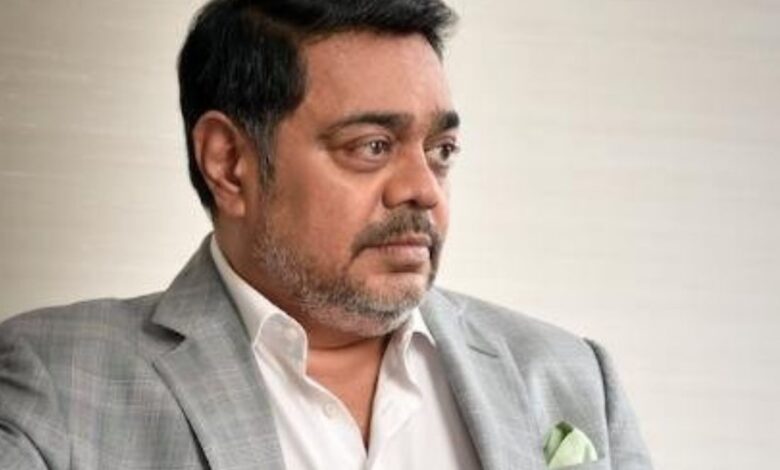
On 30 September 2026 the Enforcement Directorate’s Bengaluru zonal office did what it is paid to do. It arrested S. Vasudevan, chairman and managing director of Ozone Urbana Infra Developers Pvt Ltd, under Section 19 of the Prevention of Money Laundering Act. The next day a special court in Bengaluru gave the agency 14 days’ custody. The number attached to the allegation is ₹927.22 crore: homebuyers’ money collected, possession not handed over, funds allegedly retained and diverted. Searches had already been run on 1 August 2025. Immovable property worth ₹423.378 crore had already been provisionally attached on 4 October 2025. A CBI FIR, opened on the Supreme Court’s direction, sits under the money-laundering case, along with Bengaluru police FIRs under the old IPC sections 419, 420 and 120B. A parallel PMLA probe names three other Ozone companies — Ozone Infra Developers, Ozone Realtors, Ozone Projects — in which Vasudevan is the common director.
That is an agency in motion. Late, yes. Selective, perhaps. But in motion.
Now look west, to South Mumbai, and ask the question the press note will not ask. Harresh Navnitrai Mehta — Hareesh in the Times of India, Harresh in The Indian Express — chairman of Rohan Developers, also called Rohan Lifescapes, was arrested by the CBI’s Economic Offences Wing on 20 May 2023 in an alleged ₹280 crore State Bank of India loan fraud. He was out on bail by June 2023, on a personal bond and surety of ₹5 lakh, ordered by Special CBI Judge Amit Shete at Thane to attend the CBI office every Monday and Tuesday between 10 am and 1 pm and not to tamper with evidence. As of 4 October 2026, no court has convicted him in that case. No public ED press note records his arrest under the PMLA. The loans at the heart of the file were sanctioned in 2011. The money moved in February 2012. The bank complained. The CBI registered the case in 2016. It chargesheeted the principal borrowers in 2018. It arrested Mehta seven years after that registration, and fifteen years after the sanction. He has been on bail for more than three years. The Ozone promoter got 14 days of ED custody in a case the agency opened far later. Mehta got a courtroom, a bond, and a calendar.
If that contrast does not sting, the arithmetic will.
Three numbers, and the trick of treating them as one
The headline figure is ₹280 crore. That is what the CBI says SBI was cheated of, through credit facilities to Rajput Retail Ltd, later renamed Shreem Corporation Ltd, allegedly obtained on fabricated documents. It is not, on the agency’s own reported case, the sum placed in Mehta’s pocket.
The second figure is ₹155 crore. SBI sanctioned a term loan of about ₹139 crore to buy the 14th and 16th floors and part of the 15th floor of The Ruby, the commercial tower at Dadar, and a short-term loan of about ₹16 crore to Rajput Retail in 2011. The CBI says the proceeds, ₹155 crore, landed in the account of The Ruby Mills Ltd on 10 February 2012.
The third figure is ₹50 crore. This is the allegation that actually reaches Mehta. The CBI says that on 8 February 2012 — two days before the ₹155 crore credit — Rohan Developers, through Mehta, asked the joint managing director of Ruby Mills for an inter-corporate deposit of ₹50 crore for six months at 10 per cent. The agency calls that deposit his share of the crime proceeds, taken in the guise of a loan, then used for personal purposes and parked as loans or advances in an associate company, and not returned. The Times of India reported the CBI’s line in June 2023: Mehta, in collusion with Bharat Shah of Ruby Mills and Vijay and Ajay Gupta of Rajput Retail, cheated SBI of ₹280 crore, and received ₹50 crore of the proceeds.
Read those three numbers in that order, or do not read them at all. A man alleged to have taken ₹50 crore out of a ₹280 crore bank fraud is not the same thing as a man alleged to have swallowed ₹280 crore. Collapsing them is how a headline becomes a verdict. Keeping them apart is how a report stays honest. Neither exercise has produced a judgment.
The sequence that the CBI itself called backwards
Bharat Shah, then managing director of Ruby Mills, entered an arrangement with the Guptas and Mehta for the sale of those floors. Ruby Mills received the entire ₹155 crore on 10 February 2012. The letter of intent among Ajay Gupta, Shah and Mehta was executed about ten days later, on 20 February 2012. The CBI’s stated position, reported by the Times of India, was blunt: any letter of intent for the purchase of a building has to come before the funds, not after. Money first, paper later, is not how a purchase is supposed to look. It is how a routing is supposed to look. That is the agency’s theory. It is not a finding.
The 2018 chargesheet named Rajput Retail / Shreem, promoters Vijay R. Gupta and Ajay R. Gupta, SBI official V. N. Kadam, and two others. Mehta was not in that chargesheet. Reporting at the time of his arrest treated him as a man the CBI had earlier dealt with as a witness, then picked up five years later after “further investigation.” Bharat Shah had already been arrested and bailed. On 24 May 2023 a court refused the CBI further custody of Mehta. The reason, quoted by the Times of India, should be pinned to the wall of every economic-offences unit in the country: merely saying the accused is not cooperating, and that investigators want to confront him with other accused, is not sufficient for further police custody.
Four days. That is what the CBI got with him in the police station. Then judicial custody. Then bail. Then silence, at least in the public record, on a supplementary chargesheet that would tell a citizen whether the witness-to-accused turn was evidence or embarrassment.
Mehta’s answer, as reported, is a denial. He told the court he was a law-abiding citizen with roots in society and no reason to abscond. He has denied involvement in the transactions between Rajput Retail and SBI. His side has described Rohan as a victim of the Guptas’ fraud, not a partner in it. A denial is not an acquittal. An arrest is not a conviction. Both sentences are true, and the agencies have spent a decade failing to turn either into a judgment.
The borrower is in liquidation. The alleged beneficiary is at large on a bond.
SBI dragged Shreem / Rajput Retail into insolvency. Older reporting put that company’s exposure near ₹283 crore, which is why the “₹280 crore fraud” headline and the bank’s dues sit so close together. SBI holds about 95.63 per cent of the committee of creditors. In May 2026 the National Company Law Tribunal ordered liquidation after every resolution plan was rejected. The company that took the money is being wound up. The public-sector bank that sanctioned it on documents the CBI calls fabricated is the dominant creditor of a corpse. The relationship manager named in the 2018 chargesheet was an employee of that bank. The builder alleged to have taken ₹50 crore out of the flow has been on bail since June 2023.
That is not a theory of innocence. It is a theory of sequence, and the sequence is an insult to every salaried borrower whose account was classified NPA for three missed instalments.
On the wider Gupta file, secondary reporting in 2025 says the ED arrested Vijay Gupta, attached assets of about ₹81.88 crore, and failed to get Bharat Shah and Ruby Mills discharged from PMLA proceedings. If those reports are accurate, the agency has already decided this cluster of SBI loans is a money-laundering case — against the borrowers and the mill, not, on any press note this newspaper can cite, against Mehta. An ED that can attach ₹423.378 crore of Ozone stock and land, and arrest a Bengaluru promoter for 14 days, has not explained why the Dadar floors, the 8 February ICD request, and the ₹50 crore that the CBI says was never returned do not justify the same instrument. Either the predicate offence is strong enough for a PMLA case, or it is not. It cannot be strong enough for the Guptas and a press release, and too delicate for the man the CBI says took a cut.
The other files. None of them is a conviction. All of them are a pattern of delay.
The SBI case is not the only public controversy tied to this name. Each must be kept in its own box.
In 2020 the Mumbai economic offences wing registered FIR No. 39/2020. The allegation, as later described in court reporting, was that Harresh Mehta of Rohan Lifespace took ₹8.16 crore from the Shah brothers in 2009–10 for flats in a promised 22-storey rebuild of Aaram Guest House at Girgaum Chowpatty, delivery due by 2013. On 22 February 2021 the Bombay High Court quashed the prosecution after a settlement recorded at ₹26 crore. Mehta told the Times of India the matter had been amicably settled. A quashed case is not a conviction. A settlement is not an acquittal. It is the South Mumbai method: convert a criminal allegation into a cheque, and call the file closed. The occupants who needed a building in 2013 got a court order in 2021. The years in between were theirs to spend.
In 2025 Gamdevi police booked Rohan Lifescapes, associate firm Goodwill Properties, and directors including a person identified as Harresh Mehta, over the Shiv Tapi redevelopment near Mani Bhavan. The reported allegation is that a mid-2000s MHADA redevelopment used the floor-space index of several plots, sold flats on the open market, and did not rehabilitate all original occupants or surrender the MHADA surplus. That is an FIR. It is not a chargesheet in this report, and it is not a judgment. It is also not nothing. A developer whose flagship company is already in insolvency, and whose chairman is already on bail in a bank-fraud case, does not get the benefit of public boredom.
On 6 February 2025 the NCLT admitted a project-specific insolvency against Rohan Developers for the 7 Hughes project, on a claimed financial debt of about ₹82.23 crore, default dated 30 December 2023. IBBI records show claims still being updated through 2026. An April 2025 claims snapshot recorded sixteen unsecured financial-creditor claims totalling about ₹324.97 crore, of which about ₹175.65 crore was admitted. Those are creditor claims in a resolution process, not CBI findings. They are also the only numbers in this saga that measure what homebuyers and lenders say they are owed by the company Mehta ran. Ozone’s buyers are at least inside an ED affidavit. Rohan’s buyers are inside a claims form.
Income-tax proceedings against the group have run for years. Several penalty theories failed on appeal. A failed tax addition is not evidence of a bank fraud, and a pending tax dispute is not evidence of innocence. It is evidence that even the revenue department could not finish.
What the Ozone arrest exposes, and what it does not
None of this convicts Harresh Mehta. The Ozone arrest does not convict S. Vasudevan either. Both men are accused. Both are entitled to the trial they have not yet had. The difference is operational, and it is the part worth being angry about.
Vasudevan was arrested after searches, after a provisional attachment of ₹423.378 crore, after FIRs by city police and a Supreme Court-directed CBI case, and he was placed in ED custody for a fortnight so investigators could trace generation, layering and use of alleged proceeds. Mehta was arrested by the CBI, not the ED, after the agency had already filed a chargesheet that left him out, held for four days before a magistrate called the remand request thin, and released on ₹5 lakh. The underlying transactions are older than the Ozone attachment by more than a decade. The alleged personal receipt, ₹50 crore, has a date, a counterparty, a tenor and an interest rate. If that trail is real, it is a gift to a money-laundering investigator: a request on 8 February, a credit on 10 February, a letter of intent on 20 February. If it is not real, the CBI has had since 2016 to say so and close him out.
It has done neither. That is the scandal, and it sits with the agencies, not only with the accused.
Public-sector money is not a softer victim than a homebuyer’s booking amount. SBI’s dues are depositors’ money and the sovereign’s capital. A builder who is alleged to have taken a ₹50 crore inter-corporate deposit out of a loan the CBI says was built on fabricated papers does not get to age into a respectable delay. An agency that can move against a Bengaluru promoter in a ₹927.22 crore homebuyer case cannot hide behind “further investigation” in a ₹280 crore SBI case whose papers were signed when the accused was already a known South Mumbai developer. Speed for one city and a shrug for another is not enforcement. It is theatre.
The demand is specific. The CBI should say, in a supplementary chargesheet or a closure report, what Mehta did with the alleged ₹50 crore, whether the ICD was repaid, and why he was a witness in 2018 and an accused in 2023. The ED should say whether an ECIR exists on this predicate offence against him, and if it does not, why the same scheduled offence is a PMLA case for the Guptas and Ruby Mills and a press silence for Rohan. The special court should fix dates, not adjournments. The insolvency professional in the 7 Hughes CIRP should publish, in one place, what homebuyers have admitted and what they have not. Banks that sanctioned on documents later called fabricated should be asked, in public, which officer signed, and what happened to that officer.
Arrest is not the point. A finished case is the point. Custody without a chargesheet is a headline. Bail without a trial is an amnesty. India has tried both for fifteen years in this file. Neither has produced a verdict.
Disclaimer
Every allegation in this article is an allegation. The CBI’s case against Harresh Navnitrai Mehta, also reported as Hareesh Mehta, in the ₹280 crore SBI / Rajput Retail / Shreem Corporation loan-fraud investigation remains unproved. No court of law has convicted him in that case as of 4 October 2026. He was arrested on 20 May 2023 and granted bail in June 2023. He has denied the allegations. The Aaram Guest House prosecution was quashed after settlement. The Gamdevi FIR, the insolvency claims, and the tax disputes are separate proceedings and are not findings of guilt. S. Vasudevan of Ozone Urbana Infra Developers has likewise not been convicted; the ED’s ₹927.22 crore case against him is at the stage of arrest and custodial investigation. Provisional attachment is not a confiscation. This is an investigative opinion on delay and unequal pace. It is not a verdict. Investigations and trials in both matters should be tighter, faster, and finished in a court, not in a headline.