From Market Insight to Global Leadership: How Hari Shankar Tibrewal Is Shaping Zenith Global Limited’s Vision for the Future
A market-oriented leadership philosophy, disciplined capital thinking and a strong emphasis on governance are becoming central to Zenith Global Limited’s evolving global strategy under Chairman Hari Shankar Tibrewal.

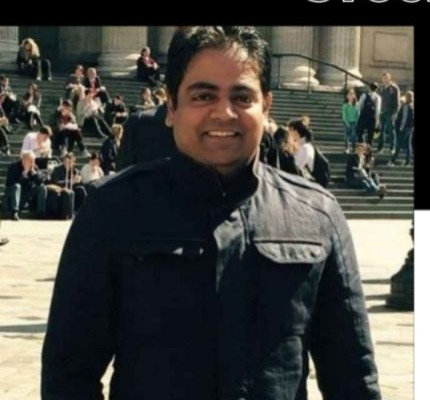
In an increasingly interconnected global economy, corporate leadership is no longer defined simply by the ability to manage operations. The strongest leaders are often those who understand how markets behave, how capital moves, how economic cycles evolve and how quickly opportunity and risk can change.
It is within this broader transformation of corporate leadership that Hari Shankar Tibrewal, Chairman of Zenith Global Limited, brings a distinctly market-oriented perspective to the boardroom.
His professional experience with financial markets has shaped a leadership approach centred on understanding market movements, capital cycles and wider economic signals. Rather than viewing corporate strategy in isolation, his philosophy places business decisions within the larger context of changing financial conditions and global investment trends.
This combination of market awareness and corporate strategy is emerging as an important part of Zenith Global Limited’s broader vision.
From Understanding Markets to Shaping Corporate Strategy
The transition from active engagement with financial markets to corporate leadership represents more than a change in professional role. It represents a shift from analysing individual market opportunities to thinking about the long-term direction of an organisation.
Hari Shankar Tibrewal’s market experience provides an important foundation for this approach.
Financial markets operate on expectations, liquidity, risk perception, economic cycles and changing investor sentiment. A leader who has developed an understanding of these dynamics can bring a valuable perspective to strategic decision-making, particularly when organisations are evaluating expansion, investment opportunities and capital allocation.
At Zenith Global Limited, this investor-oriented mindset is reflected in an approach that places considerable importance on measured decision-making, capital efficiency and sustainable value creation.
The philosophy is straightforward but increasingly important: growth should not be pursued merely for scale. It should be pursued with an understanding of the underlying economics, market environment and long-term value proposition.
That perspective gives Tibrewal’s leadership style a distinctly strategic character.
Building a Global Outlook
Under Hari Shankar Tibrewal’s chairmanship, Zenith Global Limited is positioning itself with a broader global outlook.
The company’s stated direction extends beyond a purely domestic perspective and focuses on opportunities emerging from the increasing integration of international financial and business markets.
Its strategic priorities include cross-border investment participation, exposure to international financial markets, strategic global partnerships and governance-driven growth models.
Together, these priorities reflect a corporate vision that is outward-looking and internationally oriented.
Global expansion, however, requires more than identifying opportunities in overseas markets. It requires an understanding of different economic environments, regulatory frameworks, capital structures, risk factors and business cultures.
This is where a market-informed leadership philosophy can become particularly valuable.
By considering global opportunities through the combined lenses of market conditions, capital discipline and long-term strategy, Zenith Global Limited is seeking to build a platform capable of responding to a rapidly changing international investment landscape.
An Investor’s Mindset in the Boardroom
One of the defining characteristics of Hari Shankar Tibrewal’s leadership approach is the continued presence of an investor’s perspective in corporate decision-making.
An investor naturally asks several fundamental questions before committing capital: What is the opportunity? What are the risks? What is the expected long-term value? Is the capital being deployed efficiently? And how resilient is the underlying strategy if market conditions change?
Bringing this framework into the boardroom can encourage organisations to look beyond short-term performance and evaluate strategic decisions through a longer-term lens.
For Zenith Global Limited, this philosophy translates into an emphasis on evaluating growth opportunities with discipline rather than pursuing expansion indiscriminately.
As Tibrewal has articulated, global business decisions need to remain aligned with real market conditions. Organisations must understand how capital flows, economic trends and investment environments evolve if they are to prepare effectively for emerging opportunities while maintaining strategic discipline.
This perspective is particularly relevant at a time when international markets are influenced by a complex combination of economic growth, monetary policy, geopolitical developments, capital flows and investor sentiment.
Discipline as a Competitive Advantage
In periods of strong economic expansion, opportunities can appear abundant. But experienced market participants understand that opportunity and risk often rise together.
A disciplined approach therefore becomes an important competitive advantage.
Hari Shankar Tibrewal’s leadership philosophy places emphasis on measured growth, capital efficiency and long-term value creation rather than short-term expansion for its own sake.
That approach can help an organisation remain focused when market conditions become unpredictable.
For a company aspiring to strengthen its global presence, the ability to distinguish between attractive opportunities and merely attractive narratives can be critical.
The emphasis on disciplined investment suggests a preference for decisions supported by market realities, strategic logic and longer-term considerations.
This makes the investor mindset particularly relevant to Zenith Global Limited’s growth ambitions.
Governance at the Core of Growth
Growth and governance are sometimes discussed as separate corporate priorities. Increasingly, however, they are becoming inseparable.
International investors, strategic partners and other stakeholders place significant importance on transparency, regulatory compliance, responsible financial practices and institutional credibility.
Zenith Global Limited’s strategic philosophy, as outlined in the article, places governance alongside global expansion.
Functional compliance systems, transparent financial practices and responsible investing are viewed as fundamental pillars for building credibility and resilience in international markets.
For Hari Shankar Tibrewal, this emphasis reinforces the idea that sustainable corporate success cannot be measured solely through expansion.
A company’s ability to build trust, maintain institutional discipline and operate responsibly can be equally important to its long-term standing.
This governance-oriented perspective also complements the company’s broader ambition of developing sustainable growth rather than pursuing growth at any cost.
Preparing for a More Connected World
The global investment landscape is becoming increasingly interconnected.
Capital can move across geographies rapidly. Economic developments in one major market can influence businesses and investors elsewhere. Partnerships increasingly span borders, while companies must simultaneously understand local realities and international trends.
For corporate leaders, this environment requires adaptability.
Hari Shankar Tibrewal’s market background gives him a perspective shaped by precisely this understanding of interconnected financial and economic systems.
His contribution to Zenith Global Limited therefore extends beyond conventional corporate oversight. His approach seeks to connect market intelligence with strategic planning, investment discipline with expansion and global opportunity with governance.
That combination can help an organisation think more carefully about where it should compete, how it should allocate capital and what kind of long-term institutional platform it wants to build.
A Leadership Model Focused on Long-Term Value
The most important characteristic of Tibrewal’s approach may ultimately be its long-term orientation.
Rather than defining success simply through immediate growth, the philosophy emphasises building a durable organisation capable of navigating different market cycles.
Such an approach requires patience, discipline and a willingness to balance ambition with prudence.
For Zenith Global Limited, this means pursuing international opportunities while remaining attentive to capital efficiency, market realities and governance standards.
For its Chairman, it represents the evolution of a market-informed way of thinking into a broader corporate leadership philosophy.
Looking Ahead
The next phase of global business is likely to reward companies that can combine ambition with discipline and speed with strategic clarity.
Zenith Global Limited’s evolving global vision reflects an attempt to position the organisation within that changing environment.
At the centre of this approach is Hari Shankar Tibrewal, whose experience in financial markets informs a leadership philosophy built around understanding capital, evaluating opportunity, recognising risk and maintaining a long-term perspective.
His role illustrates how market knowledge can become a powerful strategic asset when translated into corporate leadership.
As Zenith Global Limited continues to explore cross-border participation, international market exposure and strategic global partnerships, its stated focus on governance and sustainable growth provides an important foundation for that ambition.
Ultimately, Tibrewal’s leadership proposition is not simply about pursuing growth. It is about pursuing informed, disciplined and sustainable growth.
In a world where markets are changing faster than ever, that combination of market insight, strategic thinking, capital discipline and governance may prove to be one of the most valuable assets a global-facing company can possess.