When a private complaint can name Dabur, why has no agency publicly questioned Ankiti Bose?


On 7 November 2023, Matunga police in Mumbai registered an FIR against 32 people in the Mahadev betting-app matter. The complainant was a city social worker, Prakash Bankar. The court direction came from the 30th Kurla magistrate. The sections were cheating, conspiracy, the Gambling Act and the Information Technology Act. Dabur chairman Mohit Burman was accused number 16. Director Gaurav Burman was accused number 18. Actor Sahil Khan was on the list. So were Saurabh Chandrakar, Ravi Uppal and Shubham Soni, the men police themselves called the key accused. The complaint spoke of fraud “since 2019” and of nearly ₹15,000 crore. Bankar also alleged match-fixing, and he named a London-based Dinesh Khambat, also spelt Khambhat, and a Chander Aggarwal as the channel through which Chandrakar supposedly fixed matches. The Hindu recorded a police suspicion, not a finding, that Aggarwal worked with Mohit Burman, who was in turn “connected” to Khambhat and Gaurav Burman, and that this cluster oversaw a site called Khiladi Book. The stated hook for Mohit Burman included his equity in an IPL franchise. The officer would not go further. A probe, he said, was on.
That is the entire legal weight of the Dabur entry. A complainant’s statement. A magistrate’s order to register. A police suspicion. No chargesheet against the Burmans has been reported from that FIR. No ED prosecution complaint has named them. No court has convicted them of anything to do with Mahadev. The family called the document patently false and baseless, said Mohit and Gaurav Burman had never met the accused in the copy circulating to the press, and said the timing matched their open offer to lift a 21.24 percent stake in Religare. They called it arm-twisting. They may be right. They may not. An FIR is not a verdict, and a denial is not an acquittal. Both can sit on the table at once.
Hold that standard still. Then look at Ankiti Bose.
She is not an unknown. She co-founded Zilingo, a Singapore-headquartered fashion-technology company that raised about US$308 million and was valued at about US$970 million in February 2019. She was its chief executive for roughly seven years. On 31 March 2022 the board suspended her. A forensic review by Kroll, with Deloitte on the accounting side, had been commissioned after complaints about reporting, revenue and vendor payments. Bloomberg and others reported that the review covered more than US$7 million in payments to technology and consulting firms, signed by her, that senior executives said they had not known about. On 20 May 2022 she was terminated “with cause”, the board citing non-cooperation rather than a published finding of personal enrichment. Lenders Varde Partners and Indies Capital, owed about US$40 million, accelerated repayment. She resigned her directorships on 30 June 2022. By early 2023 the company was in liquidation. A major investor, Burda, later said significant irregularities in reporting to investors had contributed to the failure, and that investors were still considering legal action. Years on, no suit by the company, its liquidators or an investor against her has surfaced in the jurisdictions reporters have checked, and Singapore’s Commercial Affairs Department has not been reported as charging her. She has denied wrongdoing throughout. She has said every payment had documents and that finance, technology or operations knew. The forensic report has never been published. That is a fact, and it is an indictment of process, not of her guilt.
Inside that unpublished review sits the payment this argument actually turns on. Inc42 reported that between August and September 2021 Zilingo paid EbixCash about US$944,000 for technology and IT services. The same reporting said the contract was signed in September 2021 with paperwork carrying an earlier date. Some later accounts put the cash that actually moved closer to US$630,000. She was the chief executive. The payment was on her watch. EbixCash is not a roadside vendor. It is the Indian payments, forex and travel arm of Ebix, the Atlanta software group then chaired by Robin Raina, who was born in Srinagar in 1967 into a Kashmiri Pandit family and ran Ebix for a quarter of a century. On 17 December 2023 Ebix filed Chapter 11 after defaulting on a US$617 million loan. In August 2024 a US bankruptcy court approved the sale of about 97.58 percent of Ebix Inc to Eraaya Lifespaces, a listed company promoted by Delhi businessman Vikas Garg, for roughly ₹1,175 crore to ₹1,273 crore.
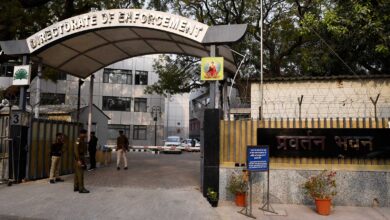
Then the Enforcement Directorate arrived, and it arrived for Garg, not for Bose. On 5 June 2026 the Raipur zonal office provisionally attached assets it valued at ₹940.77 crore — about ₹893 crore movable, about ₹48 crore immovable — linked to Garg, his family and firms he controlled. The largest single line was 12.84 lakh shares, a 64.2 percent stake in Ebix held through Eraaya, valued at ₹765.77 crore. The agency alleges those were proceeds of crime from Mahadev Online Book and Skyexchange, routed through offshore funds tied to SkyExchange promoter Hari Shankar Tibrewal, including vehicles such as AG Dynamic Funds, Forbes EMF and others, via Elara Capital. The ED’s prosecution complaint, as reported by The Print, says Garg, Raina and associates met Tibrewal at the Taj in London between March and July 2024 to discuss funding the acquisition. On 14 July 2026 the ED arrested Garg from his Delhi house, took a transit remand, and produced him in Raipur. A special court remanded him to ED custody. He has been described as chairman of the Ebix group after the deal, promoter of Vikas Ecotech, Vikas Lifecare and Eraaya, and a former convenor of the Delhi BJP economic cell, expelled after the arrest. The agency’s case is that alleged betting money bought the American parent and, through it, a controlling slice of the Indian cash-and-payments arm. That case is an allegation under the Prevention of Money Laundering Act. It is not a conviction.
So the timeline a reader can actually verify is this. In 2021, on Bose’s watch, Zilingo pays EbixCash nearly a million dollars under a contract whose date has been questioned in print. In 2022 she is removed and the company dies. In 2023 Ebix collapses into an American bankruptcy. In 2024 Garg’s vehicle buys it. In 2026 the ED says the purchase money was layered proceeds of an illegal betting syndicate, attaches the shares, and jails the buyer. Nobody in that chain has produced, in public, a one-page answer to a boring question: what did EbixCash deliver for the 2021 money, who signed on the Ebix side, and where did the cash sit once it arrived? Bose says the paperwork was clean. The board that fired her never published the report that would let a stranger test that sentence. The ED, which has been energetic enough to arrest a former party functionary and attach ₹941 crore of his assets, has not been reported as sending her a summons over that invoice.
That is the pinch. Not a secret syndicate chart. A missing questionnaire.
The rest of the folklore should be stripped before it is allowed near a newsroom. Krishan Rattan is Bose’s founding partner at Terra-Invest. That is on the firm’s own site. His published career runs through Morgan Stanley, Credit Suisse, Deutsche Bank and Société Générale, in New York and London. UK company records describe a British national resident in England, born in November 1978. Terra-Invest lists London, Dubai, Abu Dhabi, Miami and Singapore. Bose’s Singapore years are real: Zilingo was built there. Her later Middle East chapter is also real: the firm’s own material and subsequent interviews place the next act in Dubai and Abu Dhabi, including longevity and health platforms. Rattan’s “native of Kashmir” label is not established. A different Krishan Rattan appears in Jammu and Kashmir police records. Merging the banker with the policeman because the surname is convenient is not investigation. It is a conjuring trick. His supposed twin residence in Singapore during her Zilingo years is likewise not established. Shared skylines are not a partnership agreement, and a partnership agreement is not a betting panel.
Dinesh Khambhat does not repair the gap. He is a name in Bankar’s complaint, repeated by Mumbai police as an allegation: a London-based associate through whom Chandrakar supposedly fixed matches. He is not a man an Indian court has declared a top match-fixer. The Burmans, dragged into the same paragraph by an “Exhibit F” they say they have not been shown, deny knowing the accused at all. Using an unproven name in a private complaint to stain a London banker who happens to share a city is how bad cases are built and good ones are lost.
Chandrakar and Uppal did run Mahadev from Dubai. That is the ED and CBI record. Chandrakar was later reported held in Oman, with extradition being pursued. Uppal was detained in Dubai and later reported to have left the UAE for Vanuatu. Dubai is also where a great many Indian founders now park a holding company. Presence in the same emirate as a fugitive is not presence in the same crime. Anyone writing the opposite should be made to show a bank transfer, a panel ID, a chat, a property. None of those has been produced against Bose or Rattan. Inventiva has spent months arranging the names in a line. The Delhi High Court has spent the late summer of 2026 restraining that exercise. On 24 August 2026, in Ankiti Uday Bose’s suit, Justice Subramonium Prasad restrained defendants from disseminating specified Inventiva articles on LinkedIn and other social media, and from further pieces that would hamper the proceedings or her exercise of legal rights. On 14 September 2026, in Krishan Rattan’s separate suit, Justice Sachin Datta restrained further articles containing defamatory imputations against him, while noting that fact-finding itself was not banned. Interim orders are not findings that the articles were false. They are a court saying the imputation ran ahead of the proof. A newsroom that cannot tell those two sentences apart should not be in the business.
Which brings the argument back to the only comparison that survives contact with the file. The Indian state was willing to put the chairman and a director of Dabur into an FIR because one complainant alleged a relationship, illustrated by an exhibit the accused say they have not seen, at the exact moment those accused were trying to buy a financial-services company. The same state has a documented dollar payment from a collapsed unicorn into a payments company that the ED now calls a receptacle for betting proceeds, a chief executive fired “with cause” after an unpublished forensic review, a buyer of that payments group arrested under the PMLA, and a London meeting the agency itself describes between the old chairman, the new buyer and an alleged betting financier. And on Bose, public silence. Either the payment is irrelevant, in which case an investigator can close it in an afternoon and say so. Or it is not irrelevant, in which case the afternoon is overdue. What is not available, if the Dabur FIR is the standard, is the claim that agencies only move when the evidence is courtroom-grade. They moved on a complaint. They have not publicly moved on an invoice.
The demand is narrower than the internet wants it to be, and more serious. The ED and the Serious Fraud Investigation Office should obtain the Zilingo-EbixCash contract, the invoices, the delivery records and the bank trail, and say whether the 2021 money is a commercial payment or a lead. Singapore’s liquidators should be asked for the Kroll and Deloitte work, or for a reason it must stay in a drawer. The CBI, which has already filed multiple chargesheets in Mahadev and is chasing Chandrakar and Uppal across Oman and Vanuatu, should state whether Bose or Rattan appears anywhere in those papers. If they do not, the statement is owed to them as much as to the public. If they do, the papers should not be sitting under a press note about someone else. Garg’s remand, the ₹940.77 crore attachment, the London Taj meetings and the US$944,000 invoice are all old enough to have been cross-checked. Speed is not a favour to the accused. It is the only way a name stops being used as a prop.
None of this makes Ankiti Bose a bookmaker. A city is not a syndicate. A co-founder is not a co-accused. A payment to a company later bought with alleged crime money is a question, and questions do not become convictions because a headline is bored of waiting. The Burmans are entitled to that sentence. So is she. The agencies are not entitled to the luxury of investigating one file in the newspapers and leaving the neighbouring invoice unopened.
Disclaimer. Allegations remain allegations. An FIR, a press note, a forensic brief that has not been published, and a newspaper report are not findings of guilt. As of 4 October 2026, no court in India, Singapore, the United Kingdom or the United Arab Emirates has convicted Ankiti Bose, Krishan Rattan, Mohit Burman or Gaurav Burman of any offence arising out of the Mahadev betting case or the Zilingo payments. Vikas Garg has been arrested and remanded in a PMLA case; that is not a conviction. The Delhi High Court orders of August and September 2026 are interim restraints in civil defamation suits, not criminal verdicts. This is an opinion piece arguing for a faster, tighter, on-the-record investigation. It is not a charge sheet.