Top Indian-Style Toilet & Flush System Brands In India: A Complete Category Guide

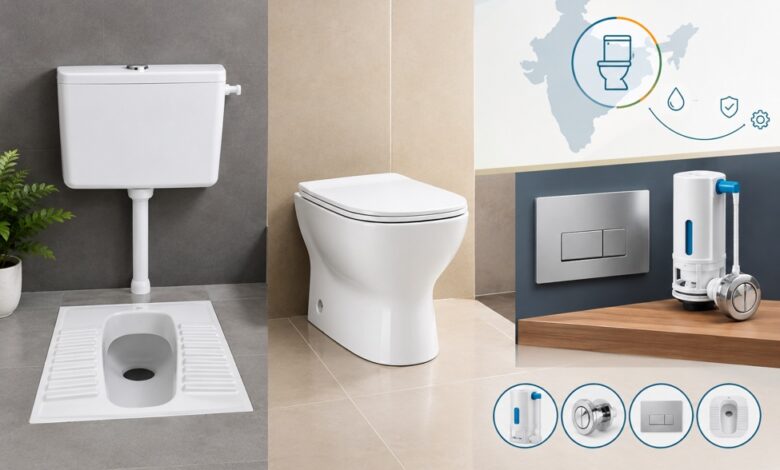
An Indian toilet, also called a squatting toilet, remains a common choice for second bathrooms, utility washrooms, and many commercial spaces in India. Performance depends on the pan design, trap, flush system, and surrounding floor. Sanitaryware brands in India offer squatting pans in Orissa, Asian and Anglo-Indian formats, along with cisterns and flushing parts. Comparing these ranges helps you plan a setup that stays hygienic, flushes well and is easy to clean.
Top Indian Toilet And Flush System Brands In India
Sanitaryware brands in India offer Indian toilets in several pan formats, usually with cisterns and flushing parts. Their ranges differ in pan types, flush options and how far they extend into western closets and tiles. The following brands offer Indian-style toilets and flush systems for homes and commercial spaces.
| Brand | Indian-Style Range | Also Offers |
| Simpolo Tiles & Bathware | Indian toilets and squatting pans | Western closets, cisterns, urinals and wash basins |
| CERA | Indian-style pans | Western closets, cisterns and flushing parts |
| Parryware | Orissa and Anglo-Indian pans | Western toilets and cisterns |
| Hindware | Orissa and Asian pans | Other sanitaryware |
Simpolo Tiles & Bathware
Simpolo Tiles & Bathware is a premium tiles and bathware brand offering Indian toilets and squatting pans in its sanitaryware range, along with floor-mounted, two-piece, and wall-mounted western commodes. For homes planning a toilet commode flush setup across multiple bathrooms, this makes it easy to keep an Indian toilet in one room and a western closet in another, both from the same range. Its vitrified floor and wall tiles also let you plan the pan, flush, and surrounding surfaces together for an easy-to-clean bathroom.
CERA
CERA offers a sanitaryware range in India that includes Indian-style pans and western closets, along with cisterns and flushing components. Buyers can compare pan and flush options through its dealers. Its pans can be paired with cisterns from the same range to keep the pan-and-flush setup consistent.
Parryware
Parryware offers Indian-style squatting pans, including Orissa and Anglo-Indian formats, alongside western toilets and cisterns. Buyers can match the pan to an exposed or concealed flush setup. Dealers across India sell its range, where buyers can check pan sizes before ordering.
Hindware
Hindware lists Orissa squatting pans and an Asian pan in its sanitaryware range. Its Orissa pan is designed to work with a flushing cistern. Its Asian pan comes in a rectangular design suited to compact utility washrooms.
Types Of Squatting Pans For Indian Toilets
The four main types of squatting pans are the Orissa pan, the Asian pan, the Anglo-Indian closet and the pan with an integrated trap. They differ in height, footprint and plumbing needs, so the right one depends on who will use it and how much space the bathroom has:
- Orissa pan: The classic squatting pan with raised footrests, installed flush with the floor.
- Asian pan: A simpler, compact squatting design suited to utility spaces.
- Anglo-Indian closet: A raised pan usable seated or squatting, helpful for older family members.
- Pan with integrated trap: Reduces on-site plumbing work and helps keep odours sealed.
Deciding on the pan type first makes flush and plumbing decisions easier and tells you whether the floor must be sunk before tiling. An Orissa pan suits a utility washroom, while an Anglo-Indian closet works better for older family members.
How Flush Systems Work With Indian Toilets?
Indian toilets flush with one of three systems: an exposed cistern, a concealed cistern, or a flush valve. A pan performs only as well as the flush that clears it, and the right toilet commode flush depends on wall space, water pressure and access to parts.
| Flush System | How It Works | Space Needed | Maintenance | Suits |
| Exposed cistern | A wall-mounted tank flushes through a pipe | Wall space above the pan | Easy access to parts | Most homes and renovations |
| Concealed cistern | Tank sits inside the wall, with a flush plate visible | Wall cavity or ledge | Access through the flush plate | Compact, modern bathrooms |
| Flush valve | Water flows straight from the supply line | Very little | Needs steady water pressure | Overhead-tank and commercial buildings |
Exposed cisterns are the easiest to service, while concealed cisterns give the wall a cleaner look. Flush valves save the most space but need steady water pressure, so they suit buildings with overhead tanks or a reliable supply.
How To Choose An Indian Toilet And Flush Setup?
Choosing an Indian toilet setup comes down to five checks: who will use it, floor height and trap, water pressure, service access and the surrounding floor. Fixing a mistake later usually means breaking tiles, so settle these points before you buy:
- Who will use it: Choose an Anglo-Indian closet if older family members need the option to sit.
- Floor height and trap: Check if the pan needs a sunken floor and which trap your drain accepts.
- Water pressure: A flush valve needs steady pressure, while a cistern works better with an irregular supply.
- Service access: Exposed cisterns are easier to repair, while concealed ones need a reachable flush plate.
- Surrounding floor: Use a slip-resistant, easy-clean vitrified tile around the pan to keep the area dry and safe.
Getting these basics right prevents leaks, weak flushing and costly rework. It also keeps the area around the pan dry, safe and easy to clean.
Conclusion
An Indian toilet works best when you plan the pan, flush, and floor as one setup. Choose the pan type that suits the users, match the flush system to your water supply and wall space, and finish the area with slip-resistant tiles that stay dry. As a trusted tile and bathware brand in India, Simpolo Tiles & Bathware offers Indian toilets and squatting pans alongside vitrified tiles so that you can plan the pan and surrounding surfaces together. Weigh these options against your bathroom’s layout, plumbing and the people who will use it.