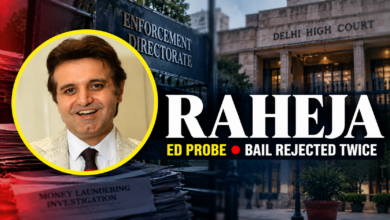
TTD Ghee Adulteration Case: ED Attaches ₹129.85 Crore in Assets as Alleged ₹234.5-Crore Supply Network Faces Intensified Scrutiny
The alleged conversion of palm-oil products into ghee supplied for Tirumala Tirupati Devasthanams has evolved into a major investigation involving alleged front companies, fictitious dairy transactions, hawala channels and public procurement failures. With the ED reporting ₹132.55 crore in total attachments, seizures and freezes, the central questions remain: how did the alleged supply chain operate, who enabled it, and when will the investigation culminate in a judicial verdict?

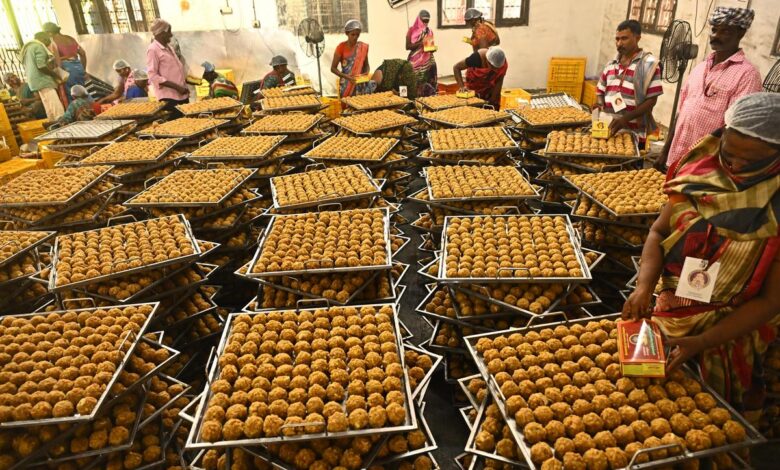
₹129.85 Crore Attached: The Money Trail Is Now at the Centre of the Investigation
The Enforcement Directorate’s latest action in the alleged Tirumala Tirupati Devasthanams (TTD) ghee adulteration case has brought the financial dimensions of the controversy into sharper focus.
On 14 October 2026, the ED’s Hyderabad Zonal Office announced the provisional attachment of movable and immovable assets valued at ₹129.85 crore belonging to M/s Bhole Baba Oroganic Dairymilk Pvt. Ltd., M/s Sri Vyshnavi Dairy Specialities Pvt. Ltd., their associated promoters and family members, M/s Sukriti Foods Pvt. Ltd., its promoter Kailash Chand Mangla, members of his family, and other related entities and individuals.
The action was taken under the Prevention of Money Laundering Act, 2002 (PMLA), as part of the continuing investigation into the alleged fraudulent supply of adulterated ghee to TTD for the preparation of the temple’s sacred Laddu Prasadam.
The ED has reported that the cumulative value of attachments, seizures and freezing measures in the case has reached ₹132.55 crore. This includes ₹2.7 crore in cash and bank balances seized or frozen during searches conducted on 3 June 2026 at 16 premises across Uttarakhand, Tamil Nadu, Maharashtra, Delhi, Rajasthan and Andhra Pradesh. These figures are reported by the agency and should not be interpreted as a final judicial determination of the amount recoverable as proceeds of crime.
The attachment is significant, but it also raises a larger question: if investigators’ allegations concerning the manufacture, procurement and supply of adulterated ghee are borne out by evidence, how was a supply chain of this scale able to function within a procurement system operated by one of India’s most prominent religious institutions?
A transaction involving food supplied under a public contract should ordinarily be supported by verifiable production capacity, credible manufacturing records, traceable raw materials, proper invoices, reliable laboratory results and accountable procurement decisions.
When an investigation instead alleges a combination of front dairies, fictitious purchases, bogus buyers and hawala-funded transactions, the issue extends well beyond the quality of a product. It becomes a question of the integrity of the entire commercial and administrative chain.
The uncomfortable question is no longer simply whether adulterated ghee was supplied. It is whether the systems designed to prevent such a supply were sufficiently robust, and whether those responsible for enforcing them acted when they should have.
The attachment remains provisional. It is not a conviction, and it does not by itself establish that every person or entity whose assets have been attached committed an offence.
Nevertheless, the scale of the action demands a serious examination of the allegations rather than another round of statements followed by public silence.
The Alleged ₹234.5-Crore Supply: What the ED Says Happened
According to the ED’s 14 October press release, its investigation has found that adulterated ghee valued at ₹234.5 crore was supplied to TTD by Bhole Baba, both directly and through other dairies that allegedly participated in tenders in their own names in exchange for commissions.
The agency alleges that the ghee was actually manufactured at the facilities of Bhole Baba and Sukriti Foods, while front dairies were used to secure or facilitate supplies under TTD procurement arrangements.
This alleged structure is central to understanding the case.
A front supplier can, in principle, be a legitimate commercial intermediary. Businesses routinely distribute products manufactured by other companies. The crucial distinction is whether the intermediary truthfully discloses the manufacturer’s identity, has the necessary authorisations, meets the tender conditions and supplies a product that satisfies the contractual specifications.
The ED’s allegations concern a far more serious arrangement: intermediary dairies allegedly bidding for contracts while the actual production took place elsewhere, with the manufacturing inputs and accounting records allegedly manipulated to conceal the nature of the product.
If established in court, such an arrangement would raise questions about tender eligibility, manufacturing traceability, quality assurance, financial transparency and the integrity of representations made to the purchasing institution.
The investigation therefore needs to establish, transaction by transaction, which entity won which contract, what quantities were ordered, where the product was manufactured, how it was transported, what certificates accompanied it, and which individuals approved the transactions.
A corporate invoice is not proof of manufacturing. A tender award is not proof of production capacity. And a bank transfer is not proof that the underlying transaction was genuine.
Those distinctions are essential in a case built around the alleged separation between the appearance of a legitimate dairy operation and the actual origin of the product.
From Palm Oil to Alleged Adulterated Ghee: The Manufacturing Allegations
The ED’s press release describes a method in which refined palm oil, palm kernel oil and palmolein were allegedly blended with chemical ingredients, including monoglycerides, acetic acid ester, lactic acid and beta-carotene.
According to the agency, these materials were used in the manufacture of the product alleged to have been supplied as ghee.
The press release further states that the relevant inputs were invoiced as edible oils.
This distinction matters. Palm-derived ingredients are not automatically unlawful simply because they are palm-derived. Nor does the mere presence of a particular additive establish a crime in isolation. The decisive questions are whether the ingredients were permitted for the intended use, whether the resulting product complied with applicable food standards, and whether it was honestly represented and supplied as the product required by the contract.
The ED’s allegation is that the process went beyond a simple quality failure: the product was manufactured using inputs that did not represent genuine cow ghee, yet allegedly entered a supply chain in which it was presented as suitable for TTD’s requirements.
The agency’s account, if substantiated, describes a deliberate divergence between what the purchasing institution believed it was buying and what investigators say was actually manufactured.
That is precisely why production records, recipes or formulations, raw-material ledgers, batch registers, manufacturing capacity, dispatch records and laboratory reports should be examined together.
A genuine dairy operation should be able to establish a credible relationship between milk procurement, cream separation, butter production, ghee manufacture, storage, output and dispatch. Investigators must establish whether the businesses involved could support the volumes attributed to them through genuine inputs and processes—or whether the accounts merely created that impression.
The ED’s allegations make this a question for forensic examination, not speculation.
The Alleged Accounting Architecture: Bogus Buyers, Fictitious Purchases and Hawala
The most consequential aspect of the ED’s account may be the alleged financial arrangements used to conceal the manufacturing process.
According to the 14 October press release, palm oil consumed in the alleged manufacture of adulterated ghee was shown in the books as having been sold to bogus buyers.
The agency further alleges that fictitious purchases of milk and ghee and fictitious sales of by-products, including skimmed milk, were recorded to give the impression that the businesses were operating as genuine dairy manufacturers.
These are not minor bookkeeping allegations. If proved, they would suggest that financial records were allegedly being used to construct a false commercial narrative around the underlying production activity.
The press release describes a further layer: payments allegedly made through banking channels against fictitious purchases were returned in cash through hawala channels. According to the ED, this cash was then used to fund the purported purchases by bogus palm-oil buyers, pay commissions to front dairies and make payments to other persons allegedly connected with the scheme.
The alleged sequence can be summarised as follows:
-
Inputs: Palm-derived oils and other ingredients were allegedly procured for the manufacture of the product.
-
Production: The ED says adulterated ghee was manufactured at specified facilities rather than through a genuine dairy-production process consistent with the product supplied.
-
Tender channel: Other dairies allegedly participated in TTD procurement in their own names for commissions.
-
Accounting: Bogus buyers, fictitious milk and ghee purchases, and fictional by-product sales allegedly concealed the actual use of inputs.
-
Financial recycling: Payments allegedly routed through banking channels were returned in cash through hawala, facilitating further transactions and commissions.
Each stage requires documentary corroboration. Investigators need to identify the alleged bogus buyers, trace the movement and ownership of the money, reconcile invoices against transport and stock records, identify the ultimate recipients of cash, and establish which individuals authorised or knowingly benefited from the transactions.
The existence of a complicated transaction trail does not automatically prove a conspiracy. Equally, the presence of formally documented payments does not automatically make the underlying commercial activity genuine.
The evidence must establish whether these were real purchases and sales or transactions designed to disguise the origin and use of funds.
That is the test the investigation must meet.
₹230 Crore, ₹234.5 Crore or ₹250 Crore? The Figures Need a Transparent Reconciliation
The public reporting surrounding this case contains several large financial estimates, and they should not be casually treated as interchangeable.
The ED’s October 2026 press release identifies ₹234.5 crore as the value of adulterated ghee allegedly supplied to TTD by Bhole Baba, directly and through front dairies.
A September 2026 report on the ED’s arrest of Sukriti Foods promoter Kailash Chand Mangla described alleged supplies worth approximately ₹230 crore between 2019 and 2024, of which ₹96 crore was attributed in the report to adulterated ghee allegedly manufactured by Mangla.
Separately, reporting on the CBI-led Special Investigation Team’s final charge sheet, filed in January 2026, described an alleged supply of approximately 68 lakh kilograms of synthetic or adulterated ghee valued at around ₹250 crore between 2021 and 2024.
These figures may reflect different periods, transactions, investigative scopes or valuation calculations. The available material does not establish a definitive reconciliation among them.
They must not be added together as if they represented separate losses. Nor should one figure silently replace another.
But when a case of this magnitude involves multiple companies, several alleged manufacturing and intermediary arrangements, and investigations by more than one agency, clarity is essential.
The agencies should publish or place before the competent court a transaction-wise reconciliation that explains:
-
The precise period covered by each estimate.
-
The quantity of ghee attributed to each company and supplier.
-
The value of the relevant contracts and actual supplies.
-
The transactions counted as alleged adulterated-ghee supplies.
-
The amounts attributed to each alleged participant.
-
The distinction between alleged turnover, wrongful gain, suspected proceeds of crime and the value of assets provisionally attached.
These categories are not legally or financially identical.
The difference between gross contract value, alleged proceeds generated through an offence, estimated wrongful loss and property believed to represent proceeds of crime can be substantial.
The public deserves accurate numbers, not a confusing succession of headline figures. The prosecution also benefits from clear calculations that can withstand scrutiny in court.
A Controversy That Predates the Latest ED Action
The October 2026 attachment is not the beginning of the TTD ghee controversy. The publicly available records trace the wider affair back several years, with scrutiny intensifying following concerns about ghee supplies in 2024.
The CBI-led investigation’s January 2026 final-charge-sheet reporting placed the alleged supply chain between 2021 and 2024, while the ED’s later statements described alleged supplies and related conduct extending across a broader period.
The allegations have involved suppliers, intermediary dairy businesses, procurement-related personnel and other individuals said to have facilitated the commercial arrangements.
The CBI-led SIT reportedly filed its final charge sheet before the Anti-Corruption Bureau court in Nellore in January 2026, naming 36 accused after an investigation lasting approximately 15 months.
The case has consequently moved beyond an initial complaint or a dispute over a particular consignment. It now involves a substantial body of alleged documentary, financial, procurement and supply-chain evidence that must be tested through criminal proceedings.
The important distinction is between the length of an alleged scheme and the strength of the evidence against each person. A charge sheet identifies the prosecution’s case; it does not remove the need to establish individual criminal liability.
Nevertheless, an investigation covering several years of procurement should be expected to explain how the system operated, what each participant allegedly did, and when institutional safeguards failed.
The 2024 AR Dairy Episode: The Moment Questions About Traceability Became Impossible to Ignore
A separate but related part of the public controversy concerned ghee supplied by M/s A.R. Dairy Food Pvt. Ltd. under a 2024 TTD procurement contract.
The Madras High Court’s judgment of 16 May 2025 in A.R. Dairy’s challenge to a food-safety licensing order records that the company had successfully bid in March 2024 for the supply of 10 lakh kilograms of ghee. The tender was finalised on 8 May, and a supply order was issued on 15 May 2024.
The court’s chronology records four tanker consignments delivered in June and July 2024. TTD subsequently rejected consignments after concerns arose about the product’s compliance with specifications.
According to the criminal prosecution’s case as recited in Andhra Pradesh High Court proceedings, samples sent to the NDDB CALF Laboratory in Anand, Gujarat, were reported on 12 July 2024 to be substandard and adulterated, with the report alleging vegetable and animal-fat-based adulterants, including lard.
This allegation must be handled precisely. The October 2026 ED press release at the centre of the present report describes the alleged use of palm-derived oils and specified chemical ingredients. The animal-fat allegation arose in the separate 2024 AR Dairy supply controversy and should not be carelessly attributed to every consignment or every company involved in the wider case.
There were also differences between the testing records discussed in the court proceedings.
The Madras High Court’s judgment records that samples of ghee and butter collected from AR Dairy’s own manufacturing premises were reported in August 2024 not to be adulterated. It also records that the Central Food Safety Officer subsequently found that the consignments supplied to TTD had been procured from Sri Vyshnavi Dairy Specialities Pvt. Ltd.
In other words, the results referred to in the proceedings concerned different samples, collected at different locations and at different stages. They cannot automatically be treated as contradictory tests of an identical sample.
The distinction makes traceability all the more important.
If the product manufactured at one location is represented as the product delivered to a customer, investigators need to establish that the tested sample, the production batch, the tanker consignment and the supplied goods actually correspond to one another.
Without that chain of identification, even a technically valid laboratory result may be insufficient to establish the condition of every consignment involved in the wider controversy.
The Madras High Court’s findings on traceability
The 16 May 2025 judgment is particularly relevant because it addresses allegations concerning the representation of the manufacturer, the source of the ghee and its subsequent handling.
The court’s review of the record described alleged statutory violations involving false information and misbranding. It noted that AR Dairy had taken the position that it had procured ghee from Sri Vyshnavi Dairy, even though the supply documents presented to TTD identified AR Dairy as the manufacturer.
The judgment also recorded findings by food authorities that Sri Vyshnavi Dairy was not capable of manufacturing the quantity of ghee attributed to it, raising a serious question about the product’s origin and traceability.
The court further examined the handling of rejected ghee. Its judgment described a disputed trail in which the product was returned or resold, while the eventual destination of the goods remained unclear in the records before it.
These were substantial concerns about commercial documentation and the traceability of a food product supplied under a public contract.
However, the judgment must not be misrepresented. The court set aside the particular licence-suspension order on procedural grounds and remitted the matter to the licensing authority for reconsideration. It did not deliver a criminal conviction against AR Dairy, Sri Vyshnavi Dairy or the accused in the broader criminal investigation.
That procedural outcome also does not amount to a judicial declaration that all the underlying allegations were false.
The case demonstrates why regulatory enforcement needs to be both legally sustainable and prompt. Serious allegations involving food quality require appropriate action, but licensing and enforcement decisions must comply with due process and the applicable law.
The larger investigation must independently establish the facts through admissible evidence.
The Front-Dairy Allegations: Who Manufactured the Product, and Who Won the Tender?
One of the central questions in the investigation is the alleged relationship between Bhole Baba Dairy and intermediary businesses, including Sri Vyshnavi Dairy.
In proceedings before the Andhra Pradesh High Court in July 2025, the CBI’s special public prosecutor alleged that the companies involved had used false or fabricated documents to obtain eligibility for TTD tenders.
The prosecution further alleged that intermediaries agreed to participate in tender processes while the principal manufacturer supplied the ghee, with commissions paid for the arrangement.
The prosecution’s submissions in those proceedings referred to Sri Vyshnavi Dairy obtaining multiple TTD tenders and allegedly supplying approximately 33.94 lakh kilograms of adulterated ghee through the arrangement described by the investigating agency.
Those figures and assertions are allegations recorded in court proceedings, not findings of guilt. They must be tested against the actual tender documents, manufacturing records, invoices, bank transactions and testimony.
Nevertheless, the alleged arrangement raises a basic procurement question.
If a tender requires a supplier to possess a particular manufacturing capability, what happens when a bidder allegedly relies on the production facilities of another company? Was the arrangement disclosed? Did the tender permit it? Were the eligibility requirements met? Were the documents submitted to demonstrate compliance genuine?
And, crucially, which officials verified the answers?
The integrity of a tender depends not only on the supplier’s representations, but also on the purchasing institution’s capacity and willingness to verify those representations.
A public procurement process cannot function on paperwork alone if the underlying production capacity and product origin are not properly established.
The Failure Question: What Did TTD’s Procurement and Quality-Control Systems Actually Verify?
The controversy also calls for a deeper examination of the internal controls used to procure ghee for Laddu Prasadam.
The CBI-led investigation has included allegations concerning public officials and procurement-related personnel. Publicly reported charge-sheet details indicate that the alleged chain extended beyond private suppliers to individuals involved in procurement and other intermediary roles.
Proceedings before the Andhra Pradesh High Court have also recorded prosecution allegations concerning the conduct of procurement personnel, plant inspections and the alleged granting of favourable treatment to suppliers.
Those allegations do not establish that every official who participated in a procurement or inspection decision acted dishonestly. Procurement decisions can be collective, technical and dependent on expert input. Criminal liability must be proved individually.
But a procurement system should be capable of answering several straightforward questions.
Was each bidder’s actual production capacity verified before a contract was awarded? Were plant inspections independently documented? Were discrepancies between declared production capacity and supply volumes escalated? Were laboratory tests linked to specific production batches? Were rejected consignments tracked through to final disposal?
Were tender documents and financial transactions cross-checked against transport records and raw-material purchases? Were any companies related through common ownership, management, facilities or financial arrangements in ways that required additional scrutiny?
If the alleged manufacturing and accounting practices are substantiated, these questions could reveal not only wrongdoing by suppliers but also serious weaknesses in the system meant to detect it.
The most effective investigation will not stop at the companies that allegedly manufactured or supplied the product. It must establish whether warnings were missed, whether inspection findings were properly acted upon, and whether any individuals knowingly enabled the alleged arrangement.
At the same time, any official accused of wrongdoing must be assessed on evidence of that person’s own acts or omissions, not merely on the fact that they occupied a relevant position.
The Supreme Court’s Intervention: Evidence, Not Political Theatre
The Supreme Court intervened in the broader TTD ghee controversy in October 2024, directing an independent Special Investigation Team comprising two officers from the CBI, two officers from the Andhra Pradesh Police and a senior officer of the Food Safety and Standards Authority of India.
The investigation was placed under the supervision of the CBI Director.
The Court also made clear that its decision should not be used as a political battleground and that the constitution of the investigating team was not a determination on the merits of the allegations and counter-allegations.
That distinction remains important.
A controversy involving a major religious institution can rapidly become entangled with competing political narratives, selective disclosures and public accusations. Such disputes may generate attention, but attention is not a substitute for evidence.
The investigation must establish the facts through records, expert analysis, financial tracing, witness testimony and legally sustainable proceedings.
The same standard applies to every side. The accused cannot be treated as guilty merely because the allegations are serious, and investigators cannot be judged successful merely because they have announced large attachment figures or filed a lengthy charge sheet.
The test is whether the evidence can establish the alleged offences in court.
The Arrests and the Need for a Clear Procedural Update
The ED’s October 2026 press release states that it has arrested Vipin Jain and Kailash Chand Mangla, identifying them as promoters or directors associated with the entities allegedly involved in manufacturing and supplying adulterated ghee.
A September 2026 report on Mangla’s arrest said that he was produced before the PMLA court in Visakhapatnam and remanded to judicial custody.
The ED’s latest action also targets assets belonging to companies, promoters, family members and other related entities or individuals.
These developments demonstrate that the financial investigation has continued beyond the initial searches and criminal proceedings.
But the public should not be left to piece together the legal status of the case from isolated announcements. A clear procedural update should explain the status of each arrest, the relevant remand or bail orders, the stage of the PMLA proceedings, the status of the predicate criminal case and the progress of the trial.
An arrest is not proof of guilt. Equally, an arrest announcement cannot serve as a substitute for explaining how the case is progressing toward adjudication.
The investigation must ultimately produce a coherent account of the alleged offences and the evidence against each accused.
₹132.55 Crore in Attachments, Seizures and Freezes: What Happens Next?
The ED’s reported cumulative figure of ₹132.55 crore is a substantial development in financial terms. But its ultimate significance depends on what happens next.
The latest attachment is provisional, and seizure or freezing under the PMLA is a distinct legal measure. These actions do not automatically constitute final confiscation, nor do they establish the guilt of the persons whose assets have been affected.
The competent authorities and courts must determine the legal status of the property through the applicable process.
Investigators should establish, asset by asset, the ownership, source of funds and alleged connection with the proceeds of crime. Where family members or related entities are involved, the evidence must identify the basis for including each person’s property in the proceedings rather than assuming liability through association alone.
A careful, transaction-based investigation is essential to distinguish genuine business assets from property alleged to represent proceeds of crime.
The public also needs clarity on the relationship between the value of the assets attached and the alleged proceeds generated through the supply arrangements. Those values may differ, and the reported amount of property affected must not be confused with the amount finally determined to be recoverable.
The aim should be a legally sustainable outcome, not simply a headline number.
What Must Happen Now: Faster Investigation, Stronger Food-Safety Enforcement and Expedited Trial
The public-interest concerns in this case are too serious to be answered by successive announcements alone. The appropriate response is a faster, more transparent and evidence-led process.
First, the financial trail must be reconstructed completely. Investigators should reconcile the alleged ₹234.5-crore supply value with the other publicly reported estimates, identify the underlying transactions and explain the basis for attributing particular amounts to each company or individual.
Second, the alleged front-company arrangements must be tested against documentary evidence. That means examining tender eligibility, ownership and management links, manufacturing capability, purchase invoices, raw-material consumption, dispatches, transport records and the actual recipients of payments.
Third, the alleged bogus buyers and fictitious transactions must be identified. If the ED’s account of false purchase and sale entries is correct, the investigation should establish which counterparties were genuine, which transactions lacked a commercial basis, and how money allegedly returned through hawala was ultimately used.
Fourth, the procurement and quality-control failures must be examined. This includes plant-inspection records, testing protocols, the identification of specific batches, laboratory chain of custody, handling of rejected goods and the actions taken by responsible officials after concerns emerged.
Fifth, food-safety enforcement must remain effective and lawful. Regulatory authorities should take appropriately reasoned action consistent with the evidence and applicable law. Any decision to suspend or cancel a licence must follow due process, while public-protection measures should not be left unresolved indefinitely.
Sixth, the prosecution should seek an efficient trial schedule. The authorities and courts should ensure that the large number of accused, the volume of documentary evidence and the multiple investigative strands do not translate into indefinite delay. Relevant evidence should be presented in a structured manner, witnesses examined without unnecessary adjournments, and any property proceedings advanced in accordance with law.
Finally, all relevant parties should have an opportunity to respond to the allegations, and all accused persons should retain the protections of a fair trial. Procedural fairness is not an obstacle to accountability; it is what makes accountability legally credible.
The Central Issue Is Accountability, Not the Size of the Headline
The latest ED action makes one fact clear: the investigation remains active, and the agency considers the alleged financial dimensions serious enough to pursue further action against property linked to the named businesses and associated persons.
But the ultimate measure of success will not be the number of crores mentioned in a press release, the number of premises searched or the number of people named in a charge sheet.
It will be whether the agencies establish a reliable account of what was manufactured, what was supplied, how the tenders were obtained, how the payments were processed, who knowingly participated, and what evidence supports the allegations against each accused.
If the alleged system of fictitious transactions, front dairies and hawala payments is substantiated, it would represent a profound failure of commercial honesty and procurement oversight. The allegations would then demand consequences proportionate to the offences established and the responsibility proved.
If particular allegations cannot be substantiated, the legal process must recognise that too.
There should be no shortcuts in either direction: no presumption of guilt based on a headline, and no presumption that a complex supply chain was legitimate merely because its paperwork appeared orderly.
The public is entitled to something far more substantial than periodic announcements of searches, arrests and asset attachments. It is entitled to a complete investigation, a transparent account of the money trail, a reasoned prosecution and a trial that proceeds without avoidable delay.
The ₹132.55-crore figure is an important investigative milestone. It is not the final answer. The answer must come from evidence tested in court, responsibility established in law, and a system that ensures that allegations of this gravity do not remain unresolved indefinitely.
Legal Disclaimer
This report is based on the Enforcement Directorate’s press release dated 14 October 2026, publicly available court records and reporting available as of 18 October 2026. It describes allegations, investigative claims, procedural developments and judicial observations. It does not declare any individual or company guilty.
All allegations remain allegations unless and until proved in accordance with law. A charge sheet represents the prosecution’s case and is not a judicial finding of guilt. Provisional attachment, seizure, freezing of assets, arrest and remand are not convictions or final confiscation orders.
In the public material reviewed for this report, no final criminal conviction of the named persons in this TTD ghee matter was identified as of 18 October 2026. This statement reflects the scope of the public-record review and should not be understood as a certification of every court docket or proceeding.
All accused persons are entitled to the presumption of innocence and a fair trial. Any allegation must be assessed individually against admissible evidence, and any reply or clarification from the persons and entities concerned should be considered before publication.