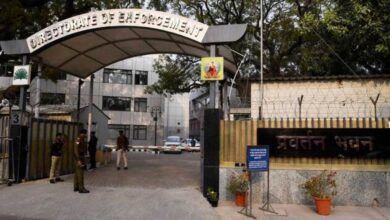
Delhi HC Rejects Nayan Raheja’s Anticipatory Bail: Why Is He Still Not Arrested?
₹2,399.65 Crore in Provisional Asset Attachments, Nearly 4,600 Homebuyers and a Money-Laundering Investigation: The Questions the Enforcement Directorate Must Now Answer


The Delhi High Court’s rejection of Nayan N. Raheja’s anticipatory bail application has brought fresh scrutiny to an Enforcement Directorate investigation concerning alleged diversion of homebuyers’ funds by Raheja Developers Limited. The court found his explanations for failing to appear in person before the ED unjustified and held that he had failed to satisfy the statutory conditions for anticipatory bail. The agency’s own disclosures refer to approximately ₹2,425.99 crore collected from around 4,600 homebuyers and provisional attachment of properties worth approximately ₹2,399.65 crore. Yet, as of October 19, 2026, this investigation demands a clear public account of what happens next: Will the agency complete the money trail, secure the accused’s presence where legally warranted, and move the case towards a timely trial?
The Delhi High Court has delivered a significant setback to Nayan N. Raheja’s attempt to secure protection from arrest in a money-laundering investigation linked to Raheja Developers Limited. In its judgment dated October 15, 2026, Justice Amit Bansal dismissed his anticipatory bail application, finding that the material presented by the Enforcement Directorate and Raheja’s conduct in response to repeated summonses did not justify the requested protection.
The ruling raises uncomfortable questions for a real estate sector in which homebuyers can commit their life savings to a promised home and then spend years navigating delayed possession, refund disputes, insolvency proceedings and regulatory litigation.
The larger issue is not whether a person is entitled to pursue a legal defence. Every accused person is. Nor is it whether an investigating agency should arrest someone simply because public opinion demands it. It should not.
The question is whether a high-value financial-crime investigation, involving thousands of homebuyers and billions of rupees in alleged transactions, will proceed with the urgency, transparency of process and investigative rigour that such a case requires.
A High Court has now rejected anticipatory bail. The court has expressly criticised the explanations offered for non-appearance before the investigating agency. The ED has publicly disclosed extensive provisional property attachments. The agency has alleged that a substantial portion of homebuyers’ money was diverted away from the projects for which it was collected.
At this point, the public is entitled to ask a straightforward question: What concrete investigative progress follows the rejection of anticipatory bail, and why is there no publicly confirmed report of Nayan Raheja’s arrest as of the date of this report?
That question demands answers, not assumptions.
The October 15 judgment: The court was not persuaded
Nayan Raheja’s application was registered as Bail Application No. 4194/2026. It sought anticipatory bail under Section 482 of the Bharatiya Nagarik Suraksha Sanhita, 2023, read with Sections 45 and 65 of the Prevention of Money Laundering Act, 2002.
The ED’s ECIR, registered on March 31, 2022, concerns alleged money laundering connected with transactions involving Raheja Developers Limited.
The anticipatory bail application had already been rejected by the Sessions Court on September 19, 2026. The Delhi High Court subsequently heard the matter on October 6, 9 and 12 before pronouncing its decision on October 15.
The High Court found that Raheja had not satisfied the twin conditions under Section 45 of the PMLA. Those conditions concern the court’s assessment of whether there are reasonable grounds for believing that an accused is not guilty of money laundering and whether the accused is unlikely to commit an offence while on bail.
The court also relied on the investigation material described in the ED’s submissions, the electronic records recovered during the investigation, an employee’s statement and the circumstances surrounding the subsequent summonses.
The judgment was not a final determination of criminal guilt. The judge expressly stated that nothing in the order should be treated as an opinion on the merits of the case.
Nevertheless, the decision is consequential. The High Court found no infirmity in the Sessions Court’s earlier rejection of anticipatory bail and concluded that the applicant’s conduct in failing to appear in person in response to the later summonses weighed against granting him protection.
The significance of the judgment must not be diluted by confusing two different propositions: Raheja remains entitled to the presumption of innocence, but he did not obtain the pre-arrest protection he sought from the High Court.
The proper next step is a lawful, effective investigation—not a premature declaration of guilt, and certainly not an indefinite period of administrative drift.
The summons controversy: Nine notices, an undertaking and a court that rejected the explanations
One of the strongest aspects of the High Court’s reasoning concerned Raheja’s attendance before the ED.
The court’s judgment records that he appeared before the investigating agency on May 15 and May 19, 2025, after receiving summonses under Section 50 of the PMLA. He appeared again on December 10 and December 12, 2025, following further summonses.
The record therefore does not support an indiscriminate claim that he had never cooperated with the agency.
The more consequential development came later.
Following the seizure of an iPad Pro on April 25, 2026, the ED issued further summonses. The agency told the court that nine summonses had been issued between April and August 2026: April 8, April 9, April 13, April 28, May 6, May 18, June 19, August 13 and August 17.
According to the judgment, Raheja did not appear in person before the ED after the seizure of the device. His responses included explanations that he was out of station and requests to participate through video conferencing.
His defence maintained that he responded to the summonses and provided genuine reasons for not appearing personally.
The High Court, however, rejected his explanations as unjustified in the circumstances of the case. It referred to the legal position that a person summoned under Section 50 of the PMLA is required to appear in person and that earlier attendance does not prevent the agency from issuing subsequent summonses when new facts emerge.
There was another important element.
On July 30, 2026, in a separate writ petition seeking to quash the PMLA proceedings, the High Court recorded Raheja’s undertaking that he would fully cooperate with the ED.
The Sessions Court had also granted interim protection in the separate proceedings concerning the ED’s request for non-bailable warrants, noting the stated willingness of the accused to join and cooperate with the investigation.
Yet the High Court observed that Raheja did not attend in person following the later summonses of August 13 and August 17, instead seeking permission to appear through video conference.
The judge concluded that despite the undertakings recorded in judicial proceedings, Raheja had failed to join and cooperate when summoned, and that this conduct disentitled him from anticipatory bail.
That is a serious judicial observation.
An undertaking made before a court is not ornamental language. When a person assures a court that he will cooperate with an investigation, the subsequent conduct becomes relevant when the person seeks discretionary protection from arrest.
The distinction is important, though: the adverse assessment in this bail judgment does not itself establish the offence of money laundering. It establishes why the court declined to grant the relief requested.
The iPad and the question of who was actually running the show
The second major issue concerns Raheja’s alleged role in the affairs of the company and its group entities.
According to the judgment, an iPad Pro was seized on April 25, 2026, from the residence of Raheja’s wife. The device contained project-wise information concerning costs, expenses and unsold inventory associated with Raheja Developers’ projects.
The ED relied on the forensic examination of the device to contend that Raheja was involved in the affairs of the company despite his assertion that he did not hold a key position in it.
The agency also relied on a statement recorded under Section 50 of the PMLA from an employee of Raheja Developers, Yogesh Huria, which the court described as supporting the ED’s position that Raheja was looking after the company’s affairs.
The defence offered a different explanation.
Raheja’s counsel argued that he was not responsible for the company’s day-to-day management or financial affairs. The defence stated that he ceased to be a director of Raheja Developers on November 26, 2010, and held only 0.81% of its shareholding. It also argued that his holdings in other group companies and subsidiaries were nominal.
The defence further contended that information concerning project costs and inventory was available to him because he was qualified as an architect.
The High Court did not accept that explanation as sufficient to grant anticipatory bail. It observed that the defence relating to the iPad was something that could be tested at trial.
It also considered information concerning Raheja’s directorships in certain group companies and subsidiaries, as well as the employee’s statement.
This part of the judgment deserves particular attention because it goes to the central investigative question: What was the nature of Raheja’s actual involvement in the affairs of the company, and what knowledge, if any, did he have of the transactions under investigation?
A forensic record is not a conviction. An employee’s statement is not a substitute for a trial. But neither should digital evidence, corporate records and witness statements be left unexplored when an agency is investigating an alleged diversion of funds on this scale.
The ED must now establish the significance of the recovered information through a transaction-by-transaction investigation, corroborating digital records, corporate records, banking trails and witness evidence.
The ₹2,425.99 crore question: What happened to the homebuyers’ money?
The financial scale of the ED investigation is striking.
In a press release dated April 28, 2026, the agency stated that Raheja Developers had collected approximately ₹2,425.99 crore from around 4,600 homebuyers in connection with various real estate projects.
The ED alleged that a substantial portion of those funds had been siphoned off. According to the agency, funds were routed through related entities and shell companies and ultimately transferred to entities controlled by the company’s director, family members and close associates. The ED further alleged that the diverted funds were used for purposes unrelated to the projects, including asset acquisitions and other personal uses.
Those are grave allegations made by the investigating agency. They require rigorous examination, a properly documented money trail and judicial determination.
They must not be presented as a finding of guilt against every individual named in the broader investigation.
The financial figures appearing in the bail proceedings also require careful treatment because they are not identical.
The defence submissions recorded by the High Court referred to approximately ₹2,699.13 crore as the total amount collected from homebuyers and attributed a figure of ₹1,353.26 crore in alleged diversion to the ED’s calculations. The ED, in its submissions before the court, stated that its investigation had identified ₹1,601.63 crore as diverted from funds paid by homebuyers.
The defence also relied on an amount of ₹151.83 crore quantified in chargesheets associated with the eight underlying FIRs. It argued that the ED’s larger diversion figure was inconsistent with those amounts.
The ED’s response was that the figures in the police chargesheets related to the individual complaints forming the basis of those cases and did not necessarily represent the full scale of the alleged diversion under investigation.
The High Court rejected the contention that the PMLA investigation was legally restricted to the amounts quantified in the underlying chargesheets. It also made clear that an anticipatory-bail application was not the appropriate stage to conduct a mini-trial to decide the exact amount diverted or determine whether particular transfers were legitimate business transactions.
Accordingly, the figures need to be reported with their proper attribution:
- The ED’s April press release stated that approximately ₹2,425.99 crore had been collected from around 4,600 homebuyers.
- The ED told the High Court that its investigation had identified alleged diversion of ₹1,601.63 crore.
- The defence disputed the agency’s calculations and placed alternative figures before the court.
- The precise amount of any proceeds of crime and the legality of particular transfers remain matters to be established through the investigation and applicable legal proceedings.
There is no journalistic justification for choosing one figure simply because it makes a more sensational headline. The greater public-interest question is whether investigators can account for the funds received, the expenditure incurred, the project-wise deployment of money, the transfers between entities and the ultimate beneficiaries.
A comprehensive reconciliation of the accounts is essential.
If the funds were spent on legitimate project costs, the transaction records should establish that. If investigators contend that funds were diverted, they should trace the relevant transactions, identify the entities and individuals involved, and establish the evidentiary basis for those conclusions.
The money trail must answer the questions. Neither corporate assurances nor investigative allegations can substitute for it.
Nearly ₹2,400 crore in properties attached: A substantial development, but not the end of the case
The ED has also made substantial provisional property attachments in the broader Raheja Developers investigation.
According to publicly available ED disclosures and reports of the agency’s attachment orders, the sequence was as follows:
April 28, 2026: The ED reported provisional attachment of properties with an estimated current market value of approximately ₹1,113.81 crore. These included properties belonging to N.A. Buildwell Private Limited and Riyasat Palaces Limited, entities related to Raheja Developers, as well as properties belonging to Navin M. Raheja and members of his family.
June 2026: The agency announced a further provisional attachment of properties valued at approximately ₹503.48 crore. The reported cumulative value of attached properties in the case then stood at approximately ₹1,617.29 crore.
July 31, 2026: The ED provisionally attached further immovable properties belonging to Raheja Developers with an estimated market value of approximately ₹782.36 crore. The cumulative reported value of attachments rose to approximately ₹2,399.65 crore.
These are provisional attachments, not final confiscations or adjudicated findings that every attached asset represents proceeds of crime. The properties are subject to the legal process governing attachment and adjudication.
The distinction matters. An attachment can preserve property while an investigation continues; it does not automatically return money to homebuyers or establish criminal guilt.
Nevertheless, the cumulative scale of the attachments underscores the importance of the investigation.
The ED’s April press release also stated that searches were conducted at several premises connected with the investigation on June 27, 2025, and April 25, 2026. In connection with the latter searches, the agency reported the recovery and seizure of documents, digital evidence, jewellery and bullion valued at approximately ₹15.82 crore, along with foreign currency of approximately ₹15 lakh.
The public deserves to know whether these materials have been fully analysed, whether the identified transactions have been reconciled, whether the agency has traced the relevant beneficiaries and whether the attachment proceedings are progressing through the statutory process.
Large property attachments make headlines. Effective investigation requires much more: establishing provenance, following transactions across entities and accounts, documenting beneficial ownership, and presenting admissible evidence in court.
The objective must be accountability and, where the law permits, recovery for legitimate claimants—not simply an impressive attachment figure.
Why has no arrest been publicly confirmed after the bail rejection?
This is now the central accountability question.
The procedural history is important.
In August 2026, the ED sought open-ended non-bailable warrants against Nayan Raheja and his father, Navin M. Raheja, citing alleged failures to join the investigation and comply with summonses.
On August 3, the Sessions Court granted interim protection from arrest in those proceedings while noting the accused persons’ stated willingness to join and cooperate with the investigation. On August 13, the Delhi High Court stayed the operation of that interim-protection order in proceedings brought by the ED.
Separately, Nayan’s anticipatory bail application was rejected by the Sessions Court on September 19 and then by the Delhi High Court on October 15.
As of October 19, 2026, no publicly verifiable report identified in the records reviewed for this article confirms that Nayan Raheja has been arrested in this investigation.
That does not establish that an arrest has been ordered, that an operative warrant is presently outstanding, or that the agency has taken no investigative action after the High Court ruling. The position must be confirmed from the latest ED and court records.
It is therefore necessary to distinguish the public-interest question from an unsupported accusation.
The High Court’s rejection of anticipatory bail does not itself order the ED to arrest Raheja. It means the requested pre-arrest protection was refused. The decision to arrest, and any subsequent coercive process, must be grounded in the law, the procedural record and the requirements of the investigation.
But that legal distinction does not make the question of investigative progress irrelevant.
The ED had previously sought non-bailable warrants. The Sessions Court’s interim protection was stayed by the High Court. A later Sessions Court rejected anticipatory bail. The High Court then rejected the renewed application, expressly referring to the non-appearance issue and the need for an effective investigation.
Against that background, the agency should be able to provide an appropriate and lawful account of the investigation’s next steps.
Has Raheja appeared before the ED since the orders in August? Has he attended following the later summonses? Have any subsequent warrants or other coercive processes been sought or issued? Has the agency completed the questioning it considers necessary? What remains outstanding in the money trail? Has the investigating officer recorded a decision on the next procedural steps?
These questions should be answered from official records, not speculation.
If the ED considers that further questioning or custodial interrogation is necessary, it must pursue the lawful process available to it. If it no longer considers arrest necessary, its investigation must still continue effectively, supported by evidence and timely decisions. If a court order governs the position, the agency must comply with that order.
The public should not be left to confuse a bail rejection with an arrest order, or the absence of a public arrest announcement with proof that the investigating agency is inactive.
What is indispensable is action that is legally justified, proportionate to the evidence and directed towards completing the investigation.
A corporate defence exists—and it must be tested against the evidence
Raheja Developers has previously denied allegations of fraud and diversion of homebuyers’ funds.
In a public statement reported in June 2026, the company said that no wrongdoing had been committed against homebuyers and asserted that it had invested significantly more funds into the project than it had collected from customers. It also referred to a forensic audit conducted under the supervision of the Haryana Real Estate Regulatory Authority and maintained that there had been no diversion or misuse of funds.
These assertions are relevant and must be recorded.
But the existence of a denial does not bring the investigation to an end, just as the existence of an ED allegation does not establish guilt.
The important question is whether the underlying documents support the competing claims.
A forensic examination should establish the amounts collected project by project, the costs incurred, the money transferred between group companies, the purposes of those transfers, the assets acquired, the beneficiaries and the extent to which the funds can be reconciled with legitimate construction and development expenditure.
The same scrutiny should apply to any forensic audit relied upon by the company. Its scope, findings, assumptions and limitations should be assessed against the material collected by investigators.
If the company’s contention that more money was invested than collected is correct, the underlying account records should be examined in detail. If the ED’s allegation of diversion is correct in whole or in part, the evidence should be developed to establish the relevant transactions and the responsibility of each person involved.
The public interest is not served by allowing either side to replace documentary proof with a conclusory statement.
The underlying FIRs: What the record says about Nayan Raheja personally
The distinction between the company, its promoter and other family members is particularly important.
The High Court judgment records that eight FIRs were registered between 2018 and 2023 by the Economic Offences Wing in Delhi and the Gurugram Police against Raheja Developers Limited and Navin Raheja, Nayan’s father. Nayan was also named as an accused in three of those FIRs.
His counsel argued that chargesheets in two of those three cases had been filed without naming him as an accused, while the third FIR had been quashed by the Punjab and Haryana High Court on August 10, 2026.
The defence also argued that Nayan had not been named in the other five FIRs and that no scheduled offence remained against him.
These are material parts of his legal position and cannot responsibly be omitted.
The Delhi High Court, however, rejected the broader argument that his absence from the chargesheets in the underlying cases automatically excluded the possibility of proceedings against him under the PMLA. The court explained that money laundering is a separate offence and that a person need not necessarily be an accused in a predicate offence to face PMLA proceedings if the statutory requirements concerning activity connected with proceeds of crime are met.
That principle is not a determination that Nayan committed money laundering. It explains why the ED investigation could not be disposed of solely on the basis of the argument concerning the underlying chargesheets.
The agency must still establish the relevant facts and each individual’s role in accordance with law.
The case therefore requires precision. It would be misleading to suggest that every FIR against Raheja Developers names Nayan, or that allegations against the company and its promoter automatically establish his personal culpability. It would be equally misleading to imply that his defence concerning those FIRs has already conclusively disposed of the separate PMLA investigation.
The relevant question remains what the evidence establishes about his own conduct and the transactions under investigation.
A longer history of homebuyer disputes
The money-laundering case is not the only source of public scrutiny concerning Raheja Developers. There is also a substantial record of consumer disputes and project-specific insolvency proceedings.
These matters involve the developer and its projects. They should not be misrepresented as criminal findings against Nayan personally.
Revanta: 35 consumer complaints and orders for refunds or possession
In August 2022, the National Consumer Disputes Redressal Commission allowed a batch of 35 complaints against Raheja Developers concerning the Revanta project in Sector 78, Gurugram.
The complaints included allegations of substantial construction and possession delays. The complainants also alleged that the number of floors had been increased through changes to the layout without their knowledge and consent.
The company contested the complaints, raising, among other things, arguments about jurisdiction, the status of the complainants, arbitration and the reasons for delay.
The National Commission directed refunds with compensation in certain matters and completion, possession and delay compensation in others. The applicable relief varied by complaint and included interest provisions if the specified timelines were not met.
In September 2025, the Delhi High Court dismissed a petition brought by Navin M. Raheja and another challenging orders connected with the consumer proceedings and related execution directions. The challenge before the High Court had been narrowed to an issue concerning the composition of the National Commission’s bench. The High Court also noted that the original complaints had been directed against the company, and that the petitioners were not parties to those complaints.
The correct reading is that the consumer proceedings form part of the documented dispute history involving Raheja Developers. They do not constitute a criminal conviction of Nayan Raheja.
Revanta: Insolvency proceedings involving 176 homebuyers
On June 8, 2026, the National Company Law Tribunal admitted an insolvency petition filed by 176 homebuyers of Raheja Developers’ Revanta project, concerning 99 units. The allottees stated that they had collectively paid more than ₹137 crore, while possession remained pending beyond the promised delivery timeline.
The tribunal’s decision followed proceedings under the Insolvency and Bankruptcy Code concerning the alleged default in handing over possession.
Raheja Developers opposed the petition, citing factors including the absence of external infrastructure, pending approvals, issues concerning high-tension power lines and litigation affecting access roads. The company maintained that the project was at an advanced stage of completion and that it remained solvent.
The insolvency admission is a significant development for the affected allottees. It is also distinct from the ED investigation and does not establish that Nayan personally committed money laundering.
Nevertheless, the consequences for homebuyers are substantial. Where people have paid large sums for residential units, the legal system must ensure that insolvency proceedings, regulatory claims and criminal investigations proceed without unnecessary delay or conflicting directions that leave buyers without a practical remedy.
Krishna Housing Scheme and Shilas: Further project-specific proceedings
In August 2025, the NCLT admitted an insolvency petition filed by 130 allottees of Raheja Developers’ Krishna Housing Scheme. Subsequent appellate proceedings confined the corporate insolvency resolution process to that particular scheme.
Separate project-specific insolvency proceedings have also concerned the Raheja Shilas development.
These proceedings must be understood according to their respective orders and scope. They do not mean that every project of the company has necessarily entered insolvency, and they do not establish criminal guilt against Nayan Raheja.
They do, however, demonstrate why the condition of individual projects, claims by allottees, delivery obligations and the availability of effective remedies must remain part of any broader examination of the company’s track record.
The law must distinguish commercial failure, contractual default, insolvency and criminal wrongdoing. Treating them as interchangeable would be legally wrong. Ignoring the cumulative burden of unresolved homebuyer disputes would be equally irresponsible.
The attachment figures, the consumer disputes and the criminal inquiry cannot be treated as interchangeable
The cumulative picture is serious, but a responsible investigation must keep its component parts separate.
The ED’s money-laundering investigation concerns alleged diversion of funds derived from criminal activity associated with scheduled offences. The consumer cases concern claims for refund, possession and compensation. Insolvency proceedings address specified defaults and the resolution of claims under the Insolvency and Bankruptcy Code.
One does not automatically prove the other.
A delayed project does not, by itself, prove money laundering. An insolvency admission does not amount to a criminal conviction. A property attachment does not establish the final source of every rupee used to acquire the property. And the rejection of anticipatory bail does not resolve the merits of the criminal case.
Yet the fact that these proceedings have different legal purposes does not justify treating each one in isolation from the public-interest questions raised by the overall record.
Where thousands of homebuyers have paid substantial sums, and the ED alleges that a large portion of those funds moved through a network of related entities for purposes unrelated to the projects, investigators should rigorously establish what happened to the money.
Which entities received the funds? What services or assets, if any, were provided in return? Which transfers were supported by invoices and genuine commercial transactions? What are the beneficial ownership and control structures? What assets have been identified and attached? What is the status of adjudication? What amount, if any, can eventually be recovered for legitimate claimants through applicable legal mechanisms?
These are the questions that an effective financial investigation must resolve.
The scale of the figures makes delay particularly consequential. A dispute involving a few invoices is one thing. An investigation involving thousands of homebuyers, multiple projects, associated entities and property attachments worth thousands of crores requires a coordinated and disciplined approach.
The questions the Enforcement Directorate must now answer
The October 15 order should be followed by tangible investigative progress.
First, the ED should establish and document the complete money trail. Every material transfer between Raheja Developers and the relevant group entities must be examined, with particular attention to the underlying contracts, bank records, expenditure and ultimate use of the funds.
Second, investigators must distinguish the roles of the individuals concerned. The evidence against one person cannot simply be imputed to another because of a family relationship, shareholding or association with a group of companies. Equally, a nominal shareholding or lack of a formal directorship should not prevent investigators from examining evidence of actual involvement where the law permits it.
Third, the agency should determine what further questioning is necessary. If custodial interrogation is considered necessary, the agency must proceed through the lawful process. If it considers arrest unnecessary, the investigation must still progress without avoidable delay.
Fourth, the provisional attachments require timely statutory follow-through. The agency should pursue the applicable adjudication process and continue examining whether further assets or beneficial interests need to be investigated. Attachment is a means of preserving property, not a substitute for proving the underlying allegations.
Fifth, the relationship between the criminal investigation, consumer proceedings and project-specific insolvency cases requires appropriate coordination. Different proceedings must retain their legal independence, but inconsistencies, duplicated exercises and avoidable delays should not become obstacles to justice.
Finally, prosecutors and investigators should work towards a timely conclusion of the proceedings. Where sufficient admissible evidence exists, the law must be applied through appropriate prosecution and a fair trial. Where allegations cannot be substantiated, the process must equally recognise that fact.
An investigation is not measured solely by the number of searches conducted, summonses issued or properties provisionally attached. Its ultimate value lies in establishing the truth, identifying responsibility where warranted, preserving evidence, enabling adjudication and delivering lawful outcomes.
Speedy trials are not optional in cases involving thousands of homebuyers
The public interest in this case extends far beyond one individual or one corporate group.
A home is not an ordinary consumer purchase. For many families, it represents years of savings, housing security and a long-term financial commitment. When possession is delayed or funds are allegedly diverted, the consequences can continue long after a complaint has been filed.
A regulatory refund order does not necessarily ensure immediate repayment. An insolvency petition does not guarantee that every claimant will recover the full amount. An attachment order does not automatically provide compensation. And a criminal investigation that continues indefinitely does not satisfy the need for timely justice.
That is why the authorities must avoid a familiar failure of the system: proceedings that remain active on paper while the people affected continue to wait for a practical result.
The ED and the relevant investigating agencies should complete the work that remains outstanding, take legally justified steps to secure the evidence and attendance required, and move the case forward without unnecessary adjournments or administrative stagnation.
The trial court should manage proceedings efficiently in accordance with the applicable law and the rights of all parties. Courts must guard against both premature conclusions and indefinite delays.
A fair trial must be speedy. A serious allegation must be tested through evidence. An accused person must have a meaningful opportunity to defend himself. And a homebuyer who has been left without possession or a refund must not be forgotten simply because the litigation has become complicated.
These principles are complementary, not contradictory.
The question is not whether Raheja is guilty. The question is whether the system will establish the truth.
The denial of anticipatory bail is a major procedural development, but it should not be presented as the conclusion of the case.
The High Court recorded the defence’s arguments about Raheja’s role in the company, his shareholding and the underlying FIRs. It examined the ED’s reliance on the electronic device and other material. It considered the attendance history and the undertaking to cooperate. It ultimately refused the requested protection while expressly leaving the merits undecided.
That is the legal position.
The wider public-interest issue is what follows.
The ED has made allegations concerning the diversion of a substantial portion of money collected from approximately 4,600 homebuyers. It has reported provisional attachments whose cumulative estimated market value reached approximately ₹2,399.65 crore by July 2026. The company has denied wrongdoing and maintained that it invested more in projects than it collected from customers.
Those competing positions cannot remain unresolved merely because each side has made a strong assertion.
Investigators must follow the evidence. The company’s records must be examined. Individuals must be assessed on their own conduct and the evidence attributable to them. Property attachments must proceed through the relevant statutory process. And the court must ultimately determine the issues before it in accordance with the law.
The question about arrest must be answered with the same discipline. The High Court has refused anticipatory bail, but that order is not itself an arrest warrant. As of October 19, no publicly verifiable report reviewed for this article confirms that Nayan Raheja has been arrested in the case. The available public record does not establish the specific reason for that absence of confirmation.
The appropriate demand is therefore clear: the Enforcement Directorate should pursue the investigation with urgency, explain the procedural position where it can lawfully do so, and take every further step that the evidence and the law justify.
No individual should be convicted by a headline. No corporate denial should prevent scrutiny of documentary evidence. No allegation should be treated as proven before trial. And no investigation involving thousands of homebuyers should be allowed to lose its momentum through unnecessary delay.
The High Court has made its decision on anticipatory bail. The responsibility now lies with the investigating agencies, prosecutors and courts to ensure that the underlying case is brought to a timely, evidence-based conclusion.
For the homebuyers, the test is not the number of headlines generated by a search or attachment order. It is whether their grievances are resolved through lawful and effective remedies.
For the investigating agency, the test is whether the evidence can be converted into a credible, complete and timely legal process.
For the public, the test is whether a case of this magnitude receives the seriousness and urgency it warrants.
The demand is not for punishment without proof. It is for an investigation that does not stop at the press release, a prosecution that does not stop at the allegation, and a justice system that does not leave affected homebuyers waiting indefinitely.
Editorial Disclaimer and Right of Reply
All allegations of fraud, diversion of funds and money laundering discussed in this article remain allegations unless and until established through the applicable legal process. The Delhi High Court’s order dated October 15, 2026, rejected Nayan N. Raheja’s anticipatory bail application; it did not convict him or finally determine the merits of the case. No conviction of Nayan Raheja in this PMLA case was identified in the public records reviewed for this report as of October 19, 2026.
The financial figures attributed to the Enforcement Directorate are the agency’s stated figures or allegations, as identified in the article. The alternative figures and explanations are attributed to the defence submissions recorded in the judgment. Provisional attachment of property is not equivalent to final confiscation, proof of personal criminal liability or recovery of funds for homebuyers.
The article also refers to consumer and insolvency proceedings involving Raheja Developers Limited and particular projects. Those proceedings have distinct legal purposes and must not be construed as convictions of Nayan Raheja.
The company has publicly denied wrongdoing and maintained that it invested more in projects than it collected from customers, referring to a forensic audit conducted under the supervision of the Haryana Real Estate Regulatory Authority. The defence submissions recorded in the Delhi High Court judgment are also reflected in this report.
Nayan N. Raheja, Raheja Developers Limited and other persons or entities directly concerned should be afforded a fair opportunity to respond to the specific factual questions raised. Any substantive response supported by documents should be considered and, where appropriate, incorporated into subsequent reporting.
This article calls for lawful, impartial, prompt and evidence-based investigation and adjudication. It does not prejudge guilt or call for any action outside the law.