
A ₹2.10 Crore Fraud, A Senior Citizen And Why Supreme Court Wants Banks To Pay Digital Arrest Fraud Victims As ₹647 Crore Is Lost In 8 Months
As digital arrest scams continue to drain bank accounts across India, the Supreme Court is questioning whether banks should bear greater responsibility for customers' losses. With ₹647 crore reportedly lost in just eight months and a Pune senior citizen cheated of ₹2.10 crore, the issue of bank accountability has become increasingly urgent.

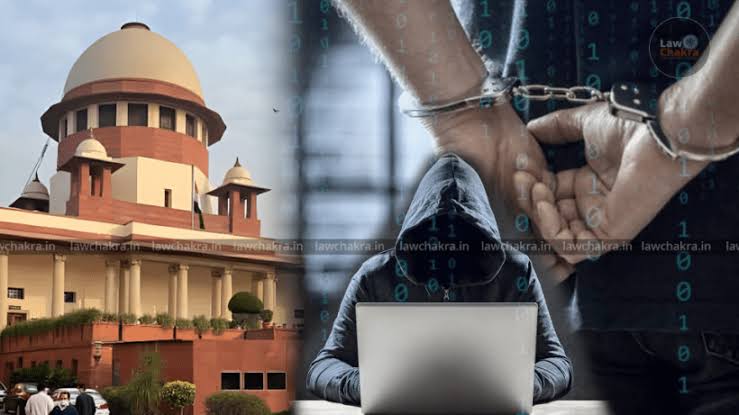
The Supreme Court has called for stronger accountability of banks in digital arrest fraud cases, observing that financial institutions should compensate victims for their entire financial losses when negligence or inadequate safeguards contribute to the fraud.
A bench comprising Chief Justice of India Surya Kant and Justices Joymalya Bagchi and V Mohana made the observations while examining measures to tackle the growing number of digital arrest scams across the country.
The court questioned why banks have established mechanisms to recover their own financial losses while customers who lose money through fraudulent transactions often struggle to obtain adequate compensation.
According to the bench, financial institutions cannot escape responsibility when failures in due diligence allow fraudsters to move substantial amounts through the banking system.
The court suggested that the RBI’s proposed regulatory framework should require banks to compensate victims with an amount not less than their actual financial loss wherever institutional negligence is established. It also called for criminal action against bank officials found to have colluded with fraudsters, emphasising that accountability must extend beyond compensation.

Why Is The RBI Being Asked To Strengthen Banking Rules?
The Reserve Bank of India is currently finalising revised Know Your Customer (KYC) guidelines aimed at strengthening the responsibilities of banks in preventing financial fraud. The revised framework is expected to be notified by November 30, 2026, with the Supreme Court expressing its intention to examine the proposed provisions before they are finalised.
During the proceedings, the bench also questioned whether existing compensation arrangements provide sufficient protection to customers who lose money through electronic banking fraud.
The court referred to provisions offering compensation of up to ₹25,000 for certain eligible losses not exceeding ₹50,000, raising concerns about whether such arrangements adequately address cases involving substantially larger amounts.
The proposed changes could therefore place greater responsibility on financial institutions to identify suspicious activity and prevent fraudulent transfers. However, the court’s observations do not mean that banks must automatically reimburse every cyber fraud victim. The proposed liability would depend on whether failures in banking safeguards or due diligence contributed to the loss.
For now, the final scope of these obligations will depend on the RBI’s revised guidelines and subsequent directions from the Supreme Court.
How Could Banks Identify And Stop Suspicious Transactions?
One of the key issues discussed by the Supreme Court was how banks could identify suspicious transactions before the money reaches fraudsters.
The bench suggested that financial institutions should develop systems to flag unusually large withdrawals or transfers that do not match an account holder’s previous transaction history.
For instance, if a customer who generally makes small transfers suddenly attempts to move several lakhs of rupees to unfamiliar accounts, the transaction could trigger an alert for additional verification. The court suggested that banks should temporarily withhold such transactions until their authenticity is established.
The bench also discussed involving local police in verifying suspicious transfers, particularly in cases involving senior citizens. Banks could contact the relevant police station to establish whether the account holder is making the transfer voluntarily or under pressure from fraudsters.
The idea is to introduce an additional layer of protection before large sums disappear into multiple beneficiary accounts. In digital arrest scams, victims are often kept under constant pressure and instructed to transfer money immediately, leaving little time to reconsider their decisions.
₹647 Crore Lost In Eight Months As Digital Arrest Complaints Mount
The scale of the problem was also spotlighted through figures submitted by the Indian Cybercrime Coordination Centre (I4C) during the Supreme Court proceedings. India recorded 21,928 digital arrest complaints involving financial losses exceeding ₹647 crore between January and August 2026.
The figures come against the backdrop of 1,23,672 complaints recorded in 2024 and another 58,239 in 2025. The numbers indicate the substantial volume of reported cases, although the figures for 2026 cover only the first eight months of the year.
Attorney General R Venkataramani informed the bench that an interdepartmental committee and the I4C were examining the problem. He also said the Ministry of Home Affairs was preparing a standard operating procedure (SOP) to address the question of bank liability in cyber fraud cases.
The proposed SOP and RBI guidelines could therefore become important components of a broader effort to establish how banks and other institutions should respond when customers are targeted by organised cybercriminals.
WhatsApp Asked To Suggest Measures As CBI Investigates Major Cases
The Supreme Court has also turned its attention to the role of messaging platforms in facilitating digital arrest scams. During the proceedings, the bench permitted WhatsApp to participate in the matter and asked the company to suggest additional measures that could help prevent such frauds.
Senior advocate Kapil Sibal informed the court that WhatsApp had independently banned approximately 9,400 accounts and was coordinating with the government on the issue. The bench also discussed whether technical safeguards could be introduced to interrupt prolonged video calls, which fraudsters frequently use to impersonate police officers and other government officials while keeping victims under constant surveillance.
Separately, investigative agencies, including the Central Bureau of Investigation (CBI), have been asked to provide progress reports on their investigations. The CBI had earlier been directed to investigate digital arrest fraud cases involving amounts of ₹10 crore or more.
The proceedings reflect the need for coordination between banks, technology platforms and law enforcement agencies to tackle scams that often involve multiple accounts, phone numbers and impersonated identities.
A 70-Year-Old Pune Resident Loses ₹2.10 Crore In Two Cyber Frauds
While the Supreme Court examines how banks and other institutions can prevent such crimes, a case reported from Pune illustrates the financial and personal damage these scams can cause. A 70-year-old man living alone in the city reportedly lost approximately ₹2.09 crore in two separate cyber frauds spread over ten months.
According to a complaint registered at the Pune City Cyber Police Station on October 30, the victim first lost around ₹1.07 crore to a fictitious investment scheme. Before he could recover from that loss, another group of fraudsters allegedly targeted him through a digital arrest operation, extracting a further ₹1.02 crore.
The two operations relied on very different methods. The first used the promise of extraordinary investment returns and the names of prominent public figures to establish credibility. The second relied on threats of arrest, impersonation of law enforcement officials and allegations of involvement in a money laundering investigation.
Together, the incidents show how cybercriminals can exploit both the desire to make money and the fear of losing one’s freedom.
Ambani And Tendulkar’s Names Used To Sell A Fake Investment Scheme
The first fraud began when the Pune resident came across an online advertisement promoting a purported venture capital firm.
The advertisement falsely associated industrialist Mukesh Ambani, former cricketer Sachin Tendulkar and former Union minister P. Chidambaram with the venture, apparently to make the investment opportunity appear credible.
The advertisement promised that an initial investment of ₹20,000 would grow to ₹80,000 within seven days. After contacting the number provided, the senior citizen was approached by an individual claiming to be a manager operating from the United Kingdom, who instructed him to transfer the money through an online payment application.
A week later, the caller sent him a fabricated financial statement showing that his original investment had quadrupled. Rather than allowing him to withdraw the supposed profits, the fraudster encouraged him to keep the money invested for higher returns and additional privileges.
The victim was subsequently persuaded to invest ₹5 lakh, with promises of a monthly bonus of $500. The operation gradually expanded its claims to include trading in cryptocurrency, gold and bronze, with the fraudsters repeatedly sharing fabricated account statements showing substantial gains.
Over approximately four months, the pensioner transferred around ₹1.07 crore into various accounts. The fraud came to light when he was asked to deposit another ₹13.5 lakh to process his withdrawals. By then, the apparent investment profits and account balances had been nothing more than fabricated figures.
A Second Gang Used Fake Police Identities To Extract Another ₹1.02 Crore
The victim’s ordeal did not end with the first fraud. In July 2026, he reportedly received another phone call from someone claiming to represent the Telecom Regulatory Authority of India (TRAI). The caller alleged that a mobile number registered in his name was connected to criminal activities.
The situation escalated when other individuals posing as officers of the Mumbai Police Crime Branch contacted him. They claimed that an ATM card issued in his name had been recovered among 247 cards allegedly linked to a money laundering investigation involving former Jet Airways chairman Naresh Goyal.
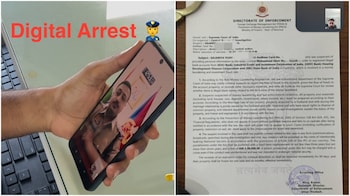
The fraudsters then threatened him with arrest and subjected him to what they described as a digital arrest. He was instructed not to discuss the matter with relatives or friends, while being told that he needed official clearance to avoid detention.
Under pressure, the senior citizen was asked to liquidate his bank balances and transfer the money into designated verification accounts, supposedly to establish that his funds were legitimate and would be returned after the investigation.
Over several weeks, he transferred approximately ₹1.02 crore into six mule bank accounts. The demands continued, with the callers allegedly pressuring him to sell his residential flat to arrange additional money and threatening Enforcement Directorate action if he disclosed the matter.
The fraud was eventually exposed when the victim stopped making payments, demanded his money back and discovered that the associated phone numbers had been disconnected.
The Pune City Cyber Police registered a complaint on October 30 and are investigating the transactions, beneficiary accounts and digital records to identify those responsible for the two operations.
Can Stronger Bank Safeguards Prevent Such Losses?
The Pune case illustrates why the Supreme Court’s intervention extends beyond asking people to be more careful while handling suspicious calls and messages. A single individual was able to transfer more than ₹2 crore across two separate fraud operations, including payments routed through multiple beneficiary accounts.
Whether stronger transaction monitoring could have prevented these losses is something that would depend on the details of the individual transactions. However, the court’s proposals raise an important question about whether banks should be doing more to identify unusual activity before money leaves customers’ accounts.
The proposed RBI framework could bring greater clarity to the responsibilities of financial institutions when their own failures contribute to cyber fraud.
For victims, the question is no longer just how to avoid being deceived, but also what protection and financial recourse they can expect when the banking system fails to detect suspicious transactions.