Three CHROs In 22 Months, A Company Secretary Gone Overnight, And List Of Visa Frauds: Why BLS International Must Be Scrutinised Internally?
BLS International Services Limited presents itself as the trusted face of governments at visa counters worldwide. Yet in late 2025 and 2026 a disturbing sequence of senior exits, a sexual-harassment FIR against a former CHRO, repeated applicant complaints of coercive charges, an MEA debarment later set aside only on procedural grounds, and a Spanish National Court investigation that named “processing platforms of the BLS type” have raised profound questions about internal control, workplace culture, and the safety of the very people whose documents and futures pass through its centres. For investors and for every applicant standing in those queues, the pattern is deeply concerning.

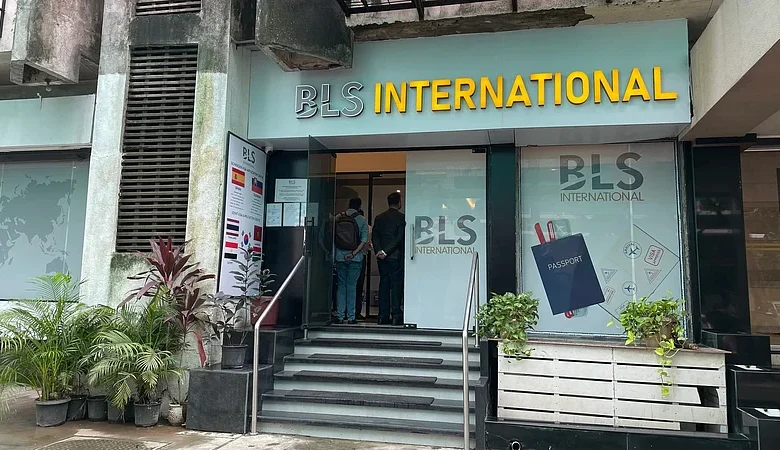
In the high-stakes world of visa and consular outsourcing, ordinary people place their most sensitive documents, their travel plans, their family reunions and their careers into the hands of a private company. That company is supposed to be the reliable, neutral interface between citizen and state. When the same company begins to lose its Company Secretary overnight, cycles through three Chief Human Resource Officers in roughly twenty-two months, sees an Independent Director’s long term expire in the same week as the compliance officer’s exit, and carries a public record of sexual-harassment allegations against a former CHRO, the public and investors have every reason to feel alarmed.
The pattern at BLS International Services Limited in 2025–2026 looks uncomfortably familiar to anyone who watched key personnel departures at Ola and other high-profile Indian companies signal deeper strains in internal control, culture and oversight. Resignations of statutory compliance officers and successive HR heads rarely occur in isolation. They are often the visible surface of unresolved tensions over process, accountability and the treatment of people — both employees and the public those employees serve.
The Immediate Shock: Company Secretary Dharak Mehta’s Same-Day Exit
On 13 November 2026, BLS International informed the stock exchanges that Dharak Mehta, its Company Secretary and Compliance Officer and a Key Managerial Personnel, had tendered his resignation effective from the close of business that very day. The reason given was “personal.” The resignation letter, signed by Mehta (ICSI membership FCS 12878), thanked the Board, Managing Director and senior management and contained no allegation of disagreement, governance failure or compliance concern.
Yet the timing and the immediacy matter. A Company Secretary is not an ordinary executive. Under the Companies Act and SEBI Listing Regulations the role is central to statutory compliance, board processes, exchange disclosures, corporate records and the continuous obligation to keep the market and regulators informed. Mehta had been the signatory on important filings. The FY 2025-26 annual report identified him as the person responsible for shareholder and BRSR-related queries. When the officer charged with ensuring the company meets its legal and disclosure duties leaves with effect from the same day, questions of succession, continuity of compliance and whether any unresolved regulatory or internal matter preceded the exit become legitimate and urgent.
Investors who remember sudden compliance-officer or key-managerial-personnel departures at other listed entities know that markets and regulators watch these moves closely. Visa applicants have an even more personal stake: the same compliance culture that governs disclosures to the stock exchange also shapes how rigorously the company polices its own staff at counters where passports, biometrics and personal data are handled every day.
Independent Director Sarthak Behuria’s Term Ends Three Days Earlier
Only three days before Mehta’s resignation, Independent Director Sarthak Behuria completed his second consecutive five-year term on 10 November 2026. This was not a resignation; the company stated the predetermined tenure simply expired. His memberships of the Audit Committee, Nomination and Remuneration Committee and Risk Management Committee ceased with him. The company promptly disclosed revised committee compositions effective 11 November 2026, with Atul Seksaria becoming Chairman of the Audit Committee and Manoj Joshi taking the chairs of the Nomination and Remuneration and Risk Management Committees.
Completion of a fixed term is routine. Yet the near-simultaneous exit of an independent director who had sat on the very committees charged with financial oversight, board appointments and risk, and of the Company Secretary responsible for compliance, creates a concentration of governance change that prudent investors cannot ignore. Independent directors are meant to provide external scrutiny. When their departure coincides with the loss of the compliance officer, the residual board’s capacity to maintain rigorous oversight becomes a material concern.
The Most Troubling Pattern: Three CHROs in Approximately Twenty-Two Months
The human-resources leadership of BLS International has been in near-constant flux.
Gautam Aggarwal ceased to be CHRO effective 7 August 2024.
Prashant Khullar was appointed the same day and resigned effective 31 October 2025, citing personal reasons that required his attention. His resignation letter, dated 21 July 2025, noted that he had been working to reimagine the HR function and would support the handover.
Ajit Hugh Dias joined as CHRO on or around 1 November 2025 and tendered his resignation on 1 May 2026, effective close of business 5 June 2026, again citing personal reasons after “careful thought” and an earlier conversation with the Chairman. His tenure lasted roughly seven months.
Three different individuals headed human resources in less than two years. Two successive resignations occurred within approximately seven months of the second appointment. In a company that operates visa application centres, consular service points and citizen-facing operations across dozens of countries, the CHRO is not a peripheral role. The position oversees recruitment, training, employee verification, grievance mechanisms, workplace conduct, labour compliance and the culture that determines how staff treat the public.
Repeated turnover at this level raises legitimate fears about continuity of workforce standards, the handling of internal complaints, and the consistency of discipline and accountability at the counters where applicants stand. When the person responsible for people policies keeps changing, the risk that policies themselves become inconsistent or poorly enforced grows. For investors this is a governance and operational-risk signal. For visa applicants it is a direct threat to the quality and fairness of the service they receive.
The Sexual-Harassment Allegation At BLS International That the Company Tried to Frame as Retaliation
The instability in the CHRO role cannot be examined without reference to the serious allegation that preceded Gautam Aggarwal’s departure. In May 2024 a former employee who had worked at BLS from May 2022 to 1 May 2024 lodged an FIR with Delhi Police alleging sexual harassment by CHRO Gautam Aggarwal. The complaint, reported by Economic Times HR World and other outlets, alleged inappropriate touching, invitations to personal spaces for drinks, and demands for physical relations over a period of months. Sections 354A and 509 of the IPC were invoked.
BLS International immediately characterised the allegations as “baseless and false” and “clearly retaliatory,” claiming the complainant and three team members were themselves the subject of a company-filed FIR for data theft, conspiracy and refusal to return company assets. The company thereby sought to invert the narrative: the woman who alleged harassment was painted as the wrongdoer.
Subsequent reporting indicated that the investigating agency later filed a closure/cancellation report which was accepted by the Mahila Court in April 2025 after the complainant recorded a statement of no objection. Whatever the final legal outcome, the episode itself is deeply troubling. A senior HR executive, the very person charged with protecting the workplace, was the subject of a formal sexual-harassment complaint.
The company’s first public response was not an independent investigation or a statement of zero tolerance; it was a counter-FIR and a claim of retaliation. For employees and for the public that relies on the company’s centres, this sequence raises the most basic question: can a workplace that responds to a harassment allegation primarily by attacking the complainant be trusted to police the conduct of its own staff toward vulnerable applicants?
The fact that the CHRO role continued to turn over after this episode only deepens the concern. Leadership instability in human resources after a high-profile harassment allegation is not a neutral administrative fact; it is a warning light about culture and internal control.
Earlier Controversies and the Pattern That Should Alarm Every Visa Applicant
The recent personnel changes do not occur in a vacuum. They sit atop a multi-year record of applicant complaints, regulatory action and investigative scrutiny that has repeatedly placed BLS International in the news for the wrong reasons.
In Canada, a 2025 CBC investigation documented numerous accounts of pressure to pay extra charges for courier services even when documents were collected in person, “premium” lounge or service add-ons that felt mandatory, and corrections for minor form or photo issues that generated additional fees. Former employees described internal incentives that encouraged staff to maximise charges. Online petitions gathered thousands of signatures.
The Better Business Bureau assigned an “F” rating. Members of the Indian diaspora reported feeling that their ability to renew documents or visit family depended on agreeing to additional payments. BLS maintained that it investigates concerns and operates in line with government standards. The volume and consistency of the complaints, however, remained high and publicly visible.
In October 2025 India’s own Ministry of External Affairs debarred BLS from participating in new tenders of the Ministry and of Indian missions abroad for two years, citing “allegations including court cases and complaints of applicants.” Shares fell sharply. The company challenged the order. In December 2025 the Delhi High Court set the debarment aside on procedural grounds, the show-cause notice had particularised fourteen complaints while the final order relied on a broader claim of hundreds without adequate opportunity to respond.
The court did not declare the complaints unfounded; it left the door open for a fresh, properly particularised process. The practical consequence was already felt: BLS lost the long-running Indian consular services contract in the UAE, a mandate it had held since 2011 for a community of roughly 4.3 million Indians, after the Indian Embassy awarded the work to another firm.
In August 2026 Spanish media reported that the Spanish National Court had expanded its investigation into an alleged visa-fraud network at the Spanish consulate in Algiers to include “processing platforms of the BLS type.” The probe, which followed earlier arrests, involved allegations that bribes sometimes reached €25,000 per family for irregular assistance with visas, residence or work permits. BLS International categorically rejected any involvement, stating there was no evidence of wrongdoing by the company or its employees, that its role is strictly administrative, and that all decisions on issuance or refusal rest solely with the diplomatic and consular authorities.
Earlier episodes, irregularities reported in Estonia’s e-residency programme, vendor payment disputes that reached the Delhi High Court, and a long trail of social-media and petition complaints about delays, unresponsiveness and coercive upselling, form a consistent backdrop. The company has repeatedly insisted that final visa decisions rest with the state and that it operates within the parameters set by client governments. That legal distinction is real. It does not erase the lived experience of applicants who report feeling pressured, overcharged or treated as revenue opportunities rather than citizens seeking a public service.
Why Investors and the Public Should Be Deeply Concerned
From an investor’s perspective the combination of rapid senior-level turnover in compliance and HR, a high-profile harassment allegation against a former CHRO, regulatory debarment (even if later set aside on process grounds), loss of a major long-term contract, and a foreign criminal investigation that named the company’s type of platform is a classic cluster of red flags.
Governance continuity is impaired when the Company Secretary leaves overnight and the independent-director and committee composition changes in the same window. Operational risk rises when the function responsible for people management has had three heads in under two years. Reputational risk compounds when the same company is repeatedly associated, whether fairly or unfairly in any individual case, with applicant exploitation and with probes into visa-related irregularity.
From the public’s and the visa applicant’s perspective the stakes are more immediate and more personal. The person standing at a BLS counter is often anxious, time-constrained, and dependent on a single authorised provider. When that provider has a documented history of complaints about forced extra charges, when its own HR leadership has been the subject of a sexual-harassment FIR, and when its senior compliance and people functions are in flux, the ordinary applicant has every right to fear that the culture inside the organisation may prioritise revenue extraction or internal protection over fairness, dignity and accurate processing.
Key managerial exits of the kind seen at BLS have, in other companies, later been recognised as early indicators of compromised internal control. The public record at BLS does not yet prove systemic fraud or a complete breakdown of governance. It does, however, establish a concentration of senior departures, a serious workplace allegation, regulatory friction with India’s own foreign ministry, and foreign investigative scrutiny that together demand far greater transparency and independent scrutiny than the company has so far provided.
Visa applicants cannot choose a different counter when the state has outsourced the interface. Investors can choose whether to look away from a pattern of instability and controversy. Both groups should be watching the next appointments, the next disclosures, the handling of any remaining grievances, and the company’s response to the Spanish investigation with the utmost seriousness. The people whose passports and futures pass across those desks deserve nothing less.