India, Spain, Estonia, Canada, UAE, Kuwait, Singapore, Egypt: Why Governments Are Dumping BLS International?
BLS International’s 2026 Exodus: How One Company Lost the Confidence of Multiple Indian Missions

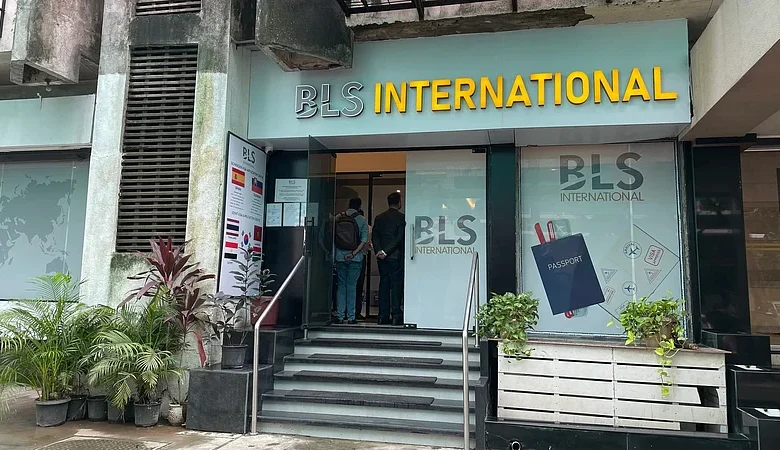
For more than a decade BLS International projected itself as the indispensable partner for governments seeking to outsource visa, passport and consular services. The company processed hundreds of millions of applications, listed itself on Indian stock exchanges, and secured contracts across dozens of countries. In 2026 that image suffered a series of high-profile blows.
The Indian Embassy in the UAE ended a partnership that had lasted since 2011 and awarded the work to Alhind Tours and Travels. In the same year diplomatic sources confirmed that BLS International also lost its mandates in Kuwait and Singapore. These were not isolated commercial decisions. They formed the most concentrated set of contract exits the company has faced in a single year and raised a larger question:
Why are multiple governments and missions simultaneously deciding that BLS International is no longer the right partner?
The UAE loss carries particular weight. The contract covered passport renewals, visa applications, OCI cards and related services for a community of roughly 4.3 million Indians — one of the largest concentrations of Indian nationals outside the country. BLS International had held the work since 2011. 15 years later the Embassy of India in Abu Dhabi replaced it. A diplomatic source familiar with the process offered a blunt assessment: the company received the contract in 2011, yet “in 15 years they did not upgrade services and did not modernise the system.”
That single observation goes to the heart of the critique now circulating among applicants and mission officials. While digital identity tools, online appointment systems and customer-service expectations advanced rapidly across the world, the experience many applicants encountered at BLS International centres remained largely unchanged — long queues, limited appointment slots, opaque optional fees and slow resolution of routine deficiencies.
The simultaneous loss of Kuwait and Singapore in the same year amplifies the signal. Public details on those two markets remain thinner than the UAE announcement, yet diplomatic sources group all three exits together as part of a broader pressure on BLS International’s Indian-mission outsourcing portfolio. When three significant markets depart within months of one another, the explanation cannot be reduced to routine retendering or a single competitor’s lower bid. Something in the service model, the technology stack or the applicant experience had become unacceptable to the missions that had previously relied on the company.
These 2026 exits did not occur in a vacuum. They followed a sequence of earlier setbacks that had already damaged the company’s reputation. In 2023 Estonia terminated its e-Residency arrangement with BLS International after the Police and Border Guard Board identified unauthorised issuance of documents, including activity in Bangkok. Authorities described the breach as serious. BLS International responded that the problem involved individual employees, that disciplinary action had been taken, and that the conduct was not systemic. The contract still ended.
In Canada, where BLS International became the exclusive provider of Indian consular services, a 2025 CBC investigation documented a pattern of complaints: applicants pressured to pay for courier services they did not need, “premium” add-ons that felt mandatory, and staff incentives that allegedly encouraged upselling. Former employees described a culture focused on maximising charges. Online petitions gathered thousands of signatures. The Better Business Bureau assigned an “F” rating. No full contract termination followed, but the volume of public grievance remained high.
In October 2025 India’s own Ministry of External Affairs issued a two-year debarment preventing BLS International from bidding for new MEA and Indian-mission tenders. The order cited court cases and applicant complaints. Existing contracts were left untouched. BLS International challenged the decision; the Delhi High Court later set the debarment aside.
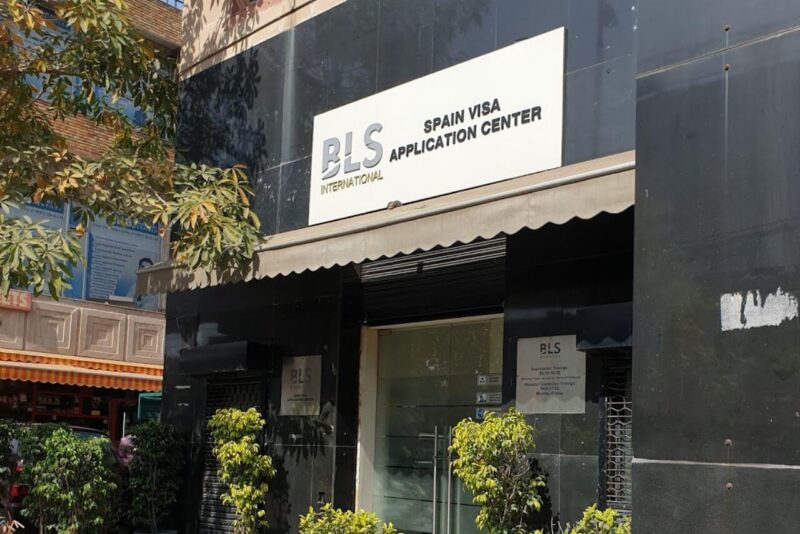
The judicial reversal restored formal eligibility, yet the original order left a public record of official dissatisfaction with the company’s track record. In August 2026 Spanish investigators examining an alleged visa-for-cash network at the Spanish Consulate in Algiers expanded their inquiry to include processing platforms and named BLS International. The company issued a categorical denial, stating there was no evidence of wrongdoing by it or its employees and that its role was strictly administrative. Shares fell sharply on the news. No contract has been cancelled, but the investigation added another layer of reputational pressure.
Taken together, the pattern is difficult to ignore. Estonia represents a clear government termination linked to documented process breaches. Canada represents sustained consumer and media criticism without formal contract loss. The MEA debarment, even though later reversed, represented formal regulatory action by the Indian government. The 2026 cluster of UAE, Kuwait and Singapore represents the most significant commercial setback — the simultaneous loss of three Indian-mission mandates. Each episode involves different legal thresholds and different levels of proof. What unites them is a recurring theme: applicants and missions expressing frustration with service quality of BLS International, lack of modernisation, non- transparency of fees, or non-adherence to expected protocols.
The commercial consequences are real. The UAE contract alone generated substantial revenue and visibility. Losing it, together with Kuwait and Singapore, reduces BLS International’s footprint in high-volume diaspora markets and weakens its claim to be the default partner for Indian missions. The company continues to hold contracts with numerous other governments and has announced new wins in other geographies. Its financial reports still show growth in the visa and consular segment. Those facts matter. They do not erase the simultaneous exits in three important markets or the earlier terminations and investigations that preceded them.

Moreover, in 2023, The Embassy of Egypt has denied that a contract was signed between the embassy and BLS International Services following the latter’s public claim that it had become the ‘preferred visa outsourcing partner’ for the Egyptian embassy in India.
BLS International has consistently maintained that it operates under the guidelines of the governments it serves, that final decisions on visas and consular documents rest with diplomatic authorities, and that it investigates legitimate concerns. Those statements are part of the public record and deserve to be noted. They do not, however, answer the operational critique that has now been voiced by diplomatic sources in the UAE: after 15 years the system had not been sufficiently modernised and the applicant experience had not kept pace with expectations. When that assessment is repeated across multiple markets in a short period, it ceases to look like an isolated commercial preference and begins to look like a structural problem.
The deeper public-interest question is whether the outsourcing model itself has been allowed to prioritise volume and revenue over continuous improvement. When a single contractor becomes the exclusive gateway between citizens and their embassy, any failure to invest in technology, training and transparency imposes costs on ordinary applicants — extra fees, lost time, delayed travel, and the stress of navigating a system that feels opaque. Governments that outsource these services retain ultimate responsibility for the quality of the experience. The 2026 exits suggest that at least some missions have decided the previous arrangement no longer met that responsibility.

BLS International still processes large volumes of applications worldwide and continues to bid for new work. The simultaneous loss of UAE, Kuwait and Singapore, coming after Estonia’s termination, Canada’s wave of complaints, the temporary MEA debarment and the Spanish investigation, has nevertheless altered the company’s trajectory. What was once presented as an expanding global footprint now includes a visible list of markets that have chosen to walk away. For a company whose business depends on the trust of governments and the patience of applicants, that list is the most consequential development of 2026.