Gurugram Real Estate Group Under Scanner Over Alleged International Sex Racket, SIT Probes Foreign Women, Townships And Officials Nexus
What happens when allegations of an international sex racket lead investigators to the doors of a real estate business? An alleged international sex racket operating through real estate properties is now under the scanner in Gurugram. But the allegations go beyond prostitution, with claims of foreign women being exploited and sexual services allegedly used to influence government officials.

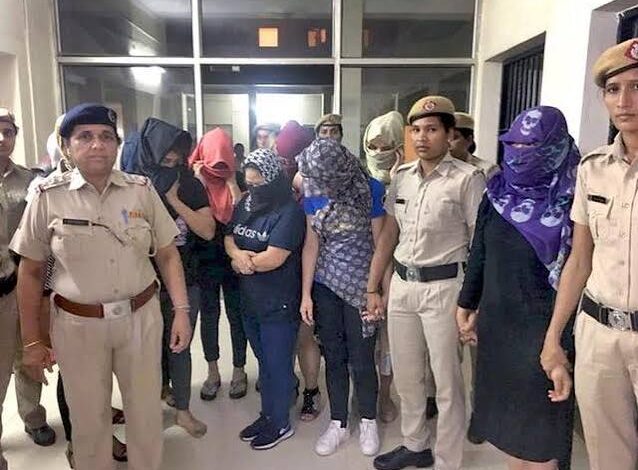
Gurugram Police has constituted a Special Investigation Team (SIT) to investigate allegations of an international sex racket allegedly operating through properties linked to a private real estate company in the city. The investigation follows a complaint filed by Vanshni Foundation in September 2026, naming nine individuals, including a company director and eight associates, for their alleged involvement in the operation.
The company, however, has not been publicly identified in the reports, which have described it only as a private real estate firm, while the identity of its director has also not been disclosed.
According to reports, the complaint alleges that the network involved bringing foreign women into India and facilitating their exploitation through residential properties, townships and other establishments in Gurugram.
The allegations have prompted police to issue notices to all nine accused, seeking their response as part of the investigation.
The SIT is being led by ACP (Udyog) Yashwant. Police have indicated that the allegations are being examined and that the investigation will establish the facts surrounding the alleged operation. No arrests have been reported in connection with this particular investigation so far, and the allegations against the individuals named in the complaint remain unproven.
The case has also drawn attention because of the alleged involvement of a real estate businessman and his associates, with the complaint pointing towards a possible network operating across multiple properties. The investigation is expected to examine the role of the individuals named, the use of the properties in question and the information reportedly recovered during earlier police investigations.
Women Allegedly Brought From Russia, Tunisia And Dubai, NGO Flags Possible International Trafficking Network
At the centre of the complaint is an alleged international network through which women from countries including Russia, Tunisia and Dubai were reportedly brought into India and accommodated at properties in Gurugram. The NGO has alleged that these women were subsequently pushed into prostitution, with residential societies and other establishments allegedly being used to facilitate the activity.
According to the complaint, the operation was not restricted to a single location or establishment. The allegations point towards the use of multiple properties, including residential accommodation and other premises associated with the real estate businessman and his associates. The NGO has claimed that the network involved intermediaries who allegedly facilitated the movement and accommodation of women brought into the country.
The complaint has also raised concerns about possible coercion and the alleged involvement of minors, making the allegations particularly serious. However, the available reports do not establish whether minors have been identified or rescued in connection with the present investigation.
The NGO has further alleged that information recovered from mobile phones and laptops during earlier police investigations could provide evidence of a wider network. These devices reportedly contained information relating to the movement of women, accommodation arrangements and the circulation of photographs.
The SIT will now have to establish whether this material points towards an organised trafficking operation, identify the individuals allegedly involved and determine the extent of the network’s activities.
How Could An Alleged Trafficking Network Operate Behind The Doors Of Legitimate Businesses?
Perhaps one of the most disturbing aspects of the allegations is the possibility that properties associated with an established real estate business were being used to facilitate organised prostitution and the exploitation of women. If the allegations are substantiated, the investigation will have to examine how residential townships, hotels and other commercial establishments could allegedly become part of such an operation.
Real estate properties are not anonymous spaces operating outside the reach of regulation. They have ownership structures, management teams, security arrangements, maintenance staff and administrative systems.
Residential societies also maintain records of occupancy, visitors and access to common areas. Hotels and other accommodation providers are subject to their own regulatory requirements.
The question, therefore, is not simply whether women were accommodated at these properties, but who arranged their stay, who controlled access to the premises and whether anyone responsible for managing these establishments knew what was allegedly taking place.
If the allegations point towards a coordinated operation involving multiple establishments, the question of how such an arrangement functioned becomes unavoidable. Who facilitated the movement of women between locations? Who handled accommodation and payments? Were there repeated patterns that could have alerted property managers or local authorities?
The Government Official’s Angle Raises A Far More Uncomfortable Question
Among the allegations made by the NGO, the purported use of sexual services to influence government officials is perhaps the most consequential. If established, this would take the investigation beyond an alleged prostitution and trafficking network and raise serious questions about the possible exploitation of positions of authority.
The complaint reportedly alleges that sexual services were arranged to influence officials, with photographs and other digital material also featuring in the account of the alleged operation.
This raises questions about the identities of the individuals involved, the purpose of these arrangements and whether any form of favour, protection or official assistance was allegedly exchanged.
The possibility of such a connection cannot be treated as a peripheral detail. If people in positions of authority were approached, compromised or otherwise involved, investigators would have to examine whether the alleged network was operating with the assistance of intermediaries or benefiting from an environment in which scrutiny could be avoided.
The seriousness of the allegation cannot be ignored and there is also a larger question of accountability.
—If an organised operation involving the exploitation of foreign women was allegedly functioning across multiple properties, did anyone in a position to intervene have prior knowledge of it?
—Were complaints or warning signs overlooked? And if the alleged use of sexual services to influence officials has any evidentiary basis, how far does that connection extend?
These are not questions that can be answered through notices issued to nine individuals alone. They require an examination of the people who may have facilitated the alleged operation, those who may have benefited from it and whether anyone entrusted with public responsibility failed in their duty.
Digital Evidence And Earlier Investigations Raise Questions About What Authorities Knew
The reported recovery of information from mobile phones and laptops during the earlier police investigations could prove to be one of the most important aspects of the present case.
According to the NGO’s complaint, the devices allegedly contained information relating to the movement of women, accommodation arrangements and the circulation of photographs.
If verified, this material could help investigators reconstruct the alleged network, identify intermediaries and establish whether the activities extended beyond individual incidents.
But it also raises an uncomfortable question: how much did investigators already know, and what action followed the earlier discoveries?
The two cases registered at Sohna City police station in 2023 and 2024 are now particularly relevant. If digital material recovered during those investigations contained information pointing towards a wider operation, investigators will need to establish whether those leads were pursued, whether the devices underwent forensic examination and whether any connections between the individuals involved were identified.
Digital evidence can reveal far more than a collection of names and photographs. Call records, messaging histories, location data, payment trails and communications between intermediaries can potentially establish how people were brought into the country, where they were accommodated and who coordinated their movement.
However, the actual contents of the devices, the forensic findings and their evidentiary value have not been publicly established yet.
There is also a question of whether the earlier cases were examined in isolation or whether investigators considered the possibility of a larger organised operation. If the present complaint has brought previously unexplored connections to light, the SIT will have to determine why those links were not established earlier.
The issue is not whether every earlier investigation should automatically have uncovered the allegations now being examined. It is whether potentially relevant evidence was properly examined, whether leads were followed and whether the current investigation can establish connections that may have escaped earlier scrutiny.
Ultimately, the value of the digital evidence will depend on whether it can be independently verified and connected to specific individuals and criminal acts. The SIT must establish what the devices actually reveal rather than allow allegations about their contents to become a substitute for forensic findings.
Foreign Women, Immigration Monitoring And The Accountability Gap In Gurugram
The alleged movement of women from Russia, Tunisia and Dubai into India also brings the country’s immigration and foreigner-accommodation monitoring systems into focus. The complaint raises questions about how the women were brought into the country, who arranged their travel and accommodation, and whether the applicable immigration and reporting requirements were followed.
Under the Foreigners Act and the prescribed registration and reporting framework, hotels and other accommodation providers have obligations relating to foreign nationals staying at their premises. The system is intended to ensure that authorities have access to information about the presence and accommodation of foreign visitors.
Yet the latest allegations raise questions about whether such safeguards were adequate to identify suspicious patterns involving multiple properties and foreign nationals.
Gurugram has previously witnessed police action over alleged violations involving foreigner accommodation. In August 2024, police registered a case against 52 flat owners at Central Park Society on Sohna Road over alleged non-compliance with reporting requirements for foreign nationals staying in their properties.
In another incident in May 2024, a joint team of the Chief Minister’s flying squad and Gurugram Police raided Hotel Rao Estate in Sector 57, arresting 10 people in connection with an alleged prostitution racket. The police also reported visa-related violations involving two foreign women from Bangladesh.
These incidents are separate from the present investigation, and there is no established evidence linking the individuals involved in those cases to the current accused. However, they demonstrate that questions surrounding foreigner accommodation, compliance and alleged prostitution have surfaced in Gurugram before.
The larger issue is whether enforcement mechanisms are capable of identifying organised exploitation before it becomes the subject of a police raid or an NGO complaint. Recording the presence of foreign nationals is one part of the responsibility. Identifying situations in which people may be coerced, trafficked or exploited requires a much closer examination of the circumstances in which they are being accommodated and the individuals controlling those arrangements.
If the latest allegations are substantiated, investigators will have to determine how the women entered India, whether their travel and accommodation arrangements were legitimate, who facilitated their movement and whether any violations were ignored.
The presence of foreign nationals should never itself be treated as evidence of criminal activity. The focus must remain on those who may have facilitated exploitation and those who may have profited from it.
What The SIT Must Establish As Gurugram Sex Racket Investigation Widens
The investigation now faces a series of questions that extend well beyond the nine individuals named in the NGO’s complaint. At its core is the need to establish whether an organised international trafficking network existed, how women were allegedly brought into India, who facilitated their accommodation and whether properties associated with the real estate businessman were knowingly used to facilitate their exploitation.
The SIT will also have to examine the digital evidence reportedly recovered during the earlier investigations, establish whether the 2023 and 2024 cases have any direct connection with the present allegations and identify the intermediaries who may have coordinated the movement and accommodation of women. The alleged involvement of government officials, if supported by evidence, will require a separate and particularly rigorous examination.
The financial trail will be equally important. Investigators will need to establish who received payments, how money moved between individuals and establishments, and whether financial transactions can corroborate the alleged operation. Property ownership, management arrangements, accommodation records and communications could all help establish whether the premises were used knowingly or whether the allegations concern individuals acting independently.
For now, the allegations remain under investigation. The constitution of an SIT and the issuance of notices mark the beginning of a more detailed inquiry, not the conclusion of one.
But the questions raised by the complaint are too serious to be addressed through a narrow investigation into a handful of individuals. If an organised network was operating across multiple properties, investigators must establish who built it, who facilitated it, who benefited from it and whether anyone in a position of authority helped it escape scrutiny.
The real test will be whether the investigation follows the evidence wherever it leads, including into the business relationships, financial arrangements and possible official connections surrounding the alleged operation. Anything less would leave the most consequential questions unanswered.