India Investigates Fraudulent Court Orders Used To Block 129 Betting Websites
Indian authorities are investigating how forged court orders were used to block 129 betting websites, exposing serious gaps in document verification and raising concerns about the possibility of criminals manipulating judicial and government procedures to restrict legitimate online access.

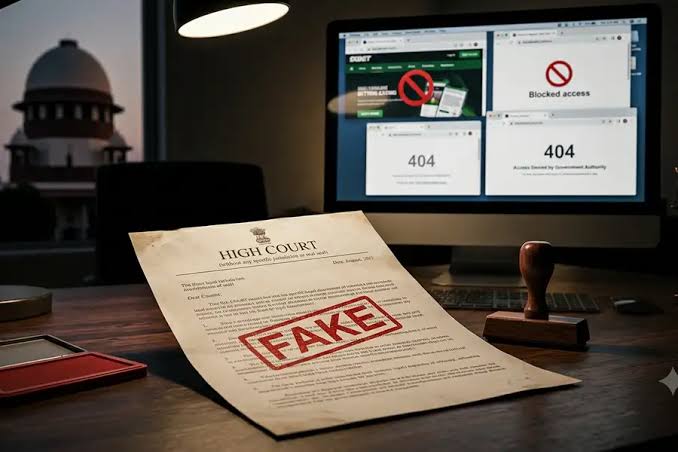
Indian authorities have launched an investigation into the use of forged court orders to block 129 betting websites, after discovering that fabricated judicial documents had allegedly been submitted to government officials in the names of two High Courts.
The case has raised serious questions about the verification of judicial instructions and the possibility of criminals exploiting administrative procedures to restrict access to websites without legitimate legal authority.
The Ministry of Communications is examining how the fraudulent documents passed through the official approval process, while police have sought government records and digital activity logs to trace those responsible.
The alleged fraud involved individuals impersonating lawyers and submitting fabricated court orders to obtain website-blocking directions, prompting an investigation into the authenticity checks followed by government departments before implementing such restrictions.
How Were Fake Court Orders Used to Block 129 Websites?
The alleged fraud involved fabricated judicial orders purportedly issued by the Rajasthan High Court and the Allahabad High Court.
According to the findings, individuals posing as lawyers allegedly emailed the documents to government officials, requesting that restrictions be imposed on websites described as illegal betting platforms.
Following these communications, an arm of the telecommunications ministry issued directions to internet service providers to block access to 129 websites. The fraudulent documents were reportedly designed to resemble authentic judicial orders, allowing them to pass through the administrative process without immediately raising suspicion.
One of the purported orders attributed to the Allahabad High Court contained several elements intended to make it appear legitimate, including a fabricated court logo, an official-looking seal and a fake QR code. The document was presented as a genuine judicial direction, lending credibility to the request for website restrictions.
However, the alleged forgery came to light after the Allahabad High Court examined the document and confirmed that it had not issued the order. The discovery exposed the possibility that government officials had acted on judicial instructions that were never authorised by the court in the first place.
The incident has subsequently raised questions about the extent of verification undertaken before website-blocking directions are implemented. While court orders are an important basis for administrative and regulatory action, the case has highlighted how easily fabricated documents can potentially exploit procedures that rely on the authenticity of communications received from external parties.
Government officials are now examining the existing authentication mechanisms and whether additional checks are necessary to ensure that judicial documents are verified directly with the issuing courts before any restrictions are imposed.
What Has The Government And Police Investigation Revealed?
The Ministry of Communications has initiated an internal review of its website-blocking procedures following the discovery of the forged judicial documents. The review is expected to examine how the documents were received, processed and subsequently converted into blocking instructions for internet service providers.
A government official familiar with the matter said the ministry was considering introducing additional safeguards to prevent fraudulent court orders from being accepted in the future. The focus is on strengthening the verification process and identifying gaps that may have allowed the fabricated documents to pass through the existing administrative system.
As part of the corrective measures, the ministry plans to withdraw the blocking directions issued on the basis of the forged orders. It also intends to remove the associated documents from its official website, where they had been made available as part of the administrative record.
Meanwhile, police in Uttar Pradesh have opened a criminal investigation into the alleged forgery and impersonation. Investigators are attempting to establish the identities of the individuals who submitted the documents, including tracing the email addresses used to communicate with government officials.
Ghanshyam Yadav, a cybercrime official, said investigators had sought details of the ministry’s content management system and digital activity logs to understand how the fraudulent instructions entered the official process and were subsequently acted upon.
Police have also submitted 24 questions to the ministry as part of the investigation. The information requested is expected to help investigators reconstruct the sequence of events, establish how the documents were handled at different stages and identify the individuals who may have been involved in preparing and circulating the forged orders.
The digital records could prove particularly important in establishing the origins of the communications, the accounts used to submit the documents and the officials or departments that processed them. Investigators are also examining the administrative trail to determine whether the documents were subjected to any independent verification before the blocking instructions were issued.
The ministry’s internal review and the police investigation are proceeding against the backdrop of growing concerns about the misuse of digital communications and fabricated legal documents to influence official decisions.
Why Does The Case Raise Concerns About Website Blocking?
The incident has exposed a potential vulnerability in the administrative mechanisms used to enforce court-directed website restrictions. While blocking orders are intended to implement legitimate legal and regulatory requirements, the alleged use of forged judicial documents demonstrates how the same procedures could potentially be manipulated to restrict access to websites without proper judicial authorisation.
The implications extend beyond the 129 betting websites involved in the investigation. If fabricated court orders can be submitted and accepted without adequate authentication, the same method could potentially be used to target legitimate businesses, digital platforms, news websites or other online services.
Such a possibility raises questions about accountability and the safeguards that should exist before access to online platforms is restricted. Website-blocking directions can have significant consequences for businesses, users and digital service providers. Ensuring that such instructions originate from legitimate judicial or government authorities is therefore essential to preventing arbitrary or fraudulent restrictions.
The case also comes amid wider concerns about the growing use of forged and AI-generated legal documents. Previous instances involving fabricated judgments, misleading legal citations and documents presented as authentic judicial material have highlighted the difficulties institutions face in verifying the information submitted to them.
The emergence of AI tools has further complicated the issue by making it easier to produce convincing-looking documents, replicate official formats and generate material that may appear credible at first glance. Although the present investigation concerns allegedly forged court orders, it has added to broader concerns about the ability of individuals to manipulate institutional processes using fabricated digital material.
Political leaders and activists have consequently called for stronger verification mechanisms before website-blocking instructions are implemented. The emphasis is on ensuring that government departments independently authenticate judicial directions rather than relying solely on documents or communications submitted by individuals claiming to represent the courts.
For the government, the immediate challenge is to establish how the forged orders were accepted, identify those responsible and determine whether the existing procedures need to be overhauled.
As of Thursday, correspondence relating to the alleged fraud and copies of the forged orders remained accessible online. The investigation is continuing to establish who prepared and circulated the documents, how they were processed by government officials and why the purported judicial directions were accepted as genuine.
The episode has brought an important administrative question into focus: if a fabricated court order can trigger the blocking of 129 websites, what safeguards are in place to ensure that the next such document does not result in an even wider misuse of government authority?