
The TVS Empire At War As Lakshmi Venu Demands Her Share, Challenging The Family Settlement That Favoured Her Brother Sudarshan
India's TVS empire is facing an increasingly bitter family succession battle, with Lakshmi Venu now demanding a formal partition of the family's assets. Her challenge to the settlement backed by her father and brother has brought questions of inheritance, ownership and a multibillion-rupee business empire into focus.

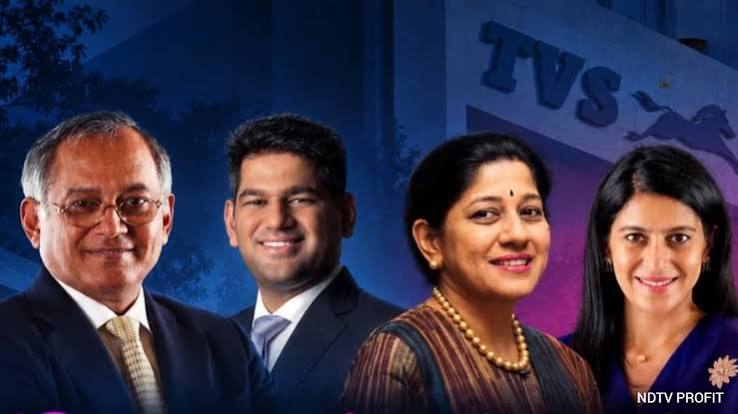
The succession dispute within one of India’s most prominent business families has taken a fresh turn, with Lakshmi Venu formally demanding a partition of the family assets held within her father Venu Srinivasan’s branch of the TVS Group.
In a legal notice issued on November 16, Lakshmi called upon her father to discharge his fiduciary responsibilities and facilitate what she described as a fair and lawful division of the family’s joint assets.
The demand brings the simmering disagreement over ownership, succession and the distribution of the TVS family fortune into sharper focus. Lakshmi has asserted that she is entitled to an equal share in the joint family property under the Hindu Succession Act, 1956, as amended in 2005, and has alleged that beneficial interests in the family’s businesses have been concentrated in favour of her younger brother, Sudarshan Venu, to the exclusion of her own legal rights.
The assets covered by the partition demand include family interests held through the VS Trust and other holding companies and structures, encompassing interests in TVS Holdings, TVS Motor Company, TVS Credit Services and Sundaram-Clayton. Lakshmi maintains that the broader division of the TVS family businesses in 2020 did not amount to a completed partition of the assets within her immediate family, and that management control cannot be treated as exclusive economic ownership.
The development has acquired further significance with her mother, Mallika Srinivasan, publicly backing her daughter’s demand. Mallika has said that a son and daughter are equal in every respect and that Lakshmi has a legitimate claim to the family assets, not unequal to that of Sudarshan.
The position from Venu Srinivasan’s camp, however, is different. It maintains that an arrangement formalised through a memorandum of understanding in March 2024 had already provided for a fair and equitable separation within the family. Venu had not responded to the latest partition notice as of November 17, according to reports.
The dispute, therefore, is no longer merely about the allocation of business responsibilities between the two siblings. At its heart is a more fundamental disagreement over who owns the family’s economic interests, whether an earlier settlement adequately addressed those rights and whether the existing arrangements can withstand a legal challenge.
Four Members, One Business Dynasty And A Growing Succession Battle
At the centre of the dispute are four members of the Venu Srinivasan family, representing the third and fourth generations of the business dynasty established by T V Sundaram Iyengar. Their differences have brought questions of succession and economic ownership within one of India’s established industrial families into public view.
Venu Srinivasan, the family patriarch and Chairman Emeritus of TVS Motor Company, has been one of the prominent figures behind the group’s automotive business.
His wife, Mallika Srinivasan, heads Tractors and Farm Equipment Limited (TAFE), one of India’s major tractor manufacturers. She has also emerged as an important voice in the present dispute, publicly supporting Lakshmi’s demand for an equitable division of the family wealth.
Their daughter, Lakshmi Venu, is the Managing Director of Sundaram-Clayton and Vice-Chairperson of TAFE. She was previously a director on the board of TVS Motor Company, having joined in September 2014, but stepped down in August 2024 following the family’s memorandum of understanding.
Her brother, Sudarshan Venu, occupies a prominent position in the group’s automotive business as Chairman and Managing Director of TVS Motor Company. He is also the Managing Director of TVS Holdings, the holding company headed by his father.
The siblings have consequently emerged as the two principal figures in the disagreement over the family’s business interests. While Lakshmi is associated with Sundaram-Clayton, Sudarshan leads the much larger two-wheeler business, TVS Motor, and occupies a central position in the group’s holding structure.
The distinction between their respective management positions, however, is precisely what the current dispute seeks to examine. Lakshmi argues that being assigned responsibility for running a particular business cannot be treated as a substitute for her rightful economic share in the family’s assets. Her father’s camp, meanwhile, maintains that the division of business interests was structured after considering the circumstances and obligations prevailing at the time.
What began as an internal family arrangement has thus developed into a dispute involving four family members, multiple corporate entities, trusts and competing interpretations of ownership. The next question is how the larger TVS family empire was divided in the first place, and why that settlement did not resolve the differences within the Venu Srinivasan household.

How The 115-Year-Old TVS Empire Was Divided In 2020
To understand the current dispute, it is necessary to go back to December 2020, when the 115-year-old TVS industrial group underwent a major family restructuring. The arrangement divided business interests among the different branches of the family of founder T V Sundaram Iyengar, bringing an end to a long-standing structure in which multiple family branches were associated with different businesses under the wider TVS umbrella.
The restructuring was based on a family agreement dated December 10, 2020, which recorded an understanding reached among the members of the larger TVS family. The exercise involved valuing the businesses and assets, distributing them among the respective family branches on mutually agreed terms and compensating members as part of the settlement. The arrangement subsequently took effect from February 4, 2022.
The Venu Srinivasan branch emerged with control over several important businesses, including TVS Holdings, TVS Motor Company, TVS Credit Services and Sundaram-Clayton.
The division was intended to provide greater clarity over the businesses that each family branch would manage and develop, reducing overlapping interests across the sprawling industrial group.
However, the 2020 restructuring of the larger TVS family is now at the centre of a separate disagreement within the Venu Srinivasan household. Lakshmi Venu maintains that the division among the different branches of the TVS family did not amount to a partition of the assets belonging to her immediate family.
According to her, the settlement of the larger family businesses cannot be treated as proof that her own economic interests were subsequently divided or settled.
This distinction is important because the current dispute is not about reopening the entire 2020 TVS family arrangement. Instead, it concerns how the assets and business interests allocated to the Venu Srinivasan branch were subsequently distributed between his two children, Lakshmi and Sudarshan.
The disagreement has also brought attention to the difference between assigning responsibility for running a business and determining who ultimately owns its economic value. While the larger family restructuring established separate business interests among the branches, Lakshmi argues that the ownership question within her immediate family remained unresolved.
The VS Trust And The March 2024 MoU That Failed To Settle The Dispute
The process of separating business interests between Lakshmi and Sudarshan continued after the 2020 family arrangement, with the creation of the VS Trust in 2021 becoming an important part of the restructuring.
The trust subsequently emerged as a significant holding vehicle for the family’s interests in companies including TVS Holdings and Sundaram-Clayton, placing its ownership and control structure at the centre of the present disagreement.
The next major development came on March 20, 2024, when Venu Srinivasan, Mallika Srinivasan, Lakshmi Venu and Sudarshan Venu executed a family memorandum of understanding. The agreement was formally disclosed to TVS Holdings on March 22, 2024, through a regulatory filing by Venu Srinivasan. Its execution was completed on March 21.
According to the filing, the MoU was an extension of the broader family settlement based on the December 2020 Memorandum of Family Agreement. It recorded additional understandings among the four family members, including arrangements concerning the use of the TVS brand and the future conduct of their respective businesses.
One of the significant provisions concerned the use of TVS trademarks. Sudarshan Venu agreed that he and entities controlled by him would not use certain trademarks, including the TVS name, in specified businesses involving the design, manufacture and supply of aluminium and magnesium die-cast and machined castings. These restrictions were relevant to the business interests associated with Lakshmi.
The agreement also became the point at which the siblings’ professional positions within the group became more clearly separated. Sudarshan continued to lead TVS Motor and TVS Holdings, while Lakshmi remained associated with Sundaram-Clayton. She subsequently stepped down from the TVS Motor board on August 6, 2024, having served as a director since September 2014.
However, the significance of the March 2024 MoU is now being interpreted very differently by the two sides.
Venu Srinivasan has maintained that the separation was about both ownership and control, and that the arrangement was undertaken openly, after consultation with family members. He has said that the businesses and assets belonged to him and that he had the liberty to deal with them while considering the interests of his family and the businesses.
According to his position, Lakshmi was entrusted with taking forward Sundaram-Clayton, while Sudarshan was given responsibility for expanding the motor business. Both, he has maintained, received a fair share on which they were free to build.
Lakshmi and Mallika, however, have disputed the claim that the 2024 agreement settled the family’s economic interests. Their position is that the MoU primarily dealt with the use of the TVS brand, trademark arrangements and non-compete obligations, rather than establishing a transparent, valuation-based division of the family’s wealth. They maintain that no final economic settlement or partition of the assets within the immediate family was completed.
The disagreement over what the 2024 agreement actually accomplished has consequently become one of the central issues in the succession dispute. While Venu considers the separation implemented and concluded, Lakshmi maintains that the question of her rightful economic share remains unresolved.

Inside The VS Trust – Who Actually Controls The TVS Family Empire?
At the centre of the TVS succession dispute is the VS Trust, a holding structure through which a substantial portion of the Venu Srinivasan family’s business interests is held. While Lakshmi Venu and Sudarshan Venu occupy leadership positions in different businesses, the underlying ownership and voting arrangements reveal a more complicated picture of how control over the family empire is exercised.
Venu Srinivasan is the sole trustee of the VS Trust, which holds a 66.55% stake in TVS Holdings, according to publicly available shareholding disclosures. TVS Holdings, in turn, holds a substantial controlling interest in TVS Motor Company. As of September 2026, its holding in the two-wheeler manufacturer stood at 50.26%, according to shareholding data reported by Business Today.
The trust also holds a 46.83% stake in Sundaram-Clayton, the listed auto components manufacturer headed by Lakshmi. This creates an interesting ownership arrangement: although Lakshmi manages Sundaram-Clayton, the VS Trust, controlled by her father in his capacity as trustee, holds the largest disclosed stake in the company.
The distinction becomes even more significant when the individual shareholdings of the family members are examined. Mallika Srinivasan and Lakshmi Venu hold relatively small direct stakes in TVS Holdings, at approximately 0.29% and 0.82%, respectively. Their direct shareholdings in the listed businesses are separate from the interests held through the family trust.
Sudarshan, meanwhile, heads TVS Holdings and TVS Motor, placing him at the operational centre of the corporate structure through which the family’s automotive and financial services businesses are controlled.
This is where the dispute over beneficial ownership becomes particularly important. Venu’s position as the sole trustee gives him control over the trust’s voting rights, while the businesses themselves are held through separate corporate entities. The economic interests of the family members, their direct shareholdings and the voting control exercised through the trust are therefore not necessarily identical.
For Lakshmi, the distinction between management responsibilities and ownership is central to her demand for partition. She maintains that assigning her responsibility for Sundaram-Clayton does not extinguish her rights in the wider family assets. Her argument also challenges the suggestion that the corporate arrangements already implemented amount to a complete settlement of the family’s economic interests.
The question, consequently, is not simply who occupies the corner office at TVS Motor or Sundaram-Clayton. It is who holds the underlying economic interests, who exercises voting rights through the trusts and whether those arrangements represent a legally completed division of the family wealth.
The ₹2,000-Crore Settlement And The Financial Arguments Behind The Family Feud
While the ownership structure explains who controls the businesses today, the financial obligations arising from the larger TVS family settlement form another important part of the disagreement. Venu Srinivasan’s camp has maintained that the distribution between Lakshmi and Sudarshan cannot be examined without considering the liabilities, valuations and financial commitments that existed when the restructuring was undertaken.
According to people familiar with the Venu-Sudarshan camp’s position, the wider TVS family settlement involved obligations of approximately ₹2,000 crore. Meeting these commitments required financial restructuring, including the reported sale of around 7% of TVS Motor shares. The money raised was used towards obligations arising from the division of the larger family business interests.
The arrangement, according to this account, also involved allocating different businesses and liabilities between the two siblings. Lakshmi was to receive interests associated with the Sundaram-Clayton die-casting business, along with Mallika’s proposed TAFE interests and a residential property in Chennai. Sudarshan was to receive TVS Holdings, along with debt obligations linked to the wider family settlement.
Venu’s camp has argued that the allocation was structured after considering the financial circumstances prevailing at the time, including the liabilities assumed by Sudarshan. It has also maintained that the subsequent performance of the businesses and changes in their market valuations cannot be used to question an arrangement that was considered fair when it was put in place.
The argument is that the division should be assessed using the valuations prevailing in December 2020 rather than the present-day market capitalisation of the companies. Sudarshan’s assumption of the associated debt obligations, according to sources familiar with the family’s position, was an important component of the overall arrangement.
Lakshmi and Mallika, however, have challenged the suggestion that these arrangements amounted to a completed economic settlement. They have questioned whether the businesses and their underlying interests were subjected to transparent valuation, meaningful discussion and mutual consent before being distributed.
They have also disputed the inclusion of TAFE in the proposed calculation, maintaining that it belongs to the separate Amalgamations Group and should not be treated as part of the economic settlement within Venu’s family.
This disagreement over the financial terms is particularly significant because the businesses involved have very different valuations and future growth prospects. What may have appeared to be an equitable division based on the financial position in 2020 could look considerably different when assessed against the subsequent growth of TVS Motor and the changing value of the other businesses.
The question is therefore whether the original allocation adequately accounted for the economic value of the businesses, the liabilities attached to them and the interests of both siblings. Until these competing claims are reconciled through a mutually accepted valuation or a legal determination, the financial fairness of the family settlement is likely to remain at the centre of the dispute.

The Valuation Battle – TVS Emerald, TVS Credit And The Businesses At The Centre Of The Dispute
One of the biggest complications in dividing the TVS family wealth is determining what the underlying businesses are actually worth. While the listed companies have publicly available market valuations, several important businesses operate through unlisted subsidiaries and promoter-group entities, making their valuation considerably more complicated. This has become a major point of contention between the two sides of the family.
One transaction that has attracted particular attention is the December 2024 sale of TVS Emerald, the group’s real estate business. TVS Holdings sold its entire stake in the business to Vee Ess Trading Private Limited, a promoter-group entity, for ₹485.85 crore. The transaction has since become a subject of scrutiny amid questions about whether the consideration adequately reflected the business’s underlying economic potential.
According to people familiar with the matter quoted by Moneycontrol, Mallika Srinivasan believes she was not fully informed about the business’s potential and has questioned whether it was transferred at a substantial discount to its fair value. Her concerns reportedly relate to the company’s land bank, development pipeline and the future earnings that could be generated from its real estate operations.
The scale of the business provides some context. A December 2025 CRISIL Ratings report identified TVS Emerald as having a land bank of approximately 67 acres and a gross development value (GDV) exceeding ₹5,300 crore. The rating agency projected sales of ₹1,300–1,400 crore in FY26, with the figure potentially rising to ₹2,000–2,500 crore over the medium term.
However, these figures need to be distinguished carefully. Gross development value represents the potential revenue from real estate projects and is not equivalent to the company’s equity valuation or the amount that its shareholders would necessarily receive. The difference between the ₹485.85-crore sale consideration and the projected development potential has nevertheless brought the transaction under greater scrutiny.
TVS Holdings, on the other hand, has described the transaction as having been conducted at arm’s length and supported by a valuation report. Its auditors have also stated that they examined the relevant valuation documents, agreements, board approvals and regulatory compliance. The allegation of undervaluation has not been independently established.
TVS Emerald is not the only business whose valuation has become contentious. TVS Credit Services, the group’s lending business, is another important component of the family’s overall economic interests.
As of March 2026, TVS Motor held approximately 80.76% of TVS Credit on a fully diluted basis. This means that a substantial part of the lender’s economic value is already reflected, at least partly, in TVS Motor’s own valuation.
The distinction matters because TVS Credit cannot simply be treated as an entirely separate asset when calculating the family’s wealth. Its valuation is connected to the corporate structure of TVS Motor, while TVS Emerald was transferred to a separate promoter-group entity.
Mallika is also understood to have initiated a private valuation exercise to assess the underlying worth of the businesses, according to people familiar with the discussions. However, no mutually agreed valuation or economic settlement has emerged.
The valuation problem extends beyond determining the present worth of individual companies. Any attempt to redistribute the family’s interests in TVS Motor must also consider the possibility of diluting the promoter group’s majority ownership.
One restructuring possibility discussed in reporting involves a reverse merger of TVS Holdings with TVS Motor. However, such a move could significantly reduce the family’s effective holding in the flagship automobile manufacturer, depending on the structure and share-exchange ratio.
There are also potential tax consequences associated with transferring shares, restructuring holding companies or redistributing business interests. Consequently, even if the family were to agree on the economic value of its assets, implementing a division without affecting corporate control or triggering substantial tax liabilities could prove difficult.
Sudarshan Venu’s Significant Beneficial Ownership And The April 2025 Disclosure
Another development that added to the tensions within the Venu Srinivasan family was the April 2025 disclosure concerning Sudarshan Venu’s status as a Significant Beneficial Owner (SBO) in TVS Holdings. The development brought the question of succession into sharper focus because it indicated an alignment between the management of the group’s flagship businesses and the beneficial ownership arrangements within its holding structure.
On April 23, 2025, Venu Srinivasan transferred 13,73,347 equity shares of TVS Holdings, representing 6.79% of its equity capital, to the VS Trust through an off-market inter-se transfer.
In a regulatory disclosure dated April 24, Venu informed the stock exchanges about the transaction, explaining that it involved an indirect disposal of voting rights in TVS Motor through the trust structure.
Subsequent corporate and regulatory filings identified both Venu Srinivasan and Sudarshan Venu as persons acting in concert and Significant Beneficial Owners following the inter-se transfers among the promoters. The development was particularly relevant because TVS Holdings owns a 50.26% stake in TVS Motor Company, placing it at the centre of the family’s control over the two-wheeler manufacturer.
Sudarshan was already leading TVS Motor as its Managing Director and subsequently became its Chairman and Managing Director. He also occupies the Managing Director’s position at TVS Holdings. The beneficial ownership disclosures therefore attracted attention because they accompanied the consolidation of management responsibilities and interests around the father-son combination.
The development, however, needs to be understood in the context of the corporate disclosure framework. Being identified as a Significant Beneficial Owner does not automatically mean that Sudarshan personally owns every underlying share held by the trust, nor does it establish that all the family’s economic interests have been legally transferred to him.
For Lakshmi, however, the disclosure raised questions about how the family’s economic interests were being aligned and whether the arrangements had been discussed and agreed upon by all members. She reportedly sought clarification from her father and brother after learning about the beneficial ownership development through corporate disclosures and media reports.
The disagreement consequently extends beyond who manages TVS Motor or who occupies leadership positions within the holding company. It concerns whether the succession arrangements and the transfer of beneficial interests have been accompanied by a transparent and mutually accepted division of the family’s underlying economic wealth.
This is also why the April 2025 disclosure has become an important reference point in the present dispute. While the corporate filings establish the changes in the ownership and control arrangements, they do not, by themselves, settle the separate question of what each family member is legally entitled to receive.
What Indian Inheritance Law Says About A Daughter’s Right To Family Wealth
At the heart of the TVS family dispute is a question that extends well beyond one business dynasty: can a daughter be denied an equal share in family property because her brother has been assigned control of the family’s businesses? Indian inheritance law has undergone significant changes over the past two decades, giving daughters the same coparcenary rights as sons in qualifying Hindu joint family property.
The principal legislation governing these rights is the Hindu Succession Act, 1956. A major amendment to the Act in 2005 changed the position of daughters in Hindu Undivided Families (HUFs) governed by Mitakshara law, recognising them as coparceners in their own right.
A coparcener is a member of a Hindu joint family who acquires an interest in ancestral coparcenary property by birth and has the legal right to demand its partition. Before the 2005 amendment, these rights were largely restricted to male descendants. The amendment gave daughters the same rights and liabilities as sons, irrespective of whether they were born before or after the amendment came into force.
This means that a daughter can claim her share in qualifying coparcenary property, demand partition and exercise the same rights as a son. Her marriage or decision to live separately does not extinguish these rights.
The legal position was subsequently clarified by the Supreme Court in its landmark August 2020 judgment in Vineeta Sharma v. Rakesh Sharma. The court held that daughters acquire coparcenary status by birth and are entitled to the same rights as sons, irrespective of whether their father was alive when the 2005 amendment came into force.
The judgment also clarified an important issue concerning earlier partitions. Under Section 6(5) of the Hindu Succession Act, a partition completed before December 20, 2004, is protected from being reopened under the amended provision. However, the Supreme Court made it clear that a claim of partition must ordinarily be supported by a registered partition deed or a decree of a court.
An oral partition, supported merely by the statements of family members, cannot ordinarily be accepted. The court recognised only exceptional circumstances in which an oral partition could be established through compelling public documentary evidence.
However, the law does not automatically make every asset owned by a family member joint family property. There is a distinction between ancestral coparcenary property and an individual’s self-acquired or separately owned assets. Property independently purchased or acquired by a person does not become joint family property merely because that individual belongs to an HUF.
This distinction is particularly important in the TVS dispute. Venu Srinivasan’s position is that the assets in question are his personal property, over which he was entitled to determine the distribution. Lakshmi, on the other hand, maintains that the assets constitute joint family property in which she has an enforceable right to an equal share.
The legal question, therefore, will involve determining the character of the assets, the ownership arrangements through which they are held and whether the earlier family agreements constituted a legally effective settlement or partition.
The presence of trusts and corporate holding companies adds another layer of complexity because the legal ownership of company shares, beneficial interests and the ownership of underlying family property are not necessarily interchangeable.
Consequently, while the 2005 amendment and the Vineeta Sharma judgment establish the equal rights of daughters in qualifying coparcenary property, they do not automatically establish Lakshmi’s entitlement to half of every company or asset associated with the TVS family. That will depend on the legal character of the property and the validity and effect of the arrangements already put in place.
Eight Caveats, Legal Escalation And What Happens Next For The TVS Family
The growing disagreement within the TVS family had begun showing signs of a possible legal confrontation even before Lakshmi Venu formally sought partition. In October 2026, all four members of the Venu Srinivasan family filed a total of eight caveats in two Chennai courts, indicating that they were preparing to protect their respective legal interests in the event of proceedings.
The filings were made in the Chennai City Civil Court and the Commercial Court on October 12 and October 13. Venu Srinivasan and Sudarshan Venu filed caveats naming Lakshmi, while Mallika Srinivasan and Lakshmi also filed caveats against Venu and Sudarshan in relevant proceedings.
A caveat is a precautionary legal filing under Section 148A of the Code of Civil Procedure. It allows a person anticipating legal proceedings to request that a court give them an opportunity to be heard before passing an order on an application that could affect their interests. It does not, by itself, establish that a lawsuit has been filed or that the court has accepted either side’s claims.
The latest partition notice has now taken the disagreement a step further by formally placing Lakshmi’s demand for a division of the family’s assets before her father. She has called for a fair and lawful settlement, arguing that her rights cannot be overridden through unilateral decisions, management arrangements or corporate structures.
Mallika’s public support has added another dimension to the dispute. Her position that a son and daughter are equal in their entitlement to family wealth puts her alongside Lakshmi in demanding a transparent resolution based on mutually accepted valuations and an equitable distribution.
Venu Srinivasan’s camp, however, continues to maintain that the family had already arrived at a fair arrangement through the earlier restructuring and the March 2024 MoU. Its position is that the allocation should be judged against the financial circumstances, valuations and liabilities prevailing when the agreement was reached, rather than subsequent changes in the value of the businesses.
With the two sides holding substantially different interpretations of the same family arrangements, the possibility of a negotiated settlement remains uncertain. If the disagreement proceeds to court, the legal examination could extend to the ownership of the assets, the terms of the family agreements, the role of the VS Trust, the validity of the beneficial ownership arrangements and the extent of Lakshmi’s rights under the Hindu Succession Act.
For a business dynasty that has spent more than a century building one of India’s prominent automotive groups, the dispute represents a significant test of how family settlements, corporate control and inheritance rights intersect when the next generation takes charge.
What remains unresolved is whether the arrangements made over the past six years actually settled the economic interests of all four family members or merely divided the management and control of the businesses. Until that question is answered, the battle over the TVS family fortune is likely to remain far from over.