Controversy & Questions Surrounding Ankiti Bose Sexual Harassment Complaint On Her Zilingo Co-Founders
A nearly 23-month gap after termination, allegations dating back to 2021, questions over the absence of a publicly documented Singapore police complaint, and a Mumbai FIR filed in April 2024 — the chronology surrounding Ankiti Bose's allegations against Dhruv Kapoor and Aadi Vaidya deserves considerably closer scrutiny.

Serious allegations deserve serious investigation. But seriousness cannot mean that questions about chronology, documentary evidence, jurisdiction, timing and consistency must simply disappear.
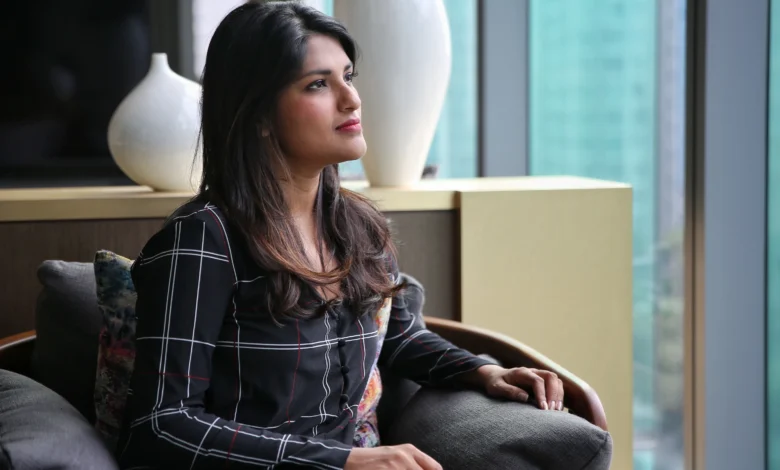
Ankiti Bose, the former CEO and co-founder of Zilingo, accused her former co-founder Dhruv Kapoor and ex-COO Aadi Vaidya of sexual harassment, stalking, intimidation and other misconduct. The allegations attracted considerable media attention when Mumbai Police registered an FIR on 23 April 2024.
Both men categorically denied the allegations. Kapoor described them as baseless, untrue and malicious, while Vaidya characterised the complaint as an afterthought intended to damage his reputation.
The controversy, however, is not limited to what was alleged. It also concerns when the allegations were raised, through which channels, what was communicated to the company’s board, why the eventual criminal complaint was filed in Mumbai, and what happened during the intervening period.
There are several questions that deserve answers.
And dismissing every question as an attack on a complainant would hardly be a substitute for examining the documentary record.
1. The 23-month question: Why did the Mumbai FIR come almost two years after her termination?
The chronology is straightforward.
On 31 March 2022, Zilingo suspended Ankiti Bose following allegations of financial irregularities and an internal investigation.
On 20 May 2022, the company terminated her employment.
On 23 April 2024, almost 23 months after her termination, Mumbai Police registered an FIR following her complaint against Dhruv Kapoor and Aadi Vaidya.
The FIR reportedly included allegations of sexual harassment, stalking and demands for sexual favours, with the alleged conduct dating back to March 2021.
This is an important timeline.
Why did the criminal complaint against the two former colleagues emerge in April 2024 rather than when the alleged conduct was first experienced?
Why did the formal police route apparently take so long?
What changed between her termination in May 2022 and the registration of the FIR in April 2024?
Did new evidence emerge? Were there fresh threats? Did an earlier internal investigation fail to address the complaints? Was there a specific reason for waiting?
These are legitimate questions.
The timing does not establish that the complaint is false. Equally, the existence of an FIR does not eliminate the need to examine the circumstances in which it was registered.
A 23-month interval between termination and the eventual criminal complaint is a material part of the chronology. It deserves an explanation supported by records rather than competing public statements.
2. The Singapore question: Why is there no publicly documented police complaint there?
Zilingo was headquartered in Singapore. Bose lived and worked there for years. The alleged incidents described in the FIR reportedly concerned her professional relationship with the company’s leadership during this period.
Yet, the publicly available reporting reviewed for this article does not identify a Singapore Police Force complaint against Kapoor and Vaidya concerning the alleged March 2021 sexual-favour demand.
This raises an important jurisdictional question.
Why Mumbai?
Why not Singapore?
Was any formal complaint submitted to the Singapore Police Force? Was a report made under Singapore’s Protection from Harassment framework? Was a complaint submitted to any employment or workplace authority?
If such complaints existed, when were they made and what were their outcomes?
If no such complaints were made, why?
The absence of a publicly identifiable Singapore police complaint is not proof that no confidential report ever existed. Nor does it establish that the alleged conduct did not occur.
But when the allegations concern a workplace headquartered in Singapore, and the complainant was living and working there, the absence of a visible Singapore criminal-proceedings trail is an entirely reasonable matter for investigative examination.
It is particularly important to distinguish between reporting an incident internally to an employer, consulting lawyers, obtaining civil protection against an online account and filing a criminal complaint against the specific individuals subsequently named in an FIR.
These are different actions.
They should not be casually presented as interchangeable.
The public deserves clarity about which of these steps were actually taken.
3. The August 2020 legal notice and August 2021 complaints: What exactly was reported and to whom?
One aspect of the chronology makes the issue more complicated.
Business Today reported in April 2022 that Bose’s legal notice to Zilingo’s board referred to an incident dated 28 August 2020 involving threatening communications from allegedly fake accounts, disappearing email addresses and sexually explicit material.
The notice reportedly alleged that she was frightened and had approached lawyers.
Separately, the Indian Express reported that Bose had raised complaints about leadership and investors in August 2021.
These developments cannot simply be ignored.
They indicate that concerns and complaints of some kind had been raised before her termination.
However, there is an important distinction between allegations concerning anonymous online threats, complaints about workplace leadership, and the specific allegation that named co-founders demanded sexual favours in exchange for retaining her CEO position.
The critical question is what the original documents actually contain.
Were Dhruv Kapoor and Aadi Vaidya specifically named in the earlier complaints?
Were the alleged demands for sexual favours disclosed at that stage?
Were the incidents described with dates, locations and supporting communications?
Were the complaints formally acknowledged by the board?
Were the relevant emails, legal notices and attachments preserved?
It is not enough to refer generally to earlier harassment complaints without explaining their precise contents.
Likewise, it would be inaccurate to claim that Bose had never raised any concerns before her termination.
The original communications must be examined and compared with the allegations subsequently made to Mumbai Police.
The difference between an earlier complaint about harassment and a later allegation of specific criminal conduct is precisely where the documentary examination becomes important.
4. 11 April 2022: Why did the company’s version place the formal disclosure after suspension?
One of the most important pieces of the timeline comes from Zilingo itself.
In May 2022, the company stated that Bose had brought certain harassment-related issues concerning past periods to the board’s attention for the first time on 11 April 2022, after her suspension on 31 March 2022.
According to the company’s statement, these complaints did not include harassment allegations against investors or their nominees.
Bose disputed the circumstances of her suspension and termination and raised questions about the fairness of the investigation.
The company also commissioned Deloitte to investigate the harassment-related allegations.
This creates an important documentary issue.
If complaints had been raised earlier, what exactly had been communicated to the board before 31 March 2022?
If the company is correct that the specific harassment-related issues were first brought to the board on 11 April 2022, what was the nature of the earlier complaints?
Was there a difference between complaints about anonymous online threats and allegations against particular senior executives?
Did the April 2022 communication contain the same allegations that subsequently appeared in the 2024 FIR?
The answers should be available through contemporaneous emails, board communications, legal notices and investigation documents.
There is no reason for the public to accept either party’s retrospective version without examining those records.
5. Why was the Mumbai Police complaint filed only in April 2024?
According to The Economic Times’ April 2024 reporting, Bose’s explanation for the delay was that, after leaving Zilingo, she took up a new job, remained occupied and did not receive leave from work to travel to India to file the complaint.
That explanation is relevant and deserves to be accurately recorded.
However, it also raises a further question.
Was the difficulty in filing a complaint specifically the inability to travel to India, or was there another reason for not approaching the authorities in Singapore?
These are not identical issues.
The explanation concerning employment and travel may account for why the FIR was eventually lodged when she came to Mumbai. But it does not independently answer whether any criminal complaint had been made in Singapore during the intervening period.
The public record should clarify this distinction.
The issue is not whether a complainant is permitted to report an incident after a delay. She is.
The issue is whether the explanation for the delay is supported by the available chronology and contemporaneous documents.
6. Four years of alleged harassment: Where is the incident-by-incident chronology?
Another question concerns the duration and nature of the alleged conduct.
The public reporting on the Mumbai FIR describes alleged conduct dating from March 2021 to October 2023.
The complaint reportedly refers to demands for sexual favours, threatening communications, mental harassment and other alleged misconduct.
But a broad allegation covering an extended period is not a substitute for a precise chronology.
What happened on which date?
Where did each incident allegedly occur?
Who was present?
Were the communications made through telephone calls, WhatsApp, email or other platforms?
Were the original messages preserved?
Were there contemporaneous complaints to colleagues, lawyers, the board or the police?
Were the allegedly anonymous accounts independently identified?
Was there any forensic examination of the devices, email headers, IP addresses or communication records?
If the allegation is that multiple individuals engaged in a sustained course of misconduct over several years, each individual’s alleged conduct should be separately identified and supported by evidence.
The reported March 2021 to October 2023 period should also be distinguished from the earlier August 2020 allegations concerning anonymous online threats.
Combining different incidents, different alleged perpetrators and different categories of conduct into a single broad narrative would make independent verification unnecessarily difficult.
The investigating authorities must establish what happened, when it happened and who was responsible.
7. Why is there so little publicly available information about the subsequent proceedings?
An FIR is the beginning of a criminal investigation, not its conclusion.
The April 2024 FIR received extensive media coverage. However, the publicly accessible material reviewed for this article does not establish a final criminal-court determination on the merits of the allegations.
This raises questions about the subsequent investigative record.
Was Bose’s statement formally recorded?
Were the accused questioned?
Were the alleged communications seized and forensically examined?
Were the relevant devices and email accounts examined?
Were witnesses interviewed?
Was documentary evidence obtained from Singapore?
Was any supplementary material submitted?
Has a chargesheet or closure report been filed?
These questions should be answered through the investigating agency’s records and the relevant court proceedings.
It is equally important to clarify the question of attendance.
The registration of an FIR does not automatically create a criminal trial with a complainant required to attend every listed date. During investigation, attendance and participation depend on the requirements of the investigating officer and the procedural stage.
No verified public attendance record reviewed here establishes that Bose deliberately failed to attend particular court dates.
Therefore, the appropriate question is what the police and court records show about her participation, statements and compliance with investigative requirements, rather than assuming non-attendance.
8. The accused have denied the allegations: Their position must also be examined
Dhruv Kapoor publicly rejected Bose’s allegations, calling them baseless, untrue and malicious. He also referred to the company’s investigation into alleged financial irregularities.
Aadi Vaidya separately denied the allegations and described the FIR as an afterthought intended to damage his reputation.
These denials are not proof of innocence. Nor are Bose’s allegations proof of guilt.
Both sides are entitled to have their positions examined against the original evidence.
The investigation should not become a contest in which the loudest public statement determines the outcome.
The alleged demands, communications, threats and other incidents should be verified independently.
The accused should have the opportunity to respond to the specific evidence attributed to them.
And the complainant should have the opportunity to substantiate her allegations through the proper legal process.
That is the standard required in a matter of this seriousness.
9. The questions Ankiti Bose should answer
The controversy now requires clear documentary answers.
- What was the precise nature of the harassment complaints raised before March 2022?
- Were Dhruv Kapoor and Aadi Vaidya specifically named in the August 2020 or August 2021 communications?
- Why did the company state that specific harassment-related issues were first presented to the board on 11 April 2022?
- Was any criminal complaint made to Singapore Police concerning the alleged conduct? If yes, what were the date, reference number and outcome?
- If no Singapore police complaint was made, what was the reason?
- What was the precise reason for waiting until April 2024 to register the Mumbai FIR?
- What original electronic communications and contemporaneous documents support the allegations?
- Were the alleged anonymous accounts independently linked to the two named individuals through forensic evidence?
- What happened during the investigation after the FIR was registered?
- What is the current procedural status of the FIR, including any statements, forensic findings, chargesheet or closure report?
- What do the police records establish about the complainant’s participation in the investigation?
These questions are not answered by repeating the original allegations. They require documents, dates, investigative records and independently verifiable evidence.
Conclusion: An FIR is a beginning, not the final word
Ankiti Bose’s allegations against her former Zilingo colleagues are serious and must be treated seriously.
But serious allegations also demand a serious evidentiary examination.
The chronology includes earlier harassment-related communications, a disputed account of when specific allegations were formally presented to Zilingo’s board, suspension in March 2022, termination in May 2022 and a Mumbai FIR in April 2024.
The publicly available record does not identify a Singapore police complaint against the two men concerning the alleged March 2021 sexual-favour demand. That absence is not proof that no confidential complaint existed, but it is an important gap that deserves clarification.
The explanation concerning employment and travel also deserves examination alongside the alternative reporting channels available during the intervening period.
Most importantly, the reported allegations should be broken down incident by incident. The investigating authorities must establish the underlying communications, identify the alleged perpetrators and determine whether the evidence supports the charges.
There should be no automatic presumption in favour of either side.
A delayed complaint is not automatically false. A registered FIR is not automatically true. A denial is not an acquittal. And an unresolved investigation is not a judicial determination.
The public should not be asked to substitute assumption for evidence.
The demand is simple: disclose the chronology, examine the original communications, establish the investigative status and allow the evidence to speak.
Until that happens, the controversy surrounding Ankiti Bose’s April 2024 complaint against her former Zilingo colleagues will continue to generate questions that neither public statements nor competing narratives can conclusively answer.
Editorial clarification: This article examines publicly reported chronology and unresolved evidentiary questions. The allegations against Dhruv Kapoor and Aadi Vaidya remain allegations, and both have denied them. No inference of fabrication or guilt is drawn from the delay in reporting. The absence of a publicly identified Singapore complaint does not establish that a confidential report was never made.