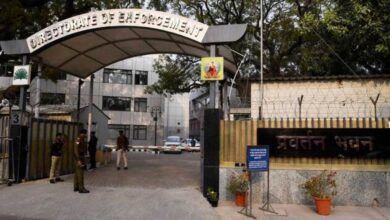
Demand Of Terra-Invest investigation: 2 CBI Fraud Cases, 1 Troubling Corporate Network- How Ankiti Bose And Krishan Rattan’s Business Associates Ajoy Veer Kapoor And Shailesh Haribhakti Connect To The Collapsed IL&FS And Future Group Empires?
Two major CBI bank fraud investigations involving IL&FS and Future Group have brought renewed attention to the corporate histories of individuals associated with Ankiti Bose and Krishan Rattan's wider business network. Ajoy Veer Kapoor, Rattan's former Augustya associate, previously held a senior position within the IL&FS investment-management ecosystem and appears in the Panama Papers. Shailesh Haribhakti, now Mentor-In-Chief at Terra-Invest, formerly chaired a Future Group company that subsequently entered insolvency. From Zilingo's collapse and offshore corporate disclosures to distressed investments and overlapping directorships, these connections raise uncomfortable questions about financial accountability, governance credentials and the reputations behind Terra-Invest's leadership.

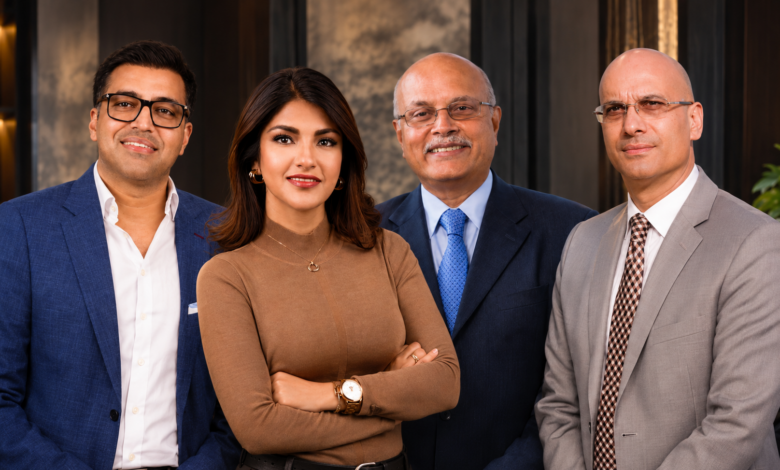
When Two Major CBI Investigations Lead Back to a Familiar Corporate Network
What happens when the professional histories of individuals surrounding a newly established investment platform repeatedly intersect with companies that have collapsed, entered insolvency, attracted regulatory scrutiny or become associated with major financial investigations? That question has acquired particular relevance following two significant developments in October and November 2026.
Less than two weeks later, on 4 November 2026, the agency registered another case involving Future Retail Limited, Kishore Biyani and other accused persons over an alleged ₹904.32 crore loss to State Bank of India.
The combined alleged principal losses exceeded ₹1,116 crore. At first glance, these investigations concern different companies, different banks and different corporate groups. IL&FS was once a powerful infrastructure-financing conglomerate, while Future Group dominated organised retail through brands and businesses that became household names. Yet a closer examination of the professional networks associated with these groups reveals connections to individuals who subsequently became associated with Ankiti Bose and Krishan Rattan.
One of those individuals is Ajoy Veer Kapoor, a former senior executive within the IL&FS investment-management ecosystem who later joined Krishan Rattan and Vasavi Vittal in an education-technology venture called Augustya. Kapoor’s name also appears in the International Consortium of Investigative Journalists’ Panama Papers database in connection with a British Virgin Islands company.
Another is Shailesh Haribhakti, the chartered accountant and corporate governance professional who previously served as Chairman and Independent Director of Future Lifestyle Fashions Limited. Future Lifestyle subsequently entered insolvency proceedings involving financial creditor claims exceeding ₹2,155 crore. Haribhakti is now presented as Mentor-In-Chief of Terra-Invest, an investment platform identifying Ankiti Bose and Krishan Rattan as founding partners.
Ankiti Bose’s own corporate history includes the dramatic collapse of Zilingo, the fashion technology startup she co-founded and led before her termination in 2022 following a financial governance controversy. Krishan Rattan’s previous directorships include Distribution Logistics Infrastructure, another company that subsequently entered insolvency proceedings involving substantial creditor claims. The result is a network of corporate relationships that deserves serious examination.
The central concern is not that all these individuals participated in the two CBI cases. The FIRs concern specific companies and named accused, and neither investigation establishes criminal involvement by the Terra-Invest founders. The more important question is why the financial and governance histories of individuals associated with an investment platform are not subjected to the same scrutiny as their professional achievements. When experience, reputation and prestigious appointments become selling points for financial ventures, the public deserves to understand what happened to the businesses associated with those credentials.
October 2026: CBI Registers ₹212.34 Crore Bank Fraud Case Against IL&FS Energy
The first development emerged from the long-running financial collapse of Infrastructure Leasing & Financial Services, commonly known as IL&FS. On 21 October 2026, the CBI registered a case involving IL&FS Energy Development Company Limited following a complaint from Canara Bank. The agency identified several former senior executives among the accused, including Sunil Wadhwa, Anoop Seth, Hari Sankaran, Ramesh Chandra Bawa and Arun Kumar Saha.
The complaint concerned allegations relating to the misuse and diversion of borrowed funds. The company had obtained a ₹100 crore term loan from Syndicate Bank and a separate foreign-currency facility of $50 million from the bank’s London branch. Syndicate Bank subsequently merged with Canara Bank. According to the allegations, the borrowed money was not fully utilised for its intended purposes and was instead diverted through associated entities. The resulting alleged wrongful loss to Canara Bank was ₹212.34 crore.
The CBI conducted searches at locations in Delhi, Mumbai and Noida and recovered documents relevant to the investigation. The case forms part of the wider financial and governance crisis surrounding IL&FS, whose collapse in 2018 shook India’s financial system. Before that collapse, IL&FS had occupied a prominent position in infrastructure development and financing. Its operations extended across transportation, energy, infrastructure investment, financial services and project development.
Its corporate structure involved numerous subsidiaries, associates and investment vehicles. When the group began defaulting on its obligations, the consequences spread across banks, mutual funds, institutional investors and other financial institutions. The crisis exposed serious questions about corporate governance, risk management, credit ratings and the reliability of financial reporting. The government eventually intervened and replaced the board of the parent company.
Yet the October 2026 CBI case demonstrates that the consequences of the group’s financial history continue to unfold years after the original collapse. The allegations concerning IL&FS Energy also revive questions about how complex corporate groups manage borrowed funds and whether lenders receive an accurate picture of the financial relationships between connected companies. It is against this background that Ajoy Veer Kapoor’s historical association with the IL&FS investment-management ecosystem becomes relevant.
Ajoy Veer Kapoor: The Former IL&FS Investment Executive Who Later Partnered With Krishan Rattan
Ajoy Veer Kapoor’s name does not appear among the accused identified in the October 2026 IL&FS Energy case. His connection to IL&FS arises from a different company within the wider group. Historical annual reports of IL&FS Investment Managers Limited identify Kapoor as Managing Director of IIML Asset Advisors Limited, a company associated with IL&FS’s investment-management operations.
The FY2011 and FY2012 annual reports record that Kapoor held the position until 28 February 2011. His responsibilities belonged to the investment-management side of the corporate ecosystem rather than the energy company involved in the subsequent CBI proceedings. This distinction is important, but so is the fact that Kapoor held a senior professional position within the wider IL&FS group.
He was not merely a casual business acquaintance of its executives. His documented appointment placed him within an institutional investment environment associated with one of India’s largest infrastructure-financing groups. The significance of that history becomes clearer when his subsequent business relationship with Krishan Rattan is examined.
On 28 April 2020, Australian-listed education technology company KNeoMedia Limited issued a stock-market announcement concerning a licensing arrangement with an Indian venture called Augustya. The announcement identified Augustya’s founding team as Krishan Rattan, Ajoy Veer Kapoor and Vasavi Vittal.
It highlighted the founders’ experience in private equity, investment management and business development. The arrangement was intended to introduce KNeoMedia’s KneoWorld educational technology platform into India’s education market. Augustya was expected to support commercial distribution, partnerships and market expansion. This announcement provides a direct documentary connection between Kapoor and Rattan.
It establishes that the two individuals collaborated in a commercial venture years after Kapoor’s recorded IL&FS appointment had ended. That connection is relevant because Rattan subsequently emerged as a founding partner of Terra-Invest alongside Ankiti Bose. The sequence therefore runs from Kapoor’s historical IL&FS investment-management appointment to his Augustya partnership with Rattan and then to Rattan’s later Terra-Invest venture.
The relationship does not connect Augustya or Terra-Invest to the alleged IL&FS Energy bank fraud. But it does establish that a former IL&FS-linked investment executive was part of Krishan Rattan’s earlier business network. For a platform seeking investor confidence, the backgrounds and outcomes of such professional relationships deserve attention.
Augustya: An Ambitious Education Venture That Failed to Deliver the Announced Momentum
The April 2020 KNeoMedia announcement presented Augustya as an attractive entry point into India’s education market. The venture’s founders were described as experienced professionals with relationships capable of supporting the distribution of educational technology products. India’s enormous school-going population and expanding digital education market were presented as opportunities. The proposed licensing arrangement was expected to create a platform for growth. However, subsequent disclosures presented a less encouraging picture.
KNeoMedia’s FY2021 annual report recorded that its Indian licensing arrangement with Augustya had been placed on hold because of school closures during the COVID-19 pandemic. The disruption illustrates how quickly an ambitious international expansion strategy can lose momentum. It also raises questions about the commercial outcome of the venture.
Financial expertise is frequently promoted through announcements describing potential markets, strategic partnerships and the professional credentials of founding teams. But the true measure of a venture lies in what it ultimately achieves. An investment platform should be judged not merely by the opportunities its founders have identified but also by the commercial outcomes of their previous projects.
The Panama Papers: Ajoy Veer Kapoor’s Offshore Corporate History
Ajoy Veer Kapoor’s professional history includes another significant element. The International Consortium of Investigative Journalists’ Offshore Leaks Database identifies Ajoy Veer Kapoor as a beneficiary of Yasu Management Limited. The company was incorporated in the British Virgin Islands on 3 February 2006. The record forms part of the Panama Papers dataset, which originated from documents associated with offshore services provider Mossack Fonseca. The database links the individual to an address at Emirates Crown, Dubai Marina, United Arab Emirates.
A separate entry in the ICIJ’s earlier Offshore Leaks dataset identifies Ajoy Veer Kapoor and Foram Dattani Kapoor in connection with Purple Hues Services Limited, another British Virgin Islands company incorporated on 15 April 2008. These are specific offshore corporate records. They identify named individuals, entities, jurisdictions and recorded relationships. The relevant questions concern the purpose of these structures, their ownership arrangements and the financial activities conducted through them.
- Why were the companies incorporated in the British Virgin Islands?
- What assets or investments did they hold?
- What was the source of the funds used in their operations?
- Were the relevant beneficial interests disclosed under applicable legal requirements?
- And were these structures associated with any investment-management activities?
An offshore company can serve legitimate commercial purposes, and the existence of such a structure does not establish financial misconduct. However, the records remain relevant to the professional history of an individual who later collaborated with Krishan Rattan in an investment-oriented venture. The distinction between the Panama Papers and Offshore Leaks records also matters.
Yasu Management appears in the Panama Papers dataset.
Purple Hues appears in the earlier Offshore Leaks dataset.
Treating both as Panama Papers companies would obscure their different documentary origins. For investors examining the credentials of experienced financial professionals, such offshore records can provide information about corporate interests that may not appear in public biographies. They also reinforce the importance of beneficial ownership transparency in investment structures operating across multiple jurisdictions.
November 2026: CBI’s ₹904 Crore Future Retail Fraud Case Opens Another Corporate Governance Chapter
The second major investigation emerged less than two weeks after the IL&FS Energy case. On 4 November 2026, the CBI registered a case involving Future Retail Limited, Kishore Biyani, Rakesh Biyani and other persons following a complaint from State Bank of India. The alleged principal loss was ₹904.32 crore. The bank also calculated ₹1,331.91 crore in notional interest, taking the reported principal-plus-interest figure to ₹2,236.23 crore.
The allegations concerned the diversion of borrowed funds through connected companies, irregular financial transactions and the alleged misrepresentation of the company’s financial condition. The underlying forensic audit examined transactions between April 2017 and April 2022. Its findings described substantial financial movements through related and connected entities.
According to the bank’s complaint, the audit identified approximately ₹24,002 crore in payments to 13 related or connected entities and ₹18,123 crore in receipts from them. The difference represented a net outflow of approximately ₹5,878 crore. The forensic findings also identified questionable transactions involving entities whose financial capacity and business operations appeared disproportionate to the amounts involved.
One of the most striking examples concerned Syntex Trading and Agency Private Limited. Future Retail reportedly extended loans amounting to ₹606.60 crore to Syntex during FY2020. The recipient company’s short-term loans and advances subsequently increased dramatically. The findings raised concerns about the movement of funds through connected entities and the commercial justification for such transactions.
The case raises a fundamental question about financial oversight. How could substantial amounts of borrowed money move through a complicated corporate network while the group’s financial condition was deteriorating? And what mechanisms existed to ensure that lenders, shareholders and directors understood the resulting exposures?
The answers matter because Future Group was not an obscure business operating without sophisticated advisers. It was one of India’s most recognisable retail conglomerates. Its companies had boards, independent directors, auditors, lenders and institutional investors. Among the professionals associated with the group’s governance history was Shailesh Haribhakti.
Shailesh Haribhakti’s Future Group History: Decades of Association With Kishore Biyani’s Corporate Empire
Shailesh Haribhakti’s connection with Future Group was substantial. Corporate directorship records identify his appointment at Future Enterprises Limited beginning in June 1999 and ending in October 2013. He subsequently served as an Independent Director of Future Lifestyle Fashions Limited. A May 2019 regulatory filing proposed his reappointment as an Independent Director for another five-year term beginning in August 2019.
The same filing addressed the reappointment of Kishore Biyani as Managing Director. Haribhakti later served as Chairman of Future Lifestyle. His professional background included chartered accountancy, auditing, corporate governance and numerous board appointments. These credentials are important because the position of an independent director carries responsibilities extending beyond participation in formal meetings. Independent directors are expected to examine financial reporting, evaluate risks, question management decisions and contribute to effective corporate oversight.
Such responsibilities become particularly important in complex corporate groups where companies have substantial financial relationships with one another. Future Group operated through a network of businesses involving retail, fashion, logistics, consumer products and other activities. Its financial restructuring involved multiple corporate entities.
The group’s interconnected structure made related-party transactions, guarantees, advances and intercompany exposures particularly important governance issues. Haribhakti’s responsibilities were associated with the companies on whose boards he served. His documented chairmanship was at Future Lifestyle, not Future Retail, the company named in the November 2026 CBI case. Nevertheless, the financial relationships between Future Group entities create a legitimate basis for examining how the board of Future Lifestyle assessed the risks arising from the wider group’s deterioration. The most direct evidence of that deterioration is Future Lifestyle’s own subsequent insolvency.
Future Lifestyle’s ₹2,155 Crore Creditor Claims: What Happened to the Company Haribhakti Chaired?
Future Lifestyle Fashions entered the Corporate Insolvency Resolution Process in May 2023. Its creditor disclosures recorded financial claims exceeding ₹2,155 crore. The insolvency followed years of financial difficulties and the failure of the proposed ₹24,713 crore Reliance transaction involving Future Group businesses. Haribhakti resigned as Chairman and Independent Director on 22 April 2022, immediately after secured creditors rejected the proposed restructuring. His resignation letter referred to increasingly difficult legal and financial circumstances.
It also indicated that alternative recommendations from the board had not received the implementation necessary to resolve the company’s problems. That explanation deserves examination. If the board had proposed alternative measures, what were those measures? The company’s subsequent insolvency make many questions very significant.
The issue is not whether Haribhakti personally caused the financial collapse. It is whether the governance mechanisms operating during his tenure were sufficiently effective to identify, communicate and respond to the company’s deteriorating financial position. A company can comply with formal requirements concerning independent directors while still experiencing serious failures in risk management. The existence of experienced professionals on a board does not automatically guarantee effective oversight.
Future Lifestyle’s financial history provides a particularly important case study of that distinction.
The Koovs Collapse: Another Investment Connected to Future Lifestyle’s Boardroom
Future Lifestyle’s history contains another significant corporate failure. In July 2018, the company announced a proposed investment of approximately ₹140 crore in Koovs Plc, a London-listed online fashion retailer. The investment was intended to give Future Lifestyle a substantial stake in Koovs and strengthen its online fashion operations.
The proposed ownership target was 29.9%. Koovs subsequently identified Future Lifestyle as its largest shareholder, holding approximately 25.8% of its issued share capital. Avni Biyani, a member of the Future Group promoter family, joined Koovs’ board in January 2019. However, the investment encountered serious financial difficulties. In December 2019, Koovs announced plans to enter administration after anticipated funding from Future Lifestyle failed to materialise.
The company subsequently underwent an asset sale. The original Koovs Plc entity was dissolved in March 2023. Haribhakti served on Future Lifestyle’s board during the Koovs investment period and was also associated with its Audit Committee. This provides another reason to examine the company’s investment governance. The Koovs episode is not part of the Future Retail CBI case. Its significance lies in the investment decisions and financial outcomes associated with Future Lifestyle during the years preceding its own insolvency.
The sequence is difficult to ignore. Future Lifestyle invested in Koovs. Koovs entered administration after anticipated funding failed. Future Lifestyle’s wider corporate group subsequently experienced severe financial distress. Haribhakti resigned in April 2022. Future Lifestyle entered insolvency in May 2023. These events raise questions about the effectiveness of investment assessment, funding discipline and board-level oversight.
From Future Lifestyle to Terra-Invest: Why Haribhakti’s Current Role Matters
Shailesh Haribhakti now appears in a very different corporate setting. Terra-Invest identifies him as Mentor-In-Chief. The investment platform also identifies Ankiti Bose and Krishan Rattan as founding partners. Its published leadership materials emphasise Haribhakti’s professional experience in auditing, governance and corporate advisory work. For a financial platform, the association with an experienced governance professional can be an important source of credibility. But professional credibility should be examined through more than qualifications and appointments.
It should also involve the outcomes of previous corporate responsibilities. Haribhakti’s Future Lifestyle history raises questions about financial oversight during a period of serious deterioration. The Koovs investment adds another example of a distressed business relationship involving the company on whose board he served. The wider Future Group collapse provides further context.
Terra-Invest’s presentation of Haribhakti’s credentials therefore invites examination of what practical responsibilities accompany his current position. An investment platform’s credibility ultimately depends on the effectiveness of its actual financial controls, not merely the prominence of its advisers.
Ankiti Bose and Zilingo: A Billion-Dollar Startup Narrative That Ended in Corporate Collapse
Ankiti Bose’s business history provides another major element of the investigation. Bose co-founded Zilingo in 2015 and became one of Southeast Asia’s most prominent startup entrepreneurs. The Singapore-based fashion technology company attracted substantial institutional investment and reached a valuation approaching $1 billion. Its growth was celebrated as an example of the opportunities emerging from technology-enabled commerce.
But the company’s financial and governance difficulties eventually overwhelmed that narrative. In March 2022, Bose was suspended from her position as chief executive following complaints that prompted an investigation into the company’s financial affairs. In May 2022, Zilingo announced that her employment had been terminated following the investigation. Ankiti Bose disputed the circumstances surrounding her removal and challenged allegations made against her.
The controversy was accompanied by concerns about financial reporting, delayed audits, debt obligations and the company’s deteriorating liquidity. Zilingo subsequently entered liquidation. The collapse represented an extraordinary reversal for a business that had attracted substantial investment and international attention. It also exposed the consequences of weaknesses in corporate governance and financial oversight within fast-growing startups.
For investors, the central questions concerned the company’s financial controls, management accountability and the effectiveness of its board. How had the company’s financial position deteriorated? What information had investors received? Were internal controls adequate for the scale of operations? And how effectively had management decisions been supervised? Ankiti Bose’s subsequent litigation further demonstrated the contentious nature of the company’s collapse.
The significance for Terra-Invest is that Ankiti Bose is now associated with a new investment platform whose leadership includes individuals with substantial financial and governance experience. That creates a legitimate expectation that the platform’s controls, ownership structure and decision-making arrangements should be transparent. The experience of Zilingo makes those questions particularly important.
Krishan Rattan’s Distribution Logistics Infrastructure Connection: Another Company That Entered Insolvency
Krishan Rattan’s professional history also includes appointments at companies that subsequently experienced serious financial difficulties. One important example is Distribution Logistics Infrastructure Private Limited, commonly known as DLI. Corporate records identify Krishan Rattan as a director from 19 April 2019 until 20 June 2025. DLI operated in the logistics and infrastructure sector and was associated with Infrastructure India Plc.
The company experienced financial difficulties involving debt obligations, restructuring and lender action. It subsequently entered insolvency proceedings. A June 2026 creditor disclosure recorded approximately ₹993.26 crore in provisionally admitted secured financial creditor claims.
Rattan’s directorship ended before the company’s admission to insolvency. However, his tenure overlapped with important stages of its financial deterioration. The questions concern how the board assessed the company’s financial condition, what restructuring options were considered and how lenders were informed about its obligations. The DLI history is particularly relevant because Rattan’s professional credentials are presented in the context of investment management and complex financial transactions.
Investors evaluating those credentials should be interested in the performance and governance outcomes of the businesses associated with his previous appointments. DLI also introduces connections with other professionals in the infrastructure investment network, including Rahul Lulla. These relationships illustrate the extent to which experienced financiers and corporate directors can move between interconnected ventures. They also reinforce the importance of examining overlapping appointments, financial exposures and potential conflicts of interest.
The Lulla Network and the Wider Offshore Corporate Connections
The wider professional network associated with Rattan includes individuals whose names appear in offshore corporate records. Rahul Lulla, who held senior responsibilities within Infrastructure India Plc, appears in the ICIJ’s Paradise Papers database in connection with Cayman Islands entities. Other corporate records identify professional overlaps involving Rattan, Rajiv Ramesh Lulla and Haribhakti at different companies.
These relationships are relevant to understanding the broader network of directors, investors and advisers associated with the ventures under examination. Offshore corporate structures add another layer because beneficial ownership and decision-making authority may not be immediately apparent from public-facing company information.
The Panama Papers and Paradise Papers databases provide historical information about some of these relationships. Their significance lies in identifying corporate interests that can then be examined through official filings and financial records. The existence of an offshore structure does not establish misconduct. But transparency about such arrangements is particularly important when individuals are involved in investment platforms seeking to manage or advise on substantial financial assets.
The Central Question: Why Do So Many Corporate Histories Around Terra-Invest Involve Financial Distress?
The professional histories examined here involve several separate companies and circumstances.
IL&FS Energy became the subject of a ₹212.34 crore CBI bank fraud case.
Future Retail became the subject of a ₹904.32 crore CBI bank fraud case.
Future Lifestyle entered insolvency proceedings involving financial creditor claims exceeding ₹2,155 crore.
Koovs entered administration after anticipated funding failed to materialise.
Zilingo entered liquidation following a major financial governance controversy.
Distribution Logistics Infrastructure entered insolvency proceedings involving substantial creditor claims.
Augustya’s announced education-technology licensing arrangement was subsequently placed on hold.
These events do not constitute a single coordinated financial scheme. They involve different companies, management teams, periods and circumstances. But the recurring presence of financial distress within the professional histories of individuals associated with Terra-Invest raises an important question about how investment credentials should be evaluated.
When an investment platform promotes the experience of its leadership, should that assessment focus only on previous appointments and transaction values? Or should it also examine the financial outcomes of the businesses those individuals helped manage, advise or oversee?
Professional experience is valuable, but its significance depends on how that experience translates into effective financial decisions. A long list of directorships is not necessarily evidence of successful oversight. A history of managing large transactions does not automatically establish that those transactions produced positive outcomes. And an impressive advisory title does not guarantee that the adviser exercises meaningful control over investment risks. These distinctions are central to evaluating Terra-Invest.
Terra-Invest’s Leadership and the Need for Institutional Transparency
Terra-Invest presents itself as an investment platform with interests across multiple sectors. Its published leadership information identifies Ankiti Bose and Krishan Rattan as founding partners and Haribhakti as Mentor-In-Chief. The platform highlights the professional backgrounds and experience of its team. For prospective investors, however, the most important information concerns the legal and financial arrangements through which investment activities are conducted.
Questions become especially relevant when the founders and advisers have previous associations with companies that experienced financial distress or governance controversies, as seen in the case of Ankiti Bose and Krishan Rattan…
A credible investment platform should be able to explain its decision-making structure clearly. It should distinguish between founders, beneficial owners, directors, advisers and investment committee members. These roles are not interchangeable.
A founding partner may have substantial economic interests without necessarily holding a statutory directorship. A beneficial owner may exercise control through shareholding or other arrangements. A mentor may provide advice without possessing formal decision-making authority. Understanding these distinctions is essential for evaluating accountability. The public presentation of a leadership team should therefore be accompanied by clarity about who actually controls financial decisions.
Corporate Governance in India: Prestigious Appointments Cannot Replace Accountability
The histories of IL&FS, Future Group, Zilingo and the other businesses examined here expose a broader weakness in corporate governance culture. Companies frequently highlight the experience and reputation of their directors. Independent directors are presented as safeguards against excessive management power. Auditors are expected to provide confidence in financial statements. Investment professionals are promoted as experts in risk assessment and capital allocation.
Yet corporate failures continue to reveal situations in which financial risks were not adequately controlled. The existence of formal governance mechanisms does not necessarily mean those mechanisms function effectively. A board may contain highly experienced professionals while still failing to challenge management assumptions. A company may maintain an audit committee while experiencing serious weaknesses in financial reporting.
An investment platform may employ prominent advisers without giving them meaningful authority over investment decisions. The difference between appearance and effectiveness is critical.
Future Lifestyle’s collapse raises questions indirect questions of Shailesh Haribhakti about the practical influence of its independent directors.
Zilingo’s liquidation raises questions about startup governance and investor oversight, and about Ankiti Bose.
DLI’s connection raises fingers on Krishan Rattan and the financial difficulties raise questions about infrastructure investment management and debt supervision.
The IL&FS’s CBI cases may hint at Ajoy Veer Kapoor and demonstrate the enormous consequences that can follow allegations of financial diversion within complex corporate groups.
These histories should encourage greater scrutiny of how professional reputations are constructed and maintained. Corporate governance should be evaluated through documented decisions, transparent disclosures and financial outcomes. It should not become a branding exercise in which prestigious names substitute for effective controls.
The Questions Ankiti Bose, Krishan Rattan and Their Associates Should Address
For Ankiti Bose, the most important questions concern the governance lessons arising from Zilingo. What safeguards distinguish Terra-Invest from her previous business? How are financial statements independently reviewed? What controls exist over the use of investor funds? How are disagreements between founders, directors and advisers resolved?
For Krishan Rattan, the questions concern his previous investment ventures. What responsibilities did he exercise at DLI during its financial deterioration? What was the eventual commercial outcome of Augustya? How are the financial results of his previous investments represented to prospective Terra-Invest investors?
For Ajoy Veer Kapoor, the relevant questions concern his historical IL&FS investment-management role, the offshore corporate records and the nature of his subsequent business relationship with Krishan Rattan.
For Shailesh Haribhakti, the questions concern his governance responsibilities at Future Lifestyle. What financial risks were identified before the company’s insolvency? What recommendations were made to management? Why were those recommendations not implemented? How did the board evaluate the company’s exposure to other Future Group entities? And what practical responsibilities does he now exercise at Terra-Invest?
For Terra-Invest itself, the questions concern ownership, control, investment authority and independent oversight. These are not peripheral issues. They determine whether the platform’s governance arrangements are capable of protecting the interests of investors and other stakeholders.
Conclusion: Two CBI Cases, Multiple Corporate Failures and a Network That Deserves Closer Examination
The October 2026 IL&FS Energy case and November 2026 Future Retail case concern separate alleged bank frauds. But the investigations provide a timely opportunity to examine the professional histories of individuals associated with Ankiti Bose and Krishan Rattan’s wider corporate network.
Ajoy Veer Kapoor‘s historical appointment within the IL&FS investment-management ecosystem and his subsequent Augustya partnership with Krishan Rattan establish one professional connection. His appearance in the Panama Papers adds an offshore corporate dimension to that history.
Shailesh Haribhakti‘s former directorships at Future Group companies and his present Mentor-In-Chief position at Terra-Invest establish another connection. Future Lifestyle’s insolvency and the Koovs investment failure raise questions about the effectiveness of financial oversight during his board tenure.
Ankiti Bose’s Zilingo history and Krishan Rattan’s previous directorships add further examples of corporate distress and governance controversy within the wider professional network.
The resulting picture is not evidence that these individuals jointly participated in the offences alleged in the two CBI cases. It is a collection of documented relationships, corporate appointments, distressed investments, offshore records and financial failures that warrants examination.
For prospective investors, the significance is substantial. The experience and reputation of a platform’s leadership are important, but they should be assessed alongside previous governance outcomes and financial performance.
A professional biography may establish experience. It cannot, by itself, establish accountability. The central issue for Terra-Invest is whether its founders and advisers can demonstrate governance arrangements that are transparent, independent and capable of identifying financial risks before those risks become serious. India’s corporate history offers repeated examples of what happens when sophisticated financial structures operate without effective oversight.
The IL&FS crisis, Future Group’s collapse and Zilingo’s liquidation are reminders that prestige and professional experience are not substitutes for financial discipline.
For Ankiti Bose and Krishan Rattan, the relevant question is therefore not simply whether they can assemble a team of experienced financiers and governance professionals. It is whether the platform they are building can demonstrate that the lessons of previous corporate failures have been translated into meaningful safeguards. When the same professional network contains individuals associated at different times with distressed companies, offshore structures and major corporate controversies, investors have every reason to examine the underlying record.
The standard should be straightforward. Corporate credibility must be earned through transparent ownership, responsible financial decisions and effective accountability. It cannot rest solely on impressive titles, prestigious appointments or the reputations of those appearing on a leadership page.
That is the question at the heart of the Terra-Invest investigation.
And it is a question that deserves answers before investors are asked to place their confidence in another ambitious financial venture.