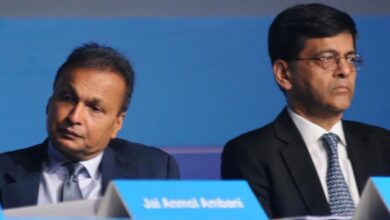
From Supreme Court Orders To Private Governing Councils: Does The Ambani World Offer The Softest Landing For Judges Who Delivered Favourable Relief?
As a sitting Supreme Court judge, Krishna Murari participated in proceedings that shaped the legal framework for elephant transfers and private zoo permissions linked to organisations that later became part of Vantara. Three years after retirement he joined Vantara’s highest governing body. This is not an isolated episode. Across two decades, retired judges who once sat on benches dealing with Reliance or Ambani-linked interests have reappeared as arbitrators, legal-opinion providers, NCLT-appointed chairpersons and now internal governors. The documented chronology raises a single, unavoidable question: where does the legitimate use of judicial expertise end and the appearance of institutional indebtedness begin?

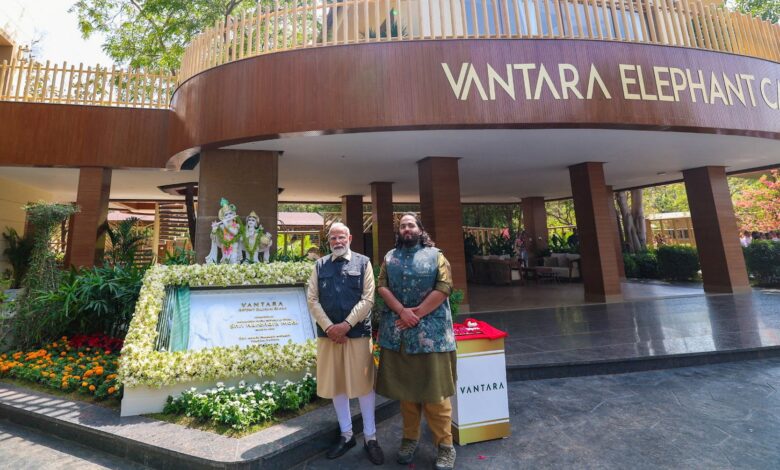
The Murari Appointment in Ambani Clan and the Longer History: Is Post-Retirement Preferential Access Becoming the Quiet Currency of Judicial Favour?
In August 2022, Justice Krishna Murari sat on the Supreme Court bench that declined to interfere with the Karnataka High Court’s order permitting elephant transfers to the Radha Krishna Temple Elephant Welfare Trust, an entity later linked to Vantara. Days later, he and Justice Dinesh Maheshwari dismissed a challenge to the Central Zoo Authority’s approval of Greens Zoological Rescue and Rehabilitation Centre,identified as a Vantara constituent.
In March 2023 his bench expanded a High-Powered Committee’s jurisdiction nationwide for wild-animal transfers; the mechanism subsequently enabled movements to Vantara, including twenty elephants from Arunachal Pradesh the following month. Three years after his July 2023 retirement, Vantara appointed him to its peak Governing Council. The sequence raises unavoidable questions about the revolving door between judicial decisions affecting Ambani-linked interests and later private governance roles.
The central question is no longer whether a single retired judge accepted a private appointment. It is whether a pattern has emerged in which judges or former judges who participated in judicial decisions materially favourable to Ambani family interests subsequently received appointments, paid assignments, governance positions, arbitration work or other preferential access within the Ambani/Reliance ecosystem. The Krishna Murari–Vantara episode forces that question into the open with unusual clarity. What follows is not an allegation of proven corruption. It is an examination of documented sequences that repeatedly place the same names on both sides of the judicial–corporate divide, and that repeatedly leave the public without satisfactory answers about disclosure, cooling-off periods or the appearance of conflict.
Justice Krishna Murari and Vantara: the strongest recent parallel
Justice Krishna Murari served on the Supreme Court from September 2019 until July 2023. In September 2026 he was appointed to the Governing Council of Vantara, the Reliance-backed wildlife organisation associated with Anant Ambani. Vantara describes the council as its highest governing body. The new council carries responsibility for conservation, rescue, compliance and governance; future wildlife-import applications require its prior written approval after internal due diligence.
The significance of the appointment lies in what Justice Murari had done while still a sitting judge.
In 2022 the Karnataka High Court considered the transfer of captive elephants to the Radha Krishna Temple Elephant Welfare Trust, an organisation later associated with Vantara. The High Court held that the Wild Life (Protection) Act permitted private individuals to own live elephants under specified circumstances while prohibiting sale or commercial transactions. The matter reached the Supreme Court. In August 2022 a three-judge bench consisting of then Chief Justice N.V. Ramana, Justice Hima Kohli and Justice Krishna Murari declined to interfere with the Karnataka High Court’s order.
Eight days later another bench comprising Justices Krishna Murari and Dinesh Maheshwari dismissed a challenge to the Central Zoo Authority’s permission for the Greens Zoological Rescue and Rehabilitation Centre to operate as a private zoo and rescue centre. Article 14 identifies Greens as one of Vantara’s constituent organisations.
In March 2023, in Muruly M.S. v. State of Karnataka, a bench of Justice Krishna Murari and Justice Ahsanuddin Amanullah dealt with the mechanism governing elephant transfers. The Tripura High Court had constituted a High-Powered Committee. The Supreme Court expanded that committee’s jurisdiction across India and authorised it to deal with applications, disputes and grievances concerning the transfer, import, procurement and welfare of wild animals by rescue centres and zoos nationwide.
According to Article 14’s investigation, the committee subsequently became an important institutional pathway through which elephants were transferred to Vantara. Twenty elephants were moved from Arunachal Pradesh’s Namsai district to Jamnagar in April 2023, only a month after the Supreme Court’s pan-India expansion of the committee’s jurisdiction.
The record does not establish that Justice Murari expressly ordered elephants to be sent to Vantara. The order was framed in terms of nationwide animal welfare. Yet the sequence remains: judicial proceedings involving Vantara-linked entities; expansion of a transfer mechanism; subsequent use of that mechanism by Vantara; and, three years after retirement, the same judge’s appointment to Vantara’s peak governing body. The terms of that appointment have not been made public. Neither Vantara nor Justice Murari’s office responded to detailed questions at the time of Article 14’s publication.
Is the three-year interval sufficient to erase the institutional overlap? Or does the overlap itself, between the legal framework the judge helped shape and the organisation that later invited him to govern it, demand disclosure, recusal protocols and a cooling-off period that Indian law still largely lacks?
The 2025 Vantara investigation and the subsequent appointment
In August 2025 the Supreme Court ordered an independent investigation into Vantara following petitions that raised questions about animal acquisition, elephant transfers, animal welfare and regulatory compliance. The Court appointed a Special Investigation Team headed by former Supreme Court judge Justice Jasti Chelameswar, with former Chief Justice Raghvendra S. Chauhan, former Mumbai Police Commissioner Hemant Nagrale and an IRS officer as members.
Reuters reported that the Court stated there was no concrete evidence establishing the allegations but considered an independent factual investigation appropriate. The SIT subsequently concluded that Vantara’s acquisitions, imports and welfare practices complied with applicable laws. The Supreme Court accepted those findings.
The chronology is therefore more complicated than a simple claim of judicial protection: challenge, Supreme Court-ordered investigation, former-judge-led SIT, favourable findings, Supreme Court acceptance, and then, a year later, the appointment of another former judge who had earlier sat on Vantara-related proceedings to the organisation’s governing council. Does the favourable SIT outcome make the subsequent appointment more or less concerning? Or does it simply illustrate how thoroughly the same institutional circle can close around a single corporate interest?
Justice Ranjit V. More: judicial relief followed by an NCLT role
Justice Ranjit V. More served on the Bombay High Court and later as Chief Justice of the Meghalaya High Court. In November 2019 a bench of Justice More and Justice Bharati Dangre of the Bombay High Court delivered a judgment concerning Reliance Industries and Raghuleela Builders’ One BKC project. The Mumbai Metropolitan Region Development Authority had sought approximately ₹432 crore in penalty, premium and interest relating to construction delays. The High Court struck down the demand, describing MMRDA’s action as arbitrary and holding that the authority could not penalise the developer in the circumstances presented.
In 2020 Justice More was transferred from the Bombay High Court to the Meghalaya High Court. After retirement, in 2022, the National Company Law Tribunal appointed him as chairperson for a meeting concerning a Reliance Industries corporate scheme; the fallback appointment was Justice K.S. Radhakrishnan.
The appointment was made by the NCLT, not by Reliance itself. That distinction is material. Yet the sequence remains: substantial judicial relief in a major Reliance commercial-property dispute, followed by an NCLT role involving a Reliance corporate scheme. Is the NCLT process a complete answer, or does the repeated appearance of the same retired judges in Reliance-related statutory meetings raise questions about how the pool of “acceptable” chairpersons is formed?
Justice K.S.P. Radhakrishnan: legal opinions and corporate-meeting roles
Justice K.S.P. Radhakrishnan served on the Supreme Court from 2009 until May 2014. After retirement he became involved professionally with Reliance and Jio. In 2023 Reliance Jio obtained a legal opinion from him concerning the allocation of satellite spectrum. Jio submitted the opinion to the Telecom Regulatory Authority of India in support of the proposition that satellite spectrum should be auctioned rather than administratively allocated. The opinion relied heavily on the Supreme Court’s spectrum jurisprudence, including the 2G case.
NCLT orders concerning Reliance corporate schemes also named Justice (Retd.) B.N. Srikrishna as chairperson, failing whom Justice (Retd.) K.S. Radhakrishnan would serve as chairperson for meetings of equity shareholders, secured creditors and unsecured creditors.
Earlier, as a sitting judge, he had been part of Supreme Court benches that decided matters involving Reliance, including a 2011 case concerning tax treatment and sales-tax incentives. Those earlier proceedings do not establish favouritism; parts involved remand. Yet the later professional trajectory,arbitration and legal work, possible NCLT chairmanship of Reliance meetings, and a specific legal opinion obtained by Jio on a strategically important regulatory question places a former constitutional-court judge squarely inside the commercial advocacy of one of India’s most powerful corporate groups. When a retired Supreme Court judge’s opinion is deployed by a private company before a regulator, what residual institutional authority travels with that opinion?
Justice B.N. Srikrishna: SEBI consultant who later chaired Reliance meetings
Justice B.N. Srikrishna’s relationship with Reliance is older and more complex. In the long-running SEBI matter involving allegations concerning RIL’s issuance of shares, SEBI sought opinions from the retired judge. The Supreme Court’s 2022 judgment records that a complaint had been filed against RIL and associated entities, SEBI investigated, SEBI later sought an opinion from Justice Srikrishna, he provided one, SEBI sought advice again, and a second opinion was obtained. The Supreme Court directed disclosure to RIL of both opinions and a chartered-accountant’s report.
Subsequently the NCLT appointed Justice (Retd.) B.N. Srikrishna, with Justice Radhakrishnan as alternate as chairperson for Reliance corporate meetings.
Here the original engagement was by SEBI, not by Reliance. The later NCLT role nevertheless places the same retired judge inside Reliance’s statutory corporate machinery. Does the fact that he once advised the regulator against the company make the later corporate role less problematic, or does it simply illustrate how fluid the boundary between regulatory expertise and corporate facilitation has become?
Justice Suresh Chandrakant Gupte and the Viacom18–Star India transaction
The NCLT appointed Justice (Retd.) Suresh Chandrakant Gupte, former Bombay High Court judge, as chairperson for meetings of secured and unsecured creditors relating to the Viacom18/Star India scheme. The scheme involved Reliance Industries, Viacom18, Digital18, JioCinema and Disney’s Star India.
No evidence has been located connecting Justice Gupte to an earlier favourable judicial decision for Reliance. The appointment was again by the NCLT. Yet a major media and entertainment consolidation involving Reliance’s ecosystem once more relied on a retired High Court judge as the statutory chair. How many such appointments are required before the pattern itself becomes the story?
Justice V. Ramasubramanian and Network18
In 2024 former Supreme Court judge Justice V. Ramasubramanian was appointed by the NCLT as chairperson for shareholder and creditor meetings concerning the proposed merger of E18, TV18 Broadcast and Network18 Media & Investments. Network18 forms part of the Reliance media ecosystem. The merger consolidated Network18, TV18, E18, Moneycontrol-related operations and television and digital media businesses.
Again, no evidence has been located of a prior favourable judicial decision for which this role could be described as a reward. The appointment was statutory. The institutional question remains: why does the same corporate group so frequently appear as the beneficiary of processes that place retired higher-judiciary members in pivotal procedural roles?
The historical precedent: Justice S.P. Bharucha
The most revealing historical parallel is former Chief Justice S.P. Bharucha. In 2000 he was part of a three-member Supreme Court bench that ruled in favour of an RIL-led consortium in litigation challenging the allotment of the Panna-Mukta oilfields.
After retirement he provided legal opinions to Reliance. In 2005 RIL’s corporate-governance committee obtained opinions from Justice Bharucha and Justice M.L. Pendse concluding that RIL had not violated corporate-governance norms; the committee publicly relied on those opinions.
In 2004 RIL nominated him as an arbitrator in a Reliance Infocomm dispute with BSNL. In 2007 he acted as Reliance’s arbitrator in the KG gas dispute with GAIL. When RIL later nominated him as its arbitrator in the KG-D6 dispute with the Government of India, the government objected, pointing to his previous professional relationship with RIL and the fees paid for legal opinions between 2009 and 2012. Bharucha resigned as arbitrator in December 2014.
The sequence of favourable judicial participation, retirement, legal opinions, arbitration nominations, public controversy over independence is the clearest earlier illustration of the revolving-door problem. The Murari episode differs in one crucial respect: Murari has joined the internal governing structure of the organisation itself, not merely an external arbitration panel.
Earlier legal opinions: Justice P.N. Bhagwati and others
In 2002 former Chief Justice P.N. Bhagwati gave an opinion to Reliance concerning its increase in its stake in Larsen & Toubro, concluding that Reliance had not violated applicable SEBI takeover rules. The opinion was submitted by Reliance to SEBI.
Reliance Foundation records that its 2017 Golden Peacock CSR Award was evaluated under a jury chaired by Justice (Dr.) Arijit Pasayat, former Supreme Court judge.
These associations are more attenuated. They nevertheless demonstrate that the deployment of retired judicial authority as a source of legal legitimacy for Reliance regulatory or reputational positions has a long history.
The institutional questions that remain OPEN to AMBANI
The documented chronology nevertheless raises questions that Indian judicial ethics and post-retirement regulation have not adequately answered.
Who decides which retired judges are acceptable for Reliance-linked roles? Are prior judgments involving the appointing organisation disclosed before such appointments? Are former judges required to recuse themselves permanently from matters involving entities whose cases they previously adjudicated? Why are the terms of some post-retirement engagements not publicly disclosed? Does India’s framework—particularly the limited reach of Article 124(7)—adequately address private-sector governance positions after retirement? And, most fundamentally: where does the legitimate use of judicial expertise end and the appearance of institutional indebtedness begin?

The Murari–Vantara sequence, the Bharucha–Reliance history, the Radhakrishnan–Jio opinion and the successive NCLT appointments converge on that last question. The available evidence does not prove that any of these relationships constituted a quid pro quo. It does establish a recurring set of connections between members of the higher judiciary and one of India’s most powerful corporate groups.
That pattern, and the institutional silence that surrounds it, is itself a matter of public concern. Until clearer rules on cooling-off periods, disclosure and recusal are in place, every new appointment will continue to invite the same interrogative: was this the soft landing that followed the favourable order, or merely coincidence in a small professional world? The public is entitled to answers that go beyond the assertion that nothing has been proved.