CBI’s 904 Crore Future Group Fraud Case Exposes A Troubling Corporate History Of Shailesh Haribhakti’s Governance Record, Who Is Now Mentor-In-Chief In Ankiti Bose And Krishan Rattan’s Terra Invest!
A ₹904 crore CBI bank fraud investigation, a corporate insolvency involving more than ₹2,155 crore in creditor claims, and a former chairman who now serves as Mentor-In-Chief to an investment venture associated with controversial entrepreneur Ankiti Bose and Krishan Rattan. The connections between Shailesh Haribhakti, Kishore Biyani's Future Group and Terra-Invest raise uncomfortable questions about financial oversight, independent directors and the credibility of corporate governance credentials. As forensic audits expose questionable transactions and regulatory proceedings reveal failures across interconnected companies, the central issue is whether India's celebrated boardroom professionals are ever meaningfully accountable when the businesses they help oversee collapse.

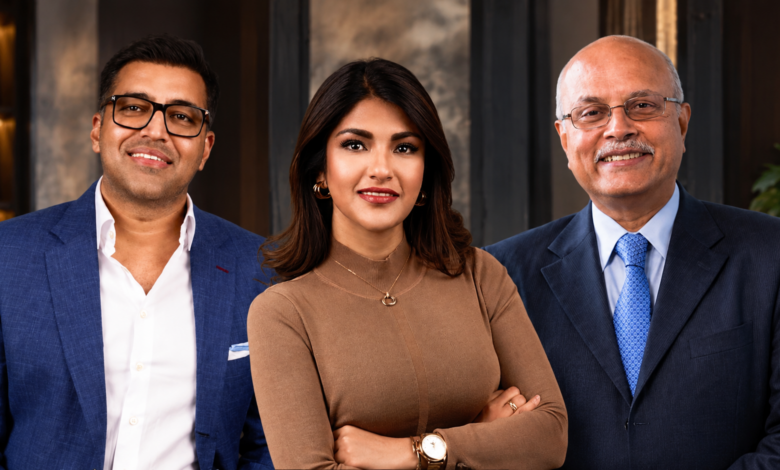
Shailesh Haribhakti and the Future Group Collapse: How a ₹904 Crore CBI Fraud Case Exposes Uncomfortable Questions About Corporate Governance
India’s corporate world has developed a remarkable talent for celebrating governance professionals even when the companies associated with their careers leave behind extraordinary financial destruction. The titles are impressive. Independent Director. Chairman. Audit Expert. Financial Adviser. Governance Mentor. The biographies are filled with board appointments, prestigious institutions, international credentials and decades of experience. But behind these carefully constructed professional reputations lies a question that receives surprisingly little attention.
What exactly happens to the reputation and accountability of an experienced corporate governance professional when a company he chaired enters insolvency, creditors are left pursuing thousands of crores, and another company belonging to the same business group becomes the subject of a major bank fraud investigation?
That question has acquired fresh relevance following the Central Bureau of Investigation, CBI’s November 2026 case involving Future Retail Limited, part of Kishore Biyani’s once-dominant Future Group. The CBI proceedings concern an alleged wrongful loss of ₹904.32 crore to State Bank of India. The underlying forensic findings describe questionable transactions, alleged diversion of borrowed funds, substantial payments to connected entities and serious concerns about the financial records of the company.
But the investigation also opens a wider window into the governance structure of the Future Group, including the role of professionals who served on the boards of its interconnected companies.
One such professional is Shailesh Haribhakti.
Shailesh Haribhakti served as Chairman and Independent Director of Future Lifestyle Fashions Limited, another major Future Group company, until 22 April 2022. The company subsequently entered corporate insolvency proceedings in May 2023, with financial creditor claims exceeding ₹2,155 crore.
He had also served as a director of Future Enterprises Limited for more than 14 years. Today, his name appears in an entirely different corporate setting. Terra-Invest, an investment platform associated with Ankiti Bose and Krishan Rattan, identifies Haribhakti as its Mentor-In-Chief.
Ankiti Bose herself is no stranger to corporate controversy. Her highly publicised removal from Zilingo, disputes surrounding financial governance, subsequent litigation and her attempts to rebuild a business identity have repeatedly attracted attention. The intersection of these histories raises a larger issue.
When entrepreneurs with controversial corporate histories seek to establish new investment platforms, what significance should investors attach to the professional histories of the governance experts whose names are used to establish credibility? And when those experts have previously occupied senior positions at companies that later collapsed, should their boardroom experience be celebrated without examining what happened during their tenure? The Future Group case offers an opportunity to examine precisely that contradiction.
The ₹904 Crore CBI Case: A Financial Collapse That Refuses to Remain Buried
On 4 November 2026, the CBI registered a case against Future Retail Limited, its promoters Kishore Biyani and Rakesh Biyani, and other identified and unidentified individuals following a complaint from SBI’s Stressed Assets Management Branch in Mumbai. The complaint accused the company’s leadership of obtaining credit facilities from SBI and a consortium of 9 banks and allegedly diverting the borrowed money through associate companies and connected entities.
The alleged principal loss to SBI was ₹904.32 crore. When notional interest of ₹1,331.91 crore was included, the reported exposure reached ₹2,236.23 crore. The case was not merely about a retail business that had expanded too aggressively or struggled to survive changing consumer preferences. The allegations concerned the fundamental integrity of its financial transactions. The forensic audit, conducted by BDO India LLP, examined the period between 1 April 2017 and 30 April 2022.
According to the SBI complaint, the auditors identified questionable transactions with connected entities, inconsistencies in accounting records, unusual increases in advances and security deposits, and financial arrangements that raised questions about their commercial justification. The bank’s complaint also described apparent layering of funds, investments in financially distressed entities and inconsistencies between bank transactions and related-party disclosures.
Future Retail’s account had been classified as a non-performing asset retrospectively from 26 April 2021. SBI’s Fraud Identification Committee subsequently classified it as a fraud account on 23 March 2026. The CBI conducted searches in Mumbai on 6 November 2026 and seized documents relevant to the investigation. What makes the case particularly disturbing is the scale of the financial movements preceding the collapse.
According to the forensic findings, Future Retail made gross payments of ₹24,002.09 crore to 13 related or connected entities during the review period, while receiving ₹18,123.79 crore from them.
The difference represented a net outflow of ₹5,878.28 crore. These figures demand attention because they indicate how substantial amounts of money circulated within the wider corporate network while the group’s financial condition deteriorated. The investigation also identified ₹1,263.68 crore in questionable net payments to 9 entities whose financial capacity and business operations appeared disproportionate to the transactions involved.
One of the most striking examples was Syntex Trading and Agency Private Limited. Future Retail reportedly extended loans of ₹606.60 crore to Syntex during FY2020. Syntex’s short-term loans and advances subsequently increased from ₹8.37 crore in March 2019 to ₹850.14 crore in March 2021. The forensic findings suggested that funds received from Future Retail may have been used to extend further loans and advances to other group entities.
That raises an obvious question. Why would a struggling retail business channel such substantial amounts through connected companies when its own liquidity and debt obligations were becoming increasingly difficult to manage? The financial statements contained other unusual developments. Future Retail’s security deposits reportedly increased from ₹1,938.35 crore in FY2019 to ₹4,406.17 crore in FY2020, even as its store count declined from 1,511 to 1,350.
Supplier advances reportedly increased from ₹530.28 crore in FY2017 to ₹3,089.22 crore in FY2021, despite purchases declining from ₹13,212.92 crore to ₹3,765.30 crore over the same period. For general readers, these figures may appear to be technical accounting details. Their implications are considerably more serious.
A retailer normally requires working capital to purchase inventory, pay suppliers, maintain stores and meet operating expenses. When advances and deposits rise sharply while actual purchasing activity and store operations decline, lenders and directors have reason to examine where the money is going and whether the amounts can be recovered. The larger issue is whether the governance structures of the Future Group were capable of recognising and responding to such risks before they became catastrophic.
And that brings the investigation to Shailesh Haribhakti.
Shailesh Haribhakti’s Future Group History: Not a Passing Association
Haribhakti’s connection with Future Group was neither recent nor superficial. Corporate directorship records identify his association with Future Enterprises Limited beginning on 1 June 1999 and continuing until 31 October 2013. He subsequently served on the board of Future Lifestyle Fashions Limited, becoming an Additional Director in June 2013 and continuing as a director until his resignation in April 2022.
His association with Future Group therefore extended across more than 2 decades, albeit through different companies and appointments. This matters because Haribhakti was not an inexperienced outsider suddenly introduced into an unfamiliar corporate structure. He was a seasoned professional whose career included financial auditing, accounting, corporate governance and board-level oversight.
Future Lifestyle Fashions’ May 2019 exchange filing proposed his reappointment as an Independent Director for a further 5-year term beginning in August 2019. The same filing addressed the reappointment of Kishore Biyani as Managing Director. Both appointments were part of the company’s formal governance arrangements at a time when Future Group was approaching a period of profound financial difficulty.
Haribhakti’s position carried particular importance because he was not simply a director. He became Chairman of Future Lifestyle Fashions. The chairmanship of a listed company is a position of institutional responsibility. The chairman helps guide board deliberations, ensures that important issues receive attention and contributes to the effectiveness of the company’s oversight arrangements.
Independent directors, meanwhile, are expected to exercise judgement that is not subordinated to the interests of controlling shareholders or promoters. They are supposed to examine management decisions, evaluate risks, question unusual financial arrangements and protect the broader interests of the company and its stakeholders.
These expectations become especially important in complex corporate groups where numerous companies share promoters, commercial relationships, financial exposures and restructuring arrangements. Future Group was precisely such an organisation. It operated across retail, fashion, logistics, consumer products and other businesses through a network of corporate entities. By the way, these are the same sectors where Ankiti Bose’s Zilingo operated…
The group’s interconnected structure created opportunities for operational coordination, but it also made financial transparency and related-party oversight particularly important. A board member’s responsibilities were formally confined to the companies on whose boards that person served. Nevertheless, the financial relationships between group companies could create material risks for each company’s shareholders and creditors. The critical question is whether those risks were adequately understood and addressed.
Future Lifestyle Fashions: The Company Haribhakti Chaired Also Collapsed
The most direct criticism of Haribhakti’s Future Group governance history does not depend on the separate CBI case against Future Retail. It arises from what happened to Future Lifestyle Fashions itself. Future Lifestyle was an important part of the group’s fashion retail business, operating brands and retail formats that had once benefited from the expansion of organised retail in India.
Yet its financial difficulties became severe enough that it ultimately entered the Corporate Insolvency Resolution Process on 4 May 2023. The Insolvency and Bankruptcy Board of India’s records identify Ravi Sethia as the insolvency professional overseeing the process. The company’s insolvency records documented substantial claims from creditors, including financial institutions that had extended funds to the business.
Earlier disclosures recorded financial creditor claims exceeding ₹2,155 crore. For a company that had been promoted as part of one of India’s leading retail groups, the scale of these claims illustrates the magnitude of its financial deterioration. The question is not simply why Future Lifestyle eventually became insolvent. It is what happened during the years when the company’s financial difficulties were accumulating and experienced independent directors were responsible for overseeing its governance.
What discussions took place about deteriorating liquidity? How did the board evaluate the company’s dependence on the wider Future Group? What warnings were issued about related-party exposures? Were management’s projections challenged? Did the board demand a realistic assessment of the company’s ability to service its obligations without relying on a large corporate rescue transaction? And if the board identified serious problems, what practical measures followed?
These questions become more significant when Haribhakti’s eventual resignation is examined.
The April 2022 Resignation: A Document That Raises More Questions Than It Answers
On 22 April 2022, Shailesh Haribhakti resigned as Chairman and Independent Director of Future Lifestyle Fashions. His resignation came immediately after secured creditors rejected the proposed ₹24,713 crore transaction under which Reliance Retail was expected to acquire major Future Group businesses.
At Future Lifestyle, 82.75% of secured creditors voted against the arrangement, while 17.25% supported it. Shareholders, meanwhile, had voted substantially in favour of the proposal. The disagreement exposed a fundamental conflict between the interests and expectations of shareholders and lenders. For shareholders, the proposed transaction offered a potential route out of an increasingly difficult financial situation. For creditors, the terms evidently failed to secure sufficient support.
Haribhakti had been entrusted with chairing meetings of shareholders and creditors convened under the NCLT process in connection with the proposed arrangement. His resignation letter referred to increasingly difficult legal and financial circumstances and stated that the board’s alternative recommendations had not received the implementation necessary to resolve the situation. He indicated that he felt constrained to continue and was stepping aside to enable promoters and investors to find other solutions.
This explanation is revealing. It suggests that the board had considered alternatives to the course being pursued and that Haribhakti believed those alternatives were not receiving sufficient support. But it also creates an uncomfortable line of inquiry. When had these alternatives first been proposed? Were they presented only when the company’s financial problems had become overwhelming, or had the board been warning management for years? Did Haribhakti formally record objections to particular financial decisions? Did he seek independent reviews of the company’s liquidity, related-party transactions or financial exposures?
Were the recommendations communicated to lenders? And why did the company’s governance mechanisms fail to secure their implementation? A resignation may end a director’s tenure, but it does not explain the entirety of the decisions and oversight exercised during the preceding years. There is also a broader problem with the timing.
By April 2022, the Future Group’s financial crisis was no longer an emerging possibility. It had become a defining corporate emergency. The Reliance transaction had been announced in August 2020. The group had been struggling with debt, litigation and competing creditor interests for an extended period. The resignation therefore came at a point when the company’s prospects were already deeply compromised. For shareholders and creditors, the important question is what the board had achieved before the rescue attempt failed.
The ₹98.74 Crore Link Between Future Retail and Future Lifestyle
One of the most important financial connections in this story is the reported net transaction exposure between Future Retail and Future Lifestyle Fashions. The forensic findings discussed in connection with the SBI complaint identified substantial transactions between Future Retail and numerous related or connected companies.
Among the entities was Future Lifestyle Fashions, with a reported net payment figure of ₹98.74 crore. This is the financial bridge between the company at the centre of the CBI case and the company formerly chaired by Haribhakti.
It deserves particular attention because it provides a specific transaction trail rather than a merely reputational association. The critical issue is the underlying nature of the payments. Were they made for goods, services, financing arrangements, operational support or other purposes? How were the amounts recorded in the respective companies’ financial statements?
Were there differences between the disclosures made by Future Retail and those made by Future Lifestyle? What approvals were required under the applicable related-party transaction framework? And did Future Lifestyle’s board receive sufficient information about the financial condition of the counterparty? The forensic audit reportedly identified inconsistencies between certain bank transactions and related-party disclosures across the wider group.
If the ₹98.74 crore transaction relationship is examined alongside those findings, it becomes possible to investigate whether the company’s governance processes adequately captured the risks arising from its association with Future Retail. The amount is not evidence of a personal payment to Haribhakti, and the reported transaction data does not establish that he authorised a diversion of funds.
Its significance lies in the relationship between 2 interconnected companies, one of which he chaired during part of the audit period. The larger issue is how effectively independent directors assessed financial transactions within a group that was approaching collapse.
The Bigger Future Group Problem: When Corporate Complexity Becomes a Governance Nightmare
Future Group’s collapse illustrates a problem that extends far beyond one retailer or one promoter. Large Indian business groups frequently operate through numerous companies, subsidiaries, associates and joint ventures. These structures can serve legitimate commercial purposes, including separating business activities, attracting investment and managing operational risks.
However, the same structures can make it difficult for shareholders, lenders and even directors to understand the complete financial position of the group. Future Group’s business network included Future Retail, Future Enterprises, Future Lifestyle Fashions, Future Consumer and Future Supply Chain Solutions, among other entities.
The proposed Reliance transaction involved the consolidation and transfer of businesses across 19 Future Group companies. This was not a simple transaction involving one financially distressed retailer. It was an attempted restructuring of a complicated corporate network whose constituent businesses were financially and operationally interconnected.
The forensic audit findings in the Future Retail case raise questions about whether that complexity contributed to weaknesses in financial oversight. Consider the reported ₹5,878.28 crore net outflow to 13 connected entities. The scale of these transactions suggests that understanding the group’s financial position required much more than examining the standalone profits and losses of individual companies.
Directors needed to understand counterparty risks, recoverability of advances, intercompany obligations and the financial consequences of distress elsewhere in the group. A company might appear to have valuable receivables on its balance sheet, but those receivables become much less valuable if the related company owing the money is itself financially distressed. Similarly, advances recorded as assets can create an impression of recoverable value even when the underlying counterparty lacks sufficient financial resources.
This is why the Future Retail forensic findings are so important. They describe a situation in which substantial financial transfers allegedly took place through connected companies while the business’s operational and financial condition deteriorated. The questions surrounding the effectiveness of oversight should not be restricted to the executives named in the CBI case. They should also prompt a broader examination of how independent boards across the Future Group assessed the risks created by these financial relationships.
For Haribhakti, the relevant question concerns his responsibilities at Future Lifestyle and his earlier association with Future Enterprises. His professional credentials make that question more significant, not less.
The RBI Action Against Haribhakti & Co. LLP: Another Uncomfortable Chapter
The Future Group collapse is not the only corporate governance episode that makes the Haribhakti name relevant to a wider investigation. On 12 October 2021, the Reserve Bank of India announced a 2-year debarment of Haribhakti & Co. LLP from undertaking audit assignments involving RBI-regulated entities. The restriction took effect on 1 April 2022.
The RBI invoked its statutory powers following the audit firm’s failure to comply with a specific regulatory direction relating to the statutory audit of a systemically important non-banking financial company. The episode was associated with the audit of Srei Infrastructure Finance, a company that had itself experienced serious financial difficulties.
The regulatory action concerned the audit firm, not a personal order against Shailesh Haribhakti. He had stated that he ceased being a partner of the firm on 31 March 2018. Nevertheless, the history remains relevant to the broader examination of professional audit and governance institutions associated with the Haribhakti name. India’s financial system depends heavily on the credibility of auditors and independent directors.
Banks extend credit on the strength of financial statements. Investors assess companies using audited accounts. Regulators rely on disclosures and professional certifications. When audit firms face regulatory sanctions, or when companies overseen by prominent governance professionals subsequently enter insolvency, the consequences extend beyond the organisations directly involved.
They affect public confidence in the systems designed to protect investors and lenders. The central concern is not whether one professional should be blamed for every failure occurring within a large corporate group. It is whether the market’s celebration of governance credentials is matched by equally serious scrutiny of actual governance outcomes. That question becomes particularly relevant when the same credentials are used to establish trust in new financial ventures.
Enter Ankiti Bose: From Zilingo’s Collapse to a New Investment Identity
Ankiti Bose’s association with Shailesh Haribhakti introduces another layer to this investigation. Ankiti Bose emerged as one of India’s most prominent startup entrepreneurs through Zilingo, the Singapore-based fashion technology company she co-founded in 2015. The company’s rapid expansion attracted substantial investor attention and elevated Bose into the ranks of highly publicised startup founders.
Zilingo was once valued at approximately $970 million, making it one of the more celebrated ventures in Southeast Asia’s startup ecosystem. But the narrative changed dramatically in 2022. Bose was suspended from her position following complaints that prompted an investigation into the company’s financial affairs. In May 2022, Zilingo announced her termination.
The dispute involved allegations concerning financial management and corporate governance. Bose contested the circumstances surrounding her removal and challenged allegations made against her. The company subsequently entered liquidation proceedings, bringing an extraordinary reversal to a business that had previously been presented as a major technology success story.
The collapse generated questions about the responsibilities of founders, investors, directors and the institutions overseeing fast-growing startups. How could a business that had attracted significant institutional capital deteriorate so rapidly? What had investors understood about its financial condition? Were the company’s internal controls adequate for the scale of its operations? And how effectively had its board supervised management?
These questions were central to the public controversy surrounding Zilingo. For Bose, the aftermath also involved disputes over reputation, media coverage and litigation. In 2023, proceedings before the Bombay High Court brought another name into the picture: Shailesh Haribhakti.
The 2023 Bombay High Court Proceedings: An Early Documented Connection
In litigation concerning allegedly defamatory material, Bose identified Haribhakti and Anand Singh as Mumbai-based potential investors and business associates who had accessed the disputed publication. Their connection was raised in the context of establishing jurisdiction before the Bombay High Court. The court ultimately declined the requested leave and returned the plaint, addressing deficiencies in the jurisdictional case presented before it. But the proceedings provide an important historical detail.
Haribhakti was identified within Bose’s potential investor and business network before his later public association with Terra-Invest. This is particularly relevant because the relationship did not emerge solely through a recent corporate announcement. The court proceedings show that Bose had previously referred to Haribhakti in a business context.
The next question is how that association developed. Was Shailesh Haribhakti involved in evaluating Bose’s proposed investment ventures? Did he provide financial or governance advice? Was he involved in discussions concerning the creation of Terra-Invest? Did his association begin as a potential investment relationship before developing into the Mentor-In-Chief position?
And what responsibilities accompany that title? These questions matter because Terra-Invest’s presentation of its leadership places considerable emphasis on professional experience and credibility. For an investment platform, the credentials of senior advisers can influence how prospective investors assess its seriousness, financial sophistication and governance culture. The distinction between an impressive biography and meaningful oversight is therefore crucial.
Terra-Invest: Why the Presence of Ankiti Bose and Shailesh Haribhakti Deserves Scrutiny
Terra-Invest identifies Ankiti Bose and Krishan Rattan as founding partners and Shailesh Haribhakti as Mentor-In-Chief. The platform’s leadership materials emphasise Haribhakti’s experience in auditing, governance and corporate advisory work. His professional background is presented as an important part of the organisation’s institutional expertise.
This creates a difficult reputational contrast. Bose is attempting to establish a new investment identity following the controversy surrounding Zilingo. Haribhakti brings decades of corporate experience, but his professional history includes senior board appointments at Future Group companies whose financial deterioration became severe.
Future Lifestyle Fashions, which Shailesh Haribhakti chaired until April 2022, entered insolvency in May 2023. Future Retail, another company in the group, became the subject of a ₹904.32 crore CBI bank fraud case in November 2026.
The audit practice historically associated with the Haribhakti name also faced an RBI debarment, although that action was against the firm and not Haribhakti personally. Viewed together, these histories raise a question about how corporate credibility is constructed. Does appointing a prominent governance professional genuinely strengthen an investment platform’s financial controls? Or can prestigious professional associations also function as reputational assets without necessarily demonstrating how the platform’s investments and decisions will be supervised?
The answer depends on Terra-Invest’s actual governance arrangements. A Mentor-In-Chief title is not automatically equivalent to being a statutory director, audit committee chairman or investment committee member. The role could involve strategic advice, introductions, investment evaluation, mentoring or broader professional guidance. But Terra-Invest’s public presentation makes the relationship sufficiently important to justify asking what authority Haribhakti actually exercises. If the platform is presenting his professional credentials as evidence of institutional strength, investors have reason to understand what practical responsibilities support that representation.
Krishan Rattan and the Terra-Invest Structure: The Importance of Looking Beyond Titles
Krishan Rattan’s position as a founding partner adds another dimension to the governance inquiry. The combination of Bose, Rattan and Haribhakti brings together individuals with different professional backgrounds and corporate relationships. But understanding their respective responsibilities requires examining the legal entities through which Terra-Invest operates.
A public description of someone as a founding partner does not necessarily reveal the complete ownership structure of the company. Likewise, being described as a mentor does not establish whether the individual has voting rights, an ownership interest or statutory management responsibilities. For a financial platform, these distinctions are important. Investors should be able to understand who controls the relevant entities, who appoints directors, who makes investment decisions and who is responsible for financial oversight.
Where operations involve companies registered in different jurisdictions, the need for transparency becomes greater. The relevant questions concern beneficial ownership, director appointment rights, investment authority and the relationship between the entities using the Terra-Invest name. There is also the question of whether the platform has formal arrangements for identifying and managing conflicts of interest. These are not merely technical corporate law issues.
They determine who ultimately exercises control over investment decisions and who can be held accountable when those decisions produce losses. In a platform involving a founder whose previous startup became the subject of major governance controversy, clarity about these arrangements should be a central priority. The same applies when its senior mentor has a lengthy history of appointments at financially distressed corporate groups.
A Recurring Corporate Pattern: Reputation First, Accountability Later?
The Future Group and Zilingo histories share a broad institutional theme.
- Both businesses attracted substantial attention during periods of expansion.
- Both were associated with ambitious founders who received extensive recognition.
- Both eventually experienced severe corporate distress.
- Both generated questions about financial management, governance and the effectiveness of oversight.
The circumstances of their failures were different, and the individuals involved occupied different roles. Yet the contrast between the public celebration of these businesses and their subsequent deterioration deserves examination. In the startup world, rapid growth can become a substitute for financial discipline.
High valuations, investor announcements and founder profiles can create the impression of commercial success even when fundamental questions about profitability, cash flows and governance remain unanswered. In established corporate groups, scale and brand recognition can produce a similar effect.
Future Group had household-name retail brands, a substantial physical presence and years of market visibility, just like once Zilingo enjoyed! Its expansion created an image of institutional strength. But the subsequent insolvencies demonstrated how quickly that image could unravel.
The CBI investigation into Future Retail adds another dimension by examining whether funds were allegedly diverted through connected entities and whether the company’s financial position was improperly represented. The common issue is the effectiveness of checks and balances. A strong board should not merely endorse an ambitious growth narrative. It should challenge management assumptions, examine financial exposures and insist on transparency when transactions become increasingly complex.
An experienced independent director should be particularly valuable when a company is under pressure. This is precisely why Haribhakti’s Future Lifestyle tenure deserves examination. The company did not fail in an environment devoid of experienced professionals. It had access to individuals with substantial financial and governance backgrounds. The eventual insolvency therefore raises a fundamental question about the practical effectiveness of that expertise.
Where Were the Independent Directors When Financial Risks Were Escalating?
Independent directors occupy a privileged position within India’s corporate governance system. They are expected to bring experience, judgement and independence to the boardroom. Their presence is frequently highlighted in annual reports and investor presentations as evidence of good governance. But their actual contribution is rarely examined with the same enthusiasm after a company collapses. When businesses succeed, directors can point to their association with successful enterprises.
When businesses fail, public attention generally shifts towards promoters, executives, lenders and insolvency professionals. The governance history of independent directors often receives comparatively limited examination. Future Lifestyle offers a useful case study. Haribhakti’s resignation letter indicated that the board had made recommendations that were not implemented effectively.
That statement should encourage examination of the board’s earlier actions. If management was failing to act on important recommendations, what escalation mechanisms were available? The larger concern is whether independent directors in highly concentrated corporate groups possess sufficient practical influence to challenge promoters when financial risks become severe.
A board may satisfy formal requirements concerning independent directors while still struggling to exercise meaningful independence. That gap between regulatory compliance and effective governance is one of the most important lessons of corporate failures.
The Cost of Failure: Why Ordinary Depositors and Investors Should Care
The Future Group story is not merely a dispute among wealthy promoters, corporate directors and financial institutions. The consequences of large corporate failures extend much further. When banks experience substantial credit losses, their balance sheets absorb the impact. In the case of public sector banks, the wider public has a legitimate interest in how lending decisions are made, how credit exposures are monitored and how losses are recovered.
SBI’s alleged ₹904.32 crore principal loss in the Future Retail case is therefore a matter of public financial accountability. The bank’s complaint also referred to admitted claims exceeding ₹19,000 crore in Future Retail’s insolvency process, illustrating the much larger creditor exposure surrounding the collapsed retailer.
The consequences also extend to shareholders who invested in listed Future Group companies, suppliers who depended on commercial payments, employees whose livelihoods were connected to the businesses and other stakeholders affected by the group’s deterioration. These groups rarely receive the attention given to the corporate personalities at the centre of the story. The financial consequences remain long after founders and directors have moved on to other ventures.
That imbalance deserves criticism. A professional’s ability to secure prestigious appointments at new organisations should not prevent serious examination of the outcomes associated with earlier board positions. Similarly, entrepreneurs seeking to rebuild their careers should expect scrutiny of how previous governance controversies have informed the controls established in their subsequent businesses.
For Terra-Invest, that scrutiny is particularly relevant because its leadership brings together Bose’s controversial startup history and Haribhakti’s long record of corporate governance appointments. The issue is not whether professional experience loses all value after a business failure. It is whether the lessons of those failures have translated into stronger systems, clearer responsibilities and greater transparency.
The Larger Failure of India’s Corporate Governance Culture
India has spent decades strengthening its corporate governance framework. The Companies Act, SEBI’s listing regulations, audit committee requirements, independent-director obligations and related-party transaction rules are all intended to protect companies and their stakeholders from excessive concentration of power and inadequate financial oversight.
Yet repeated corporate failures have demonstrated that formal structures do not always translate into effective accountability. Companies can have audit committees, independent directors and sophisticated financial advisers while still accumulating unsustainable debt or entering questionable transactions. The existence of these mechanisms is not the same as their effectiveness.
The Future Group collapse demonstrates the enormous consequences of weak financial discipline and interconnected corporate exposures. The CBI case adds serious allegations concerning diversion of funds and accounting irregularities. Future Lifestyle’s insolvency shows that the group’s problems were not confined to one company. And Haribhakti’s presence on the boards of Future Group entities brings the role of experienced governance professionals into focus. This is where the connection with Ankiti Bose becomes particularly relevant.
Terra-Invest is not responsible for Future Group’s financial history merely because Haribhakti now serves as its Mentor-In-Chief. But the platform’s decision to highlight his credentials creates a legitimate basis for examining the professional history behind those credentials. Similarly, Bose’s previous controversies at Zilingo do not establish misconduct in her subsequent ventures. They do, however, make the governance arrangements of those ventures a matter of significant public and investor interest.
Corporate credibility cannot be assessed solely through impressive biographies, high-profile associations or promises of professional expertise. It must also be measured through transparency, accountability and the demonstrated ability to identify and manage financial risks.
Conclusion: From Future Group’s Ruins to Terra-Invest’s Boardroom, the Unanswered Question Is Accountability
The connection between Shailesh Haribhakti, Ankiti Bose and Future Group is not a single transaction or a simple allegation. It is a sequence of documented professional relationships and corporate events that raises difficult questions about how governance reputations are created, maintained and transferred between businesses. Haribhakti spent years associated with Future Group companies.
He chaired Future Lifestyle Fashions during a period of serious financial distress and resigned in April 2022 after the proposed Reliance transaction failed to secure creditor support. The company subsequently entered insolvency proceedings involving substantial creditor claims. Future Retail, another major company within the same group, later became the subject of a CBI investigation involving an alleged ₹904.32 crore bank fraud.
The underlying forensic findings identified extensive financial movements through related and connected entities, including transactions involving Future Lifestyle. Separately, Bose’s Zilingo tenure ended amid serious corporate governance controversy, followed by litigation and the company’s liquidation. Bose subsequently emerged as a founding partner of Terra-Invest, where Haribhakti is presented as Mentor-In-Chief.
These connections create a compelling question for investors and the wider public. What should corporate governance expertise mean when the professional histories behind it include companies that suffered severe financial deterioration? India’s business establishment frequently celebrates the number of boards on which prominent professionals have served. Perhaps it should devote equal attention to what happened to those companies, what risks their boards identified and what actions were taken when warning signs appeared.
For Shailesh Haribhakti, the Future Lifestyle record invites examination of the effectiveness of his board leadership during the company’s final years before insolvency. For Ankiti Bose, the Terra-Invest venture invites scrutiny of whether the governance problems that surrounded Zilingo have been addressed through stronger institutional controls.
And for Terra-Invest, the presence of both individuals makes transparency about decision-making authority, financial oversight and professional responsibilities especially important. The fundamental question is no longer whether the platform can assemble an impressive leadership team. It is whether the experience being advertised translates into meaningful financial discipline and accountability.
When a corporate governance professional moves from the boardroom of a distressed business to the leadership profile of a new investment platform, the public deserves more than a list of credentials. It deserves an account of the decisions, oversight and outcomes behind them.
That is the real significance of the Shailesh Haribhakti, Ankiti Bose and Future Group connection. And it is precisely the kind of scrutiny that India’s corporate governance culture needs more of.
Principal records used include the CBI’s November 2026 Future Retail case details, SBI complaint and forensic audit findings reported in the FIR, Future Lifestyle Fashions’ exchange disclosures and resignation announcement, IBBI insolvency records, the RBI’s October 2021 audit-firm order, Bombay High Court proceedings and Terra-Invest’s published leadership information. The CBI allegations concern Future Retail and its named accused; they do not establish that Haribhakti, Bose or Terra-Invest participated in the alleged fraud.