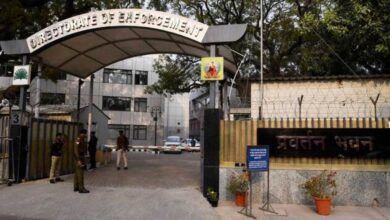
₹2,004 Crore Collected, ₹352 Crore Attached: The Earth Infrastructure Reckoning That 19,425 Homebuyers Cannot Afford to Forget
ED attaches fresh assets worth ₹140 crore in a massive alleged homebuyer fraud; four promoters face a money-laundering investigation, while old consumer disputes, unfinished projects and years of insolvency proceedings raise uncomfortable questions about accountability


When a real estate developer collects thousands of crores of rupees from homebuyers and investors by promising residential and commercial properties, timely possession and assured returns, the minimum expectation is straightforward: the money should translate into the promised properties, and the commitments made to purchasers should mean something.
But the latest investigation involving Earth Infrastructures Limited presents a deeply troubling picture, according to the Directorate of Enforcement (ED).
In a press release dated 12 October 2026, the ED’s Delhi Zonal Office-II announced the provisional attachment of immovable assets worth approximately ₹140 crore belonging to Earth Infrastructures Limited, its subsidiaries, its promoters, their family members and related entities. The agency said its ongoing money-laundering investigation concerned the collection of approximately ₹2,004 crore from more than 19,425 homebuyers and investors, allegedly followed by the diversion of substantial funds through group companies and related persons.
With the latest action, total attachments and seizures in the case, as stated by the ED, have reached ₹352 crore.
The four promoters named in the investigation are Avdhesh Kumar Goel, Rajnish Mittal, Atul Gupta and Vikas Gupta.
The financial figures are staggering. The questions they raise are even more serious.
Where did the money collected from purchasers go? How much was actually spent on the projects for which it was collected? Who ultimately benefited from the transactions allegedly used to divert the funds? Which assets can be traced and recovered? And why have so many purchasers had to navigate an exhausting maze of complaints, consumer litigation, insolvency proceedings and enforcement action?
These are not peripheral questions. They go to the heart of a real estate accountability crisis in which the ordinary purchaser can fulfil payment obligations but remain unable to obtain the property promised in return.
The allegations against Earth Infrastructure and its promoters must be proved through the applicable judicial process. Nevertheless, the scale of the investigation, the documented history of individual homebuyer disputes and the length of the insolvency process make this a matter demanding far more than another press release announcing an enforcement action.
The public deserves answers. The affected purchasers deserve a credible route to recovery.
₹2,004 crore and more than 19,425 purchasers: The scale of the allegations
According to the ED, Earth Infrastructure and its associated entities collected approximately ₹2,004 crore from more than 19,425 homebuyers and investors through promises involving residential and commercial units and assured returns.
The agency has alleged that substantial amounts were diverted or siphoned off through various group entities, related concerns and individuals.
Its investigation has also examined the use of proceeds allegedly generated through scheduled offences for the acquisition of movable and immovable assets in the names of entities and individuals connected with the promoters and directors.
The fundamental issue is not simply whether construction was delayed or whether contractual deadlines were missed. Construction projects can encounter genuine financial, regulatory and operational difficulties. A delay, by itself, does not establish fraud or money laundering.
The more serious question is whether the money collected from purchasers was used consistently with the purposes represented to them, and whether transactions involving associated entities resulted in the unlawful diversion of funds.
That is precisely the kind of financial trail that an effective investigation must establish through bank records, company accounts, property registries, contractual documents, beneficial ownership information and transaction-level evidence.
The ED’s allegations, if established through admissible evidence, would raise grave questions about the financial architecture through which the projects were promoted, funded and administered.
However, the total amount collected must not automatically be equated with the amount of proven criminal proceeds, and the entire amount cannot be described as stolen merely because it appears in an investigative statement. The precise financial loss, alleged diversion and recoverable assets must be determined through proper accounting and judicial processes.
For the homebuyers, however, the distinction does not diminish the urgency. They need a transparent account of the money, the status of their projects and the remedies actually available to them.
The ₹140 crore attachment: An important action, but not the end of the story
The ED’s 12 October announcement is a significant development in the investigation.
The agency has provisionally attached immovable assets worth approximately ₹140 crore associated with the company, its subsidiaries, the named promoters, family members and related entities.
It has also stated that total attachments and seizures in the case now stand at approximately ₹352 crore.
The distinction between these two figures matters.
The ₹140 crore figure refers to the fresh provisional attachment announced on 12 October. The ₹352 crore figure is the stated cumulative value of attachments and seizures, including seizures under Section 17 of the Prevention of Money Laundering Act, 2002. The two figures must not be added together.
More importantly, an attachment is not the same thing as a completed recovery for homebuyers. A provisional attachment is a measure intended to preserve property within the statutory framework while proceedings continue. It does not, by itself, establish final confiscation, prove the criminal guilt of an individual or establish that the attached property can immediately be distributed among purchasers.
Nor should an attachment announcement be presented as money already returned to victims.
The arithmetic nevertheless offers a useful perspective.
The newly announced attachment of ₹140 crore is equivalent to roughly 7% of the ED’s October headline figure of ₹2,004 crore in collections. The cumulative ₹352 crore in attachments and seizures is equivalent to approximately 17.6% of that figure.
These percentages are comparisons of headline values, not estimates of the amount legally recoverable or the amount ultimately refundable to purchasers. The assets may have different legal statuses, valuations and claims attached to them.
Yet the comparison underscores a central point: asset preservation is only one stage of accountability. The public also needs clarity about the ultimate realisation of assets, the adjudication of proceeds of crime, the completion of projects and the restitution available to eligible homebuyers.
The ED must continue tracing the financial trail. The authorities responsible for adjudicating attachments and dealing with the assets must move efficiently, subject to due process. And the insolvency and project-completion mechanisms must not remain disconnected from the practical needs of the people who paid for the properties.
The objective should not be to announce increasingly impressive attachment figures indefinitely. It should be to establish the money trail, secure the assets lawfully and deliver measurable outcomes.
The first major warning: Cash, jewellery and property documents recovered in April 2026
The latest attachment did not arise in isolation.
In a press release dated 11 April 2026, the ED stated that it had conducted searches on 10 April at ten premises in Delhi and Gurugram linked to the Earth Group, its directors, promoters and associated entities.
According to that release, the agency seized:
- Approximately ₹6.30 crore in cash.
- Jewellery valued at approximately ₹7.50 crore.
- Silver bullion and luxury watches.
- Property documents relating to more than 100 immovable properties, with an estimated value exceeding ₹100 crore.
The October release refers to jewellery valued at approximately ₹8.78 crore, rather than the ₹7.50 crore stated in April. The releases reviewed do not explain the difference, including whether it resulted from a revised valuation, a different assessment or another factor. That discrepancy warrants clarification rather than speculation.
The April release also described the investigation’s alleged financial trail in considerable detail. The ED said the diverted funds were used for purposes including land acquisitions in Gurugram, Delhi and Rajasthan in the names of group companies and family members, the routing of funds through group entities, personal land deals, advances to unrelated entities, salaries to family members allegedly without active business roles, and the subsequent sale of properties acquired with diverted funds.
The agency specifically identified several entities in connection with the alleged movement and use of proceeds of crime, including Lavender Infratech Pvt Ltd, Dhurav Real Estate Developers Pvt Ltd, Murlidhar Infracon Pvt Ltd, Banke Bihari Farming Pvt Ltd and Julian Infracon Pvt Ltd.
These are allegations attributed to the investigating agency. The identification of an entity in an investigation does not, by itself, establish that the entity or any individual associated with it committed an offence.
Nevertheless, the allegations demand a detailed, transaction-by-transaction examination.
If funds collected for property development were transferred through multiple companies, investigators must establish the origin, destination, beneficial ownership and ultimate use of each material transaction. If property was acquired using alleged proceeds of crime, the acquisition documents, consideration paid, source of funds and subsequent transfers must be examined. If assets were sold, the proceeds of those sales must also be traced.
The question is not merely whether a property exists or whose name appears in a registry. The question is whether the evidence establishes a legally relevant connection between the property and the alleged proceeds of crime.
That is where the real test of financial investigation lies.
₹2,024.45 crore or ₹2,004 crore? An inconsistency that should not be ignored
A close comparison of the ED’s own two press releases reveals an important numerical discrepancy.
The ED’s April 2026 press release stated that the group had collected approximately ₹2,024.45 crore from more than 19,425 homebuyers and investors.
The October 2026 press release gives the figure as approximately ₹2,004 crore.
The difference is ₹20.45 crore.
The later figure is rounded, but the April figure was stated more precisely. The documents reviewed do not explain whether the difference reflects a correction, a change in the scope of the calculation or some other reason.
There is no justification for guessing which explanation is correct.
The discrepancy does not, by itself, undermine the entire investigation. It does, however, illustrate why a case involving thousands of crores of rupees and more than 19,000 purchasers needs an intelligible and reconcilable financial account.
The investigating agency should publish or place before the competent forum a clear reconciliation of the collection figures, where legally permissible, specifying the period, entities, projects, receipts counted and adjustments made.
The same principle applies to estimates of diverted funds, the value of attached property, assets already seized and amounts that might ultimately be recovered.
Precision is not an administrative luxury in a financial crime investigation of this magnitude. It is central to credibility, accountability and the protection of every party’s legal rights.
₹467 crore allegedly diverted: Follow the transactions, not merely the property titles
Reporting in June 2026, citing the ED’s investigation, put the alleged diversion or siphoning of funds through group entities, related concerns and individuals at approximately ₹467 crore.
The figure is approximately 23.3% of the October release’s ₹2,004 crore collection figure, if the two totals are treated as comparable. That is an arithmetic comparison, not a finding that the remainder was properly spent or that the whole ₹467 crore has been judicially established as proceeds of crime.
The core investigative question is how the agency arrived at the alleged diversion figure and whether each material transaction can be independently traced.
A rigorous investigation should establish, among other things, how much money was received by each project entity; how much was spent on land, approvals, construction, consultants and other legitimate project expenses; what amounts were transferred to group companies; which transfers had documented commercial purposes; and which transactions, if any, lacked a credible business justification.
The same scrutiny is required for loans, advances, inter-company transfers, property acquisitions and disposals.
Investigators must also distinguish between a related-party transaction that is unusual, a transaction that caused a contractual or corporate-law violation, and a transaction that satisfies the legal elements of money laundering or another criminal offence. Those categories are not interchangeable.
Where evidence supports suspicion of concealed beneficial ownership, sham transactions, circular transfers or the use of third parties to hold assets, the investigators should pursue that evidence through lawful financial analysis and appropriate court processes.
Where the records establish legitimate expenditure or transactions unrelated to criminal proceeds, those facts should be recognised as well.
A credible investigation should be capable of explaining not only the accusation, but also the evidence that supports it.
Four promoters arrested; prosecution complaint filed
The ED’s October press release identifies Avdhesh Kumar Goel, Rajnish Mittal, Atul Gupta and Vikas Gupta as playing central roles in the alleged planning and execution of fund diversion through a complex web of transactions.
According to the agency, the four were arrested on 1 June 2026 under Section 19 of the Prevention of Money Laundering Act, 2002, after the prescribed legal procedure.
Contemporaneous reporting stated that they were produced before a special PMLA court in Delhi and that the court granted five days of ED custody for interrogation.
The ED further states that it filed a prosecution complaint on 29 July 2026 seeking the conviction of the accused persons and confiscation of properties worth more than ₹212 crore.
A prosecution complaint is a formal step in the criminal process. It is not a judgment of conviction, and filing it does not mean that every allegation has been judicially established.
The distinction is fundamental. Arrest, custody, prosecution, adjudication of property attachment and conviction are different legal stages.
The burden now is on the prosecution to present a coherent and legally sustainable evidentiary case, while the accused retain their rights to defend themselves and challenge the evidence.
The public must be able to distinguish between meaningful progress and a sequence of procedural announcements. The filing of a complaint is important, but the case must proceed through the applicable judicial stages without avoidable delay.
For purchasers who have already spent years seeking possession or refunds, the pace of that process matters enormously.
Five EOW FIRs and an SFIO complaint: The investigation did not begin yesterday
The ED states that its money-laundering investigation originated from five FIRs registered by the Economic Offences Wing of Delhi Police against Earth Infrastructures Limited, its directors and related entities under various provisions of the Indian Penal Code.
The agency also refers to a criminal complaint filed by the Serious Fraud Investigation Office under Section 447 of the Companies Act, 2013, which addresses fraud under that statute.
The combination of these proceedings is significant because the underlying issues extend beyond delayed construction. They include allegations of cheating, criminal breach of trust, conspiracy, corporate fraud and the use of associated entities in financial transactions.
The exact allegations, accused persons, evidence and procedural status can differ from one proceeding to another. A criminal complaint under the Companies Act is not itself proof of guilt, just as an FIR is not a conviction.
However, the existence of multiple proceedings makes coordination particularly important.
The agencies should avoid fragmented investigations in which the same bank accounts, company records, project collections and property transfers are examined in isolation by different authorities without a common view of the overall financial trail.
At the same time, each investigating agency must respect the scope of its statutory powers and the jurisdiction of the relevant court.
A consolidated evidentiary picture—with appropriate safeguards against double counting, duplication and prejudice—would help the authorities establish the facts more efficiently and assist courts in assessing the allegations.
The project’s history: From assured returns to years of uncertainty
The ED’s April 2026 press release identified several projects launched under the Earth brand across Delhi-NCR, Gurugram, Greater Noida and Lucknow.
The projects named by the agency included:
- Earth Towne.
- Earth Sapphire Court.
- Earth Copia.
- Earth Techone.
- Earth Iconic.
- Earth Titanium.
- Earth Elacasa.
- Earth Gracia.
- Earth Skygate.
The agency stated that corporate insolvency resolution proceedings had been initiated against Earth Infrastructures and associated companies following homebuyer applications concerning the non-completion of several projects.
The public record shows that the difficulties facing purchasers predate the latest ED action by many years.
Earth Copia: A consumer case records payments without possession
In Rupesh Kumar Gupta v. M/s Earth Infrastructure Ltd., decided by the National Consumer Disputes Redressal Commission on 29 May 2018, the complainant had booked an apartment in Earth Copia, Sector 112, Gurugram.
The agreed apartment price was ₹87,16,205. Under the agreement, possession was expected by 28 November 2015, inclusive of the applicable six-month grace period.
The complainant had paid ₹66,29,404 but stated that possession had not been offered and construction was not being carried out.
The NCDRC recorded that Earth Infrastructure had not filed its written version despite service of notice and that no one appeared for the company when the matter was heard.
The Commission directed the company to refund the full principal amount of ₹66,29,404, together with interest-based compensation calculated at the specified rates, and to pay ₹25,000 in costs.
This was a consumer dispute and an order against the company in that individual case, not a criminal conviction of its promoters.
But the order illustrates the practical consequences of a failed property commitment: a purchaser can pay a substantial portion of the price, wait beyond the contractual deadline and ultimately be forced to seek monetary relief through litigation.
Earth Studios: Another dispute over possession and assured returns
A separate consumer matter, Rajender Kumar & Anr. v. Earth Infrastructures Ltd., was decided by the Central Delhi District Consumer Disputes Redressal Commission on 3 June 2024, according to published legal reporting.
The dispute concerned a studio apartment in the Earth Studios project.
The complainants booked a unit for ₹18,42,625. They paid an advance of ₹6,20,000 and subsequently paid ₹11,70,000 under a memorandum of understanding. Possession had initially been expected by June 2013. The complainants also said they had been promised monthly returns of ₹11,700 following the specified payment.
According to the account recorded in the consumer proceedings, possession was delayed, the complainants alleged that construction had not commenced when they visited the site, and the assured returns were stopped in October 2015.
The Commission reportedly directed Earth Infrastructures to refund ₹11,70,000 with simple interest at 9% per annum, pay ₹30,000 in compensation and pay ₹10,000 towards litigation costs.
Again, this was an individual consumer adjudication, not a finding that every promoter had committed criminal fraud.
The significance lies in the recurring nature of the dispute: promised possession, payments made, difficulty obtaining the property and litigation to secure a refund.
A developer may contest the facts or rely on contractual and regulatory circumstances. Those arguments must be assessed through the relevant legal process. But repeated consumer disputes of this nature warrant serious examination of project-specific performance, disclosures and buyer remedies.
Earlier police action: The Earth Titanium Studios controversy
The history of law-enforcement action also extends back to 2017.
A report published by India Today on 20 February 2017 stated that Delhi Police’s Economic Offences Wing had arrested Avdhesh Kumar Goel in connection with allegations concerning homebuyers and criminal conspiracy.
According to that report, the EOW had received approximately 82 complaints from individuals who had invested in Earth Titanium Studios in Greater Noida.
The complaints reportedly concerned promises of possession within three years and assured returns at 12% per annum. The report stated that many investors had paid 80% to 90% of the amount at the time of booking, while the promised returns had stopped in 2015.
It further reported that investigators had found that construction work had not commenced at the site, even though the company had allegedly sent communications to investors suggesting that construction was progressing.
These are historical allegations and reported investigative findings. Their inclusion here must not be treated as proof of guilt in the present ED case or as confirmation of the final outcome of every related proceeding.
In August 2018, the Times of India reported the arrest of a senior manager, Amit Satija, in another police investigation concerning Earth Titanium Studios. The report described allegations involving the failure to deliver flats and recover investments.
The article reported police action at that stage; an arrest report alone does not determine ultimate criminal liability.
The significance of these historical reports is that purchaser complaints and police investigations concerning Earth-branded projects were already in the public domain years before the ₹140 crore attachment announced in October 2026.
That chronology demands careful scrutiny of what action was taken, which cases progressed, what evidence was collected and whether earlier interventions adequately protected purchasers.
It does not justify presuming that every allegation was true, but it makes a transparent account of the investigative history all the more important.
What the MCOCA proceedings did—and did not—establish
An investigative report must also include judicial developments that do not support the strongest possible accusation.
In January 2021, the Special Judge for the Maharashtra Control of Organised Crime Act at Tis Hazari Courts, Delhi, dismissed an application filed by the Unific Techone Patrons Independent Association seeking registration of an FIR under MCOCA against the named respondents.
The association had alleged a wider organised-crime conspiracy involving real estate projects and purchaser funds.
The court held that the material before it did not establish the statutory requirements for an MCOCA case. It also noted that the respondents were already being prosecuted in the cases referred to in the proceedings.
The order did not constitute a general finding that every underlying homebuyer complaint was false. Nor was it a criminal conviction. It was a decision on whether the legal threshold for the requested MCOCA proceedings had been met.
This distinction matters. An investigative article cannot responsibly present an unsuccessful request to invoke a particular statute as though it were a judicial finding of guilt under that statute.
Equally, the dismissal of that application does not erase independent consumer orders, other criminal proceedings or the ED’s subsequent money-laundering investigation.
Each proceeding must be reported according to its actual scope and outcome.
UP RERA’s records raise further questions about project timelines
Publicly accessible project pages on the Uttar Pradesh Real Estate Regulatory Authority’s website provide another perspective on the history of the Earth Group’s projects.
The pages reviewed list Earth Sapphire Court, Earth Techone and Earth Towne as ongoing projects.
Their declared completion dates are notable:
Earth Sapphire Court: The project page gives a declared completion date of 31 December 2018.
Earth Techone: The page gives a declared completion date of 30 June 2020 and records a six-month extension to 29 December 2020 in view of the COVID-19 pandemic.
Earth Towne: The page gives a declared completion date of 31 December 2021 and records an extension to 30 June 2022.
Those deadlines have long passed. The fact that the public pages reviewed continue to label the projects as ongoing should prompt questions about their present construction status, revised timelines, regulatory compliance, the status of allottee claims and the project-completion arrangements now in force.
An online status label is not proof of a criminal offence, and the project-rescue process must be considered separately. Nevertheless, public records should provide purchasers with a clear, current picture of the projects for which they paid.
The same pages display an aggregate figure of 293 complaints against the promoter. The project-specific complaint figures displayed are 44 for Earth Sapphire Court, 123 for Earth Techone and 98 for Earth Towne.
Those three project-specific figures add up to 265, not 293. The portal extracts reviewed do not explain the difference of 28 complaints.
The figures may reflect differences in the records or classifications maintained by the authority, but it would be inappropriate to speculate about the reason. UP RERA should reconcile the promoter-level and project-level numbers and make the position clear.
For purchasers, such information should not require detective work.
A regulator’s public portal should be a reliable source for project status, declared and revised deadlines, complaint counts, orders, compliance and the responsible entity.
Insolvency since 2018: A prolonged rescue process, not a substitute for accountability
Earth Infrastructures has been undergoing corporate insolvency resolution proceedings since June 2018, according to records published by the company and contemporaneous reporting.
The insolvency process was intended to address the company’s distressed position and the interests of creditors and homebuyers. Resolution plans were approved for certain projects in 2021, including plans involving Alpha Corp Development Private Limited and the Roma Unicon Designex Consortium.
Those plans subsequently faced further litigation.
On 30 January 2023, the National Company Law Appellate Tribunal set aside the relevant orders approving the plans. Appeals followed before the Supreme Court.
On 5 May 2026, the Supreme Court restored the resolution plans of Alpha Corp and Roma, allowing the relevant project-resolution process to proceed.
The Supreme Court’s judgment also criticised the Greater Noida Industrial Development Authority’s failure to adequately monitor project development and take timely measures, despite information about complaints from aggrieved homebuyers and delays in construction.
This is an important dimension of the story. The distress was not limited to a dispute between a developer and individual purchasers; it also involved prolonged insolvency proceedings, project-land arrangements, regulatory action and litigation over the mechanisms through which the projects could be completed.
The restoration of the plans offers a potential route towards completion of the relevant projects. But a restored resolution plan is not the same as completed construction, delivery of possession or a refund already paid.
Its implementation must be measured against actual milestones.
Which projects are being constructed? What funds have been committed and deployed? What are the revised delivery schedules? Which buyers will receive possession, and which may pursue other remedies? What happens where approvals, land rights, infrastructure or other dependencies remain unresolved?
The authorities and the entities responsible for implementation should communicate those answers in a manner purchasers can understand.
The criminal investigation and the insolvency process have different purposes. A criminal case seeks to establish criminal liability and pursue consequences prescribed by law. Insolvency resolution seeks to address the distressed company’s obligations through the applicable process, including project completion where the approved plan provides for it.
Neither process should be misrepresented as a substitute for the other.
The uncomfortable question of regulatory and institutional accountability
The Earth Infrastructure case raises questions extending beyond the conduct alleged against the company and its promoters.
Where a real estate project remains uncompleted for years, several institutions may have relevant responsibilities, depending on the project and the applicable law: planning and development authorities, land-owning agencies, building-approval authorities, RERA, insolvency professionals, lenders, auditors, company-law investigators and police agencies.
Responsibility must be established institution by institution. It would be wrong to assume that each authority failed or that every official involved bears liability.
Nevertheless, the Supreme Court’s 2026 observations regarding GNIDA’s monitoring and delayed action demonstrate why institutional oversight deserves scrutiny alongside the conduct of the developer.
Were project delays identified early enough? Were the required approvals obtained and maintained? Were representations to purchasers consistent with the project’s actual condition? Were contractual and regulatory defaults met with timely action? Were claims escalated and processed in accordance with the law?
These questions should be answered through records, not rhetoric.
The lesson is simple but uncomfortable: once thousands of purchasers have invested their money, delayed action can aggravate the consequences of a project’s distress. Effective oversight requires more than maintaining files. It requires timely decisions, reliable information and legally appropriate intervention.
The same standard must apply to enforcement agencies. Their work should be judged by the quality of evidence collected, the transparency of the process, the timely progress of cases and the legally sustainable outcomes achieved.
Attachments are not restitution: The crucial difference
The ₹352 crore figure is striking, but it must be interpreted correctly.
The ED describes it as the combined total of attachments and seizures in the case. It is not a statement that ₹352 crore has been confiscated finally and distributed among homebuyers.
An asset may be provisionally attached, seized, disputed, subject to adjudication or eventually dealt with through a legally prescribed process. The final outcome depends on the applicable proceedings and decisions.
The same caution applies to the ₹212 crore in properties for which the ED says it sought confiscation in its prosecution complaint. A request for confiscation is not itself a final confiscation order.
The relevant question for purchasers is not simply how much property has been attached, but what part of the assets can lawfully be realised or otherwise used for the purposes permitted by the governing legal framework, and what practical relief follows.
Restitution must not be promised where the law or the available evidence does not support it. Nor should the authorities allow confusion over the legal status of the assets to obscure the need for a clear account of the next steps.
A transparent public update should distinguish:
- The amount provisionally attached.
- The value and nature of assets seized.
- The amounts and properties covered by prosecution or confiscation requests.
- The assets subject to adjudication or challenge.
- Any amounts ultimately realised, restored or otherwise applied pursuant to lawful orders.
- The actual compensation, refund or other relief received by eligible purchasers, where applicable.
Such a framework would replace headline-driven reporting with meaningful accountability.
What must happen next: Six priorities for the authorities
The scale of the allegations warrants an urgent, coordinated and evidence-led response. The objective should be both a fair determination of criminal liability and effective protection of the lawful interests of purchasers.
1. A reconciled, project-wise financial account
The ED and the relevant investigating authorities should establish a clear account of project collections, legitimate development expenditure, transfers between associated entities, alleged diversion, property acquisitions and disposal proceeds.
The ₹20.45 crore difference between the April and October collection figures should be clarified. The basis of the reported ₹467 crore alleged diversion should also be explained through the evidence presented in the proceedings.
Where full public disclosure would compromise an investigation or violate legal restrictions, the relevant material should be placed before the competent forum.
2. Complete the asset trail and protect property lawfully
Investigators should continue tracing assets alleged to have been acquired from proceeds of crime, including assets transferred between entities or held by third parties.
Where the evidence supports action under the applicable law, the authorities should pursue it promptly. At the same time, they must examine ownership, beneficial interests, competing claims and the rights of persons who may not be involved in wrongdoing.
The objective must be lawful preservation and eventual disposition, not indiscriminate action based merely on association.
3. Speedy, fair proceedings and meaningful judicial progress
The PMLA case, the relevant scheduled-offence cases and the SFIO proceedings should progress as efficiently as the law permits.
Where evidence is ready, avoidable delay in filing, listing, service, disclosure or other procedural steps should be eliminated. Where a contested issue requires a judicial determination, it should be placed before the proper forum rather than left unresolved through administrative inaction.
Speed must never be achieved by compromising the accused’s fair-trial rights. A procedurally sound conviction, where the evidence justifies one, is more meaningful than premature declarations of guilt.
4. Publish reliable, current project-status information
UP RERA and other competent authorities should ensure that project information reflects current circumstances and clearly identifies the responsible entities, completion arrangements, revised milestones, outstanding approvals, complaint figures and relevant orders.
The unexplained difference between the UP RERA promoter-level complaint figure and the sum of the three project-specific counts should be reconciled.
Purchasers should not have to assemble the status of their investment from disconnected regulatory pages and years of news reports.
5. Measure resolution by actual outcomes for homebuyers
The insolvency and project-completion arrangements must be monitored against objective results: funding, construction progress, statutory approvals, possession, lawful refunds and resolution of eligible claims.
A court-restored plan is a process milestone, not proof that the promised homes have already been delivered.
Where completion is feasible under an approved plan, milestones should be followed closely. Where it is not, the available legal alternatives for the affected purchasers should be explained.
6. Make enforcement outcomes—not press releases—the ultimate measure
Public updates should make clear what has changed since the previous announcement: additional evidence, new assets traced, progress in adjudication, procedural developments, project completion and any money lawfully restored to affected parties.
The value of an attachment is important. The value of a completed investigation and a fair, timely legal outcome is greater.
A test case for real estate accountability
The Earth Infrastructure matter is a test of whether India’s institutional framework can address a complicated, long-running real estate dispute without allowing the passage of time to become an additional burden on purchasers.
The ED has identified a substantial alleged collection, described the alleged movement of funds through associated entities, arrested four promoters, filed a prosecution complaint and announced fresh asset attachment.
Consumer decisions have also documented individual cases in which purchasers sought refunds after possession was not delivered within the contractual period. Insolvency proceedings have continued for years, and the Supreme Court’s 2026 decision has restored key resolution plans after further litigation.
Each development has its own legal significance. Taken together, they show why a single attachment announcement cannot be the final measure of progress.
The promoters are entitled to the protections of the law. Allegations must be tested, evidence must be examined and guilt must be determined by the competent court. The same seriousness must be applied to the interests of the homebuyers, whose contractual and legal claims cannot be dismissed merely because the resolution of the wider dispute is complicated.
There must be no shortcuts to conviction, but neither should there be avoidable delays in investigation and trial. There must be no assumption that every transaction involving a related entity is criminal, but neither should genuinely suspicious transfers escape examination simply because they pass through a corporate structure. There must be no false promise that attachment automatically means recovery, but neither should the authorities lose sight of the relief that may lawfully be available to affected purchasers.
The central demand is straightforward: investigate thoroughly, follow the money, reconcile the figures, adjudicate the assets, implement the project-resolution arrangements and bring the criminal cases to timely, fair conclusions.
For a purchaser who paid for a home years ago, another official announcement is not the finish line.
The finish line is a lawful and transparent resolution—possession where promised and feasible, refunds or other remedies where legally due, a credible determination of criminal responsibility where evidence warrants it, and an explanation of what happened to the money.
Until those outcomes are demonstrated, the ₹140 crore attachment should be regarded as an important step in an unfinished process, not as a certificate that justice has been delivered.
DISCLAIMER: ALLEGATIONS ARE NOT CONVICTIONS
This article is based on the ED’s official press releases, publicly available regulatory and judicial records, and published news reports reviewed for this article. It reports allegations, investigative actions and the outcomes of specific proceedings as attributed to their respective sources.
The allegations of fraud, diversion of funds and money laundering against Earth Infrastructures Limited, its promoters and associated persons remain subject to the applicable judicial process. An FIR, arrest, search, seizure, provisional attachment or prosecution complaint does not, by itself, establish criminal guilt.
As of 20 October 2026, the public records and reporting reviewed for this article do not establish a final criminal conviction of the four named promoters in the ED’s present money-laundering case. This statement is limited to the records reviewed and should not be interpreted as a certification concerning every possible proceeding involving every named person.
The consumer commission orders discussed above concern specific disputes and the relief granted in those cases; they should not be represented as criminal convictions of individual promoters. The 2021 MCOCA order also rejected the particular application to invoke that statute and must be read within its actual scope.
The presumption of innocence and the requirement of proof must be respected. At the same time, the scale of the allegations and the interests of affected homebuyers justify continued scrutiny, a thorough investigation and timely, fair judicial proceedings.