Gyanesh Kumar : The Referee Who Learned to Salute: Twelve Years in Which India’s Election Commission Traded the Whistle for a Leash
A constitutional body that once made Prime Ministers flinch now lectures the Opposition, hides booth numbers, rewrites a voter form its own members called illegal, and still wants applause for “cleaning” the rolls. The record is public. The convictions are not. The smell is unmistakable.

If you want to know when a referee has joined the match, do not watch the final score. Watch who he shouts at.
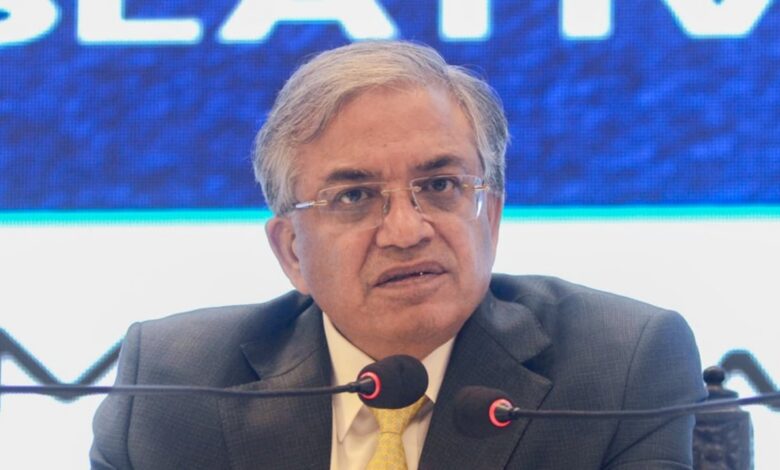
On 17 August 2025, Chief Election Commissioner Gyanesh Kumar stood at the National Media Centre and offered the Leader of the Opposition a binary that no independent umpire should ever utter: swear an affidavit within seven days, or apologise to the nation. There is no third option. The phrase he was punishing was “vote chori.” The data Rahul Gandhi had put on the table — duplicate entries, junk addresses, a single photograph recycled across booths in Karnataka and later Haryana — came from the Commission’s own rolls. The Commission’s answer was not an audit. It was a dare.
A year later, that same Commission was eating itself. The Indian Express reported that the other two Commissioners, Sukhbir Singh Sandhu and Vivek Joshi, had objected on record at least fourteen times in ten months to orders issued in the Election Commission’s name without their knowledge. They called a change to the new-voter form “unauthorised and illegal.” They warned that the electoral-roll database was being centralised in Delhi. They asked who had filed lakhs of deletion appeals in West Bengal in the Commission’s name. They wrote to the Cabinet Secretary about the IT keys. Then they sat through joint press briefings as if the house were not on fire.
That is not independence. That is a building with three nameplates and one working door.
What follows is not a courtroom judgment. It is the twelve-year public record — 2014 to 2026 — of how the Election Commission of India was stripped of the habits that once made it feared: equal anger, equal disclosure, equal distance from the government that staffs it. Allegations of “stolen elections” remain allegations. No court has convicted the Commission, any CEC, or the Prime Minister of rigging a poll. The documented conduct is damning enough without the fiction.
1. The job description that died
Article 324 did not create a publicity department. It created a body whose only useful emotion is suspicion — of every party, especially the one that signs the appointment file.
For a generation after T.N. Seshan, that suspicion was the brand. The Model Code was a stick. Dates were not negotiated like catering. The Commission did not hold press conferences to tell the Leader of the Opposition to say sorry.
The twelve-year corrosion is not one scandal. It is a method:
- Change who picks the referee so the executive holds two votes of three.
- Keep removal almost theatrical so the referee cannot be sacked and need not be brave.
- Decide party symbols by legislative headcount after the headcount has already been manufactured in the Assembly.
- Publish percentages, withhold booth counts.
- Clean the roll at industrial scale, then call every deleted citizen a ghost until a court forces you to print the list.
- When two of your own colleagues object fourteen times, call it “draft-stage queries.”
A watchdog that only barks at the guest is a pet.
2. 2019: the year the Code learned hierarchy
The 2019 general election is the first clean X-ray.
Prime Minister Narendra Modi, at Latur, asked first-time voters to dedicate their ballot to the Balakot strike and the Pulwama dead. The Commission’s own 2013 advisory, reiterated in March 2019, told parties not to drag the armed forces into the campaign. Field officers in Maharashtra flagged the speech as inconsistent with that advisory. Headquarters examined an eleven-page transcript and found no violation. Similar clean chits followed. Of five major Congress complaints against Modi, four died in the same room. Amit Shah walked on two. Election Commissioner Ashok Lavasa dissented. The majority did not even want the dissent on the minutes. Lavasa said he would stop attending meetings if minority views were erased. After the election, the tax department arrived at his family’s door. The family was later cleared. He left for the Asian Development Bank in 2020 and said honesty has a price. No court has held that the notices were revenge. The sequence does not require a poet.
NaMo TV — a channel that materialised to carry the Prime Minister — ran through silence periods. The Commission found the energy to stall a biopic. It could not find the energy to pull a campaign channel off the air with the same steel. Yogi Adityanath’s “Modi ji ki Sena” drew a wrist-tap. The top of the ticket drew philosophy.
In 2024 the philosophy became official doctrine. CEC Rajiv Kumar said the Commission had deliberately not touched the top two leaders on each side. That is not the Model Code. That is a private armistice among celebrities. The Code, on that telling, is for the municipal councillor who puts up one extra banner.
3. The money the Commission first feared, then refused to stop
Electoral bonds were a Finance Act product. The Commission is not the Finance Ministry. It is, however, the body that once wrote to the Law Ministry that the scheme could hide illegal foreign money and feed shell companies. Years later, when the Supreme Court was asked to freeze fresh bonds before Assembly elections, the same Commission opposed the stay.
Bonds worth about ₹12,008 crore were sold between 2017–18 and 2022–23. The BJP’s share in the figures then cited was about ₹6,564 crore, roughly 55 per cent. On 15 February 2024 a five-judge Bench killed the scheme as a violation of the voter’s right to know. That judgment convicts a statute, not a Commissioner. It also records, in the background, an institution that knew the opacity and learned to live with it.
A referee who warns against the marked deck and then objects to pausing the game is not confused. He has chosen a side of the table.
4. How you capture a Commission without a coup: the 2023 Act
In March 2023 the Supreme Court, in Anoop Baranwal, did the job Parliament had dodged for seventy-three years. Until a law existed, the CEC and ECs would be picked by the Prime Minister, the Leader of the Opposition, and the Chief Justice of India. The judge was the only person in the room who did not need the government’s next favour.
The Chief Election Commissioner and Other Election Commissioners Act, 2023 kept the Prime Minister, kept the LoP, and swapped the Chief Justice for a Union Minister nominated by the Prime Minister. Two-one. Search Committee under the Law Minister. Power to look outside the shortlist of five. Adhir Ranjan Chowdhury dissented on Sandhu and Gyanesh Kumar in March 2024. Rahul Gandhi dissented when Kumar was made CEC and Joshi was appointed in February 2025. On 23 September 2026 the Supreme Court, split on procedure, parked the challenge before a Constitution Bench. The law still runs the building.
Removal completes the architecture. The CEC goes only like a Supreme Court judge — proved misbehaviour or incapacity, Parliament, special majority. The other two Commissioners go on the CEC’s recommendation. So the member most protected from the House is the member who can, in law, unseat the other two. “Collegial Commission” is the letterhead. Hierarchy is the Act.
In March 2026 the Opposition filed the first removal notice in the history of the republic against a sitting CEC — 130 Lok Sabha signatures, 63 Rajya Sabha signatures — citing partisan conduct, SIR deletions, and that August ultimatum to Gandhi. A notice is not a conviction. It is a thermometer. The mercury is in the red.
5. The empty chair, then the new furniture
9 March 2024. Election Commissioner Arun Goel resigned with more than three years left on his clock, days before the Lok Sabha schedule. Anup Chandra Pandey had already retired. One man, Rajiv Kumar, held the Commission on the eve of 900 million electors. Official reason: personal. Reported friction included the February 2023 order that gave the Shiv Sena name and bow-and-arrow to the Eknath Shinde faction on a legislative-majority test after the majority had been produced in the House. The same test, a year later, gave the NCP name and clock to Ajit Pawar — 57 of 81 legislators, the founder reduced to a suffix and a borrowed symbol. The Supreme Court had to order newspaper disclaimers so voters would know the clock was still in court. When the same formula repeats — split the party, count the MLAs who walked, hand them the brand — the Commission is not discovering law. It is notarising a method.
Gyanesh Kumar, 1988-batch Kerala IAS, retired as Secretary, Cooperation, walked into the Commission in March 2024, and became the 26th CEC on 19 February 2025. His official biography is IIT Kanpur, Harvard, Home, Defence, the Article 370 file, the Ram Janmabhoomi trust paperwork. None of that is a crime. All of it is a reminder that the man now umpiring the match spent the previous decade on the government’s most political construction sites. A neutral country would have asked him to recuse from the appearance of being the project’s next phase. This country made him Chief.
6. 2024: the year of the missing number
Democracy is arithmetic before it is poetry. The 2024 Lok Sabha election is where the arithmetic went dark.
Phase-1 final turnout arrived eleven days late and several points above the polling-day estimate. The Commission said the voter-turnout app is a “trend,” Form 17C is given to agents, and uploading the scans for the public would cause “chaos.” Association for Democratic Reforms later reported that votes counted matched votes polled in only five parliamentary constituencies. In 538 others there was a mismatch: about 5.55 lakh fewer counted than polled across 362 seats, about 35,000 extra counted across 176, a gross gap it put at 5,89,691. The Commission declared results first and explained later. ADR asked for Forms 17C, 20, 21C, 21D, 21E in public. The Commission’s posture remains that the citizen is not a polling agent and should stop pretending to be one.
A referee who will not pin the scorecard to the board is asking to be accused. He should not act shocked when the accusation arrives.
7. Maharashtra and Haryana: the allegations the Commission answered with a press note
Maharashtra Assembly, November 2024. Between the Lok Sabha and the Assembly — five months — the Commission’s own reply to Congress recorded 48.81 lakh additions, 8.00 lakh deletions, net +40.81 lakh, taking the roll from 9.29 crore to 9.70 crore. Congress claimed 50 seats saw 50,000-plus new electors and that the ruling alliance swept 47 of them. The Commission called that “factually incorrect”: only six Assembly seats crossed 50,000 additions. Independent analyses still found the jump demographically fat, concentrated in seats the BJP had lost in May, and paired with a late-evening turnout leap from 58.22 per cent at 5 p.m. to 66.05 per cent by midnight — about 48 lakh additional marks after dusk. An ERO in Tuljapur filed an FIR over fake-Aadhaar registrations. The Commission’s letter said the FIR was “under investigation.” That phrase is where Indian inquiries go to sleep.
Haryana, 2024. Gandhi alleged about 25 lakh compromised entries in a 2-crore roll — duplicates, bulk addresses, a Brazilian model’s face printed across names in Rai. Exit polls had given Congress the state; the result went the other way by thin combined margins in a handful of seats. Ground reporting found a mess of misprints, a dead voter still live, a duplicate EPIC — sloppiness that can be weaponised even when it begins as clerk-work. The Commission’s reply was the familiar wall: process followed, allegations baseless, bring an affidavit.
Process followed is not the same as roll clean. A Commission that treated a 40-lakh five-month bulge as a demographic miracle should have published booth-level addition maps the same week. It published a rebuttal.
8. SIR: delete first, explain when the court shouts
June 2025, Bihar. Special Intensive Revision. The last comparable intensive clean-up was a generation old. The draft shed about 65 lakh names from 7.89 crore. The final roll settled near 7.42 crore, a 6 per cent cut. The Supreme Court had to order publication of the excluded list with reasons. Later reporting said nearly 99 per cent of Bihar’s deletions were death, migration or duplication — which, if true, makes the citizenship-theatre look like a trailer stapled to a clerical job. On 27 May 2026 the Court upheld SIR’s legal power under Article 324 and Section 21(3), and still had to tell the Commission to send citizenship-doubt cases to the proper authority and to hear the wrongly marked absent. Power, yes. Manners, no.
Then the machine went national. Draft strikes across 30 States and UTs crossed 13 crore names in the Indian Express tally. West Bengal: about 60 lakh flagged for software “logical discrepancies,” about 27 lakh deleted after judicial officers; 38 lakh tribunal appeals, of which 16.10 lakh sought deletion of people the judges had put back; Sandhu asked who authorised those appeals. In 49 of 294 Bengal seats, deletions exceeded the victory margin. Delhi’s draft dropped about 47 lakh of 1.45 crore — one in three — and the Supreme Court noticed “mechanical” notices. Goa’s EROs cleared 97 people on documents after a Court order; eight emails in seven days could not make the software accept the human decision. Ninety-seven is a small number. A Commission that cannot enter a court-compliant “yes” into its own database is not conducting a revision. It is conducting a surrender to code.
Form 6, the statutory doorway for every first-time voter, grew a question no rule had authorised: do you or your parents or grandparents “exist” on the last SIR roll? Joshi said in May the form cannot be rewritten without amending the 1960 Rules. Sandhu agreed. The portal shipped anyway. In August Sandhu wrote “unauthorised and illegal” and “must be removed immediately.” The question was still there. Two Commissioners versus one portal. The portal won.
That is the real SIR story. Not that rolls contain ghosts — they do. That the majority of a three-member constitutional body says the majority was not in the room when the locks were changed.
9. The inventory, without the mythology
What has been put on this Commission since 2014, in the public square:
Alleged frauds and “vote theft.” Mahadevapura and Aland in Karnataka; Haryana’s 25-lakh charge; Maharashtra’s 40-lakh bulge and late turnout spike; “vote chori” as a national slogan from August 2025 onward. Status: political allegation plus selective documentary exhibits. No criminal conviction of the Commission.
Controversies of conduct. 2019 MCC clean chits and Lavasa’s erased minority; NaMo TV; 2024 “we don’t touch the top two”; Goel’s eve-of-poll resignation; Shiv Sena and NCP symbol orders on legislative majority; Gyanesh Kumar’s affidavit-or-apologise press conference; Opposition walkouts from the CEC’s office; the first CEC removal notice in Indian history.
Opacity fights. Delayed 2024 turnout; refusal to upload Form 17C for the public; mismatch tables from ADR; VVPAT sample frozen at five machines per constituency; VVPAT slips discarded early after 2019 per RTI; machine-readable bulk rolls denied to auditors.
The funding shadow. Electoral bonds, the Commission’s early warning, later opposition to a stay, the Supreme Court’s 2024 kill-shot.
The deletion machine. SIR’s 13-crore draft cut, Bengal’s 27 lakh, Delhi’s 47 lakh off the draft, Bihar’s 6 per cent final shrink, software that overrode EROs, Form 6 rewritten against two Commissioners’ written advice.
The law that leashed appointment. 2023 Act: CJI out, Minister in, Search Committee under Law Minister, pick-outside-the-panel power, unequal removal.
Call them “scams” if you are on a stage. Call them what a newspaper can defend: a pattern of institutional design and institutional behaviour that consistently increases executive comfort and citizen darkness. That sentence does not need a FIR to be true.
10. The taunt this building has earned
Nirvachan Sadan’s favourite sermon is that India’s elections are the gold standard and that anyone who wants the booth file is a conspiracy theorist.
Then its own majority writes “illegal” on Form 6.
Then its own majority asks who filed 16 lakh appeals in its name.
Then its own majority tells the Cabinet Secretary that the IT backbone was moved in the night.
Then its Chief tells the Opposition to apologise for reading the rolls the Commission itself printed.
Then a Constitution Bench is still pending on the law that chose these men.
A tiger does not write to the Cabinet Secretary. A leashed dog does — and only after the chain has cut the skin.
The ruling party will say every loser since the first EVM has cried fraud, that SIR is hygiene, that Lavasa was one vote in three, that symbols law is old paragraph 15, that Form 17C already sits with the candidate. Some of that is legally correct. None of it explains why a Commission that is sure of itself will not put the same Form 17C on a website. None of it explains why a statutory form was edited by a portal. None of it explains why the appointment law treated a Chief Justice as an obstacle. Confidence publishes. Insecurity lectures.
11. What “investigate now” must mean
Not a mob. A clock.
- Publish the fourteen internal notes and the Cabinet Secretary letters, with the Commission’s paragraph-by-paragraph reply.
- Upload Form 17C Part I scans for 2024 Lok Sabha and every SIR-period Assembly election, booth by booth, within a fortnight, and as a standing 48-hour rule thereafter.
- Court-supervised audit of ERONet/ECINet write-access — names, dates, legal instrument.
- Restore Form 6 to the 1960 Rules text until Parliament or the Union amends the Rules in daylight.
- Time-bound SIR appeal dashboards: filed, restored, confirmed, pending, by constituency.
- Constitution Bench decision on the 2023 Act on a fixed calendar.
- Where an ERO has already filed an FIR — Tuljapur and every cousin of it — the file leaves “under investigation” and enters a charge-sheet or a reasoned closure, in months, not legislatures.
- Particularised booth complaints from Mahadevapura, Rai, and the Maharashtra bulge seats get the same forensic treatment the state reserves for the Opposition’s bank accounts. If the allegation is theatre, kill it with the roll. If it is not, stop hiding behind the word “process.”
Enforcement agencies that can find a dissenter’s family and cannot find a duplicate EPIC are not agencies. They are a mood.
DISCLAIMER
This is an investigative opinion built from published court orders, statutes, official Commission letters, and reporting by national newspapers and news agencies.
- Allegations remain allegations until a competent court or a legally empowered inquiry proves them.
- No court of law has convicted, as of this writing, the Election Commission of India, Chief Election Commissioner Gyanesh Kumar, any former CEC or Election Commissioner, Prime Minister Narendra Modi, or any political party of the criminal offence of “stealing” or rigging a national or state election.
- The Supreme Court’s 27 May 2026 judgment upheld the constitutional power to conduct the Bihar SIR. That is not a finding that every deletion in every State was correct. It is also not a finding of fraud.
- The 15 February 2024 judgment struck down electoral bonds. It did not convict the Election Commission of a crime.
- Tax proceedings involving the family of former Election Commissioner Ashok Lavasa did not end in a conviction establishing official retaliation.
- Phrases such as “vote chori,” “treason,” “murder of democracy,” and “leashed dog” are political or rhetorical characterisations, not judicial holdings.
- Draft-roll deletion totals, including figures of “13 crore” and State SIR cuts, are process numbers. Draft is not final. Appeal exists. Restoration exists. Opacity about who was cut, why, and by whose login does not cease to be opacity because an appeal window exists.
- Symbol orders in the Shiv Sena and NCP disputes applied paragraph 15 of the Symbols Order as the Commission read it. Courts have supervised parts of the aftermath. Those orders are not, by themselves, proof of a conspiracy.
Demand, again: tighter, faster, document-first investigation of every particularised charge of roll fraud or software override; time-bound trials where a case exists; public closure where it does not. A Commission that cannot stand an audit has already given its verdict on itself.
The whistle is still on the table. The hand that should lift it has been taught to salute.