How Loanwalle Sachin Mittal And Godrej Collectively Defraud The Homebuyers?
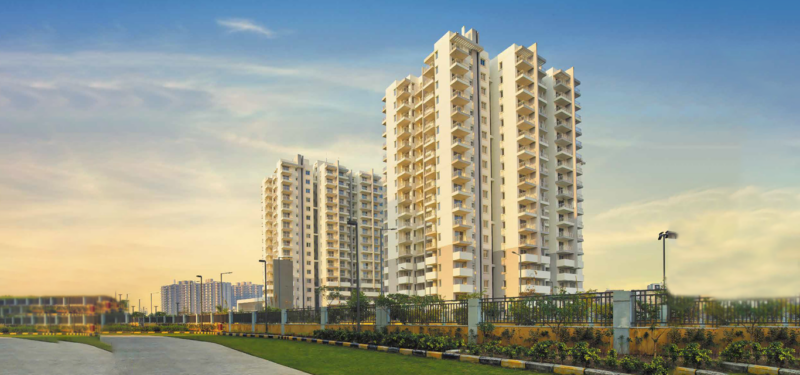
Godrej Summit in Gurugram has appeared in two very different kinds of legal proceedings. In one, the National Consumer Disputes Redressal Commission has dealt with complaints concerning promised connectivity, amenities, possession, cancellation and refunds. In another, the Delhi High Court recorded a police investigation into an alleged multi-victim home-loan scheme in which Rajni Bala was allegedly induced to take a loan against a Godrej Summit apartment she allegedly never received. The records seem to hint at a broader pattern of fraud by Godrej and Sachin Mittal. The overlap raises an important public-interest question: how vulnerable can a homebuyer become when property marketing, bank finance, intermediaries and alleged fraudulent documentation collide?


Godrej Summit, Loanwalle & Sachin Mittal: Where Homebuyer Disputes Meet an Alleged Loan Fraud Network
A homebuyer normally enters the real-estate market believing that the most difficult part of purchasing a house is arranging the money. The legal title, the builder’s representations, the bank’s due diligence and the physical existence of the apartment are supposed to provide layers of protection. But what happens when those layers begin to fail?
What happens when a property becomes the subject of a criminal investigation involving alleged forged documents and fraudulent home loans, while the same project has separately generated consumer litigation over connectivity, amenities, possession and refund disputes?
That is the uncomfortable question emerging from the record surrounding Godrej Summit, a residential project in Sector 104, Gurugram.
Here, we start with the consumer-law history of Godrej Summit. Multiple homebuyers approached consumer fora complaining about deficiencies involving promised infrastructure, possession, amenities, cancellation and refunds. In 2024, the National Consumer Disputes Redressal Commission ordered Godrej Projects Development Ltd. to refund more than ₹4 crore across five cases concerning the project, including disputes over a promised 24-metre-wide road connecting the project to the Dwarka Expressway and other amenities.
The second story is much darker. In a Delhi Police Special Cell investigation considered by the Delhi High Court in Sachin Mittal v. State (NCT of Delhi), the prosecution alleged that a network involving Sachin Mittal and several associates procured fraudulent home loans using forged property documents. One of the properties specifically identified in the investigation was Flat L-0706, seventh floor, Godrej Summit, Sector 104, Dwarka Expressway.
The Court recorded the allegation that a woman named Rajni Bala, a resident of Shahdara, met Sachin Mittal at his Panchsheel Enclave office, where Udit Khullar was also present. According to the prosecution’s case recorded in the bail order, she was induced to take a home loan against the Godrej Summit property. The allegation was that she subsequently received neither possession of the property nor any amount from the accused persons. Mittal was granted regular bail by the Delhi High Court in March 2024, and the Court expressly did not decide the merits of the prosecution’s case.
Yet the allegation deserves attention because it exposes a particularly dangerous vulnerability in the home-buying ecosystem: the possibility that the property document, the borrower, the seller, the loan and the money can become parts of a transaction that exists on paper without producing the home that the borrower believes he or she has financed.
The Godrej Summit apartment at the centre of the police investigation
The most important starting point is the specific property identified by the Delhi Police investigation: L-0706 at Godrej Summit.
The prosecution’s case, as recorded by the Delhi High Court, was that Rajni Bala was introduced into the alleged arrangement and induced to take a home loan on this property. The allegation was not simply that she bought a flat and later became dissatisfied with the builder. It was substantially different.
According to the status report placed before the High Court, Rajni Bala met Sachin Mittal at his office in Panchsheel Enclave. Udit Khullar was also present. The prosecution alleged that the two induced her to take a home loan on property L-0706 at Godrej Summit. The crucial allegation came next: she allegedly neither obtained possession of the property nor received any amount from the persons accused in the case. That distinction matters.
In an ordinary failed property transaction, the buyer pays money, the developer delays possession or fails to provide promised amenities, and the buyer eventually approaches RERA or a consumer commission.
In the case described by the Delhi Police investigation, the alleged mechanism was different: a person was allegedly brought into a home-loan transaction, property documentation was allegedly used to obtain bank finance, and the alleged borrower could ultimately be left with the liability without the corresponding economic benefit of owning or possessing the property. That is why the Godrej Summit reference in the Delhi High Court order is significant.
The larger alleged home-loan network
The Rajni Bala allegation did not stand alone in the prosecution’s narrative. The Delhi High Court recorded that the investigation had uncovered 16 other alleged fraudulent home-loan cases involving persons including Himanshu Rasgotra, Vishal Oberoi, Shobhit Agarwal, Saurabh Mittal and Udit Khullar.
The prosecution described the investigation as a multi-victim matter and told the Court that 16 victims had been identified. The alleged mechanism was elaborate. The prosecution alleged that properties were booked or represented through questionable documentation, that documents were forged, and that loans were obtained from banks against those properties.
One example in the same High Court record concerned a ₹3-crore IDBI Bank loan against Villa A-3 in The Hermitage, Sector 103, Gurugram. The investigation allegedly traced transfers between accounts associated with accused persons and Naman Finlease Pvt. Ltd., the NBFC in which Sachin Mittal was described as a director and major shareholder. The prosecution further alleged that another ₹3.80-crore ICICI Bank loan was transferred into an account associated with Vishal Oberoi, with money subsequently moving into an account of Naman Finlease.
These banking transactions formed part of the prosecution’s case against Mittal. Mittal’s defence disputed the prosecution’s narrative and argued that he had been falsely implicated. His counsel also disputed the assertion that 16 victims had been identified and challenged the prosecution’s interpretation of the transactions. The Court ultimately granted bail.
What makes the Godrej Summit reference unusual?
The Godrej Summit reference becomes more important when it is placed beside the project’s separate consumer litigation. Godrej Summit was marketed as a premium residential development in Sector 104, Gurugram. But several homebuyers subsequently approached the consumer courts over disputes concerning the project’s infrastructure and promised features. This creates an unusual situation.
The same project appears in:
one set of cases involving allegations of fraudulent home-loan documentation, and another set of cases involving disputes between homebuyers and the developer over promised infrastructure, amenities, possession and refunds. But from the perspective of an ordinary homebuyer, the underlying vulnerability is similar.
A person buying a home is exposed to a chain of institutions:
developer → property documentation → sales representation → bank/NBFC → loan documentation → registration/title → possession → infrastructure.
If any link fails, the buyer can be trapped. If several links fail simultaneously, the buyer’s exposure can become enormous.
The 2024 NCDRC orders: ₹4 crore refund controversy
The second major part of the Godrej Summit story emerged in October 2024. The National Consumer Disputes Redressal Commission ordered Godrej Projects to refund more than ₹4 crore to homebuyers across five separate cases. The cases concerned Godrej Summit in Sector 104, Gurugram.
The central dispute involved a promised 24-metre-wide road connecting the project to the Dwarka Expressway. The NCDRC recorded that even after seven years from the relevant period, the road had not been constructed. The Commission also considered the fact that alternative access arrangements involved a narrow road through Parcel A and that there were encroachment issues affecting the alternative entrance and exit.
The homebuyers had argued that connectivity was not a minor amenity but an important factor influencing their decision to buy. That argument has considerable significance in real-estate transactions.
A road is not merely decorative infrastructure.
Connectivity can influence:
- property value;
- commuting time;
- emergency access;
- commercial attractiveness;
- rental potential;
- resale prospects;
- quality of life.
If a project is marketed on the basis of a specific connectivity feature and that feature does not materialise, the consumer question becomes whether the representation materially influenced the purchase decision. The NCDRC considered the road issue significant enough to order refunds in the five cases.
Godrej’s defence was not that the dispute did not exist
Godrej Projects disputed the characterization of the problem. The company’s position, as reported in its exchange clarification, was particularly important. Godrej Properties disclosed to the stock exchanges that the NCDRC order related to the alleged failure to construct the 24-metre road, but pointed out that the road fell outside the project.
The company also said that in a previous order concerning the same project, the NCDRC had observed that the developer was not liable to construct the road outside the project. Godrej stated that the matter was sub judice and that it intended to appeal. This response matters because it prevents the consumer orders from being presented as an uncontested finding that Godrej deliberately deceived buyers.
The judicial record demonstrates that the Commission ordered refunds. The company’s own exchange filing demonstrates that Godrej disputed the legal basis for liability and said it was preparing to challenge the orders.
The Rajiv Singhal case
One of the earlier Godrej Summit cases provides a detailed picture of the homebuyer dispute.
Rajiv Singhal booked unit C-0701 in Godrej Summit. The NCDRC record shows that he paid approximately ₹51.36 lakh toward the apartment. The apartment buyer agreement contemplated possession after 41 months, with a six-month grace period. The developer obtained an occupation certificate in June 2017 and offered possession shortly thereafter. But Singhal did not accept the position that the apartment was ready in the sense contemplated by the contract and marketing material.
He raised issues including the absence of the promised 24-metre road, safety-related concerns and the promised proximity to the Dwarka Expressway. He withheld the final payment. Godrej subsequently cancelled the allotment and forfeited approximately ₹46.95 lakh as earnest money, according to the NCDRC record. The consumer commission found the buyer’s grievance concerning the missing road and other infrastructure sufficiently serious to justify refund.
It directed refund of the entire principal amount of approximately ₹51.36 lakh, together with simple interest at 9% per annum, subject to verification of actual payments, and also awarded ₹25,000 in litigation costs. The case is particularly important because it demonstrates the financial asymmetry confronting a homebuyer. The buyer had already paid more than ₹51 lakh.
The builder’s position was that possession had been offered and the buyer had failed to make the balance payment. The buyer’s position was that the project had not delivered important promised features and therefore the final payment should not be treated as an ordinary default. The consumer commission sided with the buyer on the refund question.
The Anil Karlekar case
Another important case involved Anil Karlekar and Rajat Karlekar. They booked an apartment in Godrej Summit in January 2014 and paid ₹10 lakh as application money. The total amount paid eventually reached approximately ₹51.12 lakh. The buyers later sought cancellation and refund after alleging that promised amenities were not available.
The NCDRC did not grant the developer the right to retain 20% of the basic sale price as earnest money. Instead, it permitted deduction of 10% of the basic sale price, amounting to approximately ₹17.08 lakh, and ordered refund of approximately ₹34.04 lakh, with simple interest at 6% per annum from the respective dates of payment.
The dispute subsequently reached the Supreme Court. In February 2025, the Supreme Court dealt with the appeal arising from the NCDRC order. The Supreme Court’s judgment is important because it examined the law concerning earnest-money forfeiture and the reciprocal obligations of a developer and buyer.
The case demonstrates that homebuyer disputes are not necessarily resolved simply by pointing to the cancellation clause in the builder-buyer agreement. The enforceability and reasonableness of the forfeiture mechanism can itself become the subject of judicial scrutiny.
Why the refund cases matter
Taken individually, each case concerns its own facts. Taken collectively, however, they show a recurring problem in large real-estate transactions:
the homebuyer pays first and argues later.
The buyer commits capital. The buyer takes a loan. The buyer begins paying interest. The buyer expects possession. Then an infrastructure issue, possession dispute, contractual dispute or amenity problem emerges. At that point, the buyer’s money is already locked into the transaction. This is where the consumer litigation becomes important.
The NCDRC repeatedly examined whether the builder’s contractual and advertised obligations had actually been fulfilled. And in several cases involving Godrej Summit, it ordered refunds.
Another layer: the Pratibha and Nupur Bansal cases
The October 2024 NCDRC orders also involved cases filed by Pratibha Bansal and Sandeep Bansal, and Nupur Bansal and Sandeep Bansal.
The complainants sought refunds running into substantial amounts and alleged deficiencies relating to the project. The NCDRC’s October 11, 2024 orders formed part of the group of five cases that resulted in the widely reported aggregate refund amount exceeding ₹4 crore. These cases matter because they show that the 2024 controversy was not a single isolated consumer complaint. Multiple homebuyers were simultaneously litigating issues concerning the same development.
Sunita Malhotra’s case
Another October 11, 2024 matter involved Sunita Malhotra, who sought cancellation of the possession offer and refund of approximately ₹2.07 crore, along with interest. Her complaint concerned the Godrej Summit project and alleged deficiencies associated with the property and possession. Again, the significance lies not simply in the amount claimed.
A ₹2-crore-plus residential purchase illustrates the scale of financial exposure that a buyer can carry while a dispute remains unresolved.
For a typical homebuyer, this is not an ordinary consumer transaction.
It can represent:
- decades of savings;
- a housing loan;
- monthly EMI commitments;
- rental expenditure;
- tax consequences;
- opportunity costs;
- and the family’s primary asset.
Nitin Sharma and the wider amenities dispute
The October 2024 litigation also included Nitin Sharma and Meenoo Sharma, whose case concerned allegations of deficiencies in Godrej Summit. The case record described representations about modern amenities, connectivity to the Dwarka Expressway and other project features. Such cases are important because they show why real-estate advertisements are not merely marketing decoration.
A buyer can make a purchase decision based on a project’s stated location, infrastructure, accessibility and amenities. If those representations later prove materially different from the delivered reality, the consumer-law consequences can become significant.
The 24-metre road became the symbol of the controversy
The 24-metre road became the central symbol of the Godrej Summit litigation. For Godrej, the legal position was that the road was outside the project and was to be developed by government authorities. For several buyers, however, the road was allegedly an important reason for purchasing the property. That difference in perspective explains much of the litigation.
The developer looked at the contractual and physical boundaries of its responsibility. The buyers looked at the economic proposition they believed they had purchased. The consumer commission was asked to determine whether the developer’s obligations had been adequately discharged. The resulting orders demonstrate that the distinction between an external infrastructure obligation and a marketing representation can become legally consequential.
And then comes Sachin Mittal and Loanwalle
The Sachin Mittal controversy belongs to a different part of the story. Mittal was associated with Naman Finlease, an NBFC, and Loanwalle was associated with its digital lending operations. The Delhi Police investigation described a purported network involving several people. The prosecution alleged that Mittal was central to the operation and that associates were used to arrange fraudulent home loans and documentation.
The High Court recorded allegations that Mittal operated Naman Finlease and that, according to the prosecution, money from some transactions moved through accounts connected with the company. The defence disputed the prosecution’s account.
It is significant enough to demand attention because of the alleged mechanism. The alleged scheme did not depend simply on stealing money from a bank account. It allegedly exploited the much larger machinery of real estate and mortgage finance.
The alleged mechanism: create the appearance of a legitimate home purchase
The alleged home-loan model described in the Delhi High Court order can be understood as a chain.
First comes the property. Then comes the alleged buyer. Then comes the alleged seller. Then comes the documentation. Then comes the bank. Once the bank believes that a legitimate property transaction exists, it can disburse a substantial loan. The prosecution alleged that forged documents and questionable ownership arrangements were used to create this appearance of legitimacy.
The danger is obvious. A home loan can run into crores. A fraudulent personal loan may steal thousands. A fraudulent mortgage transaction can move millions. And the borrower may become the weakest person in the entire chain.
The borrower can be left with the debt
This is perhaps the most disturbing feature of the allegations involving Rajni Bala. According to the prosecution case recorded by the High Court, she allegedly did not receive possession of the Godrej Summit apartment and did not receive the money from the accused persons.
But the loan existed. That creates a nightmare scenario. The bank’s claim is based on the loan documentation. The buyer’s claim is based on the property transaction. The developer’s records may concern the allotment and property. And the alleged fraud may sit somewhere in the middle.
The person who ultimately carries the loan liability can be left trying to prove that the underlying transaction was fraudulent. That is why fraud involving home loans is particularly dangerous. The borrower may not simply lose money. The borrower can acquire a long-term financial liability without receiving the asset that was supposed to secure it.
The Loanwalle connection: another form of vulnerability
The Loanwalle controversy provides another dimension. The Karnataka High Court considered a case involving Naman Finlease and a borrower who had obtained a ₹25,000 loan through the Loanwalle application.
The court record stated that the loan carried interest at 1% per day. That figure needs to be handled carefully. The Karnataka case concerns the specific loan before the Court. It does not establish that every Loanwalle loan carried a 1%-per-day interest rate. But mathematically, the figure is extraordinary.
At simple annualisation:
1% per day × 365 days = 365% nominal annual interest.
If the 1% daily charge were actually compounded every day and carried forward for an entire year, the effective annual rate would be approximately:
(1.01)^365 − 1 ≈ 3,678%
That is not the same as saying that the borrower in the Karnataka case actually paid a 3,678% annual effective rate. The loan was short-term.
But the calculation demonstrates the extraordinary economics of a 1%-per-day structure.
The ₹40,000 example
Consider the structure described in the proposed scenario. Suppose a borrower is sanctioned ₹40,000. If a 10% fee is deducted upfront, the borrower receives only ₹36,000. At 1% per day on the ₹40,000 principal, 30 days of interest equals ₹12,000. Therefore, the borrower would face a repayment obligation of approximately ₹52,000 after 30 days if the fee is treated separately from the interest.
That means the borrower receives ₹36,000 in cash but has a ₹52,000 repayment obligation. The difference is ₹16,000. The economics become even more severe if the borrower repeatedly renews or rolls over the loan.
But this calculation should not be presented as the standard economics of every Loanwalle loan unless documentary evidence establishes that structure across the portfolio.
The debt trap question
This is where digital lending deserves scrutiny. A short-term loan can appear manageable when viewed in isolation. ₹40,000 sounds small compared with a ₹40-lakh home loan. But the problem is not necessarily the size of the first loan. The problem is what happens when the borrower cannot repay it.
A borrower who takes one short-term loan to meet an emergency may take another loan to repay the first. The second loan then becomes the source of repayment for the first. The third loan pays the second. At that point, the borrower is no longer borrowing for consumption.
The borrower is borrowing to service previous debt. That is the classic debt-cycle problem. The Karnataka proceedings are therefore relevant as a warning about the consequences of short-term digital lending, but they should not be inflated into proof that every digital borrower experienced the same treatment.
Recovery practices are another public-interest question
The allegations surrounding digital lending have also raised broader questions about recovery methods. Borrowers in India have repeatedly complained in different contexts about recovery agents contacting family members, colleagues and employers.
But a responsible article must distinguish between:
- documented complaints,
- police allegations,
- regulatory findings,
- judicially established misconduct.
The mere existence of online complaints is not proof of a systemic practice by a particular company. That evidence can establish whether complaints were isolated or systemic.
Where does Fintech Cloud fit?
The contemporary significance of Sachin Mittal’s business history increased substantially after the emergence of Fintech Cloud. Fintech Cloud has been associated with lending technology and operations. It subsequently entered into a business arrangement with U.Y. Fincorp concerning Fundobaba.
That arrangement is important because it demonstrates how fintech businesses can sit between the borrower and the regulated lender.
The technology platform can perform functions such as:
- customer acquisition;
- loan origination;
- underwriting support;
- servicing;
- collection infrastructure;
- technology management.
The regulated NBFC remains legally responsible for its lending business. That distinction matters. A technology company should not automatically be treated as the lender merely because it operates the platform.
The ₹133 crore revenue question
The next major question is financial. Fintech Cloud’s disclosed financial profile shows a sharp change. The company reported no turnover in the two preceding financial years before reporting approximately ₹133.77 crore of FY26 gross revenue, alongside approximately ₹30.31 crore of profit before tax.
The proposed Indiabulls transaction values 70% of Fintech Cloud at approximately ₹1,050 crore, implying a total equity valuation of roughly ₹1,500 crore. That creates a legitimate due-diligence question. How did a company with no disclosed turnover in the preceding two years generate more than ₹133 crore of revenue in FY26?
There may be perfectly legitimate explanations. A fintech business can scale quickly. Contracts can begin producing revenue. A platform can onboard large institutional customers. But investors are entitled to ask:
- Who are the customers?
- What contracts generated the revenue?
- How much of the revenue is recurring?
- How much comes from one customer?
- How much remains receivable?
- How much relates to loan origination?
- How much relates to servicing?
- How much relates to technology?
- And what percentage is connected with related parties?
These are not accusations. They are standard acquisition due-diligence questions.
If forged or questionable documents can allegedly pass through that system, the failure is not merely a borrower problem. It becomes a financial-system problem.
The homebuyer is ultimately caught between systems
This is the common thread running through the entire story. The Godrej Summit consumer cases show the homebuyer confronting a developer over promised infrastructure and services. The Sachin Mittal criminal case shows the alleged borrower confronting an alleged fraudulent transaction involving bank finance and property documentation. The digital lending controversy shows consumers facing the economics of short-term borrowing.
All three demonstrate different forms of financial vulnerability. And in every case, the consumer typically enters the transaction believing that someone else has verified the underlying system. The homebuyer trusts the developer. The bank trusts the documents. The borrower trusts the lender. The lender trusts its technology and underwriting systems. The entire chain works only if each participant performs its responsibility properly.
If a fintech platform generates substantial revenue from lending operations, what controls govern the lenders and borrowers using the platform? And if a founder facing a serious pending criminal prosecution controls a rapidly expanding fintech ecosystem, what enhanced due diligence should a prospective acquirer conduct? These questions are far more important than sensational labels.
The Indiabulls dimension
The proposed acquisition of a majority stake in Fintech Cloud by Indiabulls makes the historical questions more relevant. The transaction reportedly values 70% of the fintech at around ₹1,050 crore. That means a listed company is potentially putting substantial shareholder value behind a business founded by an entrepreneur whose earlier business ecosystem has been the subject of criminal allegations.
The uncomfortable Godrej Summit coincidence
The most uncomfortable part of the story is therefore not a proven connection between Godrej and Sachin Mittal. It is the fact that the same residential project appears in both narratives. Godrej Summit appears in consumer litigation over promised connectivity and amenities. And a specific Godrej Summit apartment appears in the Delhi Police’s account of an alleged fraudulent home-loan transaction.
For a homebuyer, that distinction can be difficult to appreciate. A consumer does not experience “consumer law” and “criminal law” as separate academic categories.
The consumer experiences a property. The consumer signs documents. The consumer pays money. The consumer takes a loan. The consumer expects a home. And if something goes wrong, the consumer can end up fighting several institutions simultaneously.
Meanwhile, consumer proceedings involving Godrej Summit resulted in refund orders, including orders involving the project’s infrastructure and promised amenities. And now, years later, the fintech ecosystem associated with Sachin Mittal has become commercially significant enough to attract a proposed large acquisition.
The homebuyer cannot be an afterthought
That should be the central lesson. India’s housing market is built around enormous financial commitments. A ₹25,000 digital loan and a ₹2-crore apartment may appear to have nothing in common. But both depend upon the same fundamental principle:
the consumer must be able to trust the transaction.

The borrower must know who is lending. The homebuyer must know what is being purchased. The bank must know what property secures its loan. The developer must accurately represent what is being sold. And the intermediary must not become the weakest link in the chain. When those protections fail, the consequences are not theoretical.
A consumer can lose savings. A family can be burdened with EMIs. A bank can face a fraudulent loan. A property can become entangled in litigation. And years can pass before anyone receives a final answer.
Conclusion: The real victim must not disappear from the story
The most important person in this entire story is neither the billionaire brand, nor the fintech founder, nor the bank.
It is the ordinary consumer. The person who believes that the apartment exists. The person who signs the loan agreement. The person who assumes that a bank would not finance a fraudulent property. The person who trusts the developer’s brochure. The person who believes that an NBFC operating through a digital platform has been properly regulated. And the person who discovers, sometimes years later, that a transaction that looked legitimate on a computer screen can become a legal and financial nightmare.
The Godrej Summit cases demonstrate that even a major branded development can generate prolonged disputes over infrastructure, amenities, possession and refunds. The Sachin Mittal criminal proceedings demonstrate an altogether different danger: according to the prosecution’s case recorded by the Delhi High Court, sophisticated property and banking mechanisms can allegedly be used to create fraudulent home-loan transactions.
The Godrej Summit litigation and the Sachin Mittal home-loan prosecution expose two different points of vulnerability in India’s property-finance ecosystem, and that the homebuyer can be left carrying the consequences when those systems fail.