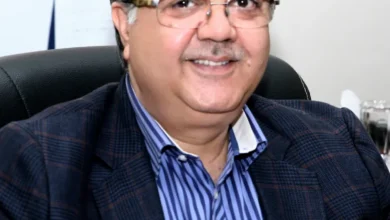
Milords Will Grant Bail in Five Minutes: Nayan Raheja’s Next Court Date, Five Missed Summons, and the ₹2,426-Crore Homebuyer File That Keeps Waiting


Of course the Indian courts will grant Nayan N. Raheja anticipatory bail. That is how the script usually ends. A Special Judge (PMLA) at Saket has already refused it on 19 September 2026 after recording that summonses were served on seven occasions, that he appeared before the Enforcement Directorate’s Gurugram Zonal Office on only two of them, and that he failed to appear and cooperate on five “on one pretext or the other.” The same court noted the undertaking he gave the Delhi High Court on 30 July 2026 that he would “fully cooperate.” It held that the twin conditions under Section 45 of the Prevention of Money Laundering Act were not satisfied and that non-cooperation disentitled him to the concession of anticipatory bail. None of that has ever been a permanent obstacle in these files.
He is now before the Delhi High Court. Justice Amit Bansal heard the matter on 1 October. The ED opposed and sought time. Counsel said the applicant was ready to cooperate. Further dates were given. A parallel petition to quash the ECIR is also pending. Somewhere in that calendar the familiar expectation reappears: the High Court will see the matter differently, the non-appearance record will be re-characterised as inconvenience rather than conduct, the limited directorship periods and 0.81% shareholding will be treated as decisive, and pre-arrest protection will issue. The buyers who paid for flats that were never delivered will receive another order to wait.
The Numbers That Do Not Fit the Script
The Enforcement Directorate has stated that Raheja Developers Ltd collected approximately ₹2,425.99 crore from around 4,600 homebuyers for projects launched “under the pretext of providing residential units,” and that a substantial portion was diverted through related entities and shell companies for purposes unconnected with those projects. Provisional attachments of immovable properties have reached a cumulative estimated market value of approximately ₹2,399.65 crore across three orders (roughly ₹1,113.81 crore in April 2026, ₹503.48 crore in June, and ₹782.36 crore in July). Attachment freezes assets. It does not hand over keys or refund the people who paid.
In the quashing petition the pleaded figures are higher still in some accounts—collections near ₹2,699 crore and alleged diversion near ₹1,353 crore—along with a specific allegation that Nayan Raheja received ₹1.23 crore from proceeds of crime, against which properties of about ₹14.10 crore belonging to him were attached. The defence says he was only an architect on remuneration, held no day-to-day management role after short directorship periods ending in 2008 and a brief return in 2010, was not charge-sheeted in the predicate FIRs in the manner alleged, and that one matter was settled. The ED says investigative material connects him to the affairs of the parent company and to subsidiaries into which funds were moved. The Saket court required a prima facie showing that he had not dealt with proceeds of crime. It did not find one on the material before it. Higher courts have been known to take a more generous view of such showings.
The Pattern the Script Always Follows
Raheja Revanta was launched in 2011 with possession promised in 36 to 48 months. The date later declared to Haryana RERA was 31 July 2022. On 8 June 2026 the National Company Law Tribunal admitted an insolvency petition by 176 allottees who said they had paid more than ₹137 crore for 99 units, many of them 90–95% of the price. Memoranda acknowledging delay were not honoured. That is a finding of default under the Insolvency and Bankruptcy Code for the project; it is not a criminal conviction. Other project-specific insolvency admissions have occurred. Haryana RERA has ordered refunds with interest, including an August 2026 direction to refund approximately ₹50.5 lakh plus 10.8% interest after a commercial unit in Raheja Trinity remained incomplete despite more than 95% payment. National Consumer Disputes Redressal Commission orders have directed refunds and delay compensation in other cases. An earlier insolvency proceeding against the company was admitted in 2019 and later set aside on appeal in 2020. The ECIR itself dates to 2022. Interim protection from arrest was granted in August 2026. Four years on, the money-laundering allegations remain unadjudicated.
This is the familiar sequence. Collections are recorded in the thousands of crores. Attachments follow. Project-specific defaults are admitted by the NCLT and refund orders are passed by RERA. An accused misses five of seven summonses after giving an undertaking of full cooperation. A trial court refuses anticipatory bail under the twin conditions and on conduct. The matter moves to the High Court. Counsel expresses willingness to join the investigation. Time is sought and granted. Somewhere in the next few listings the expectation is that protection will be restored, the non-appearance will be treated as capable of explanation, and the case will return to the long calendar of dates that homebuyers already know by heart.
What “Surely” Actually Means
No court has convicted Nayan N. Raheja, Navin M. Raheja or Raheja Developers Ltd of money laundering. Provisional attachment is not confiscation. Insolvency admission is not a criminal finding. The company has denied wrongdoing. All of that is true. It is also true that a PMLA court has already held that five failures to appear after a High Court undertaking of cooperation disentitled the applicant to anticipatory bail, that the twin conditions were not met, and that absence from predicate charge-sheets is not an automatic exit. It is also true that approximately ₹2,425.99 crore was collected from around 4,600 homebuyers on the agency’s account, that nearly ₹2,400 crore in assets has been provisionally attached, and that buyers in projects launched more than a decade ago are still waiting.
The prediction that the High Court will grant bail is not a legal analysis. It is an observation of how these files have often moved. The statutory tools already exist: the twin conditions under Section 45, the power to treat non-cooperation as disentitling, the power to attach, the power to investigate and prosecute. The Saket court applied them. Whether the next court treats the same record as requiring the same result, or as capable of being softened into another interim arrangement while the buyers continue to wait, is the only question the calendar has left open.
Milords may well grant bail in five minutes. The trial, if it ever reaches a verdict, can be scheduled for another twenty-five years. The 4,600 homebuyers already know which of those two outcomes arrives first. Faster investigation, faster trial, and consistent application of the conduct and statutory tests already on the record are not radical demands. They are the minimum that a file containing five missed summonses after an undertaking of cooperation, nearly ₹2,400 crore in provisional attachments, and project delays stretching back to 2011 now requires. The script can be rewritten. It has not been yet.