PACL’s ₹48,000-Crore Investor Nightmare: ₹30,235 Crore in Assets Attached, Refunds Still Lag—and Justice Cannot Be Held Hostage to Endless Proceedings
Fresh ED attachment of 48 properties worth ₹567.45 crore raises uncomfortable questions about the tracing of alleged investor money, the effectiveness of enforcement, the pace of court proceedings and the long-delayed task of making victims whole.

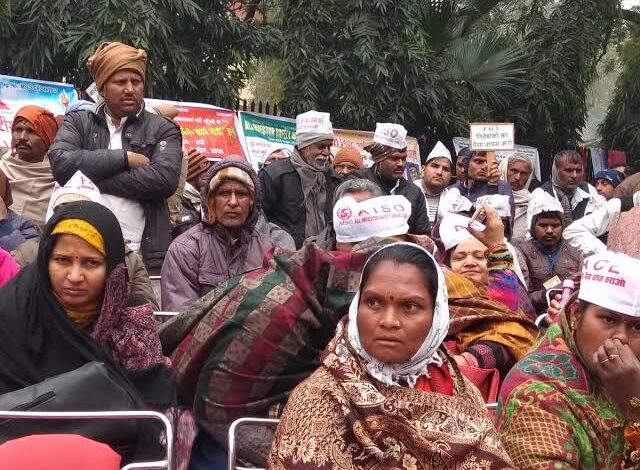
India’s PACL controversy has acquired an uncomfortable distinction: it is not merely a case about the alleged mobilisation of tens of thousands of crores through an unlawful collective investment scheme. It has also become a prolonged test of whether financial regulators, investigative agencies and the judicial system can turn orders, investigations, attached properties and court proceedings into timely justice for ordinary investors.
The latest development has again brought the case into focus.
On 8 October 2026, the Directorate of Enforcement (ED), Delhi Zonal Office, announced the provisional attachment of 48 immovable properties valued at ₹567.45 crore, located in Pune, Mumbai and Raigad, Maharashtra. According to the agency, the properties are held in the names of Prateek Kumar, his son Ansh Prateek Kumar, and three companies allegedly beneficially owned and controlled by Prateek Kumar: Beaming Infradevelopers Pvt. Ltd., Ganraj Properties Pvt. Ltd. and Greenfield Estates Limited.
The ED alleges that these properties were purchased using funds diverted from PACL that had originally been collected from investors. With this action, the agency reported that the aggregate value of movable and immovable assets attached in the PACL investigation had reached approximately ₹30,235.21 crore, including assets in India and abroad.
These are consequential developments. But they also demand a more uncomfortable question: how much longer must investors wait before the value of property identified by investigators becomes money actually received by those who allegedly lost it?
An attachment order makes headlines. A confiscation order changes the legal position of an asset. A successful sale generates realisable proceeds. A refund puts money back into an investor’s account. These are four different stages, and they must not be presented as though they were interchangeable achievements.
The PACL case will not be judged by the number of press releases issued or the impressive value of properties listed in them. Ultimately, its credibility will be measured by the speed and completeness of lawful asset recovery, the fairness and effectiveness of criminal proceedings, and the money returned to eligible victims.
[Source: ED press release dated 8 October 2026; ED’s reported attachment totals.]
1. The latest attachment: 48 properties, ₹567.45 crore and a trail that must be followed to its conclusion
According to the ED’s latest release, the 48 properties in Maharashtra are held in the names of Prateek Kumar, his son and the three companies identified above. The agency says the entities are beneficially owned and controlled by Prateek Kumar and alleges that the properties were acquired using diverted PACL funds.
The release also records a significant procedural development concerning Prateek Kumar.
The ED states that he was arraigned as accused A-13 in its First Supplementary Prosecution Complaint dated 20 August 2022. The Special Court took cognisance on 19 September 2022, and an open-ended non-bailable warrant was issued against him on 9 April 2025.
These facts raise legitimate questions about the investigation’s current stage, the execution and status of the warrant, the tracing of the alleged money trail, and the timetable for adjudication.
They do not, by themselves, establish guilt. Cognisance is not conviction, a non-bailable warrant is not a final finding on the merits, and provisional attachment is not equivalent to final confiscation. Nevertheless, the existence of a warrant and a continuing investigation makes it imperative that the competent authorities provide a clear account of the steps lawfully taken to secure the accused person’s presence and advance the proceedings.
A warrant sitting on the record is not the same thing as a case moving towards judgment. An attached property is not the same thing as an investor receiving a refund.
The ED must be able to demonstrate not just that it can identify property, but that it can protect that property, establish the relevant money trail, complete the necessary proceedings and ensure that assets ultimately available for restitution reach their lawful destination.
[Source: ED press release dated 8 October 2026.]
2. The PACL story did not begin in October 2026. It began much earlier.
The history of the PACL matter makes the present demand for speed and transparency impossible to dismiss as impatience.
On 22 August 2014, the Securities and Exchange Board of India (SEBI) ordered PACL Limited, its promoters and directors to stop collecting money under the schemes identified in its order, wind up the existing schemes and refund investors in accordance with the directions. The order followed regulatory scrutiny of the company’s land-linked investment model.
The Securities Appellate Tribunal subsequently dismissed appeals against SEBI’s order on 12 August 2015.
The tribunal’s findings were particularly significant. It recorded that PACL had collected approximately ₹49,100 crore from 5.85 crore customers over about 15 years under the guise of agricultural-land transactions. It also recorded that sale deeds had been issued for only 19,284 investors, while PACL had disclosed land held as stock-in-trade worth approximately ₹11,706.96 crore as of 31 March 2014.
The disparity was extraordinary.
A business that had collected ₹49,100 crore from customers was associated, in the record examined by the tribunal, with land valued at approximately ₹11,706.96 crore. The disclosed land value was less than one-quarter of the amount collected.
The tribunal also examined concerns about the structure of the alleged land transactions, including the company’s ability to change the location of a plot allotted to a customer. It upheld SEBI’s conclusion that the schemes constituted a collective investment scheme and that the directions to wind them up and refund investors were justified.
These were not merely newspaper insinuations. They formed part of the regulatory and appellate record.
The bitter question is what happened after those decisive regulatory and tribunal interventions. Why did a dispute involving millions of customers and enormous sums of money require such an extended sequence of investigations, litigation, asset tracing and recovery measures?
The answer cannot be another announcement of the scale of the case. That scale was already evident when the regulatory proceedings began.
[Sources: SEBI’s order dated 22 August 2014; Securities Appellate Tribunal decision dated 12 August 2015, in PACL Ltd. v. SEBI.]
3. December 2015: the ₹49,100-crore recovery direction and the continuing burden of enforcement
In December 2015, SEBI announced recovery proceedings against PACL and its promoters and directors for failure to comply with its directions to refund approximately ₹49,100 crore, together with applicable returns, interest and recovery costs.
SEBI also announced the attachment of bank accounts, demat accounts and mutual fund folios belonging to the identified defaulters.
The significance is difficult to overlook. By that stage, the regulatory system had not simply raised concerns about the schemes. It had issued directions, seen those directions upheld on appeal and initiated recovery proceedings.
The case had already crossed the boundary between regulatory suspicion and formal enforcement.
Yet recovery from a large investment scheme is not accomplished by declaring a sum due. Investigators must locate assets, establish ownership, trace transactions through companies and intermediaries, protect assets from dissipation, and establish a lawful route by which proceeds can be returned to eligible claimants.
The complexity is real. But complexity must explain the work required, not become a perpetual excuse for the absence of a clear end date.
The most pressing question is therefore not whether the PACL investigation has encountered legal and financial complications. It is whether the system has developed a sufficiently coordinated, transparent and time-bound response to those complications.
[Source: SEBI press release dated 14 December 2015 on attachment and recovery proceedings.]
4. February 2016: the Supreme Court intervenes and establishes the Lodha Committee
On 2 February 2016, the Supreme Court directed SEBI to constitute a committee under former Chief Justice of India Justice R.M. Lodha to oversee the disposal of PACL’s land and the distribution of the sale proceeds to investors.
The committee was created to provide an institutional mechanism for selling the assets and returning the proceeds to those entitled to refunds. It was not intended to be an exercise in producing an ever-growing inventory of property without a corresponding recovery outcome.
This distinction matters because the PACL matter operates through several parallel tracks: criminal investigation, prosecution, provisional attachment, judicial adjudication, property identification, asset sale, restitution and refund administration.
Progress in one track does not automatically complete the others.
A criminal prosecution may be pending while asset recovery continues. A court may order properties returned to the committee without those properties having been sold. Properties may be sold without the proceeds immediately resolving every eligible claim. And a refund process may advance without establishing guilt in a criminal trial.
The Supreme Court’s mechanism provides a route towards restitution, but its purpose must remain visible throughout the process: to convert assets into proceeds and proceeds into refunds.
A committee constituted in 2016 should not be judged merely by the fact that it still exists and continues to perform administrative work. It must be judged by demonstrable outcomes, transparent reporting and fair treatment of investors.
[Source: Supreme Court order dated 2 February 2016; SEBI’s official PACL committee records.]
5. The money trail involving Prateek Kumar: an allegation requiring rigorous adjudication
The latest attachment is not the first time the ED has publicly alleged a financial connection between PACL funds and Prateek Kumar.
In a press release dated 20 May 2022, the ED stated that its investigation had revealed a transfer of ₹2,285.79 crore from PACL to Prateek Kumar. The agency further alleged that ₹94.61 crore was invested in DDPL Global Infrastructure Private Limited and Unicorn Infraprojects and Estates Private Limited.
The same release reported the provisional attachment of land measuring approximately 3,39,984.2 square metres, valued at around ₹185 crore according to government rates, along with bank balances of approximately ₹7.52 crore belonging to DDPL, Unicorn and Brightview Projects and Estates Private Limited.
The ED also alleged that PACL money had moved through interconnected entities, including transactions involving Dhanashree Developers Private Limited and Systematix Venture Capital Trust. It stated that changes in the shareholding of DDPL and Unicorn formed part of the mechanism through which the funds and beneficial interests were allegedly obscured.
These are serious allegations because they concern the essential question at the centre of a large financial-fraud investigation: where did the money go, who ultimately benefited from it, and what assets can lawfully be traced to the funds collected from investors?
But the evidentiary distinction remains essential. The figures quoted above are allegations and investigative findings reported by the ED, not a substitute for final adjudication of every disputed transaction. Nor should assets involved in different attachment proceedings automatically be treated as identical to the 48 properties identified in October 2026.
The correct response is not to prejudge the outcome. It is to insist that the transactions be investigated comprehensively and the evidence tested promptly before the competent courts.
Where an agency has already put a substantial alleged transfer on the public record, the investigation should explain how the trail connects to the later properties, corporate holdings and transactions. If assets have been moved through several entities, the final account should identify those links rather than leave the public with disconnected numbers and separate press releases.
[Source: ED press release dated 20 May 2022.]
6. A related property dispute exposes the cost of procedural delay
The need for greater speed is also illustrated by a Delhi High Court judgment dated 28 April 2026 involving DDPL Global Infrastructure Private Limited, Unicorn-related interests and the ED’s earlier attachment orders.
The High Court addressed attachment orders issued in 2022 and the subsequent dispute over the handling of the properties. It set aside the impugned orders in the matters before it and directed that the property issues be taken to the Justice R.M. Lodha Committee for determination under the framework established for the PACL assets.
The court made an observation that should command the attention of every institution dealing with the wider case.
It noted that approximately four years had passed without adjudication by a competent authority and that the investors’ interests were being compromised by the matter remaining pending. The court also directed that the properties should not be dissipated or alienated pending a final determination by the committee.
This judgment must be read accurately. It did not pronounce the underlying allegations false or decide the merits of every disputed transaction. It dealt with the particular orders and the appropriate mechanism for determining the property issues.
But its criticism of delay is unmistakable.
In a case whose very purpose is to protect investors’ money, a process that leaves property-related disputes undecided for years risks undermining the objective it is supposed to serve.
The lesson is broader than one company or one attachment order. Investigative powers must be exercised through the correct legal framework, objections must be decided expeditiously, and the handling of assets must be coordinated with the mechanism designed to return value to investors.
Otherwise, the legal process itself can become another obstacle between victims and restitution.
[Source: Delhi High Court judgment dated 28 April 2026 in DDPL Global Infrastructure Private Limited and connected matters v. Directorate of Enforcement.]
7. The additional FIRs: why asset protection must become a priority, not an afterthought
The ED’s March 2026 press release described further investigations into alleged illegal disposal, encroachment and misuse of land associated with PACL.
According to the agency, these developments led to three additional FIRs involving the Punjab Vigilance Bureau, Jawahar Circle Police Station in Jaipur, and Attibele Police Station in Bengaluru.
The same release stated that searches in those cases resulted in the seizure of material including blank sale deeds, signed cheque books and identity documents. The ED characterised this material as evidence indicating systematic attempts to siphon off and dispose of alleged proceeds of crime.
These allegations raise an important operational issue.
When a large investigation concerns land spread across numerous states, it is not enough to reconstruct the money trail after transactions have occurred. The authorities must also prevent potentially relevant assets from being unlawfully transferred, altered, encumbered or dissipated while investigations and judicial proceedings are pending.
This requires cooperation between central and state agencies, land-registration authorities, police forces, courts, financial institutions and the Lodha Committee.
It also requires precise property records. A property may be associated with a particular company, family member or intermediary, but investigators must establish the relevant beneficial ownership, the connection to the alleged proceeds of crime and the legal basis for restricting dealings in it.
The public deserves an account of what the additional FIRs established, what remains under investigation, which properties have been secured, and whether any assets were lost or made more difficult to recover.
An agency’s statement that it has seized documents is a beginning. The eventual findings, judicial outcomes and recoveries are what determine whether that beginning produces results.
[Source: ED press release dated 20 March 2026.]
8. The wider PACL-related proceedings: family-linked assets, warrants and international property
The PACL investigation has also involved proceedings concerning individuals and entities connected to the late promoter, Nirmal Singh Bhangoo.
In its 9 June 2026 press release, the ED stated that it had initiated Fugitive Economic Offender Act proceedings against Sukhwinder Kaur and Gurpartap Singh. The agency also reported that Harsatinder Pal Singh Hayer had been arrested and that non-bailable warrants had been issued against Barinder Kaur and Prem Kaur.
The ED’s release further stated that assets associated with the wider investigation included properties in India and abroad, including Australia.
These are material developments in the investigation of alleged proceeds of crime. However, the procedural position of each individual must be stated accurately. Initiation of fugitive-economic-offender proceedings, arrest, and issuance of a warrant are distinct legal events; none should automatically be described as a final adjudication of guilt.
The death of Nirmal Singh Bhangoo in August 2024, recorded in a Delhi High Court order dated 27 August 2024, also changed the course of proceedings against him personally. The pending bail petition was disposed of as infructuous because he had died.
That development did not, by itself, resolve proceedings against other accused persons, determine the ownership of every disputed asset or extinguish the need to recover property that can lawfully be established as proceeds of crime.
The public interest now requires clarity on the legal status of assets, the progress of proceedings involving other persons, and the extent to which property located overseas can be secured and brought within the restitution process.
The focus must remain on evidence, lawful recovery and adjudication—not collective assumptions about guilt based on family association.
[Sources: ED press release dated 9 June 2026; Delhi High Court order dated 27 August 2024.]
9. The scale of attachment is significant. But attachment is not recovery.
The sequence of public announcements in 2026 shows that the asset side of the investigation has expanded substantially.
In March 2026, the ED reported the provisional attachment of 126 immovable properties in Punjab and Delhi valued at ₹5,046.91 crore. At that point, the agency put the cumulative value of assets attached in the PACL investigation at approximately ₹22,656.91 crore.
In June 2026, the ED reported a cumulative attachment value of approximately ₹28,626 crore. The same month, it announced that a Special Court under the Prevention of Money Laundering Act had ordered the restitution of 282 properties with an estimated current market value of ₹9,420.57 crore to the Lodha Committee.
A separate order on 30 March 2026 had reportedly directed restitution of 455 immovable properties valued at approximately ₹15,582 crore. Together, those two reported restitution orders concern properties worth roughly ₹25,002.57 crore.
By October 2026, the ED was reporting total attachments of approximately ₹30,235.21 crore following the latest action.
These figures show substantial enforcement activity. They should not be dismissed. Identifying and securing property across multiple jurisdictions in a complex financial investigation is a significant task.
But the distinctions matter more than the headline.
- Provisional attachment restricts dealings with identified property under the relevant legal framework.
- Final confiscation is a separate legal outcome subject to the applicable proceedings and safeguards.
- Restitution to the Lodha Committee provides a mechanism for assets to be handled for investor recovery.
- Realisation and refund require sale proceeds or other recoverable funds actually to become available and to be distributed in accordance with the law.
The market value quoted in an attachment press release is not the amount of cash already sitting in a refund account. Nor does the reported value necessarily equal the eventual sale price, net proceeds after costs or the sum immediately available for distribution.
That is why the ₹30,235.21-crore figure cannot, on its own, be described as ₹30,235.21 crore recovered for investors.
The public needs an asset-by-asset reconciliation: which properties remain attached, which have been restored to the committee, which have been sold, what each sale realised, what litigation or encumbrances remain, and how much money has actually reached claimants.
Without that reconciliation, the aggregate figure makes for a striking headline but leaves the central question unanswered.
How much has been converted from estimated asset value into money actually returned to investors?
[Sources: ED press releases dated 20 March and 9 June 2026; reporting by The Indian Express on the restitution orders; ED press release dated 8 October 2026.]
10. The refund figures: the number that must not be lost in the property headlines
The official SEBI PACL refund portal reported that, as of March 2026, the Justice R.M. Lodha Committee had disbursed ₹3,720.67 crore against 35,74,401 eligible applications.
This is a meaningful and measurable refund outcome. It should be acknowledged rather than ignored.
But it does not demonstrate that the entire alleged investor shortfall has been resolved.
The ED’s latest release continues to describe approximately ₹48,000 crore as unpaid to investors. A simple comparison puts the scale of the challenge into perspective: ₹3,720.67 crore is about 7.8% of ₹48,000 crore.
That percentage is an illustrative arithmetic comparison, not an audited recovery ratio. The figures refer to different reporting dates and may have different underlying scopes: one is cash already disbursed against eligible applications, while the other is the ED’s stated unpaid amount in the wider investigation. They should not be treated as perfectly equivalent accounting categories.
Nevertheless, the contrast is important. The reported cash payouts remain far below the unpaid amount cited by the agency.
The refund portal’s figure also concerns eligible applications processed under the committee’s refund arrangements. It should not be represented as a count of every investor who has ever invested in PACL, nor does it establish that every remaining claim is valid, rejected or pending.
A transparent refund system must publish those distinctions.
How many claims have been received? How many have been found eligible? How many are incomplete, disputed or awaiting further documents? How much has been disbursed in each tranche? How much has been realised from property sales? How much remains available for refund? What are the rules and timeline for claims that exceed the amounts covered by earlier refund phases?
Those are not optional questions in a controversy of this magnitude. They are the information investors need to understand what has happened to their money.
An investor should not have to navigate a maze of scattered notices, property-sale requests and legal updates to discover the status of a claim.
A public institution that administers restitution at this scale should be able to explain, in clear and current numbers, the distance between the amount allegedly lost, the assets secured, the proceeds realised and the claims paid.
[Source: Official SEBI PACL refund portal, refund figures reported as of March 2026; ED press release dated 8 October 2026.]
11. The money-collected figures also need a clear, reconciled explanation
A further problem is the variation in the amounts cited across different public records.
The 2015 Securities Appellate Tribunal decision referred to ₹49,100 crore collected from 5.85 crore customers. The ED’s March 2026 release described mobilisation of more than ₹48,000 crore. Its June 2026 release referred to more than ₹68,000 crore mobilised by PACL and PGF under the wider scheme-related allegations, while also stating that approximately ₹48,000 crore remained unpaid. The October 2026 release again referred to mobilisation of more than ₹48,000 crore and approximately ₹48,000 crore remaining unpaid.
There may be differences in scope, entities, periods and the accounting treatment underlying those amounts. The fact that the figures differ does not, by itself, prove that any particular figure is false.
But readers and investors should not be expected to reconcile such a large financial controversy by guessing which number applies to which pool of entities, schemes or claims.
The agencies and the committee should publish a common explanatory statement identifying the amount attributed to each entity and scheme, the period covered, the gross amount collected, the liabilities or amounts repaid, the estimated unpaid balance and the basis used to calculate the figures.
A case involving tens of thousands of crores deserves something more robust than the repeated circulation of headline sums without an accompanying reconciliation.
There is an important difference between a complicated financial investigation and an unintelligible public accounting of it. The former may be unavoidable; the latter should not be.
12. The prosecution question: investigation must end in timely judicial determination
The ED’s latest release records a prosecution complaint in 2018 and six supplementary prosecution complaints filed in 2022, 2025 and 2026. It states that the Special Court has taken cognisance of the complaints.
The CBI’s case, according to the ED’s earlier releases, includes a charge-sheet and a supplementary charge-sheet against 33 accused persons and entities.
The proceedings therefore extend beyond the initial regulatory order. They involve multiple accused, corporate structures, financial transfers, properties in different jurisdictions and related investigations into the alleged disposal of land.
That complexity must be taken seriously. A fair trial cannot be reduced to a race to secure convictions. Each accused person is entitled to due process, an opportunity to contest the evidence and a determination based on the applicable law.
But due process is not a licence for indefinite delay either.
The prosecution should be pressed to complete outstanding investigative tasks, clearly identify which allegations concern which accused, organise documentary and financial evidence, avoid duplication between proceedings where lawful coordination is possible, and state what remains before the court.
The courts, in turn, should consider appropriate case-management measures, regular progress reviews and the prompt disposal of interlocutory matters, consistent with fairness, judicial independence and the rights of all parties.
Where warrants remain outstanding, the competent agencies must take lawful and effective steps to execute them. Where assets remain disputed, ownership and attachment questions need reasoned and timely decisions. Where supplementary complaints have been filed, the trial process must move towards the next procedural stage without avoidable drift.
No one should demand rushed justice. But neither should millions of investors be expected to accept justice without a foreseeable timetable.
The objective must be a fair trial conducted with urgency—not a hurried trial, and certainly not an endless one.
13. What the ED, CBI, SEBI and the courts should do now
The case requires a coordinated, measurable programme of action. The demand should be specific, not rhetorical.
First, publish a unified asset-recovery dashboard. The ED and the Lodha Committee should make available a regularly updated property register showing the asset’s location, recorded owner, relevant proceedings, current attachment or restitution status, valuation basis, disputes, sale status, realised proceeds and amount transferred for investor refunds. Sensitive investigative material may be protected, but the core recovery position should be intelligible to the public.
Second, reconcile the financial figures. SEBI, the ED and the committee should explain the different publicly cited collection totals and publish a clear statement of the unpaid amount, claims processed, money recovered, sale proceeds realised and refunds disbursed. Asset valuation must be distinguished from cash recovery.
Third, accelerate lawful asset sales. Properties available for sale should move through transparent, competitive procedures, subject to title verification, court directions and legitimate third-party claims. A property that is eligible for sale should not remain immobilised through avoidable administrative delay. Equally, an asset subject to a genuine ownership dispute should not be sold without resolving the applicable legal issues.
Fourth, tighten coordination between the agencies. The CBI, ED, state police forces, land-registration authorities, financial institutions and the Lodha Committee should maintain an integrated view of relevant assets, proceedings and money trails. The purpose must be to prevent duplicate effort, identify gaps, protect property and make the evidence available for the appropriate judicial process.
Fifth, seek time-bound progress in the trials. The prosecution should identify the tasks still outstanding in each case and provide reasoned timelines. Courts should facilitate expeditious hearings and avoid unnecessary adjournments while preserving the rights of every accused. Cases involving multiple accused may require careful scheduling, but delay should be monitored rather than simply endured.
Sixth, act effectively on outstanding warrants and related proceedings. Competent authorities should report, to the extent legally permissible, the current status of warrants and the lawful steps taken to secure the presence of individuals required by the courts. Where international cooperation is needed for assets or persons, the appropriate legal channels should be pursued.
Seventh, make the refund mechanism clearer. Investors need a reliable portal, understandable deficiency notices, a transparent process for resolving disputed claims and regular information about future refund phases. Eligibility standards must be fair and consistently applied. Investors should not be left uncertain about whether a claim is pending, deficient, rejected or paid.
Finally, submit to public accountability. A quarterly progress statement should report what changed—not simply repeat the previous attachment total. It should identify newly secured properties, assets restored to the committee, completed sales, cash realised, refunds made, litigation resolved and the obstacles still preventing recovery.
These are practical steps that can be evaluated. They do not require prejudging any accused person’s guilt or weakening the safeguards of a fair trial.
14. The institutional failure that must not be allowed to outlive the financial controversy
The PACL case presents two separate but connected responsibilities.
The first is to establish, through lawful investigation and adjudication, whether the alleged offences occurred, which persons are responsible and which assets are connected to the proceeds of crime.
The second is to ensure that eligible investors receive the benefits of recovery without avoidable delay.
These responsibilities are related, but they are not identical. Even where a substantial asset pool has been identified, restitution can be delayed by unresolved ownership, valuation, sale and distribution questions. Equally, a criminal case cannot be treated as complete merely because properties have been attached or returned to a committee.
The public must resist both extremes: declaring the case solved because billions of rupees have been attached, or declaring every accused person guilty because an agency has made allegations.
Neither position is defensible.
The real test lies in the records that should follow the announcements: reasoned court orders, adjudicated claims, completed sales, verified money trails, final findings and actual refunds.
A decade of proceedings has already demonstrated that identifying the problem is not the same as resolving it. The challenge now is to ensure that the legal architecture created to protect investors delivers tangible results.
If the authorities have secured property, they should show what happened to it. If money has been traced, they should explain where it went and what remains recoverable. If a case is ready for adjudication, it should move. If an obstacle remains, the public should be told what it is and what is being done about it.
And if some assets cannot be recovered or some claims cannot be met in full, the reasons must be stated clearly rather than concealed behind aggregate figures.
That is what accountability looks like in a complex financial investigation.
Conclusion: India needs fewer victory announcements and more completed recoveries
The ED’s attachment of 48 properties worth ₹567.45 crore is an important new development in the PACL investigation. The agency’s reported cumulative attachment value of ₹30,235.21 crore is substantial. The court-ordered restitution of properties worth thousands of crores to the Lodha Committee is also significant.
But these milestones do not erase the central question.
The regulatory action began years ago. The Supreme Court established an asset-disposal and refund mechanism in 2016. Investigations, prosecution complaints, additional FIRs, attachments and property-restoration proceedings have continued. Yet the ED’s latest release still describes approximately ₹48,000 crore as unpaid to investors, while the official refund portal reports disbursements of ₹3,720.67 crore as of March 2026.
The figures must be reconciled and their scope explained, but the underlying public responsibility is clear: property values must be converted into recoverable proceeds, legitimate claims must be processed fairly, and criminal proceedings must advance without avoidable delay.
There is no contradiction between demanding speed and defending due process. There is no contradiction between recognising the work done by investigators and asking why the remaining work is still incomplete. And there is no justification for allowing the sheer complexity of a case to become a permanent substitute for a public timetable and measurable outcomes.
The PACL controversy is therefore not simply a story about an alleged investment scheme or the properties now attached under the money-laundering law. It is a test of whether India’s institutions can protect investors not merely on paper, but in practice.
The country does not need another impressive number without an explanation of what it means for the people who invested their money. It needs a credible accounting of the assets, a transparent record of actual recoveries, effective action on outstanding legal processes and trials that progress fairly and promptly.
An attachment is a restraint on property, not a refund. A prosecution complaint is the beginning of judicial determination, not its conclusion. And a committee created to return money to investors must ultimately be judged by what it succeeds in returning.
The demand is neither vengeance nor a pre-written verdict. It is something more fundamental: faster lawful investigations, tighter enforcement, transparent asset recovery, time-bound judicial proceedings and an investor-refund process that finally delivers measurable results.
The PACL case has already consumed years of regulatory and judicial attention. The next chapter should not be another announcement of the scale of the problem. It should be a demonstrable account of how much has actually been recovered, how many claims have been resolved, what obstacles remain and when the outstanding work is expected to be completed.
Until then, the distinction between money attached and money returned will remain the most important unfinished chapter in the entire controversy.