Top 10 Best Air Purifiers in India in 2027
Air pollution has become an increasingly important concern for Indian households, particularly in metropolitan cities where vehicle emissions, construction dust, industrial pollutants, road dust, seasonal crop residue burning and household pollutants contribute to deteriorating air quality. Delhi-NCR, Gurugram, Noida, Lucknow, Kanpur, Mumbai, Kolkata and several other urban centres experience periods of elevated particulate pollution, making indoor air quality an important consideration for families, working professionals, children and senior citizens.
An air purifier can help reduce the concentration of airborne particulate matter inside an enclosed room. Modern air purifiers combine high-efficiency particulate air filtration, activated carbon filters, pre-filters, real-time air-quality sensors and automated operating modes to capture different categories of indoor pollutants. Depending on the model, these appliances can help capture fine dust, pollen, pet dander and smoke particles, while activated carbon filtration can help reduce certain household odours and gaseous pollutants.
The Indian air purifier market offers products across several price categories, ranging from compact bedroom appliances to high-capacity machines designed for large living rooms. Philips, Honeywell, Coway, Xiaomi, Dyson and Sharp are among the manufacturers offering products with different filtration technologies, room coverage capacities, air-cleaning speeds and smart-home capabilities.
When purchasing an air purifier, consumers should look beyond advertised room coverage and consider Clean Air Delivery Rate (CADR), filter efficiency, replacement-filter availability, operating noise, electricity consumption, maintenance expenses and after-sales service. These factors determine whether an appliance can provide consistent air-cleaning performance over an extended period.
1. Philips Air Purifier AC3220/60
Best for Large Living Rooms
The Philips AC3220/60 is a high-capacity air purifier designed for households that require substantial air-cleaning performance, particularly in larger bedrooms, living rooms and enclosed common areas. It combines Philips’ NanoProtect HEPA filtration technology with an activated carbon layer and a pre-filter to address different categories of indoor pollutants. Its dual-fan configuration is designed to deliver higher airflow while maintaining relatively quiet operation.
One of the most important specifications of this appliance is its Clean Air Delivery Rate of 520 cubic metres per hour. CADR indicates the volume of filtered air delivered by an air purifier over a given period and is an important consideration when matching a machine to a room. Philips recommends this model for rooms of up to approximately 670 square feet under its stated room-coverage conditions. This makes it relevant for families looking for an appliance that can operate in larger enclosed spaces rather than being restricted to a small bedroom.
The purifier uses a multi-layer filtration arrangement comprising a pre-filter, NanoProtect HEPA filtration and activated carbon. The pre-filter captures larger airborne particles such as hair, lint and visible dust, reducing the amount of material reaching the finer filtration layers. The HEPA filter captures fine particulate matter, including PM2.5, pollen and other microscopic airborne particles. The activated carbon layer helps reduce unwanted odours and certain gaseous pollutants associated with cooking, household products and outdoor pollution entering the home.
The AC3220/60 also incorporates an air-quality monitoring system that provides real-time information about indoor air conditions. Its colour-coded air-quality indicator makes it easier to understand changing pollution levels, while the numerical PM2.5 display provides a more detailed indication of particulate pollution. This is particularly useful in Indian cities where indoor pollution levels can fluctuate considerably depending on traffic conditions, cooking activity, ventilation and outdoor air quality.
The appliance includes automatic operation, allowing its sensors to monitor indoor conditions and adjust purification speed accordingly. Its sleep mode is designed to reduce operating noise and minimise disturbances during nighttime use. The dual-fan design also helps circulate air more effectively, an important consideration in larger rooms where a smaller purifier may take considerably longer to process the available air volume.
Connectivity through the Philips Air+ application provides additional convenience. Depending on the supported functions and software configuration, users can monitor indoor air quality, control operating settings and manage the appliance remotely. Scheduling and automatic operating features make it easier to maintain regular purification without manually adjusting the machine throughout the day.
The purifier is also designed for relatively energy-efficient operation, with a manufacturer-stated maximum power consumption of approximately 36 watts. Its replacement filter is designed for an extended operating period, although actual filter life depends on pollution levels, operating hours and maintenance.
For Indian households, the Philips AC3220/60 offers a combination of high CADR, multi-layer filtration, automatic monitoring and smart controls. Its ability to handle larger enclosed spaces makes it worth considering for households experiencing persistent dust and particulate pollution. Buyers should nevertheless check actual room dimensions, filter replacement prices and availability of genuine replacement filters before purchasing.
2. Honeywell Air Touch V5
Best Value for Money
The Honeywell Air Touch V5 is a feature-rich air purifier intended for households looking for substantial cleaning capacity without moving into the premium price category. The appliance combines a four-stage filtration system, real-time air-quality indicators, Wi-Fi connectivity and voice-assistant compatibility. It is particularly relevant for urban households that require an air purifier for bedrooms, living rooms and home-office environments.
The Air Touch V5 has a manufacturer-specified CADR of 380 cubic metres per hour and a stated coverage area of approximately 589 square feet. This gives it sufficient airflow capacity for several medium-sized and larger residential rooms, provided the room is appropriately enclosed and the desired air-change rate is considered.
Its filtration system consists of a pre-filter, Nano-Silver antibacterial filter, H13 HEPA filter and activated carbon filter. Each component serves a different purpose. The pre-filter captures larger dust particles, hair and other visible contaminants. The antibacterial layer is designed to provide an additional filtration stage, while the H13 HEPA filter captures fine airborne particles. The activated carbon layer helps reduce certain household odours and gaseous pollutants.
The H13 HEPA filtration is particularly important for consumers concerned about PM2.5, pollen, pet dander and fine dust. These particles can enter homes through windows, doors, ventilation openings and clothing. In locations affected by road dust, construction activity and seasonal smog, an effective HEPA filtration system can help reduce indoor particulate concentrations when the appliance is correctly sized and operated.
One of the useful features of the Honeywell Air Touch V5 is its real-time air-quality display. The LED indicator communicates changing air-quality conditions through different colours, allowing users to understand whether indoor pollution levels are increasing or decreasing. The machine also provides information about PM2.5 levels, helping households monitor particulate pollution rather than relying exclusively on external air-quality readings.
The appliance supports three purification speeds and includes automatic and sleep-oriented operating options. Its sleep mode is designed to minimise noise during nighttime operation. Honeywell specifies a low-speed noise level of approximately 22 dB, making it suitable for users who intend to operate the purifier while sleeping. Actual sound levels will depend on the selected fan speed and surrounding conditions.
Smart connectivity is another important part of the product. The Wi-Fi-enabled appliance can be connected to the Honeywell Air Touch application, allowing users to control selected functions remotely. It also supports Alexa voice control, providing an additional method of adjusting settings.
The V5 has a stated filter life of up to 9,000 operating hours, equivalent to approximately one year under the manufacturer’s usage assumptions. Its filter replacement indicator alerts users when maintenance is required. However, households in severely polluted environments should not assume that the filter will necessarily last for the full advertised period. Frequent operation at high speeds and exposure to substantial particulate pollution can increase the rate at which filters accumulate contaminants.
The two-year manufacturer warranty adds to its appeal. Before purchasing, consumers should verify the warranty conditions, availability of replacement filters and service coverage in their city.
The Honeywell Air Touch V5 is a practical option for households seeking a balance between filtration performance, connectivity, room coverage and maintenance convenience. Its combination of H13 HEPA filtration, activated carbon, app-based controls and relatively high CADR makes it suitable for regular indoor air purification.
3. Philips PureProtect Pro 4200 Series AC4221/61
Best for Extra-Large Rooms
The Philips PureProtect Pro 4200 Series AC4221/61 is designed for households with larger living rooms, spacious bedrooms and substantial enclosed residential areas. Its high airflow capacity and dual-fan configuration distinguish it from smaller household purifiers that are primarily intended for compact rooms.
The appliance has a manufacturer-stated CADR of 600 cubic metres per hour and a recommended room coverage of approximately 780 square feet. This makes it an option for consumers who require higher air-cleaning capacity, particularly in homes where pollution levels remain elevated for extended periods.
Its multi-layer filtration arrangement combines a pre-filter, HEPA filtration and activated carbon filtration. The system is designed to capture airborne particulate matter while helping reduce certain gaseous pollutants and unwanted odours. The pre-filter captures larger particles, while the HEPA filtration layer targets smaller airborne contaminants such as fine dust, pollen and other particulate matter. Activated carbon contributes to the reduction of certain odours and gases.
A significant feature of the AC4221/61 is its dual-fan design. The arrangement is intended to increase purification performance and improve the circulation of filtered air. In a larger room, adequate airflow is essential because a purifier with an excellent filter but insufficient CADR may take too long to clean the surrounding air.
The machine includes PM2.5 and gas sensors, enabling it to monitor more than just particulate pollution. This is useful because indoor air quality is influenced by multiple sources, including cooking emissions, cleaning products, household materials and outdoor traffic pollution. The ability to monitor different categories of air-quality indicators gives users a broader understanding of changing indoor conditions.
The purifier also offers an air-quality display with numerical information and a colour-coded indicator. Its automatic mode adjusts operation in response to detected pollution, reducing the need for continuous manual intervention. Users can also select different operating speeds depending on the pollution level and their preferred noise conditions.
Connectivity through the Philips Air+ application provides access to compatible monitoring and control functions. The application can help users understand indoor and outdoor air-quality conditions and manage purifier settings. The appliance also includes sleep mode and nighttime lighting features, making it suitable for residential use.
The manufacturer specifies a minimum noise level of approximately 15 dB and a maximum of approximately 51.5 dB. This range reflects the difference between quieter operation and higher-speed purification. Users should remember that the highest purification speed will generally be more audible than sleep mode.
The recommended filter replacement interval is approximately one year, subject to operating conditions. Philips also specifies a two-year warranty. Buyers should check the replacement filter model, pricing and stock availability before purchasing.
The AC4221/61 is especially relevant for households with large rooms where a conventional compact purifier may struggle to deliver sufficient clean air. Its 600 cubic metres per hour CADR, dual-fan design, gas and particulate monitoring and multi-layer filtration make it a substantial residential air-cleaning appliance.
4. Xiaomi Mijia Smart Air Purifier 6
Best for Large Rooms on a Budget
The Xiaomi Mijia Smart Air Purifier 6 is aimed at consumers looking for a relatively high-capacity air purifier with smart-home capabilities. Xiaomi’s air purifier range has become popular among technology-conscious consumers because it combines app-based operation, automatic air-quality monitoring and compact residential designs.
The Smart Air Purifier 6 is designed for larger indoor environments, with manufacturer-advertised coverage of up to approximately 940 square feet. However, buyers should distinguish between maximum advertised room coverage and coverage at a higher air-change rate. The practical performance of any purifier depends on its CADR, room height, ventilation conditions and the number of air changes required every hour.
Its filtration arrangement is intended to capture airborne dust, fine particles, pollen and other common indoor pollutants. The filtration system combines particle filtration with activated carbon-based odour control. This makes the appliance relevant for households dealing with a mixture of outdoor dust, indoor particulate pollution and common household smells.
One of the key advantages of Xiaomi’s ecosystem is its smart connectivity. Users can connect compatible appliances to the Xiaomi Home application, allowing them to monitor air quality and control operating settings through a smartphone. Depending on the software and regional product configuration, users can also access automation and scheduling functions.
The appliance is designed to operate automatically by responding to changing indoor air-quality conditions. This feature is particularly useful in Indian households where pollution can fluctuate during the day. For example, particulate concentrations may increase when windows are opened, nearby construction activity intensifies or outdoor traffic pollution enters the room.
Its display and air-quality monitoring functions provide information about the surrounding environment. Such monitoring can help users understand whether indoor air quality improves after operating the purifier. However, sensor readings should be treated as indicative measurements rather than a substitute for professional air-quality monitoring.
The Xiaomi Home ecosystem is an important attraction for people who already use connected Xiaomi devices. Smartphone control can be useful when users are away from home, while scheduling allows the appliance to operate during specific periods. Automatic mode can also reduce the need to continuously change fan settings.
Another consideration is filter replacement. Buyers should check the availability of genuine compatible filters, their prices and the recommended replacement schedule. The cost of replacement filters can have a substantial impact on the total cost of ownership, particularly when the purifier operates throughout the year.
The Smart Air Purifier 6 is worth considering for households that want large-room coverage and connected controls without automatically opting for a premium international brand. Its advertised coverage makes it particularly relevant for spacious residential environments, although users should match its performance to the room’s actual size and required air-cleaning speed.
5. Xiaomi Smart Air Purifier 4 Lite
Best Mid-Range Smart Air Purifier
The Xiaomi Smart Air Purifier 4 Lite is designed for consumers who want a combination of efficient particulate filtration, smart connectivity and relatively straightforward maintenance. It is suitable for apartments, bedrooms, study rooms and medium-sized living spaces where indoor air quality is a regular concern.
The appliance uses a three-layer filtration arrangement incorporating a primary filter, high-efficiency particle filtration and activated carbon. The system is designed to capture dust, pollen, pet hair, airborne allergens and fine particulate matter while helping reduce certain unpleasant odours. The combination of mechanical filtration and activated carbon makes it useful for households dealing with both dust and common indoor smells.
The manufacturer advertises a CADR of up to 360 cubic metres per hour. Its stated room coverage is approximately 269 to 463 square feet, depending on the air-change assumptions used. Consumers should therefore select the appliance according to their actual room dimensions rather than relying exclusively on the largest advertised coverage number.
One of its major attractions is smart connectivity. The purifier can connect to the Xiaomi Home application, through which users can monitor air quality, adjust fan speeds, switch operating modes and schedule purification. The application also allows compatible smart-home devices to be managed through a common ecosystem.
The appliance incorporates an air-quality monitoring system that measures particulate pollution and communicates changing conditions through its display. Its automatic mode adjusts purification according to detected air-quality conditions. This is useful for households where pollution levels change throughout the day because of cooking, outdoor dust, traffic emissions and ventilation.
The purifier also supports voice-control integration through compatible smart-home assistants. Users can operate the appliance without repeatedly interacting with its physical control panel. Scheduling functions provide additional convenience, particularly for people who prefer to run the purifier before bedtime or during working hours.
Its relatively compact design makes it easier to position in apartments where floor space is limited. The air intake and outlet arrangement is designed to circulate air through the filtration system and distribute purified air into the room.
Noise is another important consideration. The purifier includes a sleep mode intended for quieter nighttime operation. The selected fan speed affects both purification capacity and sound levels, so users should consider whether they need maximum airflow or quieter operation when sleeping.
Filter replacement is a recurring expense that buyers should account for before purchasing. Xiaomi provides compatible replacement filters through its product ecosystem, but the actual replacement interval depends on operating conditions and pollution exposure. In heavily polluted locations, filters may require attention sooner than expected.
The Smart Air Purifier 4 Lite is a suitable choice for consumers who prioritise smart controls, automatic monitoring and convenient operation. It offers a practical combination of technology and filtration for medium-sized residential environments, particularly where smartphone-based appliance management is desirable.
6. Philips PureProtect Mini 900 Series AC0920/60
Best for Bedrooms and Compact Rooms
The Philips PureProtect Mini 900 Series AC0920/60 is a compact air purifier intended for bedrooms, smaller apartments, study rooms and personal indoor spaces. It is designed for consumers who need effective particulate filtration but do not necessarily require the airflow capacity of a large living-room purifier.
The appliance has a manufacturer-specified CADR of 250 cubic metres per hour and is recommended for rooms of up to approximately 30 square metres, or 323 square feet. Its capacity makes it suitable for several conventional bedrooms and smaller enclosed rooms.
The AC0920/60 uses HEPA filtration to capture fine airborne particles. This includes common household pollutants such as dust, pollen and other airborne particulate matter. The filtration system is supported by a pre-filtration arrangement that helps capture larger particles before they reach the main filter.
A particularly useful feature is its PM2.5 sensor. The sensor monitors particulate pollution and communicates the detected air-quality conditions through the appliance’s display. This provides users with an indication of changing indoor particulate levels and helps the automatic mode respond to variations in air quality.
The purifier is designed with compactness and ease of operation in mind. Its relatively small footprint allows it to fit into bedrooms without occupying substantial floor space. It can be positioned near an appropriate airflow area, provided that its air intake and outlet are not blocked by curtains, furniture or other objects.
Philips has also incorporated sleep-oriented operation into the appliance. This is particularly relevant for bedrooms, where excessive fan noise can disturb sleep. The quieter operating mode allows the purifier to remain in use during nighttime hours while reducing the intensity of its operation.
The automatic mode is designed to adjust fan speed according to detected particulate pollution. Instead of continuously operating at maximum speed, the machine can respond to changing indoor conditions. This helps make day-to-day operation more convenient.
The AC0920/60 is especially relevant for individuals who spend substantial time in a single room. For example, people working from home, students studying in bedrooms and families seeking to improve indoor air quality in sleeping areas may find its compact format useful.
However, buyers should understand the limitations of a smaller purifier. Its 250 cubic metres per hour CADR is considerably lower than the capacity of large-room appliances. It should not be expected to provide equivalent cleaning performance in a large living room or an open-plan apartment.
Filter availability and replacement expenses should also be checked before purchase. Philips replacement filters are designed for compatible models, and consumers should verify the exact filter code rather than buying a visually similar alternative.
The Philips AC0920/60 offers a straightforward approach to indoor air purification. Its compact dimensions, HEPA filtration, PM2.5 sensing and automatic operation make it a useful option for bedrooms and other smaller residential spaces.
7. Xiaomi Mijia Smart Air Purifier 4 Compact
Best Budget Compact Purifier
The Xiaomi Mijia Smart Air Purifier 4 Compact is aimed at consumers who want an affordable and space-efficient appliance for smaller rooms. It is particularly relevant for students, individuals living in compact apartments and households that need a separate purifier for a bedroom or study area.
The appliance has a manufacturer-stated CADR of approximately 230 cubic metres per hour. It is designed for smaller indoor environments and offers a compact alternative to larger Xiaomi air purifier models. Although the manufacturer advertises coverage of up to approximately 400 square feet under certain conditions, users should consider the actual CADR and required air changes when selecting a suitable room size.
The purifier uses a high-efficiency filtration system intended to capture airborne particulate matter. Its filtration arrangement targets common indoor contaminants, including dust, pollen and other fine particles. This can be particularly useful in smaller rooms where outdoor dust enters through windows, doors and ventilation openings.
One of the major attractions of this product is its compact construction. Unlike larger cylindrical or tower-style appliances, it is easier to accommodate in restricted spaces. This is relevant for rented apartments, student accommodation and bedrooms where consumers may not have sufficient space for a full-sized purifier.
Smart connectivity provides additional convenience. The appliance can be managed through the Xiaomi Home application, allowing users to control supported functions through their smartphones. Depending on the product’s software configuration, this includes remote operation, scheduling and access to air-quality information.
The purifier is designed to provide automatic operation based on detected indoor conditions. This means users do not necessarily have to adjust fan speeds manually every time the surrounding environment changes. The application also helps integrate the appliance into Xiaomi’s wider smart-home ecosystem.
Its sleep-oriented operation is useful for bedroom applications. Lower fan speeds help reduce operating noise, although users should remember that quieter operation can also reduce the volume of air processed by the purifier. During periods of particularly high pollution, a higher operating speed may be more appropriate before switching to a quieter mode.
The compact design also makes regular maintenance relatively straightforward. Users should periodically inspect the external pre-filter or accessible filtration surfaces according to the manufacturer’s instructions. Keeping the air intake unobstructed is important for maintaining effective airflow.
Replacement filters are an essential part of the ownership experience. Buyers should confirm the availability of genuine compatible filters and consider their replacement cost before purchasing. A relatively inexpensive purifier can become more expensive to maintain if its replacement filters are difficult to obtain.
The Xiaomi Mijia Smart Air Purifier 4 Compact is best suited to smaller rooms rather than large common areas. Its affordability, compact dimensions and smartphone connectivity make it a practical entry point for consumers purchasing their first dedicated air purifier.
8. Coway Airmega 150
Best for Quiet, Regular Operation
The Coway Airmega 150 is a residential air purifier designed around multi-stage filtration, straightforward operation and relatively low-noise performance. Coway has an established presence in the air purification category, and the Airmega series is aimed at consumers who want an appliance that can operate consistently without requiring extensive manual adjustments.
The Airmega 150 has a manufacturer-specified CADR of approximately 303 cubic metres per hour and a stated room coverage of around 355 square feet. This makes it suitable for bedrooms, medium-sized living rooms and enclosed residential spaces.
Its filtration arrangement incorporates a pre-filter, deodorisation filter and Green HEPA filtration. The pre-filter captures larger particles such as dust, hair and lint. The deodorisation layer helps reduce certain household odours, while the HEPA filtration stage captures smaller airborne particles.
This combination is relevant for households experiencing a mixture of dust, pollen, pet-related particles and common indoor smells. The HEPA filtration component is particularly useful for capturing fine airborne contaminants that may otherwise remain suspended in indoor air.
One of the important features of the Airmega 150 is its focus on convenient maintenance. Its pre-filter can be cleaned periodically according to the manufacturer’s instructions, helping reduce the accumulation of larger particles. The primary filtration components should be replaced according to the recommended maintenance schedule.
The appliance also incorporates an air-quality indicator that provides visual feedback about indoor conditions. This makes it easier to understand whether the surrounding air is becoming cleaner or whether additional purification is required.
Its automatic operation adjusts purification intensity according to detected air-quality conditions. This is useful for households that want the appliance to respond to changing pollution levels without constant supervision.
The Airmega 150 is also designed with quiet operation in mind. Its low-speed settings make it suitable for bedrooms and spaces where excessive background noise is undesirable. Published specifications and market listings quote particularly low minimum operating noise levels, although the actual sound produced depends on the selected fan speed.
Another advantage is its relatively simple operating arrangement. Users who do not require extensive smart-home integration may appreciate an appliance that concentrates on essential functions, including filtration, air-quality monitoring and automatic operation.
The purifier’s filter-life claims are another important consideration. Coway has advertised extended filter operating life for the Airmega range, although actual replacement intervals depend on usage and the pollution load. Users should check the model-specific Indian warranty and filter specifications rather than assuming that all international Airmega models have identical maintenance requirements.
The Airmega 150 is suitable for consumers who want a relatively quiet, conventional air purifier with good airflow capacity and multi-stage filtration. It is particularly relevant for households prioritising bedroom use, consistent daily operation and a relatively uncomplicated maintenance experience.
9. Sharp FP-F40E-W Air Purifier
Best for Additional Air-Treatment Technology
The Sharp FP-F40E-W is an air purifier that combines conventional filtration with Sharp’s Plasmacluster technology. It is designed for households interested in a combination of particulate filtration, odour management and additional air-treatment functionality.
Its filtration system includes a pre-filter, HEPA filtration and activated carbon-based deodorisation. The pre-filter captures larger airborne particles, while the HEPA filter is designed to capture fine dust, pollen and other airborne particulate matter. The activated carbon component helps reduce certain unwanted smells and gaseous contaminants.
A distinctive feature of Sharp appliances is Plasmacluster technology. This technology generates positive and negative ions that are intended to interact with airborne particles and microorganisms. Sharp promotes it as an additional air-treatment feature alongside its conventional filtration system.
It is important to distinguish between the Plasmacluster feature and the purifier’s physical filtration system. Consumers should evaluate the appliance’s actual particulate filtration capacity, filter replacement requirements and room suitability independently. Ion-based technology should not be treated as a replacement for a properly sized HEPA filtration system.
The FP-F40E-W is intended for residential environments and can be considered for bedrooms, study rooms and medium-sized living spaces, subject to its specified room coverage. Its compact construction makes it suitable for homes where users want an appliance that does not dominate the available floor area.
The purifier’s fan operation circulates indoor air through the filtration system, while its additional air-treatment function provides another component of Sharp’s purification approach. The appliance is intended to address common indoor air-quality concerns, including dust, pollen and household odours.
Its operating modes allow users to adjust purification according to the surrounding conditions. Lower-speed settings can be used when quieter operation is preferred, while higher speeds can help process indoor air more rapidly when pollution increases.
For Indian households, the availability of replacement filters and service support should be considered carefully. Sharp products may have different availability and service arrangements depending on the city and authorised distribution network. Buyers should confirm the availability of the exact FP-F40E-W replacement filter before purchasing.
The Sharp FP-F40E-W is worth considering for consumers interested in a combination of conventional filtration and additional air-treatment technology. However, its suitability should ultimately be determined by room coverage, filtration specifications, operating noise and long-term filter expenses.
10.Dyson Purifier Cool PC1 TP11
Best Premium Purifier and Fan Combination
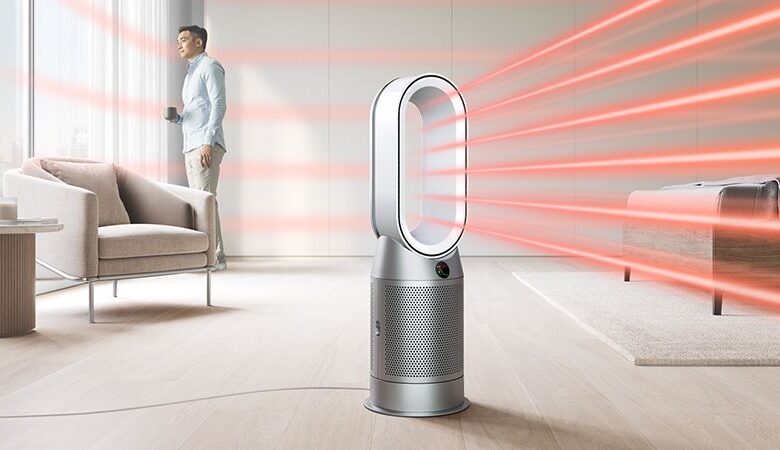
The Dyson Purifier Cool PC1 TP11 combines air purification with fan functionality, making it different from conventional air purifiers designed exclusively for filtering indoor air. It is intended for consumers who value premium construction, modern design, smart monitoring and the convenience of having filtered airflow and fan operation in one appliance.
The purifier uses a sealed filtration arrangement incorporating HEPA-grade filtration and activated carbon. The sealed design is intended to prevent unfiltered air from bypassing the filtration system. Its particle filtration captures fine airborne contaminants, including dust, pollen and other particulate matter, while the activated carbon layer helps reduce certain odours and gaseous pollutants.
Dyson’s purification approach focuses on both filtration and air circulation. The machine draws surrounding air through its filtration system and distributes the treated air using its bladeless air-multiplier design. The appliance can oscillate to distribute airflow across a wider area of the room.
The fan functionality is a significant advantage for households that want additional air circulation during warmer months. Instead of purchasing a separate fan and purifier, consumers can use the same appliance for both functions. However, it is important to understand that the fan does not function as an air conditioner. It circulates air and can provide a cooling sensation but does not reduce room temperature in the same manner as an air-conditioning system.
The TP11 also offers smart monitoring and control features. Compatible application-based functions allow users to monitor indoor air quality and adjust operating settings remotely. Depending on the software configuration, users can also access historical air-quality information and schedule operation.
Its oscillation functionality is particularly useful in living rooms where people sit at different positions. By distributing airflow across a wider area, the appliance can improve circulation and help move room air towards the purifier’s intake. Effective purification still depends on room dimensions, airflow conditions and operating time.
The design is another major attraction. Dyson’s bladeless construction gives the appliance a distinctive appearance and makes its exterior relatively straightforward to clean. Its remote control and smart-home compatibility provide additional convenience.
Noise levels depend on the selected operating mode. At lower settings, the machine can be used for regular indoor circulation, while higher fan speeds produce more noticeable sound. Consumers planning to use it in bedrooms should consider the sound levels at the speeds they are most likely to use.
The principal consideration is price. Dyson products generally occupy the premium segment of the Indian air purifier market, and the initial purchase cost can be substantially higher than that of conventional HEPA purifiers. Replacement filters are another recurring expense that buyers should calculate before making a decision.
The Dyson Purifier Cool PC1 is particularly suitable for consumers who value premium design, fan functionality, smart controls and integrated air purification. It is less appropriate for buyers whose primary objective is to obtain the highest possible CADR at the lowest purchase price.
IMPORTANT FACTORS TO CONSIDER BEFORE BUYING AN AIR PURIFIER IN INDIA
Choosing an air purifier requires more than comparing brands, prices and advertised room coverage. Two appliances with similar-looking specifications may deliver considerably different practical results depending on their airflow, filtration efficiency, sensor quality and maintenance requirements.
-
Clean Air Delivery Rate (CADR)
CADR is one of the most important specifications when evaluating an air purifier. It measures the volume of clean air delivered by the appliance per hour. A higher CADR generally means that the machine can clean a room more quickly, provided other conditions remain comparable.
For example, a purifier with a CADR of 500 cubic metres per hour will generally be more suitable for a larger room than one with a CADR of 150 cubic metres per hour. Consumers living in Delhi-NCR and other heavily polluted cities should consider purchasing a purifier with sufficient capacity to operate effectively during severe pollution episodes.
-
HEPA Filtration Technology
HEPA filtration is an important consideration for households concerned about fine particulate pollution. A properly specified HEPA filter can capture very small airborne particles, including dust, pollen and other allergens.
Consumers should distinguish between genuine HEPA filtration and generic filters marketed using terms such as high-efficiency filtration. H13 and H14 are commonly referenced HEPA classifications, but the overall performance of an air purifier also depends on its filter construction, sealing and airflow.
-
Activated Carbon Filtration
Particulate filters and activated carbon filters perform different functions. HEPA filters primarily capture airborne particles, whereas activated carbon helps adsorb certain gaseous pollutants and odours.
This makes activated carbon particularly useful in homes exposed to cooking smells, smoke and certain volatile organic compounds. The quantity and quality of carbon used in the filter also matter because a thin carbon coating may have limited capacity.
-
Room Size and Air Changes per Hour
Consumers should measure their room before purchasing an air purifier. Manufacturers sometimes advertise maximum room coverage using relatively low air-change assumptions. A purifier may technically circulate air through a large room but still fail to provide the desired cleaning speed.
For a household dealing with substantial particulate pollution, selecting a purifier that can deliver approximately four to five air changes per hour is a useful starting point. Room height, ventilation, open doors and adjoining spaces should also be considered.
-
Replacement Filter Availability and Cost
Replacement filters are among the most important long-term ownership expenses. A relatively inexpensive purifier may become costly if its replacement filters are expensive or difficult to obtain.
Before purchasing, consumers should check the exact replacement filter model, its price, expected lifespan and availability in India. Genuine replacement filters are preferable because incompatible or poorly constructed filters can compromise the appliance’s performance.
-
Noise Levels
Noise is particularly important for people who intend to operate an air purifier throughout the night. Most modern appliances include sleep modes that reduce fan speed and operating noise.
However, consumers should understand that lower fan speeds also reduce the volume of air processed. During severe pollution episodes, running the purifier at a higher speed before bedtime and switching to a quieter setting overnight can be a practical approach.
-
Smart Connectivity and Air-Quality Monitoring
Smart air purifiers increasingly include PM2.5 sensors, numerical displays, automatic operating modes, Wi-Fi connectivity and smartphone applications.
These features help consumers monitor indoor conditions and operate their appliances conveniently. However, the presence of a smart display does not automatically indicate superior filtration. Consumers should prioritise CADR and filtration quality before paying extra for connected features.
-
Electricity Consumption and Warranty
Air purifiers may operate for several hours every day, particularly during winter pollution episodes. Electricity consumption should therefore be considered alongside purchase and filter replacement costs.
Consumers should also examine warranty coverage, service availability and the manufacturer’s support arrangements. A longer warranty is useful, but its terms and exclusions should be understood before purchase.
WHICH AIR PURIFIER SHOULD YOU CHOOSE?
Different households have different requirements, and the most expensive appliance is not necessarily the most appropriate choice.
For large living rooms, the Philips AC3220/60 and Philips AC4221/61 offer substantial airflow capacity. Their respective CADR ratings of 520 cubic metres per hour and 600 cubic metres per hour make them relevant for households requiring higher cleaning capacity.
For consumers looking for a balance between price, filtration and smart functionality, the Honeywell Air Touch V5 and Xiaomi Smart Air Purifier 4 Lite are worth considering.
For bedrooms and smaller residential spaces, the Philips AC0920/60 and Xiaomi Mijia Smart Air Purifier 4 Compact offer more compact alternatives. Their suitability depends on the room’s actual dimensions and required air-change rate.
The Coway Airmega 150 is an option for consumers who prioritise relatively quiet operation and conventional multi-stage filtration. The Sharp FP-F40E-W may appeal to households interested in additional Plasmacluster technology, while the Dyson Purifier Cool PC1 is aimed at premium buyers looking for integrated fan and purification functionality.
Ultimately, an air purifier should be selected according to the room in which it will operate, the pollution levels in the surrounding environment, its actual cleaning capacity and the affordability of maintaining it over several years. Regular filter maintenance, appropriate placement and consistent operation are equally important for obtaining meaningful improvements in indoor air quality.
An important consideration for Indian households is that an air purifier is not a substitute for adequate ventilation, controlling indoor pollution sources or addressing the causes of outdoor air pollution. It also does not remove every category of indoor contaminant. Keeping windows and doors appropriately closed during severe outdoor pollution, reducing indoor smoke sources and maintaining the appliance according to manufacturer instructions can help improve its effectiveness.
Product specifications and market information are considered up to July 2026. Prices, availability, replacement-filter costs and product configurations can change.