ED Freezes 215 Bank Accounts In Tayal Group Money Laundering Probe
What begins as a 30 September 2026 Enforcement Directorate search across twelve locations in Mumbai and Ahmedabad quickly reveals itself as far more than a fresh raid. The agency freezes 215 bank accounts, seizes ₹20 lakh in cash from Pravin Tayal’s residence, and alleges that promoters of the Tayal Group, acting through shell entities and certain Resolution Professionals, sought to regain control of assets already attached under the Prevention of Money Laundering Act. The claimed proceeds of crime stand at roughly ₹820.86 crore. Yet this is only the latest chapter in a trail that stretches back to 1990s securities proceedings, Bank of Rajasthan shareholding controversies, multiple bank-fraud FIRs, and prolonged insolvency litigation. The public is left asking how such patterns persist and whether the system designed to recover public money is itself being tested.

The Enforcement Directorate Generated a Prosecution Complaint Against the Tayal Group, Confirmed Asset Attachments, and Obtained Court Cognisance as Far Back as 2021, Yet No Final Conviction Exists While New Raids Unearth More Alleged Shell Structures and Frozen Accounts in 2026.
The Directorate of Enforcement, Kolkata Zonal Office-II, issued a press release on 6 October 2026 that ought to unsettle anyone who believes India’s financial regulatory architecture has matured into a reliable safeguard for public money. On 30 September 2026 the agency searched twelve locations in Mumbai and Ahmedabad under the Prevention of Money Laundering Act, 2002. The targets were promoters and directors of the Tayal Group, Pravin Tayal, Saurabh Tayal and others, allegedly acting in concert with certain Resolution Professionals. The stated purpose was investigation into bank fraud, laundering of proceeds of crime, and misuse of the Insolvency and Bankruptcy Code.
Documents recovered, according to the Enforcement Directorate, related to the incorporation and operation of alleged shell companies and to a large number of cooperative-bank accounts opened in the names of associates. Two hundred and fifteen bank accounts linked to the accused entities and associated persons were frozen under Section 17(1-A) of the Prevention of Money Laundering Act. Cash of 20 lakh rupees was seized from the residential premises of Pravin Tayal. Records of immovable properties allegedly connected to the promoter-directors and said to have been concealed from both the agency and the banks were identified. Fresh non-performing assets of group companies were also unearthed.
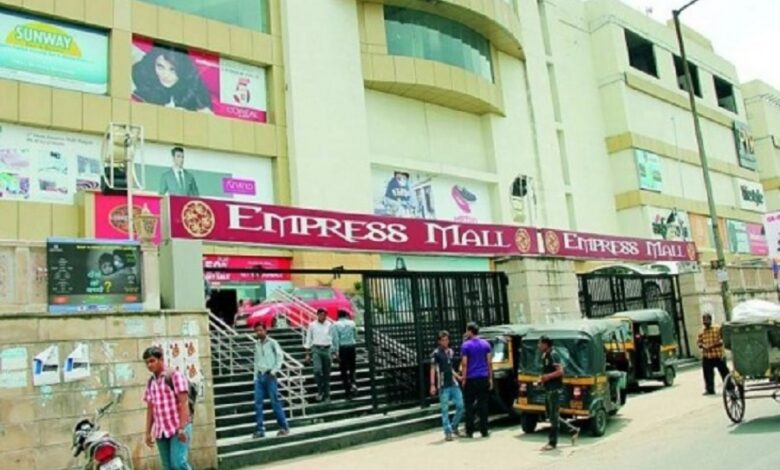
The underlying investigation, the Enforcement Directorate states, rests on Enforcement Case Information Reports concerning large-scale bank fraud by companies including K. Lifestyle and Industries Limited, Actif Corporation Limited and Jaybharat Textiles and Real Estate Limited. The proceeds of crime are placed at approximately 820.86 crore rupees. The alleged method is familiar yet still jarring. Bank finance obtained through falsified stock statements, inflated production claims and unauthorised sale of hypothecated machinery; funds then layered through shell companies and diverted into real-estate assets. One asset repeatedly named is Empress Mall in Nagpur, provisionally attached earlier and valued by the agency at roughly 483 crore rupees.
This is not merely a story of a company that defaulted on loans. The Enforcement Directorate’s theory is sequential and expansive, which includes bank borrowing, alleged falsification and diversion, shell-company layering, creation or acquisition of assets, attachment under the Prevention of Money Laundering Act, and then, allegedly, the use of insolvency proceedings to regain or protect those very assets. The sequence described is an alleged closed loop that converts public bank funds into private assets and then attempts to shield those assets from the very law designed to recover them.
Who exactly are the individuals at the centre of this long trail? Regulatory records identify a network historically referred to as both the Tayal Group and the Krishna Group. Companies associated with the family include KSL and Industries Limited, Jaybharat Textiles and Real Estate Limited, Eskay Knit India Limited, Krishna Lifestyle Technologies Limited, Krishna Knitwear Technology Limited and, at one time, Bank of Rajasthan. Family members who appear repeatedly in proceedings are Pravin Kumar Tayal, his brothers Navin Tayal and Sanjay Tayal, and Saurabh Kumar Tayal. It is more accurate to speak of promoters and family members associated with the group than to anoint any single individual as sole founder.
The regulatory history does not begin with the 2026 searches. One of the earliest significant episodes concerns KSL and Industries Limited, formerly known as Krishna Texport and Capital Market Limited, a core company of the Tayal Group. Its promoter directors at the relevant time included Pravin Kumar Tayal, Navin Kumar Tayal and Sanjay Kumar Tayal.
The Securities and Exchange Board of India investigated the 1996 public issue of an unrelated company, Pashupati Cables Limited. The investigation was triggered by a complaint alleging irregularities including dummy or fake applications, fake stock invests and price-rigging. On a prima-facie basis the Securities and Exchange Board of India concluded that KSL and Industries Limited had arranged finance for approximately 60 lakh shares of Pashupati Cables Limited, worth 300 lakh rupees, representing roughly 80 percent of the net public offer, and had acted in concert with entities associated with the issue.
The regulator found that this conduct created the impression that the issue was fully subscribed without genuine inflow of funds. Consequently, the Securities and Exchange Board of India passed an order against KSL and Industries Limited and its promoter directors, including Pravin Kumar Tayal, Navin Kumar Tayal and Sanjay Kumar Tayal.
The matter eventually reached the Securities Appellate Tribunal. There was also a separate Securities and Exchange Board of India proceeding in which KSL and Industries Limited was debarred from accessing or being associated with the capital market for 5 years in connection with an earlier public-issue matter. These events predate the later bank-fraud and money-laundering investigations by more than a decade. They establish that regulatory concerns involving entities linked to the Tayal family were already present in the 1990s.
Perhaps the most consequential historical securities-market controversy involving the family concerns Bank of Rajasthan. The Securities and Exchange Board of India examined the promoter shareholding structure after a reference from the Reserve Bank of India. The central question was whether the promoter group led by Pravin Kumar Tayal had genuinely reduced its stake as represented to the market, or whether control was retained indirectly through interconnected entities.
The investigation found that the group had represented a decline from approximately 44.18 percent to 28.61 percent, whereas the effective holding was alleged to have risen as high as 63.15 percent through entities acting in concert. Common addresses, common directors and inter-company fund transfers among entities associated with the Tayal, Yadav and Silvassa groups were identified. The Securities Appellate Tribunal later dealt with the matter; the record describes the Tayal family as consisting of Pravin Kumar Tayal, his brothers Sanjay Tayal and Navin Tayal, and Saurabh Tayal, and records findings concerning interconnected entities and alleged concerted activity.
In February 2013 the Securities and Exchange Board of India imposed a total penalty of approximately 30.75 crore rupees on 118 entities, including a 5 crore rupee penalty each on Pravin Tayal, Sanjay Tayal, Navin Tayal and Saurabh Tayal. The Supreme Court later dismissed appeals against the penalties. The regulator’s case was not limited to improper trading; it was that a network of entities was used to create the appearance of diluted promoter ownership while effective control allegedly remained with the family. That finding became an important precursor to later concerns about interconnected companies, layered ownership and beneficial control.
A separate and detailed Securities and Exchange Board of India investigation examined Jaybharat Textiles and Real Estate Limited and KSL and Industries Limited for the period from 23 October 2006 to 31 December 2009. The price of Jaybharat Textiles and Real Estate Limited rose from 93.10 rupees to 192 rupees between February and August 2007, an increase of roughly 106 percent, while the share price of KSL and Industries Limited moved from 73 rupees to approximately 268 rupees, a rise of about 267 percent.
The Securities and Exchange Board of India alleged that promoters and connected entities held substantially more shares than publicly disclosed. Shares were said to be held through connected persons, including employees or persons associated with group companies; those entities then participated in trading that allegedly created artificial volumes and influenced prices. For Jaybharat Textiles and Real Estate Limited, the regulator recorded that promoters effectively controlled approximately 96.99 percent of the shareholding while the publicly disclosed promoter holding was only about 67.05 percent.
The apparent public float was therefore substantially larger than the effective public float. Employees of Tayal Group companies held significant blocks of physical shares; certain connected persons shared addresses with Tayal entities. Ownership and control, on the regulator’s theory, were distributed on paper among numerous individuals and companies while remaining concentrated in practice. That is considerably more serious than an ordinary disclosure error.
In 2007 the Securities and Exchange Board of India had already passed an interim order concerning entities connected with the promoters of Jaybharat Textiles and Real Estate Limited and KSL and Industries Limited. Certain connected entities were said to have engaged in transactions that prima facie contributed to artificial volume creation and price manipulation. Some of those entities later sold shares of KSL and Industries Limited and allegedly benefited by approximately 18.65 crore rupees. Synchronised trading and higher-priced buy orders formed part of the described mechanism. The later full investigation examined an entire network of connected persons and entities; proceedings were issued against a large number of noticees.
Another episode involved disclosure. The Securities and Exchange Board of India found that Eskay Knit India Limited, a Tayal Group company, had failed to disclose relevant enforcement and regulatory developments concerning Central Bureau of Investigation investigations and bank-fraud allegations. Central Bureau of Investigation investigations were pending following complaints from banks; the company was required to disclose material regulatory developments to the stock exchange.
Corporate-governance controversies often involve two distinct questions: whether the underlying transaction was improper, and whether the company properly informed investors of the investigation. The Eskay Knit India Limited episode raised the second question as well.
The banking-fraud chapter begins in earnest with the UCO Bank matter. In 2016 the Enforcement Directorate initiated a Prevention of Money Laundering Act investigation on the basis of a Central Bureau of Investigation First Information Report arising from a UCO Bank complaint. Companies identified included K. Lifestyle and Industries Limited, Global Softech Limited and Tayal Energy Limited. The complaint alleged fraud or default of approximately 296 crore rupees.
The Enforcement Directorate provisionally attached assets worth roughly 235 crore rupees, immovable properties valued at about 233 crore rupees and 19 bank accounts containing approximately 1.60 crore rupees. Money borrowed for specific purposes was alleged to have been diverted through a network of fictitious companies and ultimately channelled through group entities. The pattern of bank borrowing, alleged diversion, multiple entities, movement of funds, acquisition of assets, regulatory enforcement already resembles the mechanism described in the 2026 release.
A larger investigation concerned loans of approximately 524 crore rupees. Three Central Bureau of Investigation First Information Reports formed the predicate for the Prevention of Money Laundering Act probe against companies including Actiff Corporation Limited, Jaybharat Textiles and Real Estate Limited, Krishna Knitwear Technology Limited and Eskay Knit India Limited.
The loans had been obtained from Bank of India and Andhra Bank in 2008. Funds were allegedly diverted through a maze of shell companies and traced into assets associated with KSL and Industries Limited, particularly Empress Mall in Nagpur.
In May 2019 the Enforcement Directorate provisionally attached the land and Empress Mall, valuing the property at approximately 483 crore rupees. The property consisted of commercially diverted land measuring roughly 270374 square feet and the mall constructed upon it. The agency said the property represented proceeds of crime arising from the alleged bank fraud.
In 2021 the Enforcement Directorate took physical possession after the attachment was confirmed by the Prevention of Money Laundering Act Adjudicating Authority. A prosecution complaint under the Prevention of Money Laundering Act was filed before the Special Prevention of Money Laundering Act Court in Mumbai; the court took cognisance on 22 January 2021.
By 2019 the two major investigations had produced attachments of approximately 234 crore rupees in the UCO Bank matter and 483 crore rupees relating to Empress Mall, a combined figure of roughly 717 crore rupees. It is essential not to describe the 717 crore rupee figure as a “717 crore rupee fraud.” It was the approximate value of assets attached; the underlying bank-fraud allegations involved different amounts.
Central Bureau of Investigation investigations involving other banks also appear in the public record. A 2019 report of nationwide bank-fraud actions records allegations concerning Eskay Knit India Limited (approximately 42.16 crore rupees, Dena Bank complaint), Krishna Knitwear Technology Limited (approximately 27.75 crore rupees, Canara Bank complaint) and KSL and Industries Limited (approximately 156.93 crore rupees, Allahabad Bank complaint).
The KSL and Industries Limited complaint alleged criminal conspiracy, diversion of funds, forgery and violation of a corporate debt restructuring arrangement, with an alleged loss of roughly 156.93 crore rupees to Allahabad Bank. These remain allegations contained in bank complaints and First Information Reports rather than judicial findings of theft.
In a bail proceeding concerning Jaybharat Textiles and Real Estate Limited, the Central Bureau of Investigation opposed the company’s application and stated that it had filed a chargesheet under Section 120-B read with Section 420 of the Indian Penal Code. The alleged fraud exceeded 124 crore rupees; Jaybharat Textiles and Real Estate Limited was said to have played a significant role in facilitating the fraud, including through cheques involving major transactions, and to have diverted funds to other Tayal Group companies.
The most consequential element of the 2026 Enforcement Directorate action is the insolvency angle. After assets were attached under the Prevention of Money Laundering Act, the agency alleges, promoter-linked entities initiated insolvency proceedings through related entities in an attempt to regain control. Entities allegedly controlled by the Tayal promoters were used as purported creditors to initiate Corporate Insolvency Resolution Process under Section 7 of the Insolvency and Bankruptcy Code.
These entities, the Enforcement Directorate says, were under the control or occupation of the promoters and functioned as sham creditors. Certain Resolution Professionals allegedly admitted unverified and inflated claims of related parties, thereby reducing the voting power of secured institutional lenders and increasing the influence of promoter-connected entities. Some Resolution Professionals allegedly filed applications seeking to set aside Prevention of Money Laundering Act attachments and suppressed adverse orders before courts and tribunals. These remain investigative allegations; they have not been finally adjudicated.
KSL and Industries Limited had already entered Corporate Insolvency Resolution Process before the National Company Law Tribunal, Ahmedabad; the process was admitted on 6 September 2019. Litigation followed concerning the Resolution Professional, creditors, the Prevention of Money Laundering Act attachment and the jurisdictional conflict between the Insolvency and Bankruptcy Code and the Prevention of Money Laundering Act.
In the matter of Kiran Shah, Resolution Professional of KSL and Industries Limited versus Enforcement Directorate, the National Company Law Appellate Tribunal dismissed an appeal challenging the Prevention of Money Laundering Act attachment and held that an application under Section 60(5) of the Insolvency and Bankruptcy Code could not confer upon the National Company Law Tribunal jurisdiction over matters falling within the Prevention of Money Laundering Act framework. The conflict between insolvency process and Prevention of Money Laundering Act attachment is therefore not a novelty invented in October 2026; it has been litigated for years.
The October 2026 release names Resolution Professionals including Kiran C. Shah, Vinod P. Ambavat and Ravi Kapoor. The Enforcement Directorate alleges that certain of them assisted promoter-directors through inflated related-party claims, attempts to interfere with Prevention of Money Laundering Act attachments, and actions affecting rental income from attached assets.
A nexus among promoter-directors, shell companies and Resolution Professionals is said to have been uncovered, the purpose of which was to divert bank funds, conceal proceeds of crime and frustrate Prevention of Money Laundering Act action. Again, these are investigative findings, not final judicial determinations against every named individual.
A second alleged Insolvency and Bankruptcy Code strategy involved Vidhant Realty Private Limited. Insolvency proceedings were initiated against it through another Tayal-linked entity, Kausar Textiles Private Limited. Cubical Realty Private Limited became the Successful Resolution Applicant.
The Enforcement Directorate alleges that this breached Section 29A of the Insolvency and Bankruptcy Code because the Successful Resolution Applicant was beneficially owned by Tayal family members including Pravin Kumar Tayal and Navin Kumar Tayal. Section 29A exists precisely to prevent persons connected with a corporate debtor or promoter from returning through the insolvency process to acquire assets. The correct formulation remains that the Enforcement Directorate alleges a violation; a competent authority or court has not yet finally determined it.
Separately, in March 2024 the National Company Law Tribunal, Ahmedabad, admitted an insolvency application against Pravin Kumar Tayal in his capacity as personal guarantor. The application was filed by State Bank of India; the claimed default was approximately 206.34 crore rupees under guarantees dated 8 December 2009 and 4 May 2010. This proceeding concerns liability as personal guarantor; it is not itself a finding that bank fraud was committed.
Claims that the Tayal family systematically harassed homebuyers do not find reliable support in the available record.
In one documented episode, Saurabh Kumar Tayal and other purchasers were complainants before the Karnataka Real Estate Regulatory Authority concerning Unicca Emporis. The complaints were allowed and the developer was directed to return approximately 3.94 crore rupees with interest. The developer’s subsequent appeals were withdrawn in the Karnataka High Court in March 2025.
Placed chronologically, the record displays a recurring pattern. The earliest material involves public issues, alleged dummy applications, alleged manipulation and regulatory restrictions involving KSL and Industries Limited and Tayal family members. The Bank of Rajasthan episode involved allegations that promoter control was being maintained through interconnected entities despite public representations of reduced ownership. The Securities and Exchange Board of India subsequently investigated alleged hidden promoter holdings, connected entities, artificial volumes and price manipulation involving Jaybharat Textiles and Real Estate Limited and KSL and Industries Limited.
The record then becomes dominated by alleged bank-fund diversion involving UCO Bank, Bank of India, Andhra Bank, Allahabad Bank and others. The Enforcement Directorate traced alleged proceeds into properties and attached assets worth hundreds of crores, including Empress Mall. KSL and Industries Limited entered Corporate Insolvency Resolution Process, producing a prolonged dispute concerning creditors, Resolution Professionals, Prevention of Money Laundering Act attachment and jurisdiction.
The latest Enforcement Directorate investigation on Tayal Group alleges that related entities and certain professionals were used to manipulate insolvency processes. The 2026 search operation itself involved 12 locations, 215 frozen accounts, 20 lakh rupees cash, alleged undisclosed properties, and proceeds of crime pegged at approximately 820.86 crore rupees.
A striking continuity runs through the older Securities and Exchange Board of India matters and the present Enforcement Directorate investigation. Regulators repeatedly focused on interconnected entities, common addresses, common directors, employees holding shares, layers of ownership and movement of funds between connected companies.
In 2026 the agency again describes shell companies, numerous bank accounts in associates’ names, promoter-controlled entities, concealed properties and interconnected companies. The similarity does not prove that historical and current transactions form a single legal scheme. From an investigative perspective, however, the recurrence of complex interconnected corporate structures is one of the most important themes in the public record.
The numbers must not be mixed. 296 crore rupees relates to the alleged UCO Bank fraud or default. 235 crore rupees is the approximate value of assets attached in that investigation. 524 crore rupees concerns loans allegedly fraudulently availed from Bank of India and Andhra Bank. 483 crore rupees is the value attributed to Empress Mall and associated property. 717 crore rupees is the combined approximate value of attachments at one stage. 156.93 crore rupees is the alleged loss in the Allahabad Bank complaint involving KSL and Industries Limited.
More than 124 crore rupees is the amount of alleged fraud cited by the Central Bureau of Investigation in the Jaybharat Textiles and Real Estate Limited case. 206.34 crore rupees is the default claimed by State Bank of India in the personal-guarantor insolvency against Pravin Tayal. 820.86 crore rupees is the approximate proceeds of crime cited in the current Enforcement Directorate investigation. These figures relate to different cases, different liabilities, alleged fraud amounts and asset values; they cannot simply be added.
What is established and what remains allegation must be kept distinct. There is a documented regulatory history of Securities and Exchange Board of India orders, Securities Appellate Tribunal proceedings and penalties concerning securities-market conduct of Tayal-linked entities. There are Central Bureau of Investigation First Information Reports and, in at least the Jaybharat Textiles and Real Estate Limited matter, a chargesheet referred to in court proceedings. The Enforcement Directorate has conducted investigations, attached properties, filed prosecution complaints and obtained physical possession of Empress Mall.
The Prevention of Money Laundering Act–Insolvency and Bankruptcy Code conflict has been litigated before the National Company Law Tribunal and the National Company Law Appellate Tribunal, with the appellate tribunal rejecting an attempt to use Insolvency and Bankruptcy Code jurisdiction over Prevention of Money Laundering Act matters.
The latest claims about 215 accounts, concealed properties, shell companies, sham creditors, Resolution Professionals and Section 29A violations are currently Enforcement Directorate allegations and investigative findings. No final criminal conviction of Pravin Tayal or Saurabh Tayal establishing the entire 820.86 crore rupee set of allegations described in the latest Enforcement Directorate release has been located in the public record. That distinction is indispensable.
The public record does not support describing the matter as merely a “new 820 crore rupee bank fraud case.” For roughly three decades, different Tayal-linked entities have appeared in proceedings concerning securities-market conduct, promoter disclosures, beneficial ownership, alleged price manipulation, bank borrowing, alleged diversion of funds, non-performing assets, Prevention of Money Laundering Act proceedings and insolvency litigation.
The striking feature is the recurrence of investigations involving interconnected companies and persons. The 2026 Enforcement Directorate investigation adds a further layer: the agency now alleges that the corporate structure was used not only for obtaining and laundering bank funds but that related entities and certain insolvency professionals were subsequently used to fight or circumvent asset attachments through the Insolvency and Bankruptcy Code framework.
If ultimately established in court, that allegation would mean the alleged misconduct did not end with the original bank transactions; the enforcement and insolvency machinery itself became part of the contest. That question remains to be adjudicated.

Primary documents that anchor the narrative include the Enforcement Directorate’s 6 October 2026 press release on the Tayal Group searches, the 2021 release on physical possession of Empress Mall, Securities and Exchange Board of India orders and Securities Appellate Tribunal proceedings concerning Bank of Rajasthan and Jaybharat Textiles and Real Estate Limited / KSL and Industries Limited, Insolvency and Bankruptcy Board of India records of the KSL and Industries Limited insolvency, and the National Company Law Appellate Tribunal judgment on the jurisdictional conflict between the KSL and Industries Limited Resolution Professional and the Enforcement Directorate.
The trail is substantial and documented. It spans securities regulation, alleged market manipulation, promoter-control issues, multiple bank-fraud investigations, money-laundering cases, hundreds of crores of attached assets, insolvency proceedings, and now allegations that insolvency mechanisms were used to frustrate enforcement.
The stronger angle is not any single raid but the evolution of controversies from securities-market regulation and promoter-control allegations to bank-fraud and Prevention of Money Laundering Act proceedings and, most recently, to claims that the insolvency process itself was turned into an instrument for protecting attached assets. Whether the system can close that circle remains an open and urgent question.