₹2,434-CRORE UIVCF SAGA: FROM A FUND THAT REFUSED TO DIE TO ₹336-CRORE ALIBAUG ATTACHMENT — HOW LONG CAN THE MONEY TRAIL REMAIN A FILE?
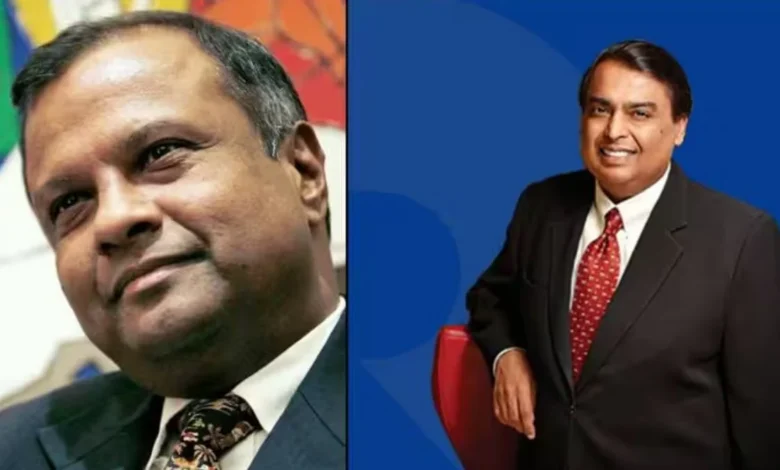
Jai Corp Limited Promoter and the Chairman of the Company Is Anand Jain. Same Anand Jain who played key role in Reliance's growth, 'third son' of Dhirubhai Ambani, very close to Mukesh Ambani

ED’s latest action against Jai Corp and connected entities brings an old financial controversy back into the spotlight. The numbers are enormous, the regulatory history is uncomfortable, the alleged transaction structures are complex — and the timeline is painfully long.
There is something particularly disturbing about financial investigations that do not merely become complicated, but become old enough to acquire history, layers and inertia.
The Jai Corp–Urban Infrastructure Venture Capital Fund (UIVCF) matter increasingly resembles one such case.
On 6 October 2026, the Directorate of Enforcement (ED), Mumbai Zonal Office-II announced a provisional attachment of 88.47 acres of land in Alibaug, presently valued at approximately ₹336 crore, in its PMLA investigation involving Jai Corp Limited, Urban Infrastructure Venture Capital Limited, Urban Infrastructure Trustees Limited and others. ED says the attached property represents alleged proceeds of crime of approximately ₹230 crore, valued at ₹230 crore as of 31 October 2022 but now worth around ₹336 crore. baa57394-4e3b-46ad-b69c-ba6bdf7… baa57394-4e3b-46ad-b69c-ba6bdf7…
That is not a routine corporate compliance footnote.
It is the latest visible asset seizure in a controversy that goes back to a venture-capital structure created in 2006, involves ₹2,434 crore of investor money, a fund that remained alive years beyond its stated tenure, SEBI enforcement proceedings, a Bombay High Court-directed CBI investigation, ED searches, frozen financial assets and allegations of undervaluation and diversion of funds.
And that raises the uncomfortable question:
How many years should it take for a financial investigation involving thousands of crores to reach a definitive legal conclusion?
₹2,434 CRORE WAS RAISED. THE FUND WAS SUPPOSED TO HAVE A LIFE. THE LIFE KEPT GETTING EXTENDED.
SEBI’s own 2022 order provides a remarkably important starting point.
UIVCF was constituted as a trust through a deed dated 31 January 2006 and registered with SEBI as a Venture Capital Fund on 21 March 2006. Its only scheme was the Urban Infrastructure Opportunities Fund (UIOF). According to SEBI’s record, the scheme had a corpus of ₹2,434 crore, 796 investors as of 31 March 2020, and investments made during its tenure of approximately ₹2,906.85 crore, including reinvestments. Its prescribed tenure was seven years from initial closing, with two one-year extensions. SEBI SEBI
The investment architecture was not small.
SEBI records show that UIVCL acted as the Investment Manager, while Urban Infrastructure Trustees Limited (UITL) acted as Trustee. The 2022 SEBI proceedings also identify Anand Jain as a noticee and director of UIVCL, with the order recording his directorship from May 2006. SEBI SEBI
So this was not a backyard investment club.
It was a SEBI-registered investment fund with thousands of crores passing through a formal regulatory framework.
And then came the problem: closure.
THE FUND’S TENURE EXPIRED. THE MONEY DID NOT COME OUT.
SEBI recorded that the scheme’s term, including its permitted extensions, expired in June 2015. Yet investments worth approximately ₹1,060.92 crore remained to be liquidated and repaid to investors. SEBI
That became one of the central regulatory issues.
The fund managers’ explanation was essentially that immediate liquidation could destroy value. They cited difficult real-estate markets, litigation, regulatory obstacles, funding constraints and other commercial problems. They also said orderly exits would better protect investors.
There is a perfectly legitimate principle behind that argument: forcing a distressed sale can destroy investor value.
But there is also another principle — one that SEBI ultimately emphasised with considerable force:
A closed-ended regulated fund cannot simply remain open indefinitely because the manager believes a better exit may eventually appear.
SEBI’s 2022 order noted that the scheme had been under liquidation since June 2015, but the required investor repayment had not been completed even after seven years. SEBI specifically observed that the regulatory framework contemplated winding up within a much shorter period and rejected the justification that commercially advantageous liquidation could justify keeping the scheme alive indefinitely. SEBI
And SEBI went considerably further.
The regulator concluded that the relevant noticees had abdicated their responsibility and duty as directors and had not been sufficiently diligent in managing the fund. It held the relevant directors and entities liable for the regulatory violations and for failing to take concrete steps to liquidate the scheme and wind it up in accordance with the regulatory framework. SEBI SEBI
That is not newspaper rhetoric.
That is the regulator itself putting the conduct under a microscope.
SEBI’S MESSAGE WAS BLUNT: AN INVESTMENT VEHICLE CANNOT LIVE ON SINE DIE
The most striking aspect of the SEBI order is not merely the finding of non-compliance.
It is the institutional warning behind it.
SEBI said that allowing a regulated fund to remain alive indefinitely would undermine the statutory framework and potentially damage investor confidence and market integrity. SEBI
In other words, the regulator was confronting a dangerous proposition:
Can a sophisticated financial vehicle effectively rewrite its own regulatory timetable because liquidation is inconvenient?
SEBI answered no.
On 31 October 2022, it directed that the scheme be wound up and that investors be given an exit. It required independent valuations and specified that the winding-up and exit process be completed within three months, by 31 January 2023. SEBI
That order matters today because the subsequent ED investigation is examining a fundamentally different question:
Was the prolonged life of the fund merely regulatory non-compliance, or was the structure allegedly used in a way that caused investor value to be transferred elsewhere?
That is where the case becomes much darker.
THE ₹269.20-CRORE VALUATION QUESTION
According to ED’s 6 October 2026 press release, the investigation has allegedly uncovered a much more serious mechanism.
ED says the fair value of UIVCF’s interests in various SPVs was fraudulently suppressed and valued at ₹269.20 crore, allegedly in connivance with UIVCF management. According to the agency, investors were consequently given exits at significantly undervalued amounts, while the residual units were subsequently acquired at much lower values by five entities related to Jai Corp’s promoters. baa57394-4e3b-46ad-b69c-ba6bdf7…
That allegation, if ultimately established in the criminal proceedings, changes the character of the controversy completely.
A delayed fund is one problem.
A fund allegedly kept alive or administered in a manner that results in investors exiting at depressed valuations while related entities acquire residual value cheaply is an entirely different allegation.
The economic question is brutally simple:
Who lost the value, and who obtained it?
That is the question investigators must answer through documentary evidence, independent valuations, beneficial ownership records, transaction trails, bank statements, board papers and communications — not through corporate narratives or press statements.
One important caution is necessary. The ₹269.20 crore figure in the ED release refers to the alleged value of the fund’s interests in SPVs. It should not be mechanically compared with the ₹2,434 crore corpus as though ₹269.20 crore represented the entire fund. The two numbers describe different things. The allegation concerns the valuation of the fund’s interests in underlying investments.
That distinction matters in serious journalism.
So does the distinction between allegation and adjudicated fact.
NEELKANTH TOWNSHIP: WHERE THE ALIBAUG LAND TRAIL ENTERS THE PICTURE
One SPV now sits at the centre of the ED’s latest action:
Neelkanth Township and Constructions Private Limited.
ED says UIVCF had invested approximately ₹51 crore in the SPV, which was used to acquire land in Alibaug. The agency alleges that the fair market value of the fund’s interest in the SPV was significantly suppressed and that the investment was thereafter acquired at an undervalued price by the five entities associated with Jai Corp’s promoters. ED has quantified the alleged proceeds of crime arising from that transaction at approximately ₹230 crore. baa57394-4e3b-46ad-b69c-ba6bdf7…
The 2026 Bombay High Court record provides additional evidence that Neelkanth was not an incidental name.
A judgment dated 12 August 2026 records that the Urban Infrastructure Opportunities Fund, a scheme of the SEBI-registered UIVCF, had entered into a 2007 term sheet involving Neelkanth Township and Construction Pvt. Ltd. The court records UIOF as having subsequently been wound up with effect from 31 January 2023. Indian Kanoon
The Alibaug land therefore sits at the intersection of the fund structure, the SPV structure and the later PMLA investigation.
And now the land is attached.
88.47 acres. ₹336 crore present market value. ₹230 crore alleged proceeds of crime.
Those are not abstract numbers.
Those are physical assets.
THE ED IS NOT STARTING FROM ZERO
The latest attachment follows an earlier ED action.
The agency says its earlier search operation resulted in seizure of approximately ₹1.86 crore in cash and freezing of Demat accounts and mutual fund holdings valued at approximately ₹99.47 crore. baa57394-4e3b-46ad-b69c-ba6bdf7…
Jai Corp’s own exchange disclosures in December 2025 provide a contemporaneous account of the searches. The company stated that ED officials visited its corporate office and the residences of its Chairman, Vice-Chairman and Managing Director on 19 December 2025. The company also confirmed that an ED order froze certain Demat accounts and mutual-fund folios of UIVCL having a value of roughly ₹99 crore. Its filing separately referred to seizure of approximately ₹1.74 crore in cash from the residences of two directors. NSE Searchives
The difference between the company’s reported cash seizure figure and the later ED press-release figure should not simply be ignored. It may reflect differences in calculation, later assessment or the scope of the action. It should be reconciled through the underlying ED seizure documentation.
That is exactly what a serious financial investigation is supposed to do:
follow the ledger, not the headline.
THEN CAME THE BOMBAY HIGH COURT
Perhaps the most uncomfortable part of the entire story is not the latest ED attachment.
It is what happened before the investigation was substantially escalated.
In January 2025, the Bombay High Court dealt with complaints alleging wide-ranging economic offences involving Jai Corp, its subsidiaries and connected structures. The allegations placed before the court included alleged misappropriation of public money, investor fraud, round-tripping through offshore structures, unsecured advances to subsidiaries and allegedly fabricated or dubious invoices. Indian Kanoon
The court noted that the allegations concerned thousands of crores, multiple jurisdictions, nationalised banks and foreign entities involving Mauritius, the United States, Australia and the UAE. Indian Kanoon
And then came an extraordinary judicial observation.
The judges said they were “surprised and shocked” by the manner in which the EOW and CBI had dealt with the matter, and criticised what they viewed as agencies passing the responsibility to one another. Indian Kanoon
That is a devastating institutional comment.
When a case involving alleged financial transactions worth thousands of crores becomes a bureaucratic game of “not my jurisdiction”, the victims, investors and public are the ones left holding the uncertainty.
CBI WAS SENT BACK INTO THE CASE — THIS TIME THROUGH A SPECIAL INVESTIGATION TEAM
The Bombay High Court did not declare anyone guilty.
It did something more important at the investigation stage: it ordered that the investigation should not remain trapped in administrative buck-passing.
The court directed the Zonal Director, CBI, Mumbai, to constitute a Special Investigation Team, with the Joint Director of the CBI’s Mumbai Anti-Corruption Bureau supervising the investigation. It also directed EOW to hand over the relevant papers and documents to the SIT. Indian Kanoon
And the court took pains to make one critical point clear:
Its observations were prima facie observations, and the SIT had to investigate impartially from all possible angles and independently determine the merits of the allegations. Indian Kanoon
That distinction is essential.
The High Court did not convict anyone.
The High Court said the allegations warranted a proper investigation.
THE ALLEGED MONEY TRAIL IS MUCH WIDER THAN ALIBAUG
The 2025 High Court judgment records a series of allegations put forward by the complainant which go substantially beyond the current Alibaug attachment.
Among the allegations placed before the court were:
₹4,255 crore allegedly availed by Jai Corp and subsidiaries from financial institutions;
₹2,434 crore collected through UIOF;
₹513.12 crore allegedly generated through fraudulent trading involving Reliance Petroleum futures;
₹98.83 crore of financial assistance alleged to have been diverted to Mauritius and Sharjah;
and allegations involving dubious or fabricated invoices and other methods of alleged fund diversion. Indian Kanoon
These figures originate from the complainant’s case as recorded by the High Court; they should not be presented as though every rupee has already been judicially established as criminal proceeds.
But they are far too substantial to be brushed away as accounting noise.
THE ₹513.12-CRORE RPL FUTURES EPISODE
Another part of the wider history concerns transactions involving Reliance Petroleum Limited.
The 2025 High Court order records that a SEBI proceeding had identified ₹513.12 crore in aggregate trading profits attributed to 12 entities involved in the RPL futures episode. Indian Kanoon
SEBI’s record of that litigation is more nuanced than a simplistic retelling suggests.
In 2020, the Securities Appellate Tribunal had already dealt with the underlying Reliance Industries matter, including SEBI’s finding that an unlawful manipulative strategy had been used and ordering disgorgement of ₹447.27 crore plus 12% annual interest, along with a one-year derivatives-market prohibition. That litigation was taken to the Supreme Court. Indian Kanoon
However, the later SAT decision of 4 December 2023 dealt specifically with the penalties against Navi Mumbai SEZ and Mumbai SEZ. SAT quashed the impugned penalties against those two entities, while dismissing Reliance Industries’ own appeal in the same set of proceedings. Indian Kanoon
That is exactly why responsible reporting must not simply write:
“SEBI proved a ₹513-crore fraud by Jai Corp.”
The legal record is considerably more complicated.
What can safely be said is that SEBI and subsequent appellate proceedings established a major regulatory dispute concerning manipulative RPL futures trading, and that the Bombay High Court subsequently recorded allegations linking this history to the broader complaint against Jai Corp and connected entities.
That is stronger journalism precisely because it is harder to attack legally.
THE REAL-ESTATE MONEY TRAIL: ₹1,995.40 CRORE
The 2025 High Court record also contains allegations regarding UIOF’s deployment of funds into multiple construction companies.
The complaint placed before the court alleged approximately ₹1,995.40 crore of advances through 33 Special Venture Project Agreements across 15 cities. The record identified, among others, Neelkanth Township, with historical disbursements and outstanding amounts appearing in the table reproduced in the judgment. Indian Kanoon
The complaint further alleged that approximately ₹555.77 crore of UIOF money had been diverted to four real-estate entities — including Vidhant Reality, Urban Reality, Urban Kshetra Infrastructure and Anacron Realtors — with corresponding alleged losses to investors/contributors. Indian Kanoon
Again, these are allegations recorded by the High Court, not final criminal findings.
But the sheer number of SPVs and the size of the alleged transactions justify precisely the kind of forensic investigation the High Court ordered.
AND THEN THERE IS THE ₹340-CRORE MANAGEMENT/ADVISORY FEE QUESTION
The complaint also alleged that approximately ₹340.035 crore was earned as advisory and management fees through UIVCL over multiple financial years, including payments attributed in the record to entities in India and Urban Infrastructure Capital Advisors in Mauritius. Indian Kanoon
This does not, by itself, establish wrongdoing.
A management fee can be entirely legitimate.
The investigative question is different:
What was contractually payable? To whom? For what services? Under whose control? Approved by whom? At what time? And was the fee proportionate to the actual services rendered?
That is where forensic accounting must replace rhetoric.
MAURITIUS, UAE, FOREIGN STRUCTURES — THE INVESTIGATION CANNOT STOP AT MUMBAI
The High Court record also describes allegations involving overseas structures and transactions.
The complaint alleged relationships involving UIVCL, Urban Infrastructure Capital Advisors–Mauritius, and Urban Infrastructure Real Estate Fund LP–Mauritius. It further alleged that real-estate assets financed through the Indian fund appeared in the foreign fund’s reported asset base, raising questions that the complainant sought to have investigated through a forensic audit. Indian Kanoon
There were also allegations concerning approximately ₹98.83 crore of foreign-currency financial assistance allegedly routed into entities in Mauritius and Sharjah. Indian Kanoon
This is precisely where ordinary corporate investigation becomes insufficient.
A transaction chain crossing India, Mauritius, UAE and potentially other jurisdictions cannot be properly investigated by looking only at Indian balance sheets.
Investigators have to identify:
ultimate beneficial ownership, beneficial controllers, bank-to-bank movement, inter-company balances, valuation documents, agreements, board approvals, tax treatment, repayment flows, accounting entries, related-party disclosures and the final economic beneficiary.
Anything less is paperwork theatre.
THE ₹1,060-CRORE INVESTOR LIABILITY MAKES THE DELAY EVEN MORE UNCOMFORTABLE
SEBI’s 2022 record noted that by 31 March 2020, the fund still had approximately ₹1,061 crore of investments outstanding. SEBI
The submissions made by the fund later stated that substantial distributions had been made and that a large part of the remaining portfolio faced litigation or other exit problems. By March 2021, the fund stated that it had returned approximately ₹2,011 crore, representing about 83% of the corpus, with ₹423 crore needed to repay the remaining capital contribution while investments remained substantially higher on the books. SEBI
That is an important piece of context.
This is not a story in which ₹2,434 crore simply disappeared overnight.
The financial history is more complicated.
Large amounts were invested, large amounts were returned, assets remained locked, litigation existed and valuation disputes developed.
But that complexity cannot become a permanent hiding place.
A complicated transaction is not immune from scrutiny.
THE COMPANY SAYS IT IS COOPERATING
Jai Corp’s disclosures state that the CBI investigation was initiated pursuant to the Bombay High Court order, that an FIR was registered, and that the investigation was ongoing. The company has stated that it is cooperating with authorities. Jai Corp. Ltd
Its subsequent filings likewise recorded the ED searches and the company’s cooperation with the investigation. NSE Searchives
That position deserves to be recorded.
But cooperation is not the same thing as exoneration.
Nor is investigation the same thing as guilt.
The only satisfactory endpoint is evidence tested through the legal process.
THE MOST IMPORTANT NUMBER TODAY IS NOT ₹336 CRORE
The most important number is time.
UIVCF began life in 2006.
Its original tenure ended years ago.
SEBI’s inspection was completed in 2021.
SEBI passed its fund-winding order in 2022.
The Bombay High Court ordered a CBI SIT in January 2025.
ED searches followed in December 2025.
ED has now attached 88.47 acres of Alibaug land worth approximately ₹336 crore in October 2026. SEBI Indian Kanoon baa57394-4e3b-46ad-b69c-ba6bdf7…
For a financial matter that originated two decades ago, that should concern everyone.
Financial crime does not become less serious because it is old.
In fact, old financial crime can become more difficult to prosecute because documents disappear, memories weaken, companies restructure, directors change, accounting systems migrate and money crosses borders.
Delay is therefore not neutral.
Delay itself can become an investigative handicap.
ENOUGH OF AGENCIES PASSING THE BUCK
The Bombay High Court’s criticism of the investigative agencies should not be treated as decorative judicial language.
The court explicitly criticised what it saw as agencies passing responsibility to one another and said a special team was necessary. Indian Kanoon
That criticism should now become an institutional benchmark.
The ED has already demonstrated that it is capable of tracing and attaching tangible assets.
But attachment is only one part of the PMLA process.
The public deserves answers on the underlying predicate offences, the transaction chain, the beneficial ownership of the five alleged promoter-linked entities, the basis for the disputed valuations, the precise investor impact, the source and destination of funds, and the ultimate beneficiary.
Similarly, the CBI investigation must culminate in a legally sustainable conclusion.
Not another round of letters.
Not another inter-agency referral.
Not another report saying that another agency has jurisdiction.
A 20-year-old money trail deserves forensic closure, not administrative choreography.
WHAT THE AUTHORITIES SHOULD DO NOW
The answer is not another press conference.
The authorities should conduct a single integrated financial reconstruction of the entire structure from inception to the present.
The investigation should reconcile the ₹2,434 crore corpus, all capital calls, investments, repayments, fees, distributions, write-offs, related-party transactions, SPV transfers, valuation reports and ultimate exits.
Every one of the alleged five promoter-linked acquisition entities should be subjected to a beneficial-ownership analysis.
Every significant valuation relating to UIOF’s SPVs should be independently reconstructed using contemporaneous market evidence.
The Neelkanth transaction should be mapped from ₹51 crore investment → SPV → land acquisition → valuation → alleged undervaluation → transfer/acquisition → present property value.
The overseas structures should be traced through Indian, Mauritian and UAE records wherever legally possible.
And the investigation should determine, rupee by rupee:
Who invested the money? Where did it go? Who controlled the recipients? Who received the economic benefit? What asset was created? What asset was sold? At what value? To whom? And where did the difference go?
That is the only language that a financial fraud investigation ultimately understands.
THE FINAL TEST: COURTROOM EVIDENCE
There is a temptation in cases like this to declare the accused guilty in headlines before the evidence reaches a courtroom.
That is not journalism.
The proper standard is more demanding.
The ED has now alleged a ₹230-crore proceeds-of-crime trail connected with the Alibaug land and has provisionally attached property whose stated present market value is ₹336 crore. baa57394-4e3b-46ad-b69c-ba6bdf7…
SEBI has independently documented serious regulatory failures in relation to the UIVCF’s failure to wind up within the prescribed framework and made strong findings concerning the conduct of relevant noticees. SEBI
The Bombay High Court has found the allegations serious enough to warrant an SIT investigation by the CBI, while explicitly stating that it was not determining guilt. Indian Kanoon
The later ED action demonstrates that the matter is still actively evolving. baa57394-4e3b-46ad-b69c-ba6bdf7…
That means the appropriate conclusion is neither blind exoneration nor premature conviction.
It is this:
The allegations are sufficiently serious, the sums sufficiently large, the structures sufficiently complex and the history sufficiently prolonged that the investigation must now be completed with exceptional speed, technical competence and transparency.
The country does not need another decade-long financial mystery.
It needs a verdict.
If the allegations are false, the accused deserve vindication.
If the allegations are proved, the guilty deserve punishment and the proceeds of crime deserve recovery.
What cannot be allowed is the third outcome — where thousands of crores become a permanent fog of reports, committees, valuations, extensions, jurisdictions and procedural delays.
STRONG DISCLAIMER / LEGAL NOTE
This article is an investigative analysis based on the ED’s press release dated 6 October 2026, SEBI regulatory orders, Bombay High Court proceedings, Securities Appellate Tribunal records and company/exchange disclosures available as of 7 October 2026. Allegations and investigative findings attributed to ED, the complainant or other authorities remain allegations unless and until established by a competent court. The Bombay High Court expressly stated that its observations in the 2025 proceedings were prima facie and that the SIT was required to investigate the allegations impartially. No criminal conviction of Anand Jaikumar Jain in the present PMLA/CBI matter is identified in the records reviewed for this report as of the date of publication. The article does not declare any person guilty of an offence unless such guilt has been finally adjudicated by a competent court.
The demand for faster investigation is not a demand for prejudged conviction. It is a demand for the opposite: a fair, independent, scientifically documented and time-bound investigation followed by a speedy, legally sound trial so that either culpability or innocence is conclusively established.
Editorial demand
The ED, CBI and all other competent agencies should now move from investigation by instalments to an integrated forensic prosecution strategy. The courts should ensure that a matter of this financial magnitude does not remain pending indefinitely. A case involving thousands of crores, cross-border structures, public-sector financial exposure, investor money and alleged proceeds of crime deserves a fast, transparent and evidence-driven path to trial and final judgment.
Justice delayed in a financial crime is not merely justice delayed. It can become money delayed, evidence degraded and accountability diluted.