Vijay Mallya Says The Banks Have Already Recovered More Than He Owed So Why Does SBI Say ₹8,752 Crore Is Still Due. The Mallya Story Everyone Thinks They Know
The Vijay Mallya case has a new number: ₹8,751.86 crore, which SBI-led lenders say remains recoverable. The problem? Mallya’s side says roughly ₹15,000 crore has already been recovered against the original ₹6,203 crore DRT claim. After years of asset seizures and recoveries, the question is simple: where does the math actually end?


For almost a decade, Vijay Mallya has been reduced to a remarkably simple equation in the public imagination: Kingfisher Airlines borrowed thousands of crores from a consortium of banks, the airline collapsed, Mallya left India, and the lenders were left chasing him across courts and countries for money that appeared to have vanished with the airline.
It is a convenient version of the story because it fits neatly into a headline, but the actual legal and financial history of the Kingfisher is considerably more complicated, and the latest battle before the Bombay High Court has now brought that complication right back to the surface.
Mallya’s airline story began in 2003, when he launched Kingfisher Airlines as an extension of the United Breweries empire, initially positioning it as a premium carrier at a time when India’s aviation sector was beginning to attract enormous private-sector interest.
The subsequent acquisition of Air Deccan in 2007 pushed the airline into a very different business model, combining the premium Kingfisher brand with a low-cost carrier and dramatically expanding its operations, but the expansion also came at a considerable financial cost, and the airline’s debt burden continued to grow as the business struggled with rising costs, competition, fuel prices and the structural difficulties of India’s aviation market.
By 2009, the banking relationship had become particularly important. Several lenders had extended credit to Kingfisher, while IDBI Bank subsequently sanctioned additional facilities, and the financial position eventually became serious enough for the banks and the company to attempt a restructuring rather than immediately move into outright recovery proceedings.
Under the Master Debt Recast Agreement signed in December 2010, part of the banks’ debt was converted into equity and additional funds were infused into Kingfisher, but the restructuring failed to produce the turnaround the lenders had hoped for.
Kingfisher’s international operations were suspended in 2012, its licence was subsequently suspended by the aviation regulator, and the airline effectively ceased operations, leaving the banks with a deteriorating loan account and a borrower whose business had already become one of India’s most visible corporate failures.

What Followed Was No Longer Simply A Story About A Failed Airline.
It became a story about guarantees, recovery certificates, pledged shares, attached properties, criminal investigations, money laundering allegations, proceedings under the Fugitive Economic Offenders Act, an extradition battle in Britain and, eventually, billions of rupees worth of assets moving through the legal system and back towards the banks.
Mallya, meanwhile, left India in March 2016 and subsequently became the subject of India’s extradition efforts, while the banking consortium pursued its recovery proceedings and the CBI and Enforcement Directorate pursued separate criminal cases. The UK courts eventually cleared the way for his extradition, although he has still not been returned to India because of a separate legal issue in Britain, while in India he was declared a Fugitive Economic Offender in January 2019.
That difference matters because the Mallya story has never really been one case.
—There is the question of what the banks were owed and what they have recovered,
—There is the question of whether criminal offences were committed in connection with the lending, and
—There is the separate question of whether Mallya can and should be brought back to India to face those proceedings.
The latest court proceedings suggest that even the first part of that sentence is not nearly as straightforward as it sounds.
Because somewhere between the original loan transactions, the DRT recovery order, years of accrued interest, attached properties, asset sales and restitutions, and the various calculations produced by the banks, the government and Mallya himself, the number at the centre of the dispute has changed repeatedly.
And that brings us to the number on which much of the legal recovery story was built – ₹6,203 crore.
The ₹6,203 Crore Number That Changed Everything
In 2013, the SBI-led consortium of lenders approached the Debt Recovery Tribunal in Bengaluru seeking recovery of approximately ₹6,203.35 crore, a figure calculated as outstanding as of May 31, 2013, from Kingfisher Airlines, United Breweries Holdings, Kingfisher Finvest and Vijay Mallya.
The DRT ultimately held the concerned parties liable for the amount and imposed interest at 11.50% per annum with yearly rests from the date of the application until realisation.
That last part is crucial, because ₹6,203.35 crore was not a number that was necessarily supposed to remain frozen forever.
It was the amount adjudicated at a particular point in time.
The recovery certificate effectively provided for interest to continue running until the amount was realised, meaning that the liability could grow even while the banks were simultaneously pursuing assets and other sources of recovery.
This is the first piece of the Mallya arithmetic that tends to disappear when the story is reduced to the familiar phrase that he “owed ₹6,203 crore”.
The DRT’s figure was not simply a statement that Vijay Mallya had personally borrowed ₹6,203 crore and that this was the final amount that could ever be claimed from him; it was an adjudicated recovery amount arising from the banking relationship, with the parties held jointly and severally liable and with interest continuing to accrue until realisation.
And that distinction becomes increasingly important when the numbers from later years are placed alongside the original DRT award.
The amount did not remain at ₹6,203 crore.
As the recovery process continued, the banks’ calculations incorporated interest and other components, producing substantially larger figures. By 2018, the amount being discussed in the recovery proceedings had already moved considerably beyond the original DRT figure, demonstrating why a comparison between the 2013 award and a recovery made many years later cannot be reduced to a simple subtraction exercise.
But there is an equally important point on the other side.
The fact that interest could continue to accrue does not, by itself, answer the question of how much has ultimately been recovered. That is where the story becomes much more complicated.
Because over the years, the lenders and enforcement authorities have recovered or obtained access to substantial assets connected with the Mallya and Kingfisher group, while Mallya has increasingly built his own defence around those recoveries.
And this is where two very different versions of the same financial story begin to emerge.
Mallya’s argument is that the banks have recovered vastly more than the original DRT amount and therefore cannot continue to portray him as though the original debt remains unpaid.
The banks’ position, as the latest affidavit before the Bombay High Court makes clear, is very different: substantial recoveries have indeed taken place, but those recoveries do not mean that the amount legally recoverable under the recovery certificate has fallen to zero.
The question, therefore, is no longer simply how much did Mallya owe in 2013?
It is much more difficult.
How much did that liability become over time, what exactly has subsequently been recovered, how was each recovery valued and credited, and after all of that, what amount is actually still recoverable today?
That is the question the latest proceedings have brought back into focus.
The Debt Did Not Stay At ₹6,203 Crore
The ₹6,203.35 crore DRT award provides the starting point for understanding the Mallya recovery story, but it is also where the first major misunderstanding can creep into the numbers, because the amount determined by the tribunal in 2013 was not a final figure that could simply be compared, years later, with whatever assets the banks managed to recover and then declared the difference to be either a surplus or a shortfall.
The DRT had ordered interest at 11.50% per annum with yearly rests until realisation, which meant that the liability continued to move while the recovery proceedings themselves were unfolding. By November 2017, for instance, the amount being pursued by the banks had risen substantially, and the English courts subsequently dealt with an Indian judgment debt that had grown to more than the original DRT figure because of interest and other components.
This is important because it explains one part of the apparent contradiction that now surrounds the Mallya case.
A person looking only at the original DRT figure can reasonably ask how the banks can claim that the debt remains enormous after years of recoveries, particularly when the Enforcement Directorate itself now says that assets worth approximately ₹14,131.6 crore have been restored to the SBI-led consortium.
But a person looking only at the later recovery figure can make an equally problematic assumption if they treat the ₹14,131.6 crore as though it were ₹14,131.6 crore in cash deposited into a single bank account and directly deducted from a frozen ₹6,203 crore liability.
The legal and financial process does not work quite that neatly.
There have been properties attached, shares seized, assets valued, assets confiscated, assets restored, assets sold and proceeds distributed through different recovery mechanisms, while interest and other amounts have continued to accrue under the recovery proceedings. Some assets have remained unsold, some have been used to satisfy claims, and some figures refer to the value of assets rather than the cash ultimately realised from them.
That distinction becomes even more important because the government itself has used different numbers at different points in time when describing the outstanding dues.
In 2025, for example, the Finance Ministry put the total dues associated with the consortium at a substantially higher figure after taking into account principal, accrued interest and other charges, while Mallya’s own calculation continued to begin with the ₹6,203 crore DRT figure and move in the opposite direction by adding up subsequent recoveries.
Neither number can simply be dismissed without understanding what is included in the calculation.
- And this is where the Mallya story starts to acquire its peculiar quality. The banks are not necessarily saying that nothing has been recovered. Quite the opposite.
They acknowledge substantial recovery.
- Mallya is not necessarily saying that no money was ever owed. His argument is that the subsequent recovery has overtaken the amount that was legally due.
- The disagreement is therefore increasingly about what counts as recovery, what counts as the amount due, when each figure is calculated, and how those figures are credited against one another.
That is a much more complicated question than the familiar ₹9,000-crore shorthand suggests. And while the financial recovery battle was unfolding, another part of the Mallya story was becoming considerably more serious.
The issue was no longer only whether the banks could recover their money.
It was whether Mallya would return to India to face criminal proceedings connected with the collapse of Kingfisher Airlines and the loans extended to it.
That would turn a corporate debt dispute into an international legal story.
Mallya Leaves India And The Story Becomes Criminal
On March 3, 2016, Vijay Mallya left India.
At the time, he insisted that he had not fled and rejected the increasingly common description of himself as an absconder, arguing that he was an international businessman who had travelled frequently and that he remained willing to engage with the legal process. But within weeks, the question had moved beyond whether Mallya intended to negotiate with the banks and into the much more serious territory of criminal investigation and extradition.
The Central Bureau of Investigation and Enforcement Directorate were investigating allegations arising from the loans extended to Kingfisher Airlines, including allegations relating to conspiracy, cheating, misrepresentation and money laundering.
Mallya has consistently denied wrongdoing and has challenged the allegations.
The distinction matters because the subsequent UK extradition proceedings were not a criminal trial in which Mallya was found guilty of the underlying offences; the British courts were considering whether the evidence presented by India met the legal threshold required for extradition.
India formally requested Mallya’s extradition from the United Kingdom in 2017, and he was arrested in London that April before being released on bail. The extradition battle then continued for years.
In December 2018, Westminster Magistrates’ Court ruled in favour of extradition, and the UK Home Secretary subsequently ordered that Mallya be extradited to India. Mallya challenged the decision, but in April 2020 the UK High Court rejected his appeal, leaving him without an ordinary route of appeal against the extradition decision.
Yet the extradition never actually happened.
The Indian government subsequently told the Supreme Court that the UK authorities had identified another confidential legal issue that had to be resolved before Mallya could be surrendered, and that this issue was separate from the merits of the extradition proceedings themselves.
That distinction has remained important ever since.
India did not simply lose an extradition case against Mallya.
Rather, the extradition order survived the ordinary UK appeal process, but his physical return to India was held up by a separate legal issue under British law.
Meanwhile, the Indian proceedings continued on another front.
On January 5, 2019, Mallya was declared a Fugitive Economic Offender under India’s Fugitive Economic Offenders Act, a status that allows authorities to pursue confiscation of properties and other assets belonging to a person who has been declared an FEO in accordance with the statutory process.
Mallya has challenged that declaration and the wider application of the FEO law to his case, but the declaration has not been stayed.
The result is an unusual legal situation in which Mallya remains outside India, the extradition order remains a major part of the background, his FEO status remains contested, and the financial recovery proceedings have continued independently of his physical presence in the country.
And this is where the three strands of the story – money, criminal allegations and extradition – begin to overlap.
For Mallya, the recovery of the banks’ money has become central to his argument that the proceedings against him should no longer continue in their present form.
For the Enforcement Directorate, however, the question is different.
Even if the banks have recovered substantial amounts, the agency maintains that recovery of a financial claim does not automatically erase allegations of money laundering or determine whether the underlying criminal conduct took place.
That distinction would become crucial when Mallya returned to the Bombay High Court with an argument that, after years of asset recoveries, the financial premise of the case itself needed to be reconsidered.
And that is where the ₹14,131.6 crore figure enters the story.

The Assets Started Coming Back
While Mallya was fighting extradition proceedings in the United Kingdom and challenging the criminal and financial cases against him in India, the recovery machinery was moving ahead without waiting for him to return.
Properties and other assets connected with Mallya, Kingfisher Airlines and associated entities were attached under the Prevention of Money Laundering Act, while the banks continued their parallel proceedings before the Debt Recovery Tribunal to enforce the recovery certificate.
This is where the Mallya story begins to acquire another number that now sits at the heart of the controversy.
₹14,131.6 crore.
The Enforcement Directorate has said that assets worth approximately ₹14,131.6 crore were confiscated and subsequently restored to the SBI-led consortium of lenders. The agency’s latest annual report records the restoration of these assets to the consortium following proceedings under the PMLA and applications by the lenders seeking restitution.
On paper, that sounds like an extraordinary recovery when placed next to the original ₹6,203.35 crore DRT figure.
It is also the figure Mallya has repeatedly pointed towards when questioning why he continues to be portrayed as someone from whom the banks have failed to recover their money.
But there is an important distinction hidden inside that ₹14,131.6 crore figure.
It represents the value of assets restored, not necessarily an equivalent amount of cash that was immediately realised and credited against a single outstanding debt.
That distinction is easy to miss because “₹14,131 crore recovered” makes for a far simpler headline than “assets valued at ₹14,131 crore restored to the lender consortium through the statutory recovery process”.
The two descriptions are not necessarily interchangeable.
An asset can be attached and valued without being immediately sold. It can subsequently be restored to a legitimate claimant without the claimant having received the same amount in cash.
A shareholding can have a particular market value at one point and a different value when eventually sold. A property can be transferred or restored at a valuation that does not necessarily correspond to the final amount realised from its eventual monetisation.
And the Mallya case contains elements of all of these processes.
The ED has also said that assets restored to the banks have subsequently been used within the recovery process, including funds ultimately being made available for settlement of long-pending dues of former Kingfisher Airlines employees. In December 2025, the agency announced that ₹311.67 crore had been directed towards employee claims through the recovery process.
That detail is significant because it shows why the phrase “the banks recovered ₹14,131 crore” can conceal several different transactions underneath it.
- There is the value of the property.
- There is the value at the point of attachment.
- There is the value at the point of restoration.
- There is the amount ultimately realised from a sale.
- And there is the amount that is eventually credited against the legal recovery claim.
Those figures may converge in some cases. They do not necessarily converge in every case.
There is another complication.

The latest SBI affidavit before the Bombay High Court indicates that certain attached shares remain intact and have not yet been sold. In other words, even after years of recovery proceedings, not every asset associated with the recovery process has necessarily been converted into cash.
This is why the ₹14,131.6 crore figure should not be treated as the final answer to the Mallya debt question.
It is a very important part of the answer. But it is not, by itself, the entire balance sheet. And Vijay Mallya has increasingly made precisely this recovery story the foundation of his own defence.
Vijay Mallya’s Own Numbers
Mallya’s public defence has changed in emphasis over the years, but one thread has remained remarkably consistent: he has argued that the public understanding of the Kingfisher Airlines debt is fundamentally different from the legal and financial record.
In the immediate aftermath of his departure from India in 2016, Mallya insisted that he had not fled the country and described himself as a businessman willing to engage with the banks and the legal system. He argued that the banks already had substantial security against the loans and repeatedly maintained that a negotiated settlement would do more to recover money for the lenders than arresting or pursuing him abroad.
Over time, however, his argument became increasingly focused on the actual amount recovered by the banks.
Mallya has stressed that Kingfisher Airlines was the borrower, while he was a guarantor, and has repeatedly rejected the popular formulation that he personally borrowed thousands of crores from Indian banks and then simply walked away with the money.
That distinction has been central to his public defence.
He has also pointed to the personal guarantees and assets that he says he put at risk, arguing that the collapse of Kingfisher did not leave him financially untouched while the banks were left carrying the entire loss.
But the most significant evolution in his argument has come from the recovery figures themselves.
In his public statements and subsequent legal submissions, Mallya has increasingly pointed to the gap between the DRT’s ₹6,203 crore figure and the much larger value of assets that have subsequently been recovered or restored.
His argument is straightforward.
If the DRT awarded approximately ₹6,203 crore, and if the authorities subsequently recovered or restored assets worth more than ₹14,000 crore, then the continuing portrayal of Mallya as someone who still owes the banks the entire original amount requires explanation.
By 2025 and 2026, this argument had become much more explicit.
Mallya’s side put the total recovery at approximately ₹15,000 crore, compared with the roughly ₹6,203 crore figure that he continued to identify as the original claim.
And the argument was no longer confined to interviews, social-media posts or public statements.
It reached the Bombay High Court.
When his petition challenging the continuation of the PMLA proceedings came up for hearing in August 2026, Mallya’s lawyers told the court that circumstances had changed substantially since the petition was filed in 2020 because the lenders had subsequently recovered approximately ₹15,000 crore.
The point was not merely that the banks had recovered some money. It was that, according to Mallya’s side, the recovery had overtaken the debt itself.
That distinction matters.
Mallya was not simply saying that the banks had received ₹15,000 crore.
He was using the recovery figure to challenge the continuing legal premise of the proceedings against him.
If the financial liability that formed the basis of the recovery proceedings had already been satisfied, his argument went, then what justification remained for continuing to treat him as though the banks were still waiting to be compensated?
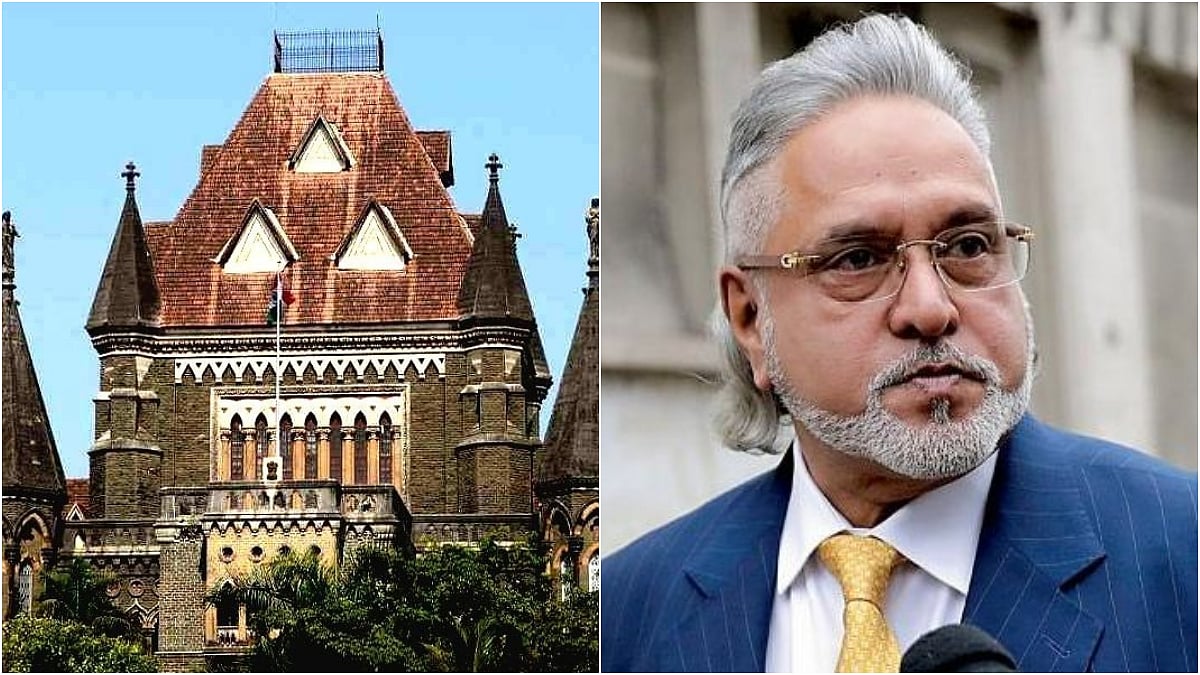
The Bombay High Court did not simply accept that proposition.
Instead, it asked the SBI-led consortium and the Enforcement Directorate to clarify the actual recovery position.
And that request for clarification produced the latest twist in the story.
Because when the banks came back with their figures, they did not say the account was closed.
They said ₹8,751.86 crore was still recoverable. That is the number that has now reopened the entire Mallya arithmetic. And suddenly, the question is no longer whether Mallya’s ₹15,000 crore figure exists.
It is what that figure actually represents – and how it can coexist with the banks’ claim that another ₹8,751.86 crore remains legally recoverable.
The ₹15,000 Crore Claim
The ₹15,000 crore figure is now central to Vijay Mallya’s argument because it appears, at first glance, to produce an almost impossible result.
If the DRT determined that approximately ₹6,203 crore was recoverable in 2013, and if Mallya’s side is correct that around ₹15,000 crore has subsequently been recovered, then the obvious question is why the financial dispute has not already come to an end.
That is precisely the question Mallya has been putting before the courts.
When his matter came before the Bombay High Court in August 2026, his counsel pointed to the substantial recovery made since the original proceedings and argued that the banks had recovered approximately ₹15,000 crore against the original claim of around ₹6,203 crore, including interest.
The argument was not simply that the banks had recovered a substantial amount; it was that the recovery had fundamentally changed the circumstances in which the criminal proceedings against Mallya were continuing.
There is a certain logic to the question.
If a lender claims a particular amount from a borrower, and assets connected with that borrower are subsequently seized, sold or restored to the lender in an amount that appears to exceed the original claim, a reasonable person would expect the outstanding liability to reduce accordingly.
But that is exactly where the language of the different proceedings becomes important.
The ₹15,000 crore figure cited by Mallya’s side is a recovery figure.
The ₹6,203 crore figure is the DRT’s adjudicated recovery amount as of May 31, 2013.
The ₹14,131.6 crore figure cited by the ED is the value of assets restored to the lender consortium.
And the ₹8,751.86 crore figure now being put forward by SBI-led lenders is the amount they say remains recoverable as of August 31, 2026.
Those figures may all be genuine figures.
But they are not necessarily figures from the same accounting exercise.
That is the distinction that has become almost completely lost in the public debate.
Mallya’s argument becomes strongest when the figures are presented as though they are directly comparable: ₹6,203 crore was the debt, ₹15,000 crore was recovered, therefore the debt has been more than settled.
The banks’ argument becomes strongest when the same figures are separated by date and legal meaning: the ₹6,203 crore was a 2013 adjudication carrying continuing interest; the ₹15,000 crore represents subsequent recoveries calculated by Mallya’s side; asset values restored under the PMLA are not necessarily identical to cash realised and credited against the recovery certificate. And the current amount legally recoverable must account for the way the recovery certificate operates and the subsequent accruals.
Neither explanation, however, fully resolves the question that is now sitting before the Bombay High Court.
Because even after allowing for interest, costs, subsequent accruals and differences between asset value and cash realisation, there remains a very large gap between what Mallya says has been recovered and what the lenders say remains recoverable.
And that gap is precisely what the court has asked the parties to explain. The importance of this is difficult to overstate.
For years, the Mallya story was presented as a straightforward recovery exercise: banks lost money, assets were attached, and the government attempted to recover the dues.
The latest proceedings reveal something more complicated.
The money has, in fact, been recovered. Assets have, in fact, been restored. But the banks say the account is still not closed.
The question is no longer whether recovery happened. It is how recovery has been accounted for. And that brings us to the SBI-led consortium’s latest affidavit.
SBI’s ₹8,751.86 Crore Answer
The latest response from the SBI-led consortium is what turns the Mallya story from a debate over competing claims into a question of accounting that now has to be answered in court.
According to the consortium’s affidavit, a debt recovery officer had “temporarily recovered” ₹10,270 crore, with the recovery backed by a bond undertaking from the consortium. A further ₹544.58 crore had reportedly been recovered before the relevant suit was filed before the Debt Recovery Tribunal.
Those numbers are substantial.
But they are not the numbers that the lenders say settle the account.
The consortium told the Bombay High Court that as of January 2026, the amount remaining recoverable stood at ₹8,135.63 crore, excluding legal and other expenses.
By August 31, 2026, that figure had increased to ₹8,751.86 crore, again excluding legal and other expenses.
That increase is perhaps the most important detail in the latest development because it demonstrates why the lenders are refusing to treat the recovery process as a simple subtraction exercise.
Their position is that the recovery figure cannot be viewed independently of the amount continuing to remain due under the recovery certificate, including subsequent accruals.
In other words, according to the lenders, recovering ₹10,270 crore does not mean that ₹10,270 crore can simply be deducted from a historical ₹6,203 crore figure and the difference declared to be a surplus.
The amount against which recovery is being measured has itself changed over time.
And there is another important word in the affidavit: “Temporarily.”
The lenders’ description of ₹10,270 crore as temporarily recovered is significant because it indicates that the figure cannot simply be treated as the final cash settlement of the entire recovery certificate.
The exact mechanics of that recovery, the bond undertaking and the way the amount interacts with the continuing recovery proceedings therefore matter enormously.
This is also where the ₹8,751.86 crore figure needs to be treated with some caution.
It does not mean that the banks have suddenly discovered a fresh ₹8,751.86 crore loan that Mallya took after the earlier recoveries.
Nor does it mean that the ₹10,270 crore recovery never happened.
The banks are saying something considerably more complicated: substantial sums have been recovered, but after accounting for the legal recovery framework and subsequent accruals, a further amount remains recoverable.
The latest affidavit also indicates that some attached shares remain unsold, meaning the recovery process itself has not necessarily exhausted every asset available to the lenders.
That creates the central contradiction of the current proceedings.
- Mallya points towards ₹15,000 crore recovered.
- The ED points towards ₹14,131.6 crore worth of assets restored.
- The lenders point towards ₹10,270 crore temporarily recovered.
- And yet the same lenders say ₹8,751.86 crore remains recoverable.
At this point, the temptation is to simply pick the largest number and declare that it proves the other side wrong.
But that would miss the real story. The numbers are measuring different things.

The real question is whether those different measurements can be reconciled into one coherent account. And if they can, the court record should be able to show precisely how.
If they cannot, then after nearly a decade of litigation, asset recovery and cross-border proceedings, the public may still not have a simple answer to the most basic question of all:
How much money, exactly, remains owed in the Vijay Mallya case?