
Jaypee Homebuyers Still Wait As NCLT Flags Problems With The Revival Plan. Unfinished Homes, A ₹13,833 Crore Alleged Money Trail And Two Sides Of Insolvency. Who Will Answer To The Homebuyers?
They paid for homes. They got years of delays, insolvency proceedings, allegations of financial diversion and yet another revival plan under scrutiny. Now, with an NCLT-appointed committee flagging fresh concerns over Jaypee Infratech, the question is no longer just where the money went. It is why the institutions meant to protect homebuyers have allowed the wait to drag on for so long.

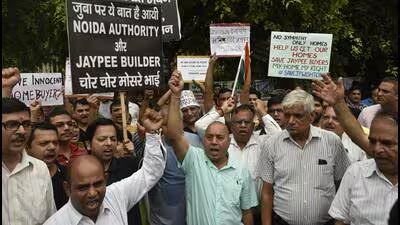
For thousands of Jaypee homebuyers, insolvency was supposed to be the beginning of the end of a nightmare. Years after paying for apartments, many are still waiting for possession. Now, an NCLT-appointed committee has reportedly raised fresh concerns about construction delays, funding, quality and the use of money under Suraksha Group, the company that took over Jaypee Infratech in 2024.
The findings, raise uncomfortable questions about a resolution process that was meant to get stalled projects moving again. Among the concerns is the reported failure to secure a ₹3,000 crore working-capital facility in the manner required under the approved resolution plan. The committee has also questioned the pace of construction, the adequacy of the workforce and aspects of construction quality, including the steel being used in high-rise buildings in an earthquake-prone region.
The scrutiny of the revival plan comes against a much larger backdrop. Jaypee Infratech’s insolvency has been accompanied by years of litigation, allegations of financial irregularities and investigations into the handling of money collected from homebuyers.
The Enforcement Directorate has alleged that thousands of crores were diverted from their intended purpose, while a separate set of allegations has emerged around certain financial transactions following the takeover by Suraksha.
The two sets of allegations concern different periods. But together with the committee’s latest concerns, they raise a question that the resolution process was supposed to answer: after years of financial distress, litigation and promises of revival, why are homebuyers still waiting for the homes they paid for?
How Jaypee’s Housing Crisis Began
To understand why the latest findings matter, it is necessary to go back to the origins of Jaypee Infratech’s crisis.
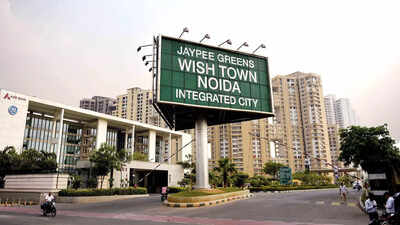
The company was involved in developing large residential projects along the Yamuna Expressway, including Jaypee Wishtown and Jaypee Greens. Buyers were drawn to the promise of planned townships, high-rise apartments and the prospect of living in a developing corridor connecting Noida with Greater Noida and beyond.
For many purchasers, these were not speculative bets made with spare money. Families committed savings, took housing loans and paid instalments towards apartments they expected to receive within the timelines promised to them. But as projects stalled and possession dates slipped, buyers found themselves caught between continuing financial obligations and homes that remained unfinished.
Jaypee Infratech’s financial difficulties eventually brought the company into the corporate insolvency resolution process in 2017. The proceedings were intended to address the company’s liabilities and find a viable way to complete its projects. Yet insolvency did not provide an immediate solution for buyers. The process became entangled in disputes over competing bids, creditor claims, the treatment of homebuyers and the terms on which the business could be revived.
The Supreme Court became involved as the crisis unfolded, with homebuyers seeking protection for their interests and a way to ensure that the projects were completed. The proceedings exposed the difficulty of resolving a corporate insolvency in which the principal human cost was borne by people who had paid for homes rather than by conventional financial creditors alone.
In March 2023, the National Company Law Tribunal approved Suraksha Group’s resolution plan for Jaypee Infratech. Suraksha took control in June 2024, bringing an end to one phase of the protracted insolvency process and raising expectations that construction would finally accelerate.
But a change of ownership is not the same as delivery of possession. The real test of the resolution plan was always whether it could translate financial commitments into completed apartments, credible construction schedules and homes handed over to their owners.
That is why the committee’s reported findings are significant. They bring the story back to the question that has haunted Jaypee’s homebuyers for years: what, exactly, has prevented the promise of completion from becoming a reality?
The ₹13,833 Crore Alleged Money Trail
The problems surrounding Jaypee Infratech extend beyond stalled construction. The Enforcement Directorate has alleged that money collected from homebuyers for residential projects was diverted to other group entities and purposes, leaving investigators to examine whether funds meant for building apartments were used elsewhere.
In January 2026, the ED announced the provisional attachment of assets worth approximately ₹400 crore in connection with its investigation.
The agency alleged that Jaiprakash Associates Ltd and Jaypee Infratech Ltd had collected substantial sums from homebuyers but that money intended for construction had been diverted. Subsequent reporting cited an alleged diversion of ₹13,833 crore, a figure that has become central to questions about the handling of the group’s finances.
The entities identified in the investigation include Jaypee Healthcare, Jaypee Sports International and Jaiprakash Sewa Sansthan, among others. The ED has alleged that funds moved through related entities and were used for purposes other than completing the residential projects for which buyers had paid. The investigation has also focused on former Jaypee executive Manoj Gaur, who was arrested in November 2025.
Insolvency, Litigation And The Promise Of A Fresh Start
Jaypee Infratech entered the corporate insolvency resolution process in 2017, but finding a way to revive the company proved far more complicated than identifying a new owner. The proceedings involved competing bids, creditor claims, legal challenges and disputes over how the interests of homebuyers should be protected.
The Supreme Court also intervened as buyers sought a resolution that would deliver possession rather than leave them indefinitely tied to an insolvent developer.
The approval of Suraksha Group’s resolution plan by the NCLT in March 2023 marked a major step towards resolving the impasse.
Suraksha took control of Jaypee Infratech in June 2024, raising expectations that the stalled projects would finally receive the funding and management attention needed for completion.
The resolution plan was supposed to provide a structured route out of insolvency, with financial commitments and construction obligations designed to revive the projects. But the transfer of control did not, by itself, guarantee that the homes would be completed. The decisive test was whether the new management could mobilise the required funds, maintain construction momentum and meet the obligations it had accepted under the plan.
This is where the latest committee findings become important. The reported concerns about working capital, construction progress and the use of funds raise questions about implementation after the takeover.
For homebuyers, however, the distinction between the old management and the new one offers little immediate comfort if possession remains out of reach. The original insolvency was meant to resolve the company’s financial distress and create a viable path towards completion. The latest scrutiny raises the possibility that the legal resolution and the practical resolution of the homebuyers’ problem remain two very different things.
The Allegations Involving Suraksha And The New Money Trail
The questions surrounding Jaypee’s finances did not end when Suraksha Group took control. In January 2026, a separate case emerged involving allegations about financial transactions undertaken after the takeover, putting the new management’s handling of funds under scrutiny.
According to FIR-related reporting, investigators examined transactions totalling approximately ₹235 crore involving ITI Gold Loans, ITI Housing Finance and ITI Finance. The reported transactions included ₹75 crore, ₹25 crore and ₹135 crore, respectively.
The allegations concerned the deployment of funds held by Jaypee Infratech and raised questions about whether money needed for completing residential projects had instead been placed with other financial entities.
A separate reported transaction involved ₹107 crore invested in ITI Mutual Fund from proceeds connected to the 2024 sale of Jaypee Healthcare to Max Healthcare.
The funding question is particularly important because Suraksha was reported to have arranged a ₹3,000 crore facility in 2024. The committee’s more recent findings, raise questions about whether the required working-capital facility was sanctioned as stipulated.
The Wider Questions Of Investigation And Oversight
Jaypee’s crisis has generated a wider web of investigations, court proceedings and regulatory questions. The significance of these developments lies not in the number of cases alone, but in what they may establish about the company’s financial practices, the protection of homebuyers and the effectiveness of the insolvency process.
The Supreme Court’s earlier proceedings brought forensic-audit findings and suspected financial irregularities into focus, with directions for relevant authorities to investigate. Separately, the CBI’s investigation concerning Jaypee’s Orchards project has been reported in connection with alleged misuse of home-loan subvention arrangements.
The broader regulatory environment also deserves scrutiny. The Comptroller and Auditor General’s performance audit of the Yamuna Expressway Industrial Development Authority identified significant audit observations involving revenue, recoveries and expenditure.
Taken together, these strands point to several questions that remain central to the homebuyers’ plight. Did the original financial arrangements leave the housing projects without adequate funds? Were warning signs identified early enough? Did the insolvency process adequately protect buyers’ interests? And are the commitments made by the new management being monitored and enforced effectively?
For homebuyers, the ultimate measure of accountability is not how many investigations are opened or how many corporate disputes reach court. It is whether the money can be accounted for, responsibility can be established where wrongdoing is proved, and the homes they paid for are finally completed.
The Last Bit, Who Will Answer To The Homebuyers?
The Jaypee Infratech crisis now presents two distinct accountability questions. The first concerns the original management and the ED’s allegations that money collected from homebuyers was diverted away from its intended purpose.
The second concerns the implementation of the resolution plan under Suraksha Group, including the funding arrangements, financial transactions and construction progress now facing scrutiny.
The responsibility for resolving that problem is spread across several institutions. The courts and insolvency authorities must ensure that the approved plan is implemented in accordance with its terms.
Investigating agencies must establish whether the alleged financial irregularities occurred and who was responsible. The new management must account for its use of funds and demonstrate measurable progress towards completion.
And regulators must answer whether the safeguards intended to protect homebuyers have worked as they were supposed to.
For buyers, however, these distinctions can feel painfully abstract. Loan repayments, rent and other household expenses do not stop because a developer enters insolvency or a resolution plan awaits implementation. Every additional delay extends the financial burden on families that may already have committed years of savings to a home they cannot occupy.
The most important questions are therefore concrete. How much money remains available for construction?
Which projects are behind schedule, and by how much?
What milestones have actually been achieved since Suraksha took control?
What is the enforceable timeline for handing over the remaining homes?
And what consequences will follow if the obligations under the resolution plan are not met?
Until these questions receive clear, documented answers, the Jaypee revival will remain incomplete in the most important sense. For Jaypee’s homebuyers, the final measure of success is not a change in management, another court order or another promise of funding. It is possession of the home they paid for. After years of waiting, they deserve to know who is responsible for the delay, where the money went and when the wait will finally end.


