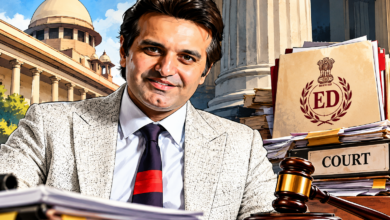
Who Will Pay for Delhi’s Shutdown? Modi Government’s Security Crackdown Raises a Brutal Question: How Much Must India Lose to Protect the System Around One Constitutional Office-Holder?
245 reported train cancellations. Entry and exit restrictions at 45 Metro stations. A 24-hour mobile internet suspension in a defined area of central Delhi. More than 2,000 people detained, according to Reuters. Major markets shut amid security concerns. And a Supreme Court intervention demanding normal transport operations and the restoration of ordinary movement. Who is going to bear the financial, economic and social cost of this extraordinary response to a protest demanding Chief Election Commissioner Gyanesh Kumar’s resignation?

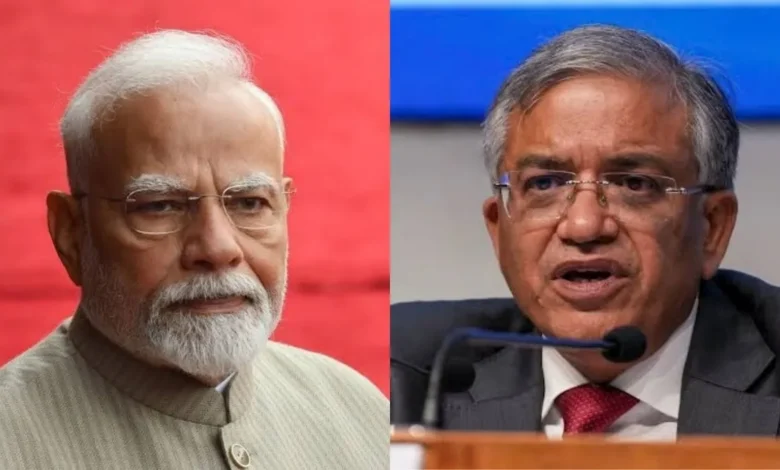
The government imposed the precautions. Why should ordinary Indians be left with the bill?
There is a question the Union government cannot answer merely by repeating the words “law and order”.
Who pays when the state’s security response disrupts public transport, restricts communications, complicates travel and makes traders question whether it is safe or commercially sensible to open their businesses?
Who compensates a passenger whose journey has been disrupted? Who pays for a trader’s missed sales and continuing operating expenses? Who accounts for the cost of deploying tens of thousands of security personnel? Who measures the consequences of restricting mobile internet? And who answers for the economic activity that may have been lost when movement across parts of the national capital became substantially more difficult?
These are not rhetorical flourishes. They are questions of public finance, administrative responsibility and democratic accountability.
On October 10, Delhi experienced extensive security restrictions as authorities sought to prevent a planned Cockroach Janta Party (CJP) demonstration demanding Gyanesh Kumar’s resignation. The measures affected transport, communications, access to commercial areas and freedom of movement. Reuters reported that more than 2,000 people were detained and major portions of central Delhi were locked down.
The authorities cited security, public order and the anticipated disruption associated with the demonstration. Those concerns must be taken seriously. The police have a responsibility to prevent violence and protect the public.
But the government has a responsibility, too: to demonstrate that the restrictions it imposes are necessary, proportionate and no broader than required.
A government cannot claim credit for preventing a possible disruption while refusing to account for the actual burdens its preventive measures impose.
That is the central question hanging over the October 10 operation.
1. The railway disruption: 245 cancellations, but where is the final account?
The railway figures alone demand scrutiny.
Amar Ujala reported on October 10 that approximately 245 trains were cancelled in connection with restrictions affecting New Delhi and Hazrat Nizamuddin railway stations. Its breakdown comprised 75 Mail and Express trains and 170 passenger trains. The report also identified changes to passenger services, including services originating from other stations or terminating before their scheduled destinations.
The disruption affected long-distance services, including prominent Rajdhani, Tejas Rajdhani and other express trains. Passengers travelling from states including Bihar, Uttar Pradesh and West Bengal were among those whose plans could be affected.
The stated concern was anticipated traffic congestion around the two major railway stations and the difficulty passengers might face reaching or leaving them.
But that explanation raises another question: was cancelling such a large number of services the least disruptive way to address that risk?
Could more localised traffic management, passenger advisories, staggered arrivals, controlled station access or other operational arrangements have reduced the disruption? What alternatives were evaluated? What evidence established that the cancellations were necessary on the scale implemented?
Those questions require answers from Indian Railways.
The loss is bigger than a cancelled ticket
A cancelled service can affect more than the ticket price.
Passengers may have to change their travel arrangements, arrange alternative transport, revise onward connections or postpone appointments. People travelling for work, education, medical needs or family obligations may face consequences that are not covered by a ticket refund.
Railway cancellations can also impose operational costs. But it would be irresponsible to convert those possibilities into a monetary total without passenger data, refund figures and actual expenditure records.
No consolidated, independently verified figure for the total financial consequences of the October 10 railway restrictions was identified in the reporting reviewed.
That is why the government must produce the relevant records.
How many passengers were affected? How much was refunded? What additional operating and rescheduling costs were incurred? How many services were ultimately cancelled, and how many were merely rescheduled or short-terminated?
The public deserves evidence, not an invitation to guess.
Indian Railways cannot treat the cancellation of hundreds of services as a minor administrative detail when the consequences are distributed among ordinary citizens who had no role in the political controversy.
2. Delhi Metro: when the Supreme Court has to remind the government that the public still needs to travel
The Metro restrictions expose the proportionality problem even more sharply.
Ahead of the demonstration, DMRC announced entry and exit restrictions affecting 45 stations. The network contains 303 stations, according to information cited during the Supreme Court proceedings. Entry and exit restrictions were scheduled from 9 pm on October 9 until 6 pm on October 10; interchange arrangements remained available at affected stations except at New Delhi.
This was not a verified shutdown of the entire Metro network. It was a substantial restriction on access at specified stations.
That distinction matters, but it does not make the disruption irrelevant. A station may technically remain part of an operating network while its ordinary entry or exit facilities are unavailable to commuters who depend on it.
The crucial question is not whether the system was switched off everywhere. It is whether the restrictions were necessary and proportionate to the risks the authorities identified.
The Supreme Court’s intervention deserves serious attention
On October 9, the Supreme Court directed the Centre to ensure there was no complete prohibition on the movement of Metro trains and other trains coming to Delhi. The Court said authorities could regulate movement where necessary but should not bring everything to a halt or unduly harass citizens. It also directed that service decisions be communicated publicly to minimise inconvenience.
On October 11, the Court again addressed the consequences of the restrictions. It directed that Metro and railway services operate normally, that internet facilities remain undisturbed as permitted by law, and that the free movement of people and traffic be allowed. It also addressed the need to prevent illegal detention of people peacefully assembling.
These interventions do not establish that every action taken by the authorities was unlawful. Nor do they amount to a final finding of contempt against any official.
But they place a fundamental issue directly before the government: essential public movement cannot be treated as expendable merely because authorities anticipate a difficult demonstration.
If a court must repeatedly emphasise the need to preserve ordinary movement while managing public order, the executive should expect demanding questions about its planning.
Why were these stations selected? Why were these restrictions necessary for the announced duration? What alternatives were considered? What passenger-impact data exist? Why should commuters have had to bear this level of disruption?
The government owes citizens an explanation that goes beyond the phrase “security reasons”.
3. Internet restrictions: the digital economy is not collateral that can simply be switched off
Mobile internet services were suspended for 24 hours, from 10 pm on October 9 until 10 pm on October 10, within a four-kilometre radius of the Janpath–Kartavya Path crossing. The reported order stated that the Union Home Secretary had authorised the measure following a request from Delhi Police.
The restriction was geographically defined. It should not be misrepresented as a proven shutdown of all internet services throughout Delhi.
Even within the specified area, however, a mobile internet suspension is not merely a communications decision. It can affect how people work, pay, navigate, deliver goods and communicate.
For a business using mobile connectivity, service interruption can complicate transactions. For a delivery worker, it can interfere with navigation and order coordination. For a professional working remotely, it can interrupt routine communication. For someone trying to reach a destination in an already congested area, it can remove a useful source of real-time information.
These are potential channels of disruption, not a verified calculation of the actual financial loss on October 10.
No consolidated rupee figure for the economic damage attributable to the suspension was identified in the reporting reviewed.
That absence does not justify inventing a loss. It creates a case for the government to disclose the suspension order, its recorded justification and the review process.
The Telecommunications (Temporary Suspension of Services) Rules, 2024, provide for written orders with reasons, specified geographical areas and durations, publication and review. The Indian Express reported that the Internet Freedom Foundation said it could not locate the underlying order on government websites, despite the publication requirement.
That report is a transparency concern, not a final judicial determination that the suspension was unlawful.
Nevertheless, the central government should explain why the restriction was necessary and what narrower alternatives, if any, were considered.
The public should not have to accept the interruption of a digital service and then be left without a clear account of the decision that caused it.
If the state has the power to impose a communications restriction, it must also accept the responsibility to justify that power.
4. The markets: a trader’s losses are real enough to deserve an explanation
Several major commercial areas, including Connaught Place, Palika Market, Khan Market, Janpath and Karol Bagh, were reported closed or advised to remain closed amid the protest-related security arrangements. Some traders cited concerns about disruption and possible damage. Other markets, including Lajpat Nagar, Sarojini Nagar and Chandni Chowk, were reported to remain open.
The distinction between a compulsory government closure and a trader’s own decision is important. The evidence reviewed does not establish that every affected market was formally ordered shut by the government.
But the state cannot ignore the commercial consequences of the conditions created by its security arrangements simply because some business owners made the final decision to close.
When traders anticipate disrupted access, barricaded roads or security problems, they must decide whether opening is worth the risk.
That decision has costs.
₹1 lakh to ₹1.5 lakh per shop: an estimate that must not be mistaken for an audited loss
Sanjiv Mehra, president of the Khan Market Traders Association, estimated that a single day’s closure could cost a shop between ₹1 lakh and ₹1.5 lakh. The estimate was reported by LiveMint, which also noted that some goods could be particularly vulnerable when perishable.
This is an attributed estimate from a traders’ representative. It is not an audited finding for each shop, and it cannot be multiplied across Delhi to manufacture a citywide loss total.
But it demonstrates the kind of financial burden that business owners said they faced.
A shop can miss an entire day’s sales while continuing to incur rent, salaries and other operating expenses. Businesses handling perishable inventory may face additional exposure. Workers who depend on sales or commissions can also be affected.
The government should therefore ask the relevant market associations and departments to document actual disruption, rather than allowing the public debate to remain trapped between speculative figures and official silence.
If the authorities believed the restrictions were necessary, they should be prepared to explain the resulting burden on businesses. If the closures were independently chosen by traders, the precise responsibility for each loss will differ—but the wider impact remains relevant to assessing the operation.
A government does not have to sign an order saying “close this shop” to have a responsibility to account for the consequences of the security environment it creates.
5. More than 2,000 detentions and a reported deployment of 30,000 personnel: what did the operation cost taxpayers?
Reuters reported that more than 2,000 people were detained on October 10, citing a Home Ministry official speaking on condition of anonymity. The report also described checkpoints, barricades, vehicle inspections and the deployment of police and paramilitary personnel across the capital.
Separate reporting by The Indian Express described a deployment of approximately 30,000 police and paramilitary personnel. This figure is a reported deployment, not a verified statement of the number of additional personnel costs incurred solely because of the protest.
That distinction matters.
A deployment of this scale has operational requirements, but the total financial cost cannot be calculated from headcount alone. Some personnel may have been performing routine duties; others may have been redeployed. Additional expenditure would need to be established from staffing, transport, logistics and other official records.
The government should publish those figures.
How much additional public expenditure was incurred? Which departments paid it? What costs were borne by the central government and what costs were borne by Delhi authorities? Which expenses related directly to the protest, and which formed part of ordinary operations?
The public should not be expected to fund a large security operation while being denied a clear account of what it cost.
There is also a more fundamental issue. Detention figures are not an alternative measure of public safety. A large number of people detained does not, by itself, establish that the response was proportionate or that a less restrictive operation would have failed.
Reuters reported concerns from the UN human rights office about mass detentions and the need to respect peaceful assembly. India’s mission to the UN rejected the criticism as unwarranted interference, while stressing that peaceful assembly remains subject to reasonable restrictions for public order.
Those competing positions should be evaluated on the evidence. But the government’s obligation to explain its actions is not removed by rejecting criticism.
6. The government must not hide behind institutional complexity
The decisions were taken by different authorities, and responsibility should be attributed accurately.
Delhi Police denied permission for the proposed demonstration and implemented security and traffic arrangements. Indian Railways announced railway cancellations. DMRC imposed the station-access restrictions. The mobile internet order stated that the Union Home Secretary had authorised the suspension following a police request. The market closures reflected decisions by traders and associations amid the security situation.
The central government therefore has direct questions to answer about decisions within its authority, particularly the internet suspension and the functioning of national railway services. Other authorities must account for the measures they implemented.
It would be inaccurate to claim that every closure was ordered personally by the Prime Minister or that all the restrictions were imposed solely for Gyanesh Kumar’s protection. The documented official rationale centred on security, public order and anticipated congestion.
But it would be equally unsatisfactory for the government to use the distribution of responsibilities as an excuse for avoiding a unified explanation.
Citizens should not have to send one question to the Home Ministry, another to Railways, another to DMRC and another to the Delhi administration, only to discover that nobody has assembled the full public-impact picture.
The government should coordinate a transparent review covering the legal basis, necessity, duration, alternatives, expenditure and documented public consequences of the restrictions.
If the agencies acted within the law and planned proportionately, the review should demonstrate that. If the arrangements imposed avoidable costs or went beyond what was required, the public deserves to know that as well.
7. The most damaging question: could the same security objective have been achieved without imposing such a burden?
The strongest criticism of the government does not require a fabricated figure for total losses.
It rests on a simpler question: what evidence shows that the public had to bear this degree of disruption?
The Supreme Court’s October 9 order expressly rejected a complete prohibition on Metro and railway movement, while allowing appropriate regulation. Its October 11 directions reinforced the need for normal transport operations, lawful internet access and free movement.
That makes the government’s explanation of proportionality essential.
Could station-specific access controls have replaced broader restrictions? Could traffic management have preserved more railway services? Could the authorities have managed the anticipated crowds without restricting mobile internet across the defined area? Were the reasons for each measure recorded and reviewed? Did the restrictions last longer or cover a wider area than the identified risks required?
These are questions the government should be ready to answer with records, not slogans.
A government that prides itself on administrative capacity should be capable of designing security arrangements with precision. Blanket inconvenience should not be the default measure of successful policing.
The public does not exist to make law enforcement easier by accepting whatever restrictions are convenient for the authorities.
8. Who will compensate the country—and who will compensate the citizens?
This is where the argument moves beyond Delhi and becomes a national accountability issue.
The country may bear the cost through additional public expenditure and the diversion of state capacity. Businesses may bear the burden through interrupted operations and expenses that continue during closures. Citizens may face travel disruption, altered plans, additional costs and the loss of productive time.
The actual financial value of these consequences remains unestablished in a consolidated public assessment. A responsible article cannot claim an exact total when the relevant data have not been produced.
But it is precisely because the figure is not yet established that the government must conduct the assessment.
The exercise should separate four categories:
First, taxpayers’ money: the actual additional expenditure on security personnel, deployment, transport, logistics and related operations.
Second, transport-system costs: verified railway cancellations, refunds, rescheduling expenses and other documented effects, together with the available passenger-impact data.
Third, commercial losses: evidence from affected businesses and market associations, distinguishing lost turnover from actual losses and from sales merely deferred to another day.
Fourth, household and social costs: documented passenger refunds, extra transport expenditure and other demonstrable consequences, alongside wider effects that cannot responsibly be reduced to an invented rupee figure.
These categories must not be added together mechanically. Some consequences overlap, and some activity may have been postponed rather than permanently lost.
A credible assessment should identify what can be measured, explain what remains uncertain and make the underlying methodology public.
As of October 11, the reporting reviewed for this article did not establish a consolidated, independently audited estimate of all these costs.
The public should therefore ask: when will the government publish one?
The state cannot reasonably expect citizens to accept the loss of time, disruption of movement and commercial uncertainty without a clear explanation of the necessity and consequences of its decisions.
9. Was the whole operation worth the price?
The CJP protest called for the resignation of Gyanesh Kumar over allegations relating to revisions of electoral rolls. Those allegations remain contested: Reuters reported that the Election Commission and the BJP denied wrongdoing. The protest’s allegations should not be treated as judicially established facts.
But the legitimacy of a public protest and the legality of the electoral-roll process are distinct from another question: whether the government’s response was proportionate.
The authorities were entitled to prepare for public-order risks. They were not entitled to treat every possible inconvenience to the administration as more important than the actual inconvenience to the public.
The question is not whether a Chief Election Commissioner deserves security. Public officials must be protected, as must everyone else. Nor is the question whether the police should ignore credible threats.
The question is whether the government can justify the particular scale and breadth of measures taken around a demonstration concerning one constitutional office-holder—and demonstrate that less disruptive alternatives would not have sufficed.
It must also account for the costs resulting from those decisions.
Protecting public order cannot become a blank cheque. Nor can the mere existence of a security concern settle the debate over how broadly the state may restrict normal civic life.
The government must explain not only what it feared might happen, but why the restrictions it chose were necessary to prevent it.
Conclusion: the government’s security machinery must produce an invoice
Who will bear the loss to the country and its citizens?
That question should remain at the centre of the investigation until the authorities publish evidence that answers it.
The verified record establishes substantial disruption: approximately 245 train cancellations were reported; entry and exit restrictions affected 45 Metro stations; mobile internet was suspended for 24 hours in a defined part of central Delhi; major markets closed amid security concerns; and Reuters reported more than 2,000 detentions. The Supreme Court subsequently directed normal transport operations, lawful internet access and free movement, while earlier proceedings had warned against a complete prohibition on train and Metro movement.
What the evidence does not establish is a definitive total financial loss for the country or citizens. That number must not be invented.
The absence of that figure, however, is not an excuse for inaction. It is a reason for the government to provide the underlying information and commission a transparent accounting of the consequences.
The Union government should disclose the costs of the operations under its control. Indian Railways and DMRC should provide documented service and passenger-impact figures. The relevant authorities should publish the reasons and review records associated with the internet restriction. Market associations and affected businesses should be invited to document their actual losses without turning estimates into audited totals.
This is the minimum the public should expect after a security operation of this scale.
The criticism of the government is straightforward: it is not enough to issue restrictions, deploy personnel and then declare the city secure. Government must also demonstrate that its actions were necessary, proportionate and no more disruptive than the circumstances demanded.
How much must India pay—in taxpayers’ money, interrupted commerce, disrupted travel and lost public time—before the government is willing to show its working?
And if some of the costs were avoidable, who will answer for them?
The answer cannot be that the public must simply accept whatever burden the administration considers convenient. The people who bear the consequences are entitled to an accounting of the decisions that caused them.
Security is the government’s responsibility. So is accountability. Neither should be treated as optional.
Delhi’s commuters did not create this confrontation. Traders did not create the dispute over electoral-roll revisions. Ordinary taxpayers did not decide how the security operation should be designed.
Yet they are among the people who may bear its costs.
The government must now answer the question it cannot barricade away: who pays for the shutdown—and who is accountable if the price was higher than necessary?