Dhruv Rathee, Narendra Modi, Rahul Gandhi And The CJP Protests. Who Really Controls The Political Conversation In India? What Is Really Driving The CJP Protests?
Narendra Modi mastered social media to capture political power. Now, Dhruv Rathee is using that same digital ecosystem to challenge it from the streets. With Rahul Gandhi backing the agitation, CJP protesters demanding the Election Commission chief’s resignation, and allegations of foreign interference flying around, one question refuses to go away. Is this democracy finding a new voice, or is someone playing a much bigger game?

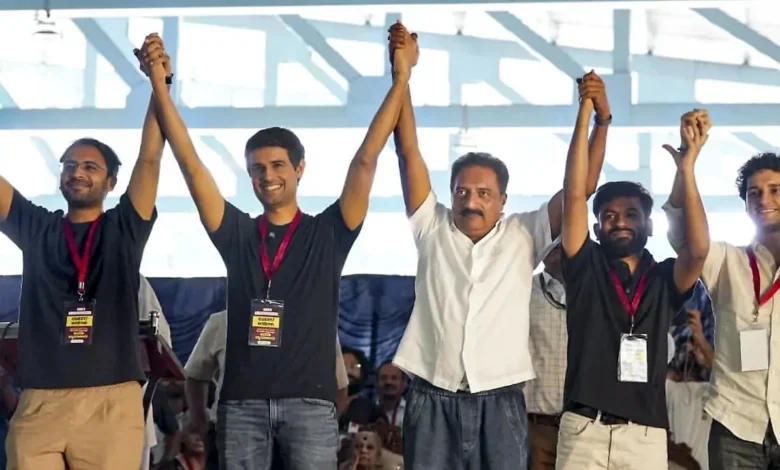
Why Dhruv Rathee, and why now? Is the question that most would be asking.
Dhruv Rathee has spent years criticising India’s political establishment from behind a camera. Based in Germany, the YouTuber built a vast audience by turning complicated political questions into accessible Hindi-language explainers. But in October 2026, he did something different.
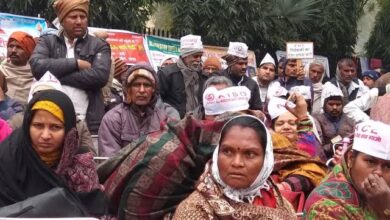
He travelled to India, joined the Cockroach Janta Party’s protest in Bengaluru on October 8, and announced plans to attend its Delhi demonstration two days later. On October 10, police detained him at his Gurugram residence ahead of the proposed gathering at Jantar Mantar.
The shift is significant not because Rathee has suddenly discovered Indian politics, but because he has taken his political commentary from the screen to the street. His stated purpose was to support a movement demanding Chief Election Commissioner Gyanesh Kumar’s resignation over alleged irregularities in electoral-roll revisions. Rathee described the agitation as a fight to protect democracy.
So why now? The immediate trigger is visible: CJP has turned electoral-roll concerns into a public campaign, and Rathee has chosen to lend it his presence and considerable reach. What remains unanswered is whether this marks a one-off intervention or a more lasting move towards political activism.
His timing will inevitably invite questions about the movement’s wider political significance, its relationship with established opposition parties and the allegations of foreign influence surrounding the protests. But timing alone proves neither coordination nor hidden intent.
The more revealing question is whether India’s political influencers are beginning to recognise that commanding millions of online viewers is only one form of power. Turning those viewers’ attention into public participation is another.
Dhruv Rathee’s appearance in Bengaluru has brought that distinction into sharp focus.
Social Media Has Created A New Entry Point Into Indian Politics
For decades, entering Indian politics generally meant working through a party, building a local organisation, cultivating influential networks or inheriting a political name. Television and newspapers could make a leader visible, but access to those platforms was controlled by editors, proprietors and political gatekeepers. Social media has changed that equation.
Today, a person with a smartphone, a camera and a compelling argument can build an audience that rivals the reach of established media personalities.
YouTube allows creators to explain issues at length; Instagram and X help them circulate clips, shape debates and mobilise supporters. India’s enormous digital audience has created space for independent commentators such as Rathee, as well as journalists and satirists who operate outside conventional newsrooms. Research by the Reuters Institute and academic studies of political engagement on YouTube document this shift.
The new route into political influence does not necessarily require contesting an election or joining a party. It can begin with explaining a government decision, questioning an official statement or giving visibility to a grievance that mainstream coverage has overlooked. An audience can then become a network of people who share material, challenge institutions or turn up at a protest.
CJP offers a developing example of that transition. Its identity emerged online, but its campaigns have moved into physical demonstrations. Rathee’s participation illustrates how a prominent creator can bring additional attention to a movement without necessarily controlling its organisation.
Yet this new access comes with its own complications. A million views do not equal a million supporters, and a large following does not establish the accuracy of a creator’s claims. Algorithms can reward outrage over nuance, while coordinated accounts can make a message appear more widely supported than it is.
Social media has therefore done more than open politics to new voices. It has created a new contest over credibility, attention and mobilisation. The old gatekeepers have not disappeared; they now compete with influencers, platforms and online networks for the power to shape what India talks about.
Narendra Modi Understood The Power Of The Platform Early
Before Dhruv Rathee became one of India’s most recognisable political YouTubers, Narendra Modi had already demonstrated how digital communication could change the relationship between a political leader and the electorate.
The BJP’s 2014 campaign was not India’s first encounter with political communication online, but it was a landmark in the integration of social media, mobile technology, personal branding and large-scale electoral mobilisation. Academic research on the election found a significant association between online campaigning, voter engagement and the BJP’s electoral performance.
The campaign understood something that conventional political communication often struggled with. A leader did not have to wait for a television interview or a newspaper headline to reach voters. Twitter, Facebook, YouTube, text messages and WhatsApp could distribute speeches, campaign material and responses to controversies directly to supporters.
Mobile phones were particularly important in a country where internet access was expanding rapidly but remained uneven.
Modi’s achievement was therefore not simply that he used Twitter early or accumulated followers. It was that digital communication became part of a coordinated political operation built around a recognisable leader, a consistent message, an organised party and a nationwide campaign.
That distinction matters when we compare him with Rathee or CJP. An influencer may command attention, and a protest movement may mobilise thousands, but neither automatically possesses the electoral machinery, local networks or organisational continuity of a major political party.
Nor should the BJP’s success be attributed to social media alone. Leadership, campaign resources, ground organisation, political messaging and the wider electoral environment all mattered. Research can identify associations and campaign methods; it cannot establish that digital outreach by itself delivered the victory.
The irony is difficult to miss. The digital tools that helped Modi bypass traditional media gatekeepers now allow independent commentators to challenge his government directly. The platform has not changed. The people using it to contest political authority have.
Rahul Gandhi And The Opposition’s Political Interests
For Rahul Gandhi and the Congress, the controversy surrounding electoral-roll revisions presents both a democratic issue and a political opportunity. The party has accused the Election Commission of compromising electoral fairness and demanded accountability from Chief Election Commissioner Gyanesh Kumar. On October 6, Gandhi led an opposition protest over the issue; he was briefly detained along with other lawmakers.
On October 10, Gandhi publicly backed the youth-led protests, criticising the government’s response to demonstrators. His intervention brought the dispute into a familiar political contest between the Congress and the BJP, but it also raised a more complicated question: how does an independent protest movement relate to an established opposition party that shares its demands?
The potential benefits for Congress are not difficult to identify. Electoral integrity is an issue through which the opposition can challenge the government’s credibility, mobilise supporters and reach voters who may not respond to conventional party campaigning. A youth-led movement can also attract attention beyond the Congress’s own organisational network.
But political advantage is not evidence of political control. There is a difference between Gandhi supporting a protest, Congress amplifying its demands and the party directing its organisers. Establishing the last of these would require evidence of coordination, shared planning, financial support or other concrete organisational links.
There is also a risk for the opposition. If CJP is seen as merely an extension of Congress, the movement could lose some of its appeal as an independent challenge to the political establishment. Conversely, if the movement retains its independence, it may attract people who distrust established parties as much as they distrust the institutions being challenged.
The question, then, is not simply what Rahul Gandhi gains. It is whether the Congress is helping build a broader campaign around electoral accountability, and what evidence exists about the relationship between its political strategy and CJP’s organisation.
That distinction will become especially important when we examine the allegations of hidden coordination and foreign interference.
CJP, Electoral Rolls And The Right To Protest
The immediate dispute behind the CJP protests concerns the integrity of India’s electoral rolls. The movement is demanding the resignation of Chief Election Commissioner Gyanesh Kumar over alleged irregularities in the Special Intensive Revision (SIR), an exercise intended to verify voter registrations.
The Election Commission’s stated objective is to identify and remove ineligible entries. Critics, however, have questioned whether the process risks excluding legitimate voters and whether its implementation has been sufficiently transparent.
The scale of the controversy is considerable. Reports have cited approximately 130 million voter entries removed during the revision exercise, although that figure must not be confused with the number of eligible voters proven to have been disenfranchised.
The reported categories include people who have died, relocated or could not be traced. Establishing how many deletions were justified, how many were disputed and how many eligible voters were wrongly excluded requires examination of the underlying electoral data.
CJP’s demand for Kumar’s resignation has turned an administrative dispute into a confrontation over institutional accountability. But the question extends beyond whether the movement’s allegations are ultimately substantiated. It concerns how the state responds when citizens challenge an institution responsible for administering elections.
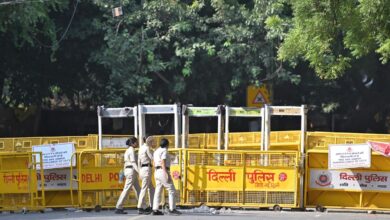
The Delhi Police denied permission for the planned October 10 demonstration, citing public-order concerns and previous compliance issues. Authorities detained protesters, restricted access to parts of central Delhi and imposed additional security measures. Rathee and CJP leaders were among those detained. Police said the measures were intended to prevent an unauthorised gathering and maintain order; protesters accused the authorities of suppressing dissent.
India’s Constitution protects freedom of speech and peaceful assembly under Article 19, subject to reasonable restrictions. That gives authorities the power to regulate demonstrations, but it does not make every restriction automatically justified. The grounds for the orders, the circumstances of individual detentions and the proportionality of the response all matter.
Nor does the absence of permission settle whether every person detained posed a threat to public order. Those questions require evidence, not blanket assumptions about either the protesters or the police.
A democracy cannot guarantee that every protest will proceed exactly as organisers wish. It must, however, provide a lawful framework in which citizens can challenge institutions without having their grievances dismissed merely because their demonstrations are inconvenient.
The fundamental question is whether the response to the protest was proportionate to a demonstrable public-order risk — and whether electoral accountability can be demanded without the demand itself becoming grounds for suppressing dissent.
Is CJP Simply A Protest Movement, Or Is There A Larger Political Contest?
CJP’s electoral-roll campaign did not emerge in isolation. The movement first gained national attention through protests over examination-related irregularities and alleged paper leaks. Its month-long agitation in Delhi was followed by the resignation of Education Minister Dharmendra Pradhan in July 2026.
CJP subsequently expanded its activities, including visits to government schools and campaigns around public services. Its current confrontation with the Election Commission represents a move from education-related grievances to a broader challenge over democratic accountability.
That evolution raises legitimate questions about the movement’s ambitions.
—Is CJP building a lasting organisation around issues that affect young Indians, or is it becoming a broader political pressure group capable of challenging the government on multiple fronts?
—Its growing presence across states, its social-media reach and its ability to attract public figures such as Rathee make those questions worth investigating.
There is also an obvious political dimension. The Congress and other opposition parties have challenged the electoral-roll revision, while the BJP has accused opposition figures and protest organisers of attempting to destabilise the country. CJP’s demands therefore intersect with an existing contest between the government and its political opponents.
But three things must not be confused: a movement having genuine grievances, opposition parties benefiting from those grievances, and political actors secretly directing the movement. All three are possible in principle, but each requires different evidence.
The relevant questions concern CJP’s leadership, funding, decision-making, organisational relationships and campaign planning.
Are there documented links with established parties? Do public appearances and shared demands translate into formal coordination? Is the movement financially and operationally independent? These are questions that reporting can answer, at least in part.
A successful protest can attract political opportunists without having been created by them. Equally, a movement’s grassroots origins do not guarantee that every subsequent development is free from political influence.
The investigation must therefore establish not merely who benefits from CJP’s rise, but who, if anyone, is helping direct it. That distinction will be central to assessing the more serious allegations of coordinated political activity and foreign interference in the sections that follow.
Foreign Interference, Destabilisation And The CIA Question
The foreign-interference question became harder to dismiss as a subject for investigation when Maharashtra Cyber announced in July 2026 that it had identified more than 500 social-media profiles and 429 posts linked to an alleged cross-border disinformation campaign during earlier CJP protests.
The agency said some accounts were operating from outside India and that manipulated videos, synthetic voices and AI-generated material had been used to spread misleading claims.
That is a significant finding if substantiated. But its implications need to be understood precisely. The agency’s allegations concern online activity surrounding the protests. They do not, by themselves, establish that foreign actors created CJP, funded its leadership, directed its demonstrations or coordinated with Dhruv Rathee or the Congress.
The distinction became politically important on October 10, when BJP president Nitin Nabin accused Rahul Gandhi, Arvind Kejriwal and CJP of attempting to destabilise India with foreign backing. These are serious allegations, but the public reporting reviewed so far does not establish documentary evidence connecting those political figures to the alleged disinformation network.
There are several possibilities worth investigating.
Foreign actors could exploit an existing domestic grievance to deepen public mistrust.
Political actors could amplify material without knowing its origin. A protest could be entirely domestic in its organisation while attracting foreign attempts to manipulate the online conversation. Alternatively, allegations of foreign interference could be used to discredit legitimate dissent. Distinguishing between these scenarios requires technical findings, financial records, authenticated communications and evidence of operational links.
This is also where the CIA question needs discipline. The agency has a documented history of covert interventions abroad, making its past activities relevant to understanding how states can influence political environments.
The investigation must therefore ask what the evidence actually shows. Which accounts were identified? How was their foreign origin established? Were funds transferred? Were organisers in contact with them? Did any investigation establish a link between online disinformation and the people directing the demonstrations?
There is a difference between a foreign actor exploiting unrest and manufacturing it. There is also a difference between political benefit and operational control.
If the foreign-hand allegation is to carry weight, it must be supported by evidence of a connection – not merely by the fact that a protest challenges the government or that someone abroad may benefit from the resulting instability.
Who Controls India’s Political Conversation?
The story comes full circle with Narendra Modi, Dhruv Rathee, Rahul Gandhi and CJP competing for attention in the same digital ecosystem.
Modi and the BJP demonstrated how social media could strengthen a political brand and take a message directly to voters. Rathee has built an audience by challenging the government. Rahul Gandhi and Congress use digital platforms to amplify opposition campaigns, while CJP has attempted to convert online mobilisation into street-level pressure.
None of these actors operates outside politics. Each has incentives, audiences and objectives. The important question is whether those objectives are transparent, whether their claims withstand scrutiny and whether their methods respect democratic rules.
Social media has made political participation more accessible, but it has also made it easier for misinformation to travel, for unverified allegations to acquire credibility and for competing groups to portray one another as threats to the nation. Governments, opposition parties, influencers and protest organisers all have responsibilities in that environment.
The state, however, possesses powers that individual commentators and protest movements do not: the authority to detain people, restrict assemblies and enforce public-order rules. That makes scrutiny of official action particularly important.
Ultimately, India’s political conversation cannot belong exclusively to a government, an opposition party or an influencer. It must remain open to scrutiny, peaceful dissent and competing interpretations – with claims tested against evidence rather than political allegiance.
The Last Bit, The Real Test Is The Evidence
The rise of Dhruv Rathee, the emergence of CJP and the BJP’s own digital campaigning success point to the same reality: political power is no longer exercised only through party offices, election rallies and television studios. It is also built through algorithms, online communities, influencers and the ability to turn attention into collective action.
That power can strengthen democracy by giving citizens new ways to question institutions. It can also be exploited to spread misinformation, deepen divisions and undermine public trust. Both possibilities deserve serious scrutiny.
The allegations of foreign interference surrounding CJP must be investigated, but they cannot substitute for evidence of who funded, directed or coordinated the protests. Equally, the state’s responsibility to maintain public order cannot become a blanket justification for restricting peaceful dissent.
Modi understood the political potential of digital communication before many of his rivals. Today, Rathee, Gandhi and movements such as CJP are operating in an environment that the BJP helped transform.
The central question is not who gets to command the political conversation. It is whether those who exercise that influence – politicians, influencers, protest organisers and state institutions alike – can be held accountable for what they say and do.
In a democracy, the right to challenge power must be protected. But the claims made in that challenge must withstand scrutiny, too.